Jorge Argueta - Böcker
Visar alla böcker från författaren Jorge Argueta. Handla med fri frakt och snabb leverans.
17 produkter
17 produkter
170 kr
Tillfälligt slut
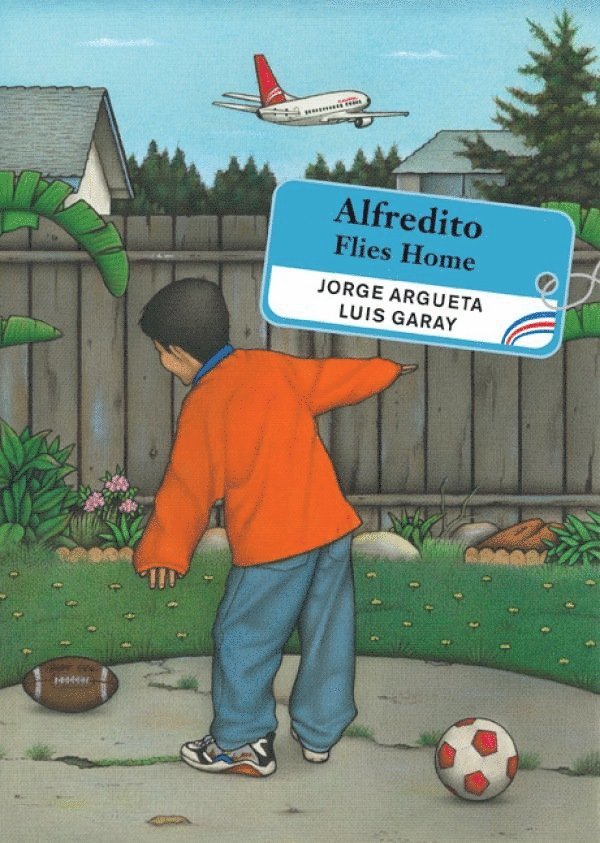
Alfredito and his family are getting ready to return to their old home in El Salvador for Christmas, their first time back since they left as refugees. But they will make this trip on a plane — the first time any of them has ever flown. The excitement mounts as they drive to the airport, get on the plane and fly up into the air, each step bringing an increasing level of amazement. But the greatest moment of all is when they finally arrive and their beloved relatives meet them. Their old house looks and feels as it always did. The smells, the food, the new puppies, the familiar plants and flowers fill Alfredito's heart with a sense of belonging and joy.
170 kr
Tillfälligt slut
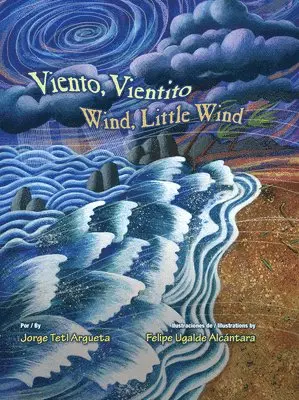
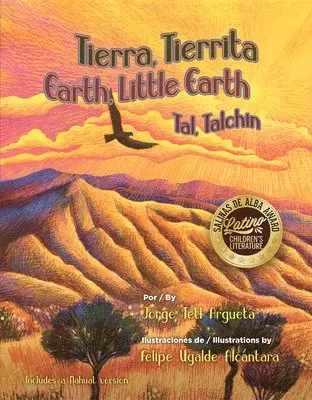
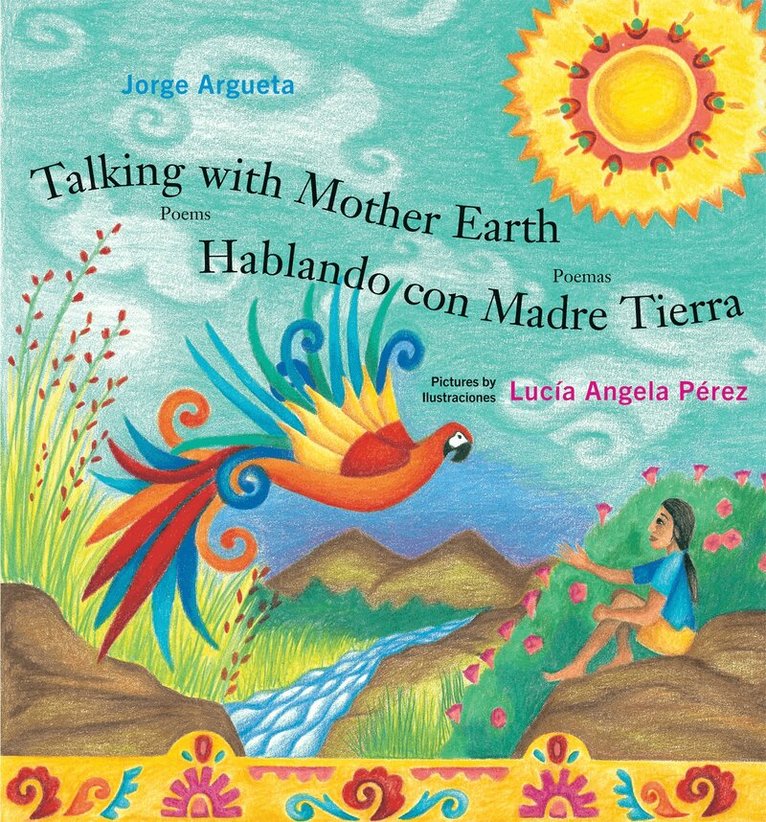
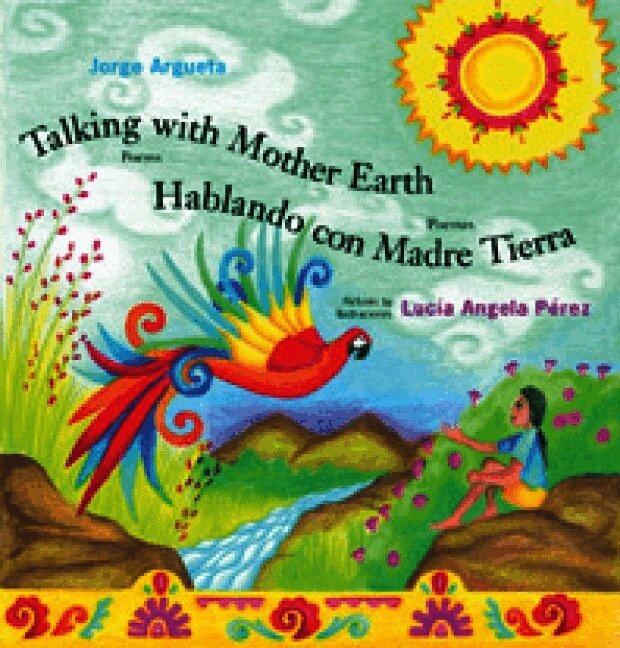
An Americas Award Commended TitleRaw, honest and powerful, these moving bilingual poems by noted Salvadoran poet Jorge Argueta explore a young Indigenous boy's connection to Mother Earth and how he is healed from the terrible wounds of racism he has endured. Tetl has learned from his grandmother about the spirituality of his ancestors, about how they viewed the earth as alive with sacred meaning. This helps him move from doubt and fear, created by the taunts of other children, to self-acceptance and a discovery of his love for nature.Mountains, wind, corn and stones all speak to Tetl, almost seeming to vibrate with life. He feels deep roots in them and, through them, he learns to speak and sing. They reveal his Nahuatl self and he realizes that he is special, beautiful and sacred.These gripping poems have something to teach us all, perhaps especially those who have been either intentionally or casually cruel or racist, as well as those who have been the victims of racism.
278 kr
Skickas inom 3-6 vardagar
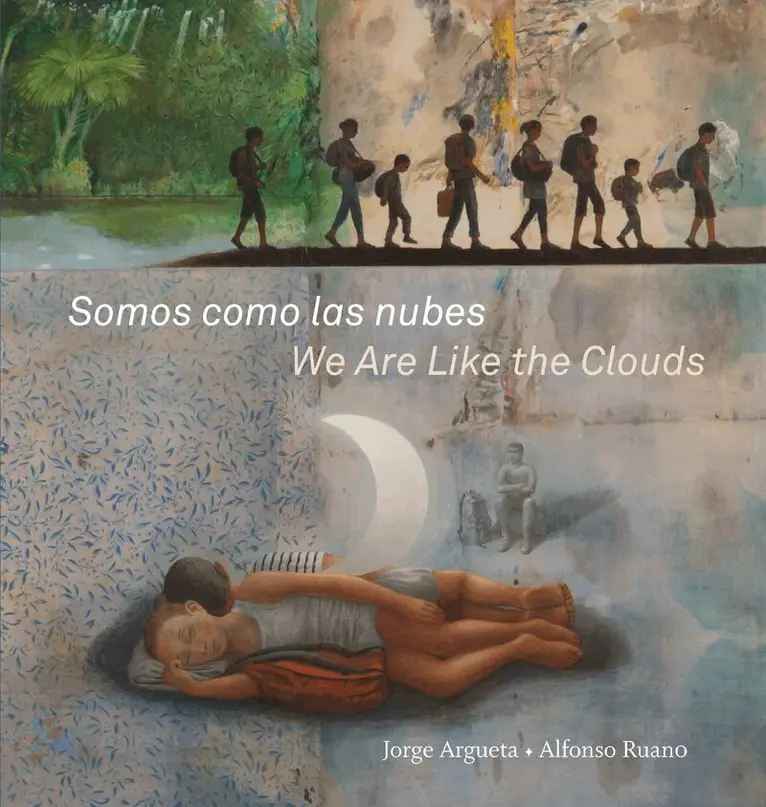
An eloquent and timely plea for understanding refugees.Why are young people leaving their country to walk to the United States to seek a new, safe home? Over 100,000 such children have left Central America. This book of poetry helps us to understand why and what it is like to be them.This powerful book by award-winning Salvadoran poet Jorge Argueta describes the terrible process that leads young people to undertake the extreme hardships and risks involved in the journey to what they hope will be a new life of safety and opportunity. A refugee from El Salvador’s war in the eighties, Argueta was born to explain the tragic choice confronting young Central Americans today who are saying goodbye to everything they know because they fear for their lives. This book brings home their situation and will help young people who are living in safety to understand those who are not.Compelling, timely and eloquent, this book is beautifully illustrated by master artist Alfonso Ruano who also illustrated The Composition, considered one of the 100 Greatest Books for Kids by Scholastic’s Parent and Child Magazine.Correlates to the Common Core State Standards in English Language Arts:CCSS.ELA-LITERACY.RL.2.1Ask and answer such questions as who, what, where, when, why, and how to demonstrate understanding of key details in a text.CCSS.ELA-LITERACY.RL.2.4Describe how words and phrases (e.g., regular beats, alliteration, rhymes, repeated lines) supply rhythm and meaning in a story, poem, or song.CCSS.ELA-LITERACY.RL.2.7Use information gained from the illustrations and words in a print or digital text to demonstrate understanding of its characters, setting, or plot.CCSS.ELA-LITERACY.RL.3.4Determine the meaning of words and phrases as they are used in a text, distinguishing literal from nonliteral language.CCSS.ELA-LITERACY.RL.3.5Refer to parts of stories, dramas, and poems when writing or speaking about a text, using terms such as chapter, scene, and stanza; describe how each successive part builds on earlier sections.CCSS.ELA-LITERACY.RL.3.7Explain how specific aspects of a text's illustrations contribute to what is conveyed by the words in a story (e.g., create mood, emphasize aspects of a character or setting)CCSS.ELA-LITERACY.RL.4.1Refer to details and examples in a text when explaining what the text says explicitly and when drawing inferences from the text.CCSS.ELA-LITERACY.RL.4.2Determine a theme of a story, drama, or poem from details in the text; summarize the text.CCSS.ELA-LITERACY.RL.4.5Explain major differences between poems, drama, and prose, and refer to the structural elements of poems (e.g., verse, rhythm, meter) and drama (e.g., casts of characters, settings, descriptions, dialogue, stage directions) when writing or speaking about a text.CCSS.ELA-LITERACY.RL.4.7Make connections between the text of a story or drama and a visual or oral presentation of the text, identifying where each version reflects specific descriptions and directions in the text.CCSS.ELA-LITERACY.RL.5.2Determine a theme of a story, drama, or poem from details in the text, including how characters in a story or drama respond to challenges or how the speaker in a poem reflects upon a topic; summarize the text.CCSS.ELA-LITERACY.RL.5.4Determine the meaning of words and phrases as they are used in a text, including figurative language such as metaphors and similes.CCSS.ELA-LITERACY.RL.5.7Analyze how visual and multimedia elements contribute to the meaning, tone, or beauty of a text (e.g., graphic novel, multimedia presentation of fiction, folktale, myth, poem).CCSS.ELA-LITERACY.RL.6.1Cite textual evidence to support analysis of what the text says explicitly as well as inferences drawn from the text.CCSS.ELA-LITERACY.RL.6.2Determine a theme or central idea of a text and how it is conveyed through particular details; provide a summary of the text distinct from personal opinions or judgments.CCSS.ELA-LITERACY.RL.6.4Determine the meaning of words and phrases as they are used in a text, including figurative and connotative meanings; analyze the impact of a specific word choice on meaning and toneCCSS.ELA-LITERACY.RL.6.5Analyze how a particular sentence, chapter, scene, or stanza fits into the overall structure of a text and contributes to the development of the theme, setting, or plot.CCSS.ELA-LITERACY.RL.6.7Compare and contrast the experience of reading a story, drama, or poem to listening to or viewing an audio, video, or live version of the text, including contrasting what they "see" and "hear" when reading the text to what they perceive when they listen or watch.CCSS.ELA-LITERACY.RL.6.9Compare and contrast texts in different forms or genres (e.g., stories and poems; historical novels and fantasy stories) in terms of their approaches to similar themes and topics.
174 kr
Skickas inom 3-6 vardagar
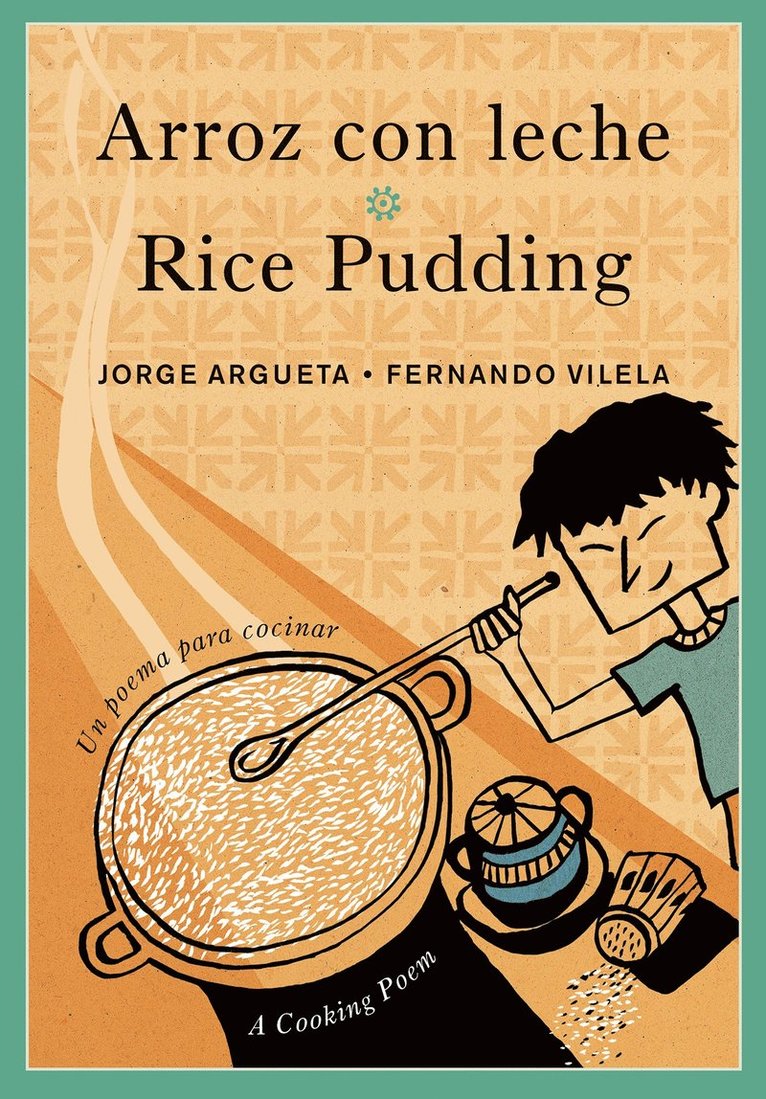
The second title of Jorge Argueta's popular bilingual Cooking Poems series, celebrates the joys of preparing, eating and sharing food.Now available in paperback, Arroz con leche / Rice Pudding is the second title of Jorge Argueta’s popular bilingual Cooking Poems series, celebrating the joys of preparing, eating and sharing food.From sprinkling the rice into the pot, to adding a waterfall of milk, cinnamon sticks, salt stars and sugar snow, Jorge Argueta’s recipe is not only easy to follow, it is a poetic experience. The lively illustrations by Fernando Vilela feature an enthusiastic young cook who finds no end of joy in making and then slurping up the rice pudding with his family.As in all the titles in this series, Arroz con leche / Rice Pudding conveys the pleasure of making something delicious to eat for people you really love. A great book for families to enjoy together.Correlates to the Common Core State Standards in English Language Arts:CCSS.ELA-LITERACY.RI.K.2With prompting and support, identify the main topic and retell key details of a text.
108 kr
Tillfälligt slut
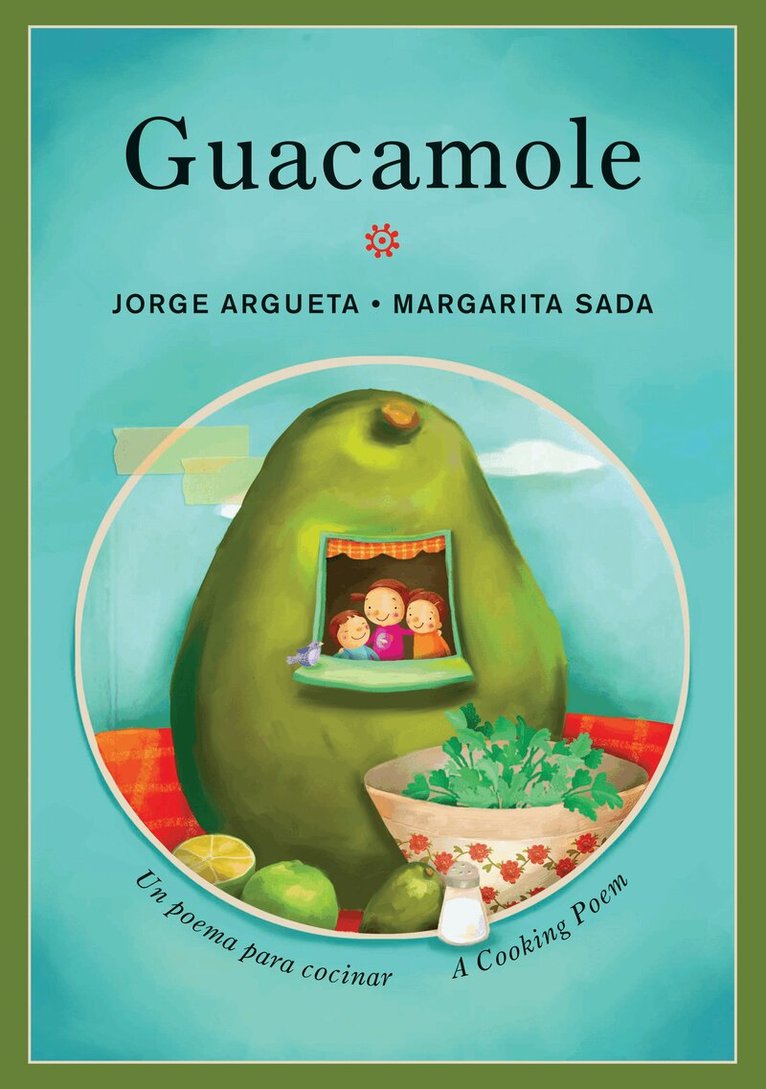
Guacamole is the third title of Jorge Argueta's popular bilingual Cooking Poems series, celebrating the joys of preparing, eating and sharing food.Now available in paperback, Guacamole is the third title of Jorge Argueta’s popular bilingual Cooking Poems series, celebrating the joys of preparing, eating and sharing food.Guacamole originated in Mexico with the Aztecs and has long been popular in North America, especially in recent years due to the many health benefits of avocados. This version of the recipe is easy to make, calling for just avocados, limes, cilantro and salt. A little girl dons her apron, singing and dancing around the kitchen as she shows us what to do. Poet Jorge Argueta sees beauty, magic and fun in everything around him — avocados are like green precious stones, salt falls like rain, cilantro looks like a little tree and the spoon that scoops the avocado from its skin is like a tractor.As in all the titles in this series, Guacamole conveys the pleasure of making something delicious to eat for people you really love. A great book for families to enjoy together.Correlates to the Common Core State Standards in English Language Arts:CCSS.ELA-LITERACY.RI.K.2With prompting and support, identify the main topic and retell key details of a text.CCSS.ELA-LITERACY.RI.K.5Identify the front cover, back cover, and title page of a book.CCSS.ELA-LITERACY.RI.K.6Name the author and illustrator of a text and define the role of each in presenting the ideas or information in a text.
268 kr
Skickas inom 3-6 vardagar
268 kr
Skickas inom 3-6 vardagar
268 kr
Skickas inom 3-6 vardagar
249 kr
Skickas inom 3-6 vardagar
135 kr
Tillfälligt slut
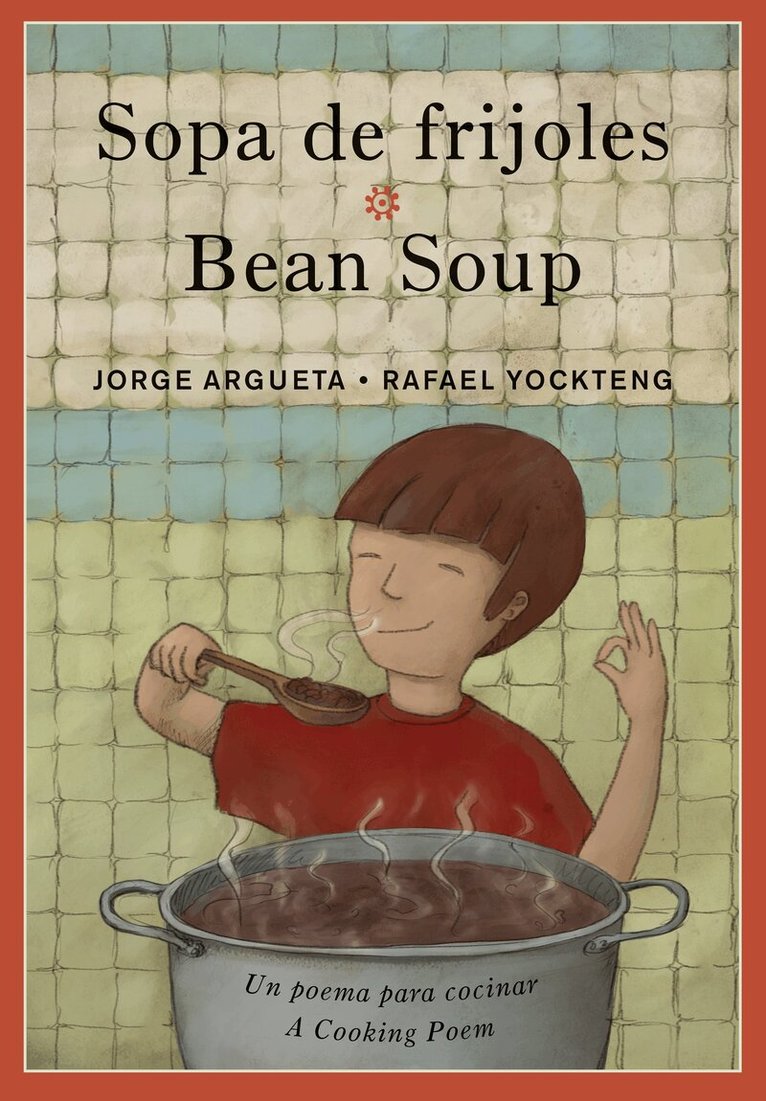
This delightful recipe in poem form shows us all, young and old, how to make a heartwarming, tummy-filling bean soupFrom gathering the beans, onions and garlic to letting them swim in the pot until the house smells wonderful and it’s time for supper.A young boy helps his mother prepare a soup the whole family will enjoy using ingredients from Mother Earth. Onions are “yellow as the dawn,” beans are like stars spread out on the “sky of the table” and the water in the pot is “as deep as a little lake.” While the soup is cooking, the boy buries the cooking scraps under a tree in the yard “so Mother Earth keeps on growing flavors.”Simply written, yet full of vivid imagery, Jorge Argueta’s verse and Rafael Yockteng’s animated illustrations make preparing bean soup a fun, almost magical experience. This book is a great family recipe/poem for those who already love bean soup — it is a comfort food for many — and for those who are looking for a delicious new healthy food.Key Text Featuresrecipeprocedural textCorrelates to the Common Core State Standards in English Language Arts:CCSS.ELA-LITERACY.RL.K.4Ask and answer questions about unknown words in a text.CCSS.ELA-LITERACY.RL.K.5Recognize common types of texts (e.g., storybooks, poems).CCSS.ELA-LITERACY.RL.2.4Describe how words and phrases (e.g., regular beats, alliteration, rhymes, repeated lines) supply rhythm and meaning in a story, poem, or song.
212 kr
Skickas inom 3-6 vardagar
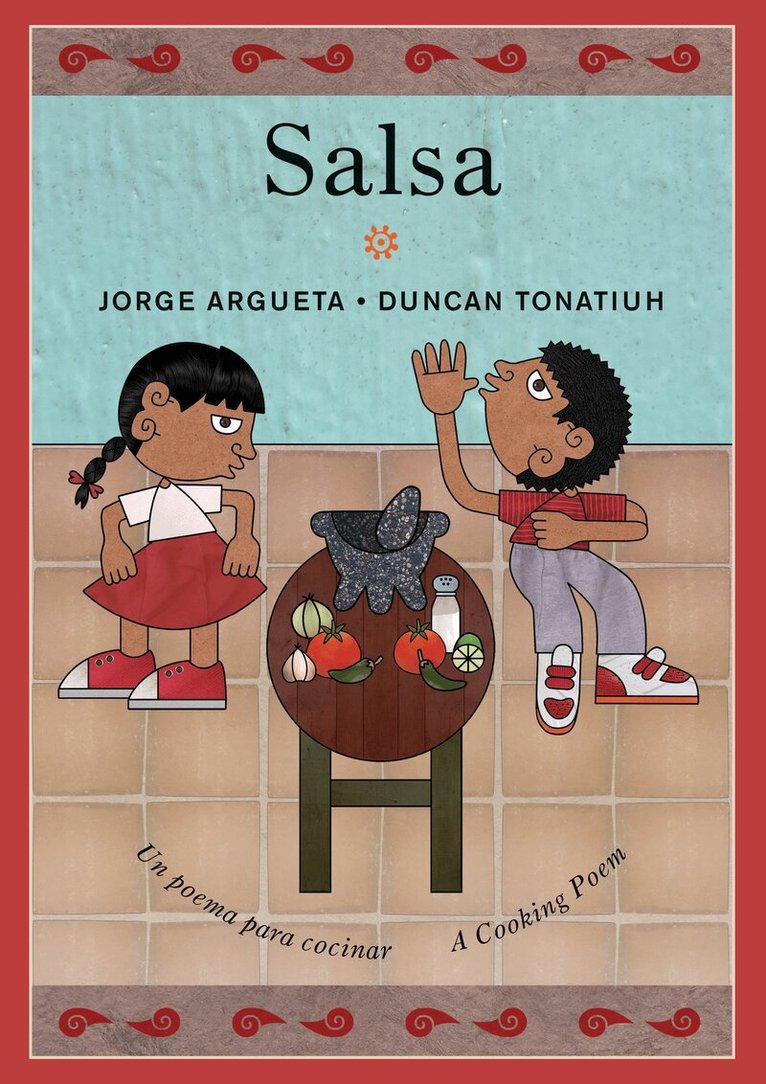
In this new cooking poem, Jorge Argueta brings us a fun and easy recipe for a yummy salsa.A young boy and his sister gather the ingredients and grind them up in a molcajete, just like their ancestors used to do, singing and dancing all the while.The children imagine that their ingredients are different parts of an orchestra — the tomatoes are bongos and kettledrums, the onion, a maraca, the cloves of garlic, trumpets and the cilantro, the conductor. They chop and then grind these ingredients in the molcajete, along with red chili peppers for the “hotness” that is so delicious, finally adding a squeeze of lime and a sprinkle of salt. When they are finished, their mother warms tortillas and their father lays out plates, as the whole family, including the cat and dog, dance salsa in mouth-watering anticipation.Winner of the International Latino Book Award for Guacamole, Jorge Argueta has once again written a recipe-poem that families will delight in.Each book in the cooking poem series features a talented illustrator from the Latino world. In Salsa the text is complemented by the rich, earthy illustrations of multiple award-winning illustrator Duncan Tonatiuh. His interest in honoring the art of the past in contemporary contexts is evident in these wonderful illustrations, which evoke the pre-Columbian Mixtec codex.Key Text FeaturesrecipeCorrelates to the Common Core State Standards in English Language Arts: CCSS.ELA-LITERACY.RL.K.4Ask and answer questions about unknown words in a text.CCSS.ELA-LITERACY.RL.1.4Identify words and phrases in stories or poems that suggest feelings or appeal to the senses.
212 kr
Skickas inom 3-6 vardagar
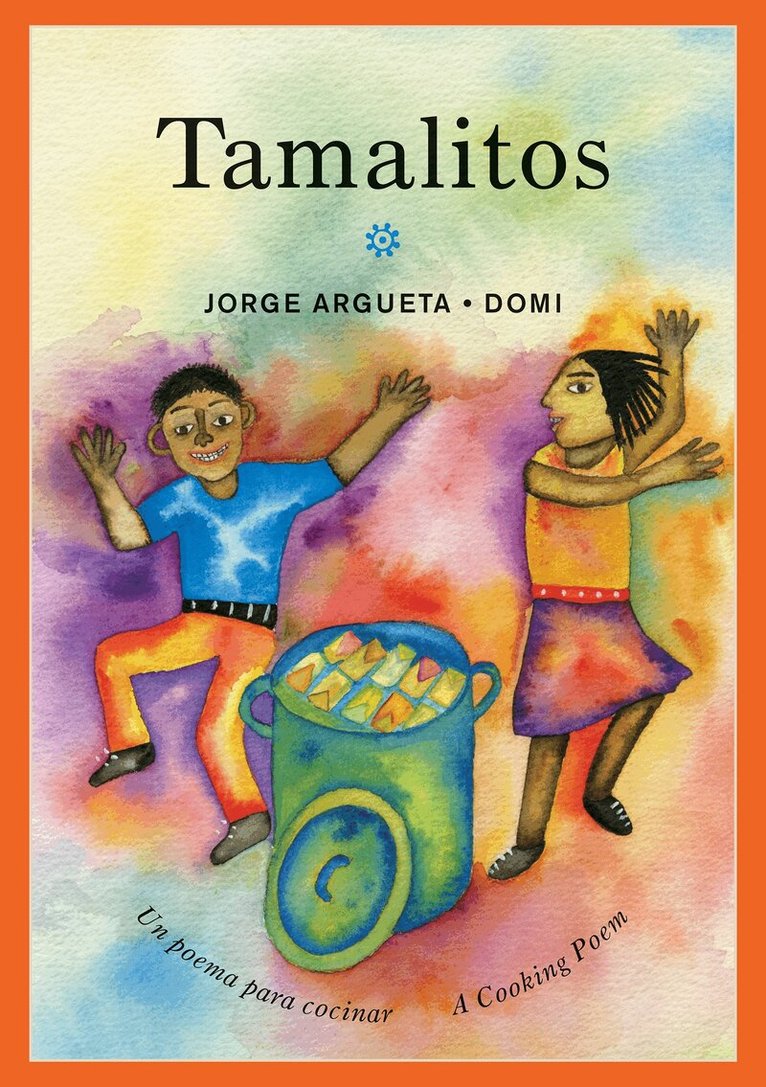
In this bilingual cooking poem for young children, Jorge Argueta encourages more creativity and fun in the kitchen as he describes how to make tamalitos from corn masa and cheese, wrapped in cornhusks.The book opens with an homage to corn — white, yellow, blue, purple, red and black. In Maya mythology the first men and women are even said to be made of corn. It has been an important food for people in Central America for centuries, and one of the most delicious things you can make using corn masa and husks are tamalitos, or little tamales.In simple poetic language, Argueta shows young cooks how to mix and knead the dough before dropping a spoonful into a cornhusk, wrapping it up and then steaming the little package. He once again makes cooking a full sensory experience, including beating on a pot like a drum, dancing the corn dance, delighting in the smell of corn masa … And at the end, he suggests inviting the whole family to come and enjoy the delicious tamalitos “made of corn with love.”Domi’s vivid paintings, featuring a sister and her little brother making tamalitos together, are a perfect accompaniment to the colorful text.Key Text Featuresprocedural textrecipeCorrelates to the Common Core State Standards in English Language Arts:CCSS.ELA-LITERACY.RL.K.7With prompting and support, describe the relationship between illustrations and the story in which they appear (e.g., what moment in a story an illustration depicts).CCSS.ELA-LITERACY.RL.3.7Explain how specific aspects of a text's illustrations contribute to what is conveyed by the words in a story (e.g., create mood, emphasize aspects of a character or setting)
170 kr
Tillfälligt slut
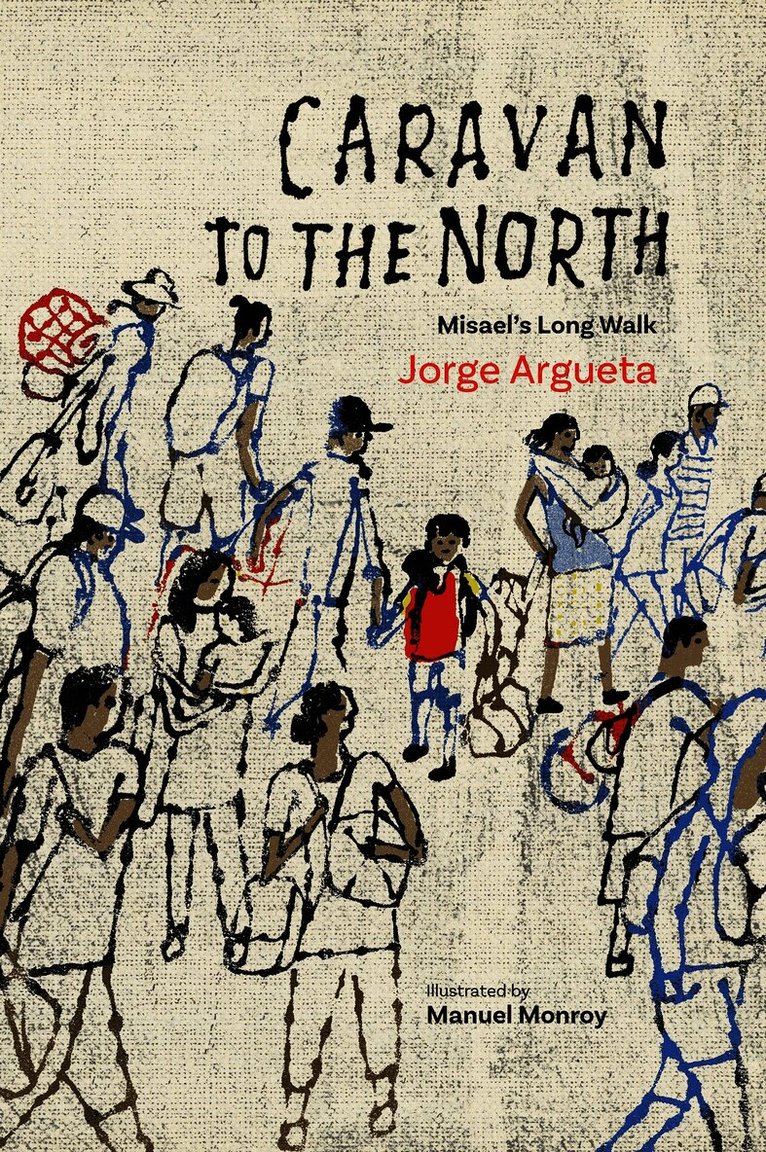
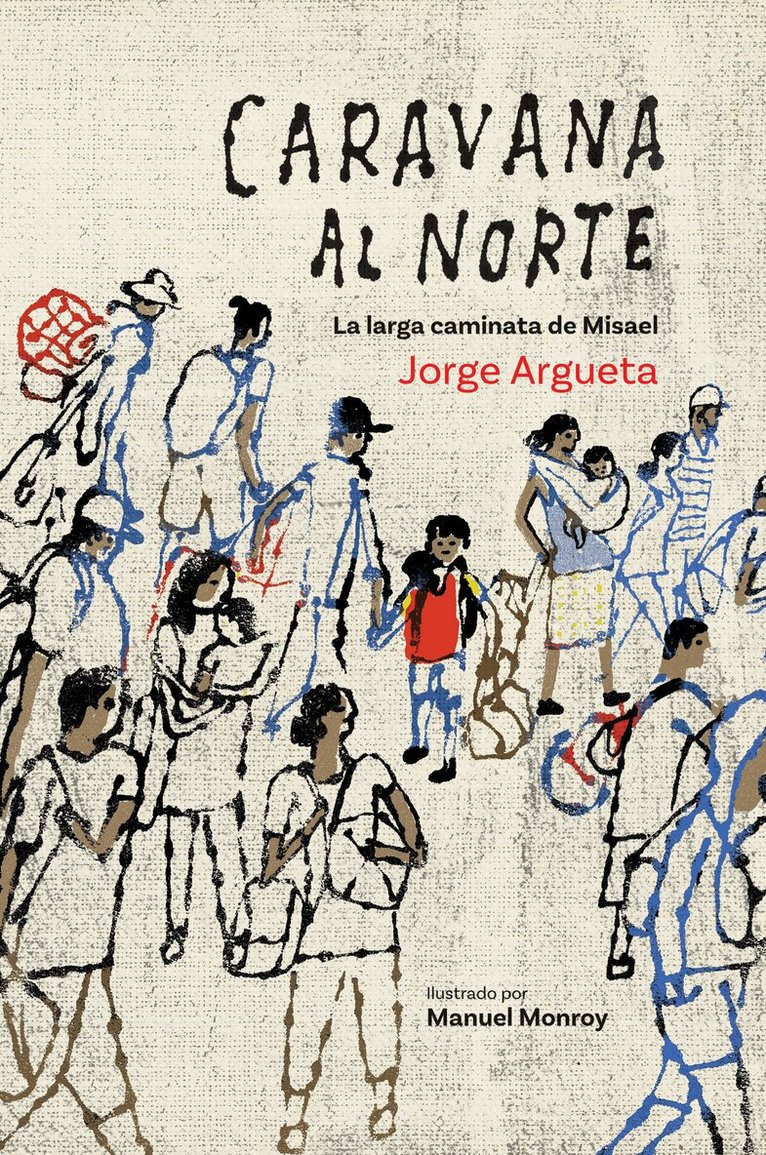
An urgent and eloquent account of a boy traveling in a caravan from his beloved homeland of El Salvador to the US border. This novel in verse is a powerful first-person account of Misael Martínez, a Salvadoran boy whose family joins the caravan heading north to the United States. We learn all the different reasons why people feel the need to leave — the hope that lies behind their decision, but also the terrible sadness of leaving home. We learn about how far and hard the trip is, but also about the kindness of those along the way.Finally, once the caravan arrives in Tijuana, Misael and those around him are relieved. They think they have arrived at the goal of the trip — to enter the United States. But then tear gas, hateful demonstrations, force and fear descend on these vulnerable people. The border is closed. The book ends with Misael dreaming of El Salvador.This beautiful and timely story is written in simple but poetic verse by Jorge Argueta, the award-winning author of Somos como las nubes / We Are Like the Clouds. Award-winning Mexican illustrator Manuel Monroy illuminates Misael’s journey. An author’s note is included, along with a map showing the caravan’s route.Key Text Featuresauthor’s notemapillustrationsCorrelates to the Common Core State Standards in English Language Arts:CCSS.ELA-LITERACY.RL.4.3Describe in depth a character, setting, or event in a story or drama, drawing on specific details in the text (e.g., a character's thoughts, words, or actions).
170 kr
Tillfälligt slut
Este hermoso y poético relato de un niño que viaja en una caravana desde El Salvador hacia la frontera de los Estados Unidos, ofrece una necesaria y elocuente visión que contrarresta las mentiras que se escuchan acerca de los inmigrantes centroamericanos cuya única opción es abandonar sus amadas tierras natales.Esta novela en verso es un poderoso relato en primera persona. Cuenta la historia de Misael Martínez, un niño salvadoreño cuya familia se une a la caravana que viaja al Norte, hacia los Estados Unidos. Nos muestra muchas de las razones que hacen que personas sientan la necesidad de irse, la esperanza que se esconde detrás de esta decisión, y la terrible tristeza de abandonar sus hogares. Es un aprendizaje sobre lo largo y arduo del viaje pero también sobre la bondad de aquellos que los ayudan a lo largo del camino. Cuando la caravana finalmente llega a Tijuana, Misael y los que lo acompañan se sienten aliviados. Piensan que han alcanzado la meta del viaje de entrar a los Estados Unidos. Pero enseguida el gas lacrimógeno, las protestas cargadas de odio, la fuerza bruta y el miedo caen sobre esta gente tan vulnerable. La frontera sigue cerrada. El libro termina con Misael soñando con El Salvador.Esta hermosa y relevante historia está escrita en el verso accesible y poético de Jorge Argueta, el galardonado autor de Somos como las nubes / We are Like the Clouds. El premiado ilustrador mexicano Manuel Monroy ilumina la travesía de Misael. El libro incluye una nota final del autor y un mapa que ilustra la ruta de la caravana. Key Text Featuresauthor’s notemapillustrations
147 kr
Skickas inom 5-8 vardagar
An urgent and eloquent account of a boy traveling in a caravan from his beloved homeland of El Salvador to the US border. This novel in verse is a powerful first-person account of Misael Martínez, a Salvadoran boy whose family joins the caravan heading north to the United States. We learn all the different reasons why people feel the need to leave — the hope that lies behind their decision, but also the terrible sadness of leaving home. We learn about how far and hard the trip is, but also about the kindness of those along the way.Finally, once the caravan arrives in Tijuana, Misael and those around him are relieved. They think they have arrived at the goal of the trip — to enter the United States. But then tear gas, hateful demonstrations, force and fear descend on these vulnerable people. The border is closed. The book ends with Misael dreaming of El Salvador.This beautiful and timely story is written in simple but poetic verse by Jorge Argueta, the award-winning author of Somos como las nubes / We Are Like the Clouds. Award-winning Mexican illustrator Manuel Monroy illuminates Misael’s journey. An author’s note is included, along with a map showing the caravan’s route.Key Text Featuresauthor’s notemapillustrationsCorrelates to the Common Core State Standards in English Language Arts:CCSS.ELA-LITERACY.RL.4.3Describe in depth a character, setting, or event in a story or drama, drawing on specific details in the text (e.g., a character's thoughts, words, or actions).
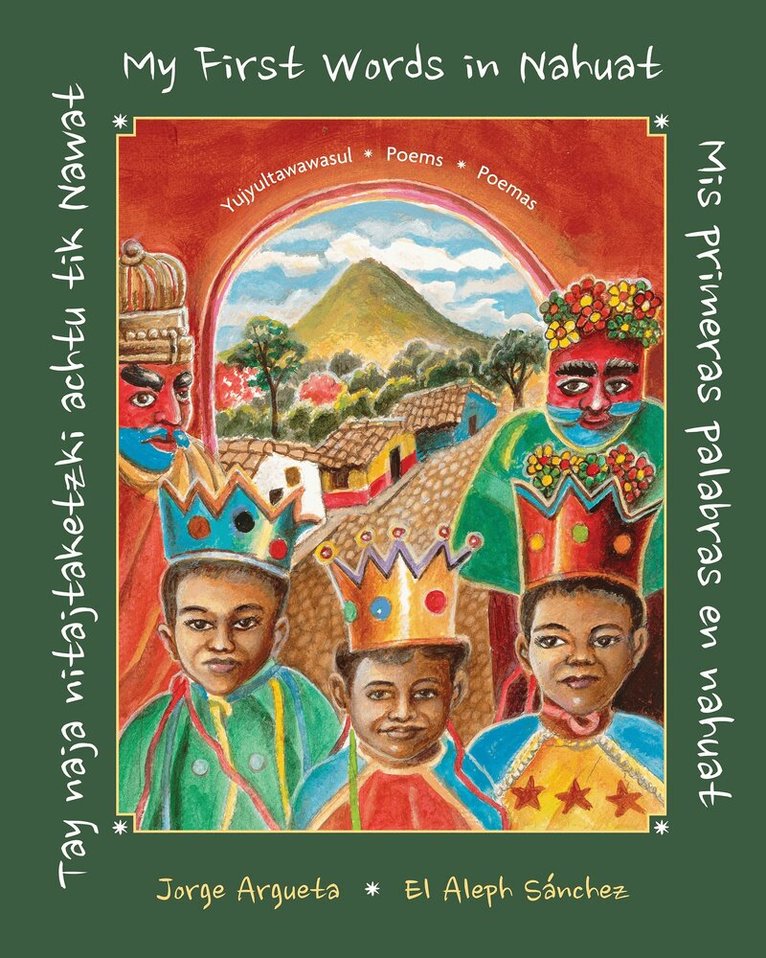
Tay naja nitajtaketzki achtu tik Nawat / Mis primeras palabras en nahuat / My First Words in Nahuat
Inbunden, Engelska, 2026, 9-12 år
297 kr
Skickas inom 3-6 vardagar
A collection of powerful poems, in Nahuat, Spanish and English, that celebrate Indigenous life and language despite efforts to eradicate them.These poems are a moving and eloquent description of how great poet Jorge Argueta came to know the almost extinct language of his ancestors. The poems tell stories of Jorge’s life growing up in the Salvadoran village of Witzapan, where his own grandmother taught him his first words in Nahuat. There are poems about the clay used to construct the village, the trees that grow in the countryside, the corn used to make tortillas and pupusas, and the Tepechapa River. Beautiful illustrations painted by Salvadoran artist El Aleph accompany each poem.In the early 1930s, the government of El Salvador massacred many Nahuat people and banned them from speaking the language, attempting to eradicate their Indigenous identity. Despite the ban, village elders continued to keep the language and culture alive. Today there are many efforts to reintroduce the Nahuat language in El Salvador. Nahuat readers can share in Jorge’s childhood world of Witzapan. So can we, whether in the original or through the Spanish and English translations of his poems.Key Text Featuresauthor’s notepoemsillustrationsglossarytable of contentstranslationsCorrelates to the Common Core States Standards in English Language Arts:CCSS.ELA-LITERACY.RL.4.3Describe in depth a character, setting, or event in a story or drama, drawing on specific details in the text (e.g., a character's thoughts, words, or actions).CCSS.ELA-LITERACY.RL.5.4Determine the meaning of words and phrases as they are used in a text, including figurative language such as metaphors and similes.CCSS.ELA-LITERACY.RL.5.7Analyze how visual and multimedia elements contribute to the meaning, tone, or beauty of a text (e.g., graphic novel, multimedia presentation of fiction, folktale, myth, poem).
150 kr
Skickas
An Américas Award Commended TitleRaw, honest and powerful, these moving bilingual poems by noted Salvadoran poet Jorge Argueta explore a young Indigenous boy's connection to Mother Earth and how he is healed from the terrible wounds of racism he has endured. Tetl has learned from his grandmother about the spirituality of his ancestors, about how they viewed the earth as alive with sacred meaning. This helps him move from doubt and fear, created by the taunts of other children, to self-acceptance and a discovery of his love for nature.Mountains, wind, corn and stones all speak to Tetl, almost seeming to vibrate with life. He feels deep roots in them and, through them, he learns to speak and sing. They reveal his Nahuatl self and he realizes that he is special, beautiful and sacred.These gripping poems have something to teach us all, perhaps especially those who have been either intentionally or casually cruel or racist, as well as those who have been the victims of racism.