Jorge Marco - Böcker
Visar alla böcker från författaren Jorge Marco. Handla med fri frakt och snabb leverans.
4 produkter
4 produkter
1 678 kr
Skickas inom 7-10 vardagar
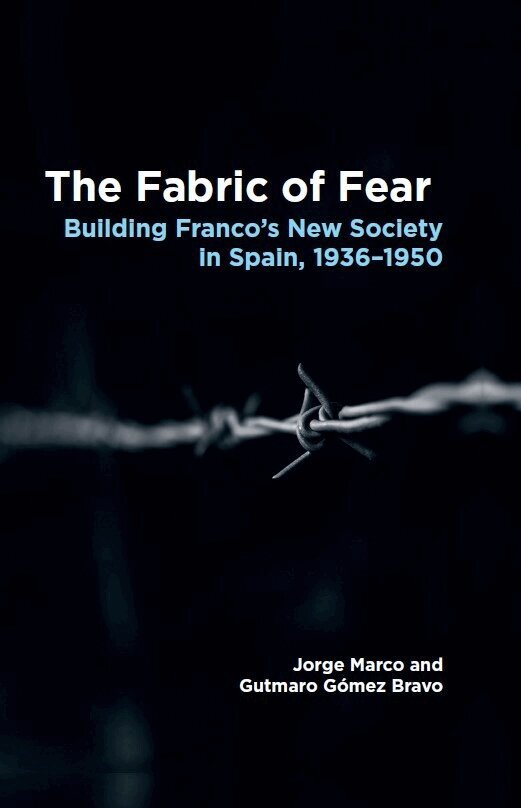
The Fabric of Fear deals comprehensively with the process of Francoist state- and nation-building in Spain. Franco’s chosen tools were mass repression and ‘cleansing’, undertaken both during the battlefield war of 1936–39 and in the decade afterwards, when ‘war’ against defeated constituencies continued by institutional means. Mobilising its grass roots supporters made them complicit in the state's project. The complex process of ‘cleansing’ and ‘conversion’ of the political ‘enemy’ required classifying soldiers from the defeated Republican army and Republican-zone civilians into ‘pro-Franco’, ‘indifferent’, or ‘internal enemy’. Many of the latter were either extrajudicially murdered or executed after cursory military trials. Classification used ultra-traditionalist Catholic means, including segregation and forced ‘conversion’. The new society programme implemented between 1936 and 1950 was applied nation-wide to political activists, members of Republican parties, labour organisations, and (poor) urban and (landless) rural social constituencies. The Francoist project adapted to the changing national and international contexts across the period 1936–1950: from a civil war; through the period of relations with the Axis powers at the same time as receiving Nazi assistance in building up Franco’s police force as an agent of repression; to the transformation of Franco into an anti-Communist client of the Cold War West. The Fabric of Fear addresses the social effects of the ‘cleansing’ process on both ‘victors’ and ‘vanquished’. On the one hand, Franco’s violent policy forged a new society and tightened the links between the regime and its social base. On the other hand, the violence and coercion exerted on the ‘vanquished’ resulted in their civil and legal death: they were expelled from Franco’s national community and deprived of all rights in what became de facto an apartheid society in Spain.
1 012 kr
Skickas inom 5-8 vardagar
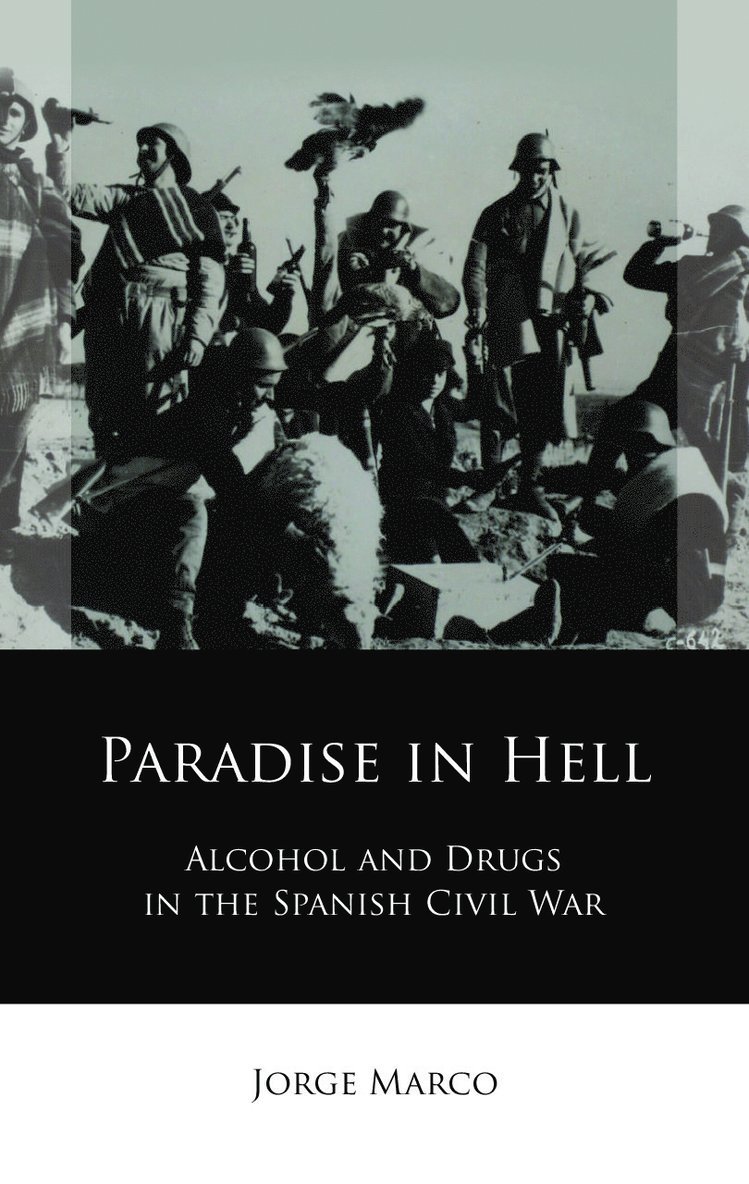
Paradise in Hell studies the role played by alcohol, morphine, cocaine, cannabis and amphetamines in the Spanish Civil War. The book analyses the moral discourses that were produced around these substances, the policies implemented by civil and military authorities, the consumption by combatants and civilians, and the role they played in the war effort. From these four perspectives, Paradises in Hell explores the everyday experiences of soldiers and civilians, the physical, psychological and emotional effects of war, the rituals of camaraderie, and the impact that the absence of these substances had on the morale of soldiers and civilians. The book also gives special attention to the role these substances played in the development of respectable, tough and cocky masculinities, in the construction of a sense of national community and everyday nationalism, and in the dehumanisation of the enemy in a way that legitimised violence.
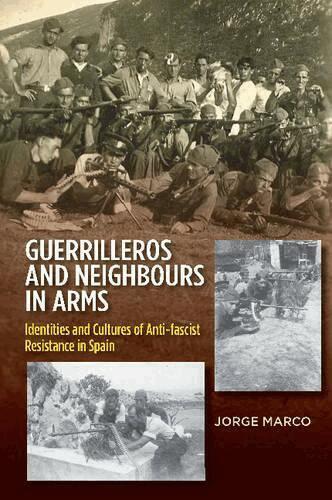
Guerrilleros and Neighbours in Arms
Identities and Cultures of Anti-Fascist Resistance in Spain
Inbunden, Engelska, 2016
1 761 kr
Skickas inom 7-10 vardagar
The Spanish Civil War, fought between 1936 and 1939, was the first battle against fascism in Europe. Five months after the victory of dictator Francisco Franco in Spain the conflict moved to Europe with the outbreak of the Second World War. Fascism and anti-fascism again faced each other on the battlefield. Amid the heat of the Nazi invasions in Europe, anti-fascist resistance groups formed by ordinary citizens emerged in virtually all European countries. Although the Franco dictatorship was not directly involved in the world war, in Spain an anti-Franco resistance movement was organized in 1939 and lasted until 1952. Although the Spanish resistance constituted the first and last anti-fascist resistance movement in Europe, the Spanish case has been consistently overlooked by international studies. This book inserts the Spanish anti-Franco resistance into the European context, proposing a new narrative of anti-fascist resistances in Europe. At the same time, the book offers a new interpretation of guerrilla phenomena with a strongly peasant character, as was the case of the resistance in Spain. The author underlines the importance of primary groups (kinship, neighbourhood, friendship) and secondary groups (camaraderie and political loyalties) in the mobilisation and organisation of armed groups. For this study, Jorge Marco establishes twelve variables that permit him to distinguish between 'neighbours in arms' and 'modern guerrilla'. The studied combinations of groups and types demonstrates the plurality of the identities and cultures of the anti-fascist resistance in Spain. Published in association with the Canada Blanch Centre for Contemporary Spanish Studies.
Guerrilleros and Neighbours in Arms
Identities & Cultures of Anti-fascist Resistance in Spain
Häftad, Engelska, 2017
555 kr
Skickas inom 7-10 vardagar
The Spanish Civil War, fought between 1936 and 1939, was the first battle against fascism in Europe. Five months after the victory of dictator Francisco Franco in Spain the conflict moved to Europe with the outbreak of the Second World War. Fascism and anti-fascism again faced each other on the battlefield. Amid the heat of the Nazi invasions in Europe, anti-fascist resistance groups formed by ordinary citizens emerged in virtually all European countries. Although the Franco dictatorship was not directly involved in the world war, in Spain an anti-Franco resistance movement was organized in 1939 and lasted until 1952. Although the Spanish resistance constituted the first and last anti-fascist resistance movement in Europe, the Spanish case has been consistently overlooked by international studies. This book inserts the Spanish anti-Franco resistance into the European context, proposing a new narrative of anti-fascist resistances in Europe. At the same time, the book offers a new interpretation of guerrilla phenomena with a strongly peasant character, as was the case of the resistance in Spain. The author underlines the importance of primary groups (kinship, neighbourhood, friendship) and secondary groups (camaraderie and political loyalties) in the mobilisation and organisation of armed groups. For this study, Jorge Marco establishes twelve variables that permit him to distinguish between 'neighbours in arms' and 'modern guerrilla'. The studied combinations of groups and types demonstrates the plurality of the identities and cultures of the anti-fascist resistance in Spain. Published in association with the Canada Blanch Centre for Contemporary Spanish Studies.