José R. Álvarez - Böcker
Visar alla böcker från författaren José R. Álvarez. Handla med fri frakt och snabb leverans.
6 produkter
6 produkter
552 kr
Skickas inom 10-15 vardagar
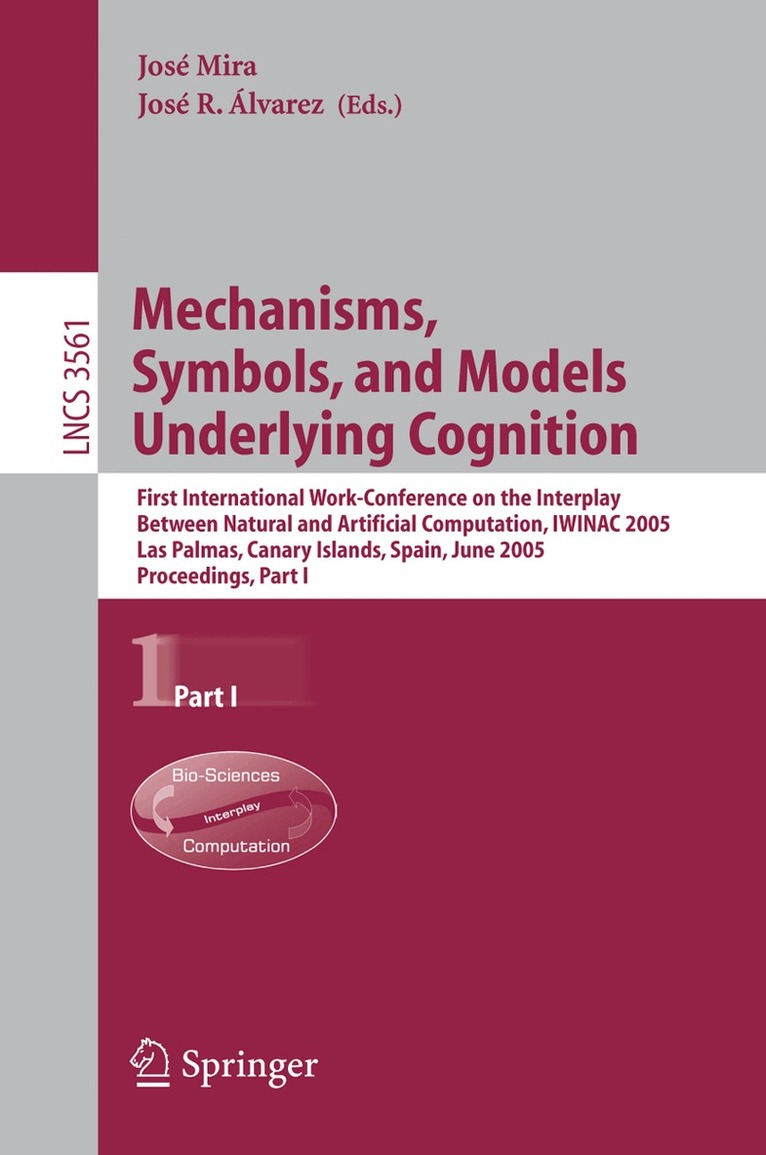
The computational paradigm considered here is a conceptual, theoretical and formal framework situated above machines and living creatures (two instant- tions), su?ciently solid, and still non-exclusive, that allows us: 1. tohelpneuroscientiststoformulateintentions,questions,experiments,me- ods and explanation mechanisms assuming that neural circuits are the p- chological support of calculus; 2. to help scientists and engineers from the ?elds of arti?cial intelligence (AI) and knowledge engineering (KE) to model, formalize and program the c- putable part of human knowledge; 3. to establish an interaction framework between natural system computation (NSC) and arti?cial system computation (ASC) in both directions, from ASC to NSC (in computational neuroscience), and from NSC to ASC (in bioinspired computation). With these global purposes, we organized IWINAC 2005, the 1st International Work Conference on the Interplay Between Natural and Arti?cial Computation, whichtookplaceinLasPalmasdeGranCanaria,CanaryIslands(Spain),during June 15-18, 2005, trying to contribute to both directions of the interplay: I: From Arti?cial to Natural Computation. What can computation, arti?cial intelligence (AI) and knowledge engineering (KE) contribute to the und- standing of the nervous system, cognitive processes and social behavior?This is the scope of computational neuroscience and cognition, which uses the computational paradigm to model and improve our understanding of natural science.
1 096 kr
Skickas inom 10-15 vardagar
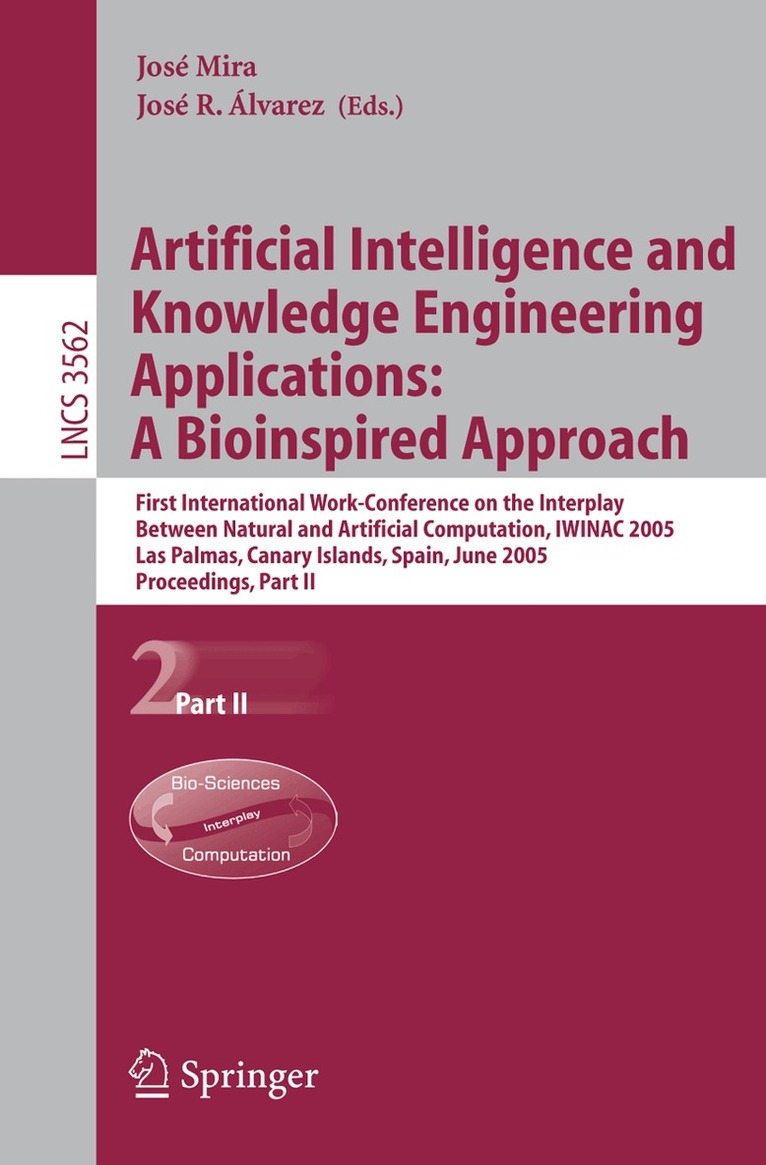
The computational paradigm considered here is a conceptual, theoretical and formal framework situated above machines and living creatures (two instant- tions), su?ciently solid, and still non-exclusive, that allows us: 1. tohelpneuroscientiststoformulateintentions,questions,experiments,me- ods and explanation mechanisms assuming that neural circuits are the p- chological support of calculus; 2. to help scientists and engineers from the ?elds of arti?cial intelligence (AI) and knowledge engineering (KE) to model, formalize and program the c- putable part of human knowledge; 3. to establish an interaction framework between natural system computation (NSC) and arti?cial system computation (ASC) in both directions, from ASC to NSC (in computational neuroscience), and from NSC to ASC (in bioinspired computation). With these global purposes, we organized IWINAC 2005, the 1st International Work Conference on the Interplay Between Natural and Arti?cial Computation, whichtookplaceinLasPalmasdeGranCanaria,CanaryIslands(Spain),during June 15-18, 2005, trying to contribute to both directions of the interplay: I: From Arti?cial to Natural Computation. What can computation, arti?cial intelligence (AI) and knowledge engineering (KE) contribute to the und- standing of the nervous system, cognitive processes and social behavior?This is the scope of computational neuroscience and cognition, which uses the computational paradigm to model and improve our understanding of natural science.
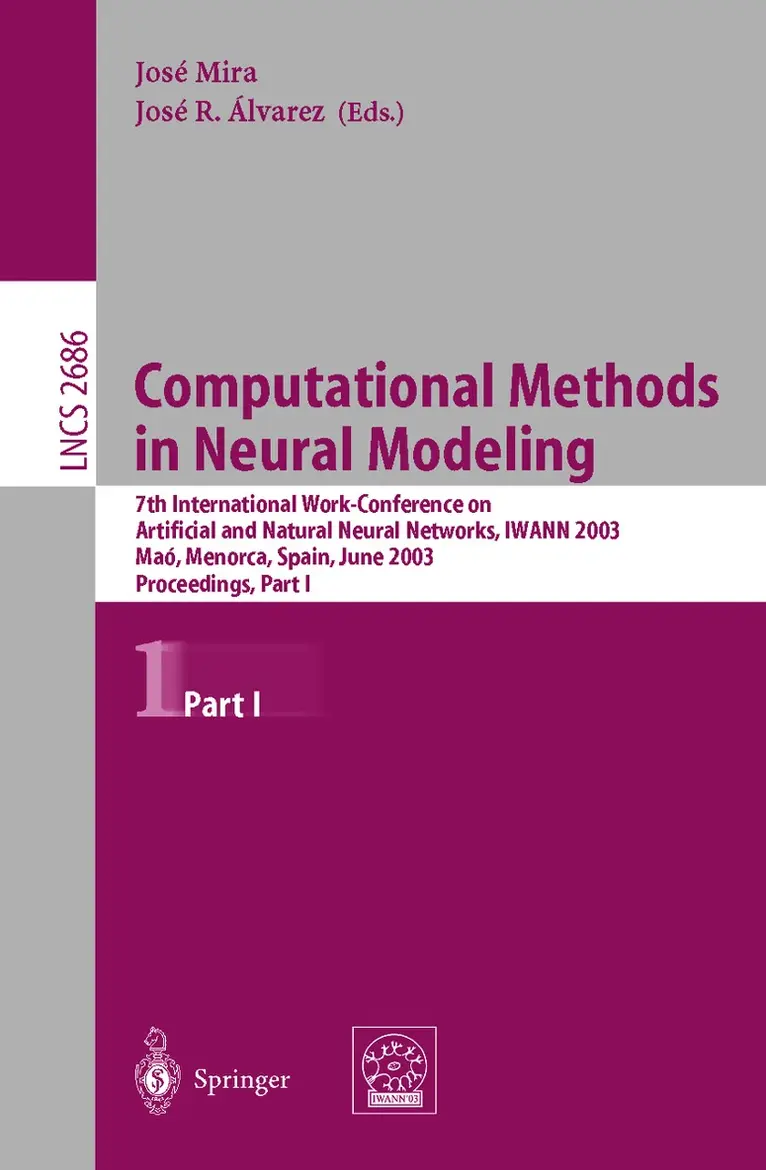
Computational Methods in Neural Modeling
7th International Work-Conference on Artificial and Natural Neural Networks, IWANN 2003, Maó, Menorca, Spain, June 3-6. Proceedings, Part I
Häftad, Engelska, 2003
1 096 kr
Skickas inom 10-15 vardagar
The global purpose of IWANN conferences has been to provide a broad and - terdisciplinary forum for the interplay between neuroscience and computation. Our dream has been, and still is: (1) ?nd ways to understand the physiol- ical, symbolic and cognitive nature of the nervous system (NS) with the help of computational and engineering tools; and (2) ?nd rich and insightful sources of inspiration in biology, to develop new materials, mechanisms and probl- solving methods (PSM) of value in engineering and computation. As all of us knowwell, this dreamstarted with the AncientGreeks, reappearedin the fo- dational stage of neurocybernetics and bionics, and is now broadly accepted in the scienti?c community under di?erent labels such as computational neu- science(CN) andarti?cialneuralnets (ANN), orgenetic algorithmsandhybrid neuro-fuzzy systems. We have also to recognize that there is a considerable lack of credibility associated with CN and ANN among some researchers, both from biology and from the engineering and computation area.Potential causes of this scepticism could be the lack of methodology, formal tools, and real-world applications, in the engineering area, and the lack also of formal tools for cognitive process modeling. There is also the possibility of the computational paradigm being inappropriate to explain cognition, because of the "representational" character ofanycomputationalmodel. Some"moresituated"approachesarelookingback to the "neurophysiological epistemology" of the 1960's (mind in a body) to searchdirectlyforthemechanismsthatcouldembodythecognitiveprocess,and this means some fresh air for our old dream of connectionism.
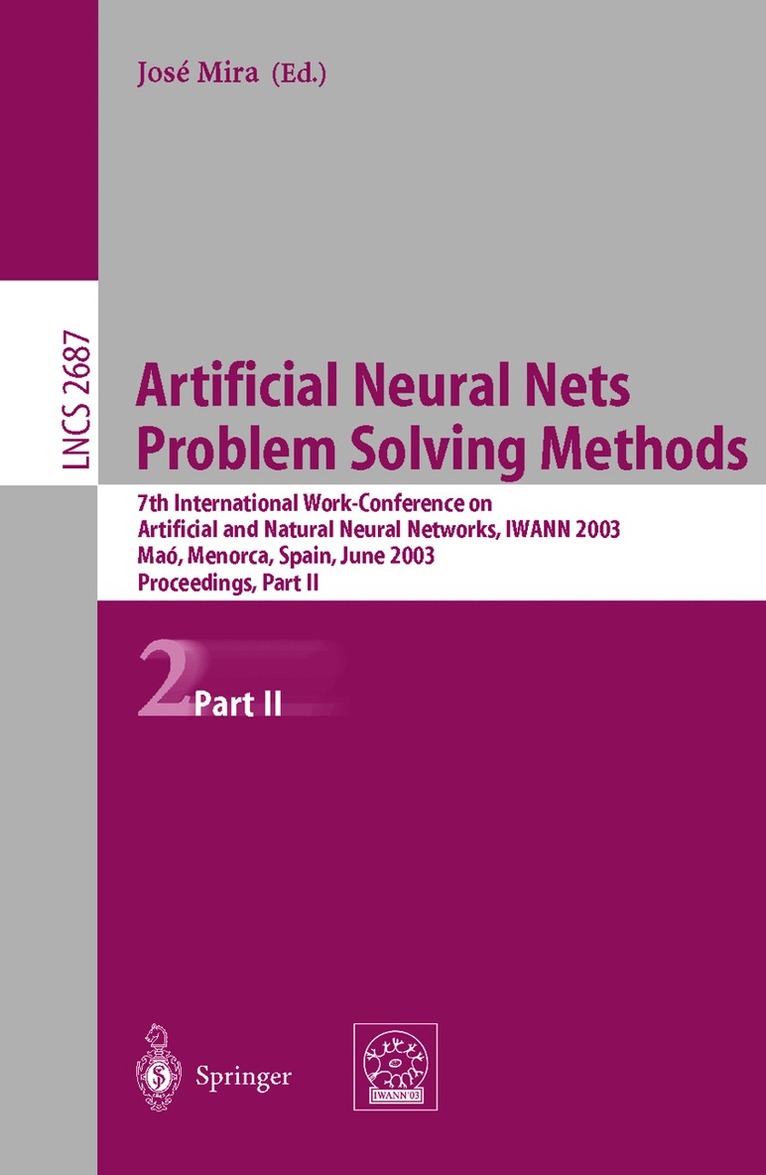
Artificial Neural Nets. Problem Solving Methods
7th International Work-Conference on Artificial and Natural Neural Networks, IWANN 2003, Maó, Menorca, Spain, June 3-6. Proceedings, Part II
Häftad, Engelska, 2003
1 096 kr
Skickas inom 10-15 vardagar
The global purpose of IWANN conferences has been to provide a broad and - terdisciplinary forum for the interplay between neuroscience and computation. Our dream has been, and still is: (1) ?nd ways to understand the physiol- ical, symbolic and cognitive nature of the nervous system (NS) with the help of computational and engineering tools; and (2) ?nd rich and insightful sources of inspiration in biology, to develop new materials, mechanisms and probl- solving methods (PSM) of value in engineering and computation. As all of us knowwell, this dreamstarted with the AncientGreeks, reappearedin the fo- dational stage of neurocybernetics and bionics, and is now broadly accepted in the scienti?c community under di?erent labels such as computational neu- science(CN) andarti?cialneuralnets (ANN), orgenetic algorithmsandhybrid neuro-fuzzy systems. We have also to recognize that there is a considerable lack of credibility associated with CN and ANN among some researchers, both from biology and from the engineering and computation area.Potential causes of this scepticism could be the lack of methodology, formal tools, and real-world applications, in the engineering area, and the lack also of formal tools for cognitive process modeling. There is also the possibility of the computational paradigm being inappropriate to explain cognition, because of the "representational" character ofanycomputationalmodel. Some"moresituated"approachesarelookingback to the "neurophysiological epistemology" of the 1960's (mind in a body) to searchdirectlyforthemechanismsthatcouldembodythecognitiveprocess,and this means some fresh air for our old dream of connectionism.
1 096 kr
Skickas inom 10-15 vardagar
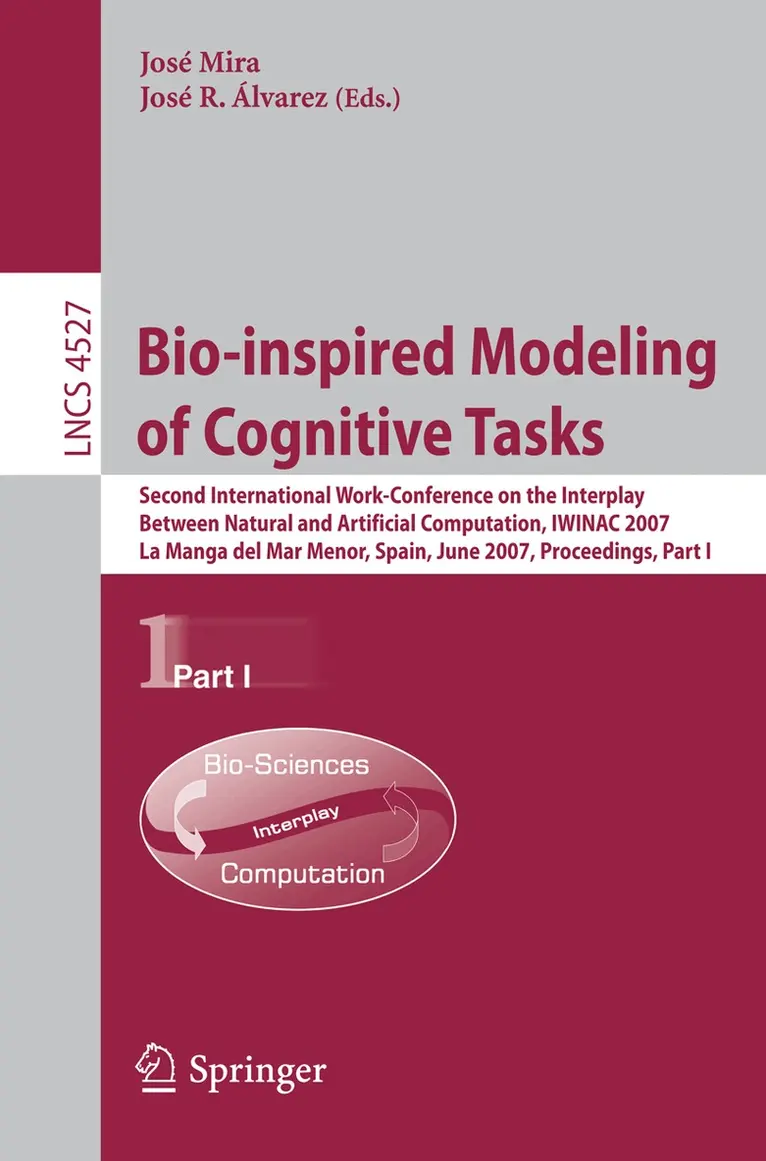
The first of a two-volume set, this book constitutes the refereed proceedings of the Second International Work-Conference on the Interplay between Natural and Artificial Computation, IWINAC 2007, held in La Manga del Mar Menor, Spain in June 2007. It includes all the contributions mainly related with theoretical, conceptual and methodological aspects linking AI and knowledge engineering with neurophysiology, clinics and cognition.
1 096 kr
Skickas inom 10-15 vardagar
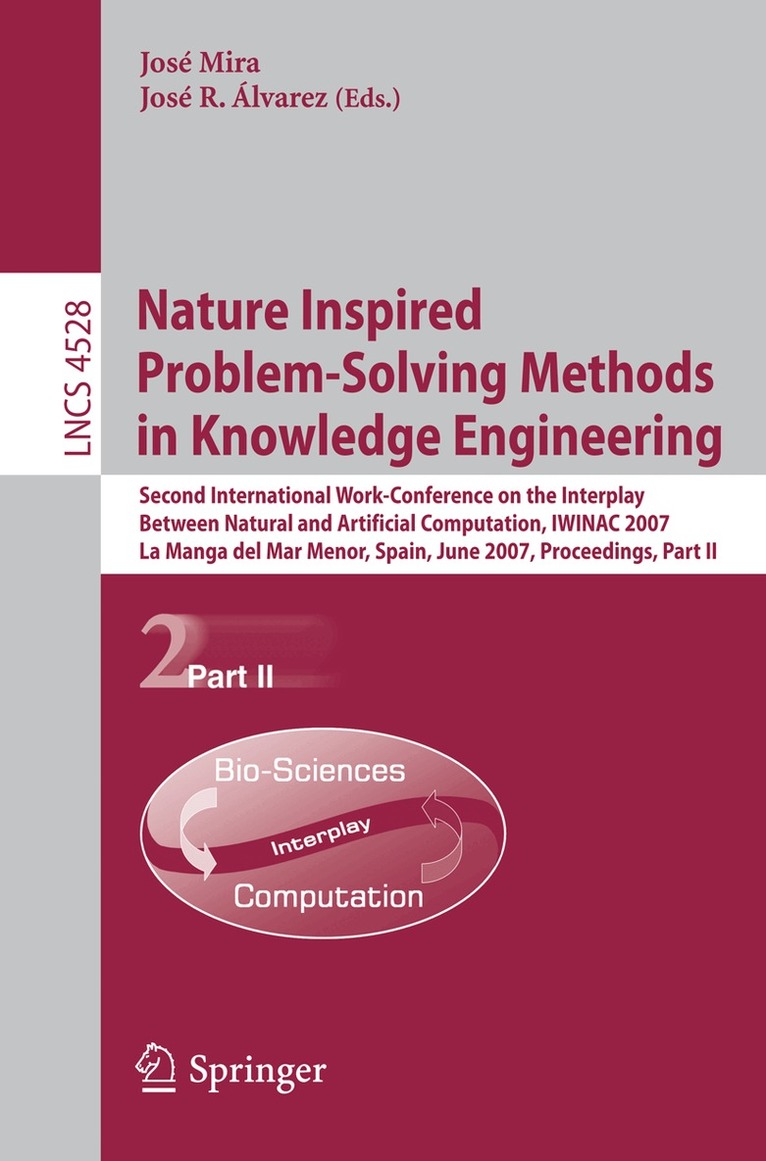
The second of a two-volume set, this book constitutes the refereed proceedings of the Second International Work-Conference on the Interplay between Natural and Artificial Computation, IWINAC 2007, held in La Manga del Mar Menor, Spain in June 2007. It contains all the contributions connected with biologically inspired methods and techniques for solving AI and knowledge engineering problems in different application domains.