Josefina Ludmer - Böcker
Visar alla böcker från författaren Josefina Ludmer. Handla med fri frakt och snabb leverans.
3 produkter
3 produkter
213 kr
Skickas inom 5-8 vardagar
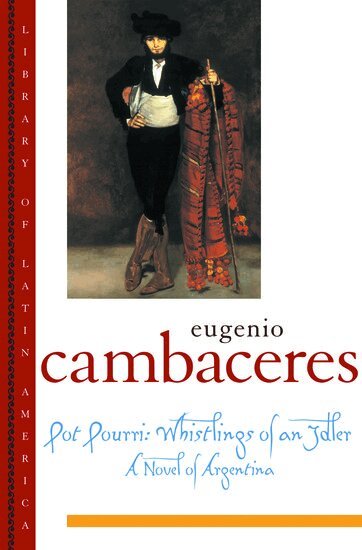
Eugenio Cambaceres was the first to introduce the naturalist manner of Émile Zola to Argentinean literature in the late nineteenth century. The work of Cambaceres, a precursor to the contemporary Argentinean novel, is crucial for an understanding of the period of consolidation of Argentina, the formation of a national identity, and especially for the role of the intellectual during that transition. This gereation theoretically and methodically built up a literature with features of its own, stressing the cultural primacy of Buenos Aires par excellence, to enhance the evolution of the cosmopolitan metropolis.A rich dandy narrates Pot Pourri, relating a story of marriage and adultery during the carnival celebrations. The volume editor, Josefina Ludmer, describes the dandy as an ambiguous protagonist who acts both as a reflection and a critic of the liberal state. As a new addition to the already-acclaimed Library of Latin America, Pot Pourri should find its rightful place with the ever-growing audience for Latin American literature.
621 kr
Skickas inom 3-6 vardagar
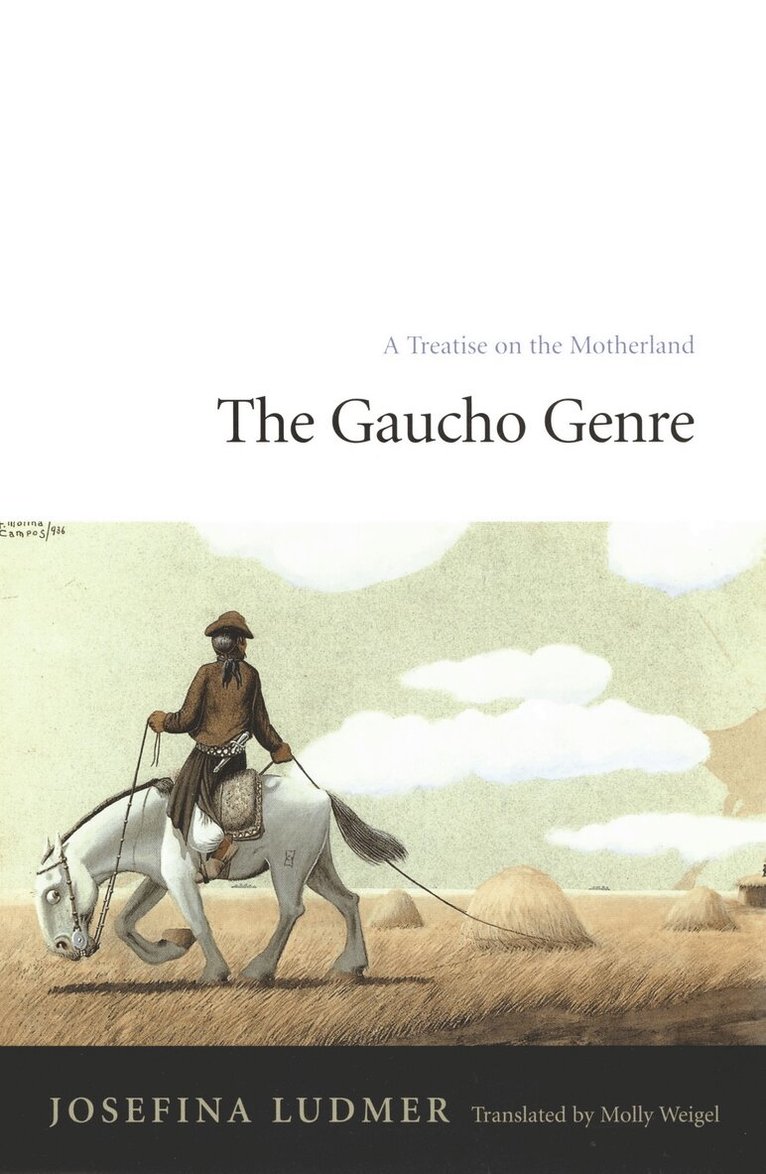
Hailed when first published in Spanish in 1988 as one of the best contemporary examples of Latin American critical thought, Josefina Ludmer’s El gÉnero gauchesco describes the emergence of gaucho poetry-which uses the voice of the cowboy of the Argentine pampas for political purposes-as an urgent encounter of popular and elite tradition, of subaltern and hegemonic discourses. Molly Weigel’s translation captures the original's daringly innovative literary flavor, making available for the first time in English a book that opened a new arena in Latin American cultural history.By examining the formation of a genre whose origins predated the consolidation of Argentina as a nation-state but that gained significance only after the country's independence, Ludmer elucidates the relationship of literature to the state, as well as the complex positionings of gender within the struggle for independence. She develops a sociological investigation of “outsider” culture through close textual analyses of works by Hidalgo, Ascasubi, Del Campo, Hernandez, Sarmiento, and Borges. This inquiry culminates in the assertion that language, marked as it is by the collisions of high and low culture, constitutes the central issue of Latin American modernization and modernism. Extensive annotation renders this edition of Ludmer's seminal study easily accessible for a North American audience.The Gaucho Genre’s far-reaching implications will make it valuable reading for a varied audience. While teachers and students of Latin American literature and criticism will find it an important resource, it will also interest those concerned with the processes of nation-building or in the complex intersections of dominant and marginal voices.
803 kr
Skickas inom 7-10 vardagar
An intellectual tour de force from one of today’s leading critics of Latin American literature and culture, The Corpus Delicti (The Body of Crime) is a manual of crime, a compendium of crime tales, and an extended meditation on the central role of crime in literature, in life, and in the life of the nation. Drawing her examples from canonical texts, popular novels, newspaper serials, and more, Josefina Ludmer captures the wide range of Argentine crime stories and detective fiction from the late nineteenth and early twentieth centuries. She offers more than a mere genre study, examining the relationship of crime and punishment to the formation of law, the body, and the modern state, exposing the ways in which literature—both high art and mass culture—can help construct, not just represent, social reality. Covering a dazzling array of primary sources, social history, and cultural theory, this provocative work is also a structural masterpiece, challenging readers as it charts new roles for text and notes. In this redefined dialogue, the notes variously offer alternate views, additional insights, and, often, parallel commentaries. Glen Close’s stylish translation captures the energy of Ludmer’s prose—simultaneously subtle and daring—for English-language readers.