Joseph Adu-Gyamfi - Böcker
Visar alla böcker från författaren Joseph Adu-Gyamfi. Handla med fri frakt och snabb leverans.
4 produkter
4 produkter
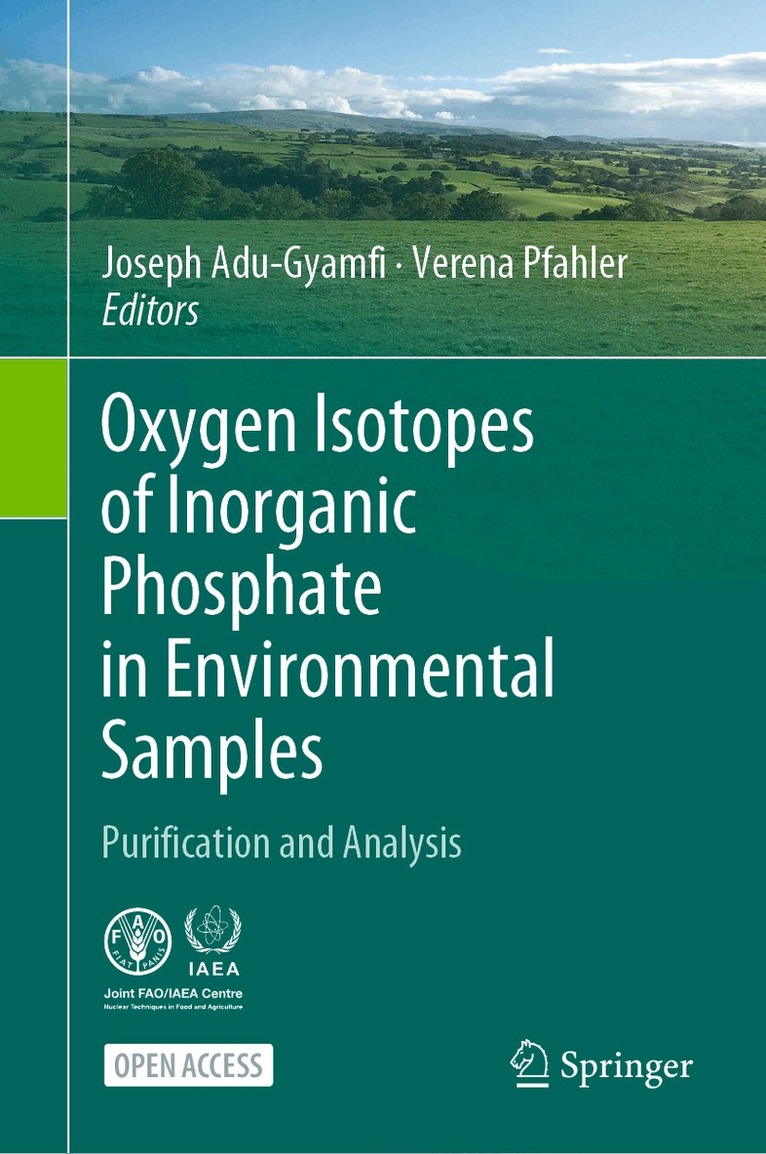
Oxygen Isotopes of Inorganic Phosphate in Environmental Samples
Purification and Analysis
Inbunden, Engelska, 2022
536 kr
Skickas inom 10-15 vardagar
Chapter 1 outlines the background and examples of d18Op studies in sediments, soils, fresh water, mineral fertilizers, and plants. Chapter 5 discusses planning and designing of a study using d18Op, external quality assurance with an example of an inter-laboratory study.
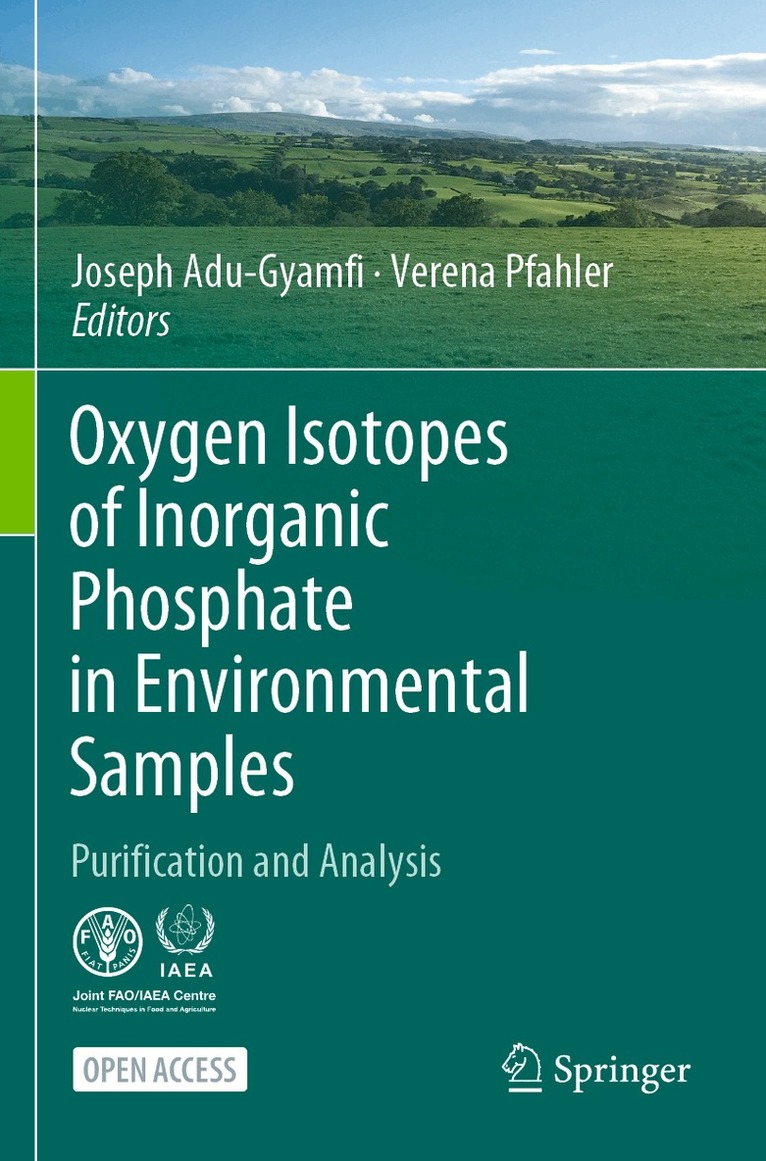
Oxygen Isotopes of Inorganic Phosphate in Environmental Samples
Purification and Analysis
Häftad, Engelska, 2022
430 kr
Skickas inom 10-15 vardagar
Chapter 1 outlines the background and examples of d18Op studies in sediments, soils, fresh water, mineral fertilizers, and plants. Chapter 5 discusses planning and designing of a study using d18Op, external quality assurance with an example of an inter-laboratory study.
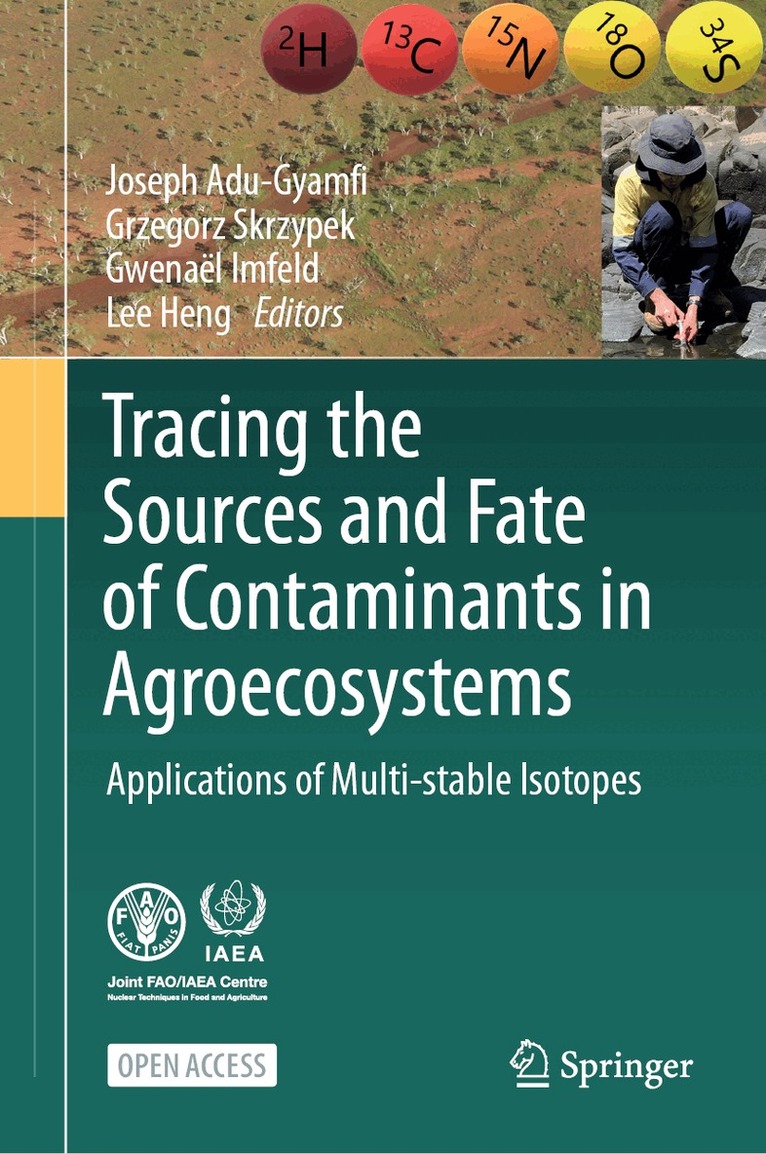
Tracing the Sources and Fate of Contaminants in Agroecosystems
Applications of Multi-stable Isotopes
Inbunden, Engelska, 2024
536 kr
Skickas inom 10-15 vardagar
The objective of this open access book is to present protocols, methodologies, and standard operating procedures (SOPs) used for the identification of sources, transport, and fate of agro-contaminants and illustrate them with several case studies of successful applications. The Soil and Water Management & Crop Nutrition (SWMCN) Subprogramme of the Joint Food and Agriculture Organization (FAO)/International Atomic Energy Agency (IAEA) Centre of Nuclear Techniques in Food and Agriculture, through a Coordinated Research Project (CRP) in partnership with national and international research institutes, developed and evaluated a set of analytical techniques (the toolbox). The toolbox integrates multiple isotope tracers that provide information on the origins and pathways of multiple pollutants through agro-ecosystems, thereby providing more accurate guidance on mitigations. However, land management strategies to address and control the transport of pollutants from soil to water bodies remain the shared responsibility of farm and aquaculture operators, agro-chemical manufacturers, and policymakers in food and agriculture as well as the mining sectors. This book is structured into eight chapters covering (i) an overview of the book’s content, (ii) guidelines for designing water sampling programmes, (iii) the use of mixing models applicable to tracers for water pollution studies, (iv) compound-specific isotope analyses to investigate pesticide degradation in agricultural catchments, (v) the use of stable oxygen isotope composition of phosphate to investigate phosphorous in soil-plant continuum, (vi) the use of stable sulphur isotopes to disentangle agro-pollutants from other contaminants, (vii) nuclear tools used in sediment source apportionment, and (viii) the conclusions and perspectives forward. The book offers up-to-date information, and we hope it is a great source of information for students, researchers, and policymakers. The SWMCN subprogramme thanks all the contributors involved in the preparation of this publication.
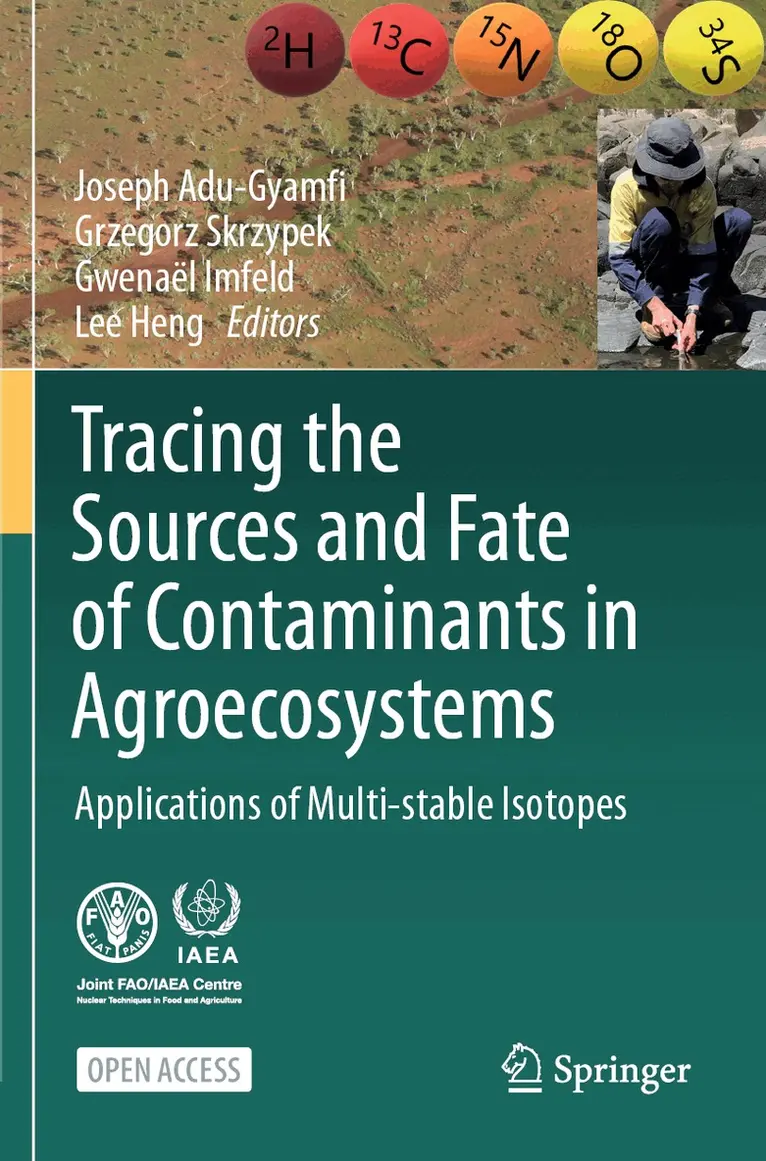
Tracing the Sources and Fate of Contaminants in Agroecosystems
Applications of Multi-stable Isotopes
Häftad, Engelska, 2025
430 kr
Skickas inom 10-15 vardagar
The objective of this open access book is to present protocols, methodologies, and standard operating procedures (SOPs) used for the identification of sources, transport, and fate of agro-contaminants and illustrate them with several case studies of successful applications. The Soil and Water Management & Crop Nutrition (SWMCN) Subprogramme of the Joint Food and Agriculture Organization (FAO)/International Atomic Energy Agency (IAEA) Centre of Nuclear Techniques in Food and Agriculture, through a Coordinated Research Project (CRP) in partnership with national and international research institutes, developed and evaluated a set of analytical techniques (the toolbox). The toolbox integrates multiple isotope tracers that provide information on the origins and pathways of multiple pollutants through agro-ecosystems, thereby providing more accurate guidance on mitigations. However, land management strategies to address and control the transport of pollutants from soil to water bodies remain the shared responsibility of farm and aquaculture operators, agro-chemical manufacturers, and policymakers in food and agriculture as well as the mining sectors. This book is structured into eight chapters covering (i) an overview of the book’s content, (ii) guidelines for designing water sampling programmes, (iii) the use of mixing models applicable to tracers for water pollution studies, (iv) compound-specific isotope analyses to investigate pesticide degradation in agricultural catchments, (v) the use of stable oxygen isotope composition of phosphate to investigate phosphorous in soil-plant continuum, (vi) the use of stable sulphur isotopes to disentangle agro-pollutants from other contaminants, (vii) nuclear tools used in sediment source apportionment, and (viii) the conclusions and perspectives forward. The book offers up-to-date information, and we hope it is a great source of information for students, researchers, and policymakers. The SWMCN subprogramme thanks all the contributors involved in the preparation of this publication.