Joseph Fletcher - Böcker
Visar alla böcker från författaren Joseph Fletcher. Handla med fri frakt och snabb leverans.
13 produkter
13 produkter
276 kr
Skickas inom 5-8 vardagar
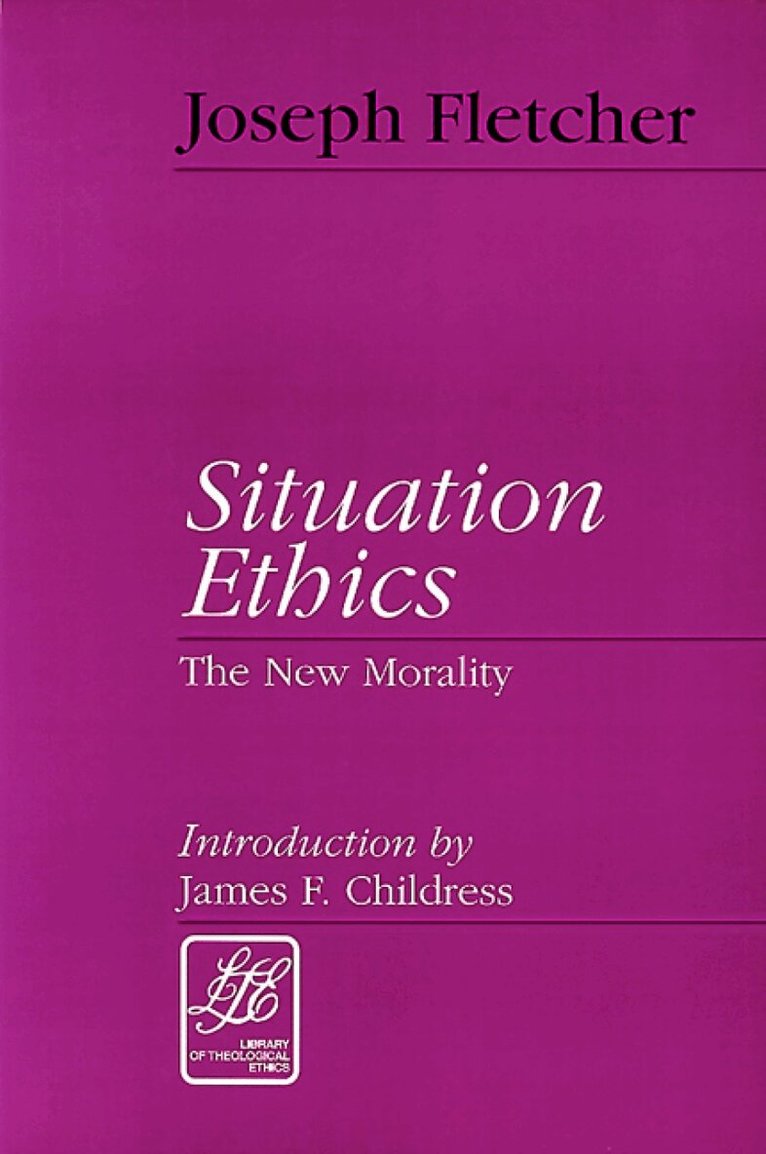
It is possible, though not easy, to forgive Professor Fletcher for writing his book, for he is a generous and lovable man. It is harder to forgive the SCM Press for publishing it.' As Professor Dunstan's remarks in The Guardian show, Situation Ethics is not a book which can be read in tranquillity. It arouses vigorous feelings for or against, for its thesis is a controversial one. While some argue that Dr Fletcher is a 'ready-made devil's advocate' (Church of England Newspaper), the Bishop of Woolwich, on the basis of an earlier article, described Dr Fletcher's approach as 'the only ethic for "man come of age". To resist it in the name of religious sanctions will not stop it: it will only ensure that the form it takes will be anti-Christian.' Like many philosophers, Frederick Copleston had his reservations, but concluded that Dr Fletcher's 'belief that in Christian ethics love is the supreme value seems to me unquestionably valid.' In its new paperback form, this book is certain of continued attention in the current discussion of ethical problems. In its new paperback form, this book is certain of continued attention in the current discussion of ethical problems.
363 kr
Skickas inom 3-6 vardagar
Igniting a firestorm of controversy upon its publication in 1966, Joseph Fletcher's Situation Ethics was hailed by many as a much-needed reformation of morality--and as an invitation to anarchy by others. Proposing an ethic of loving concern, Fletcher suggests that certain acts--such as lying, premarital sex, adultery, or even murder--might be morally right, depending on the circumstances. Hotly debated on television, in magazines and newspapers, in churches, and in the classroom, Fletcher's provocative thesis remains a powerful force in contemporary discussions of morality.The Library of Theological Ethics series focuses on what it means to think theologically and ethically. It presents a selection of important and otherwise unavailable texts in easily accessible form. Volumes in this series will enable sustained dialogue with predecessors though reflection on classic works in the field.
417 kr
Skickas inom 3-6 vardagar
Taking a critical look at some of the recent controls over human life, health, and death, Fletcher draws a vivid picture of contemporary biological needs and ethical responsibility. Genetic engineering, foetal research, abortion, suicide, human experimentation, infanticide, and euthanasia are some of the issues explored in it.
290 kr
Tillfälligt slut
The patriarch of medical ethics explains why some accepted ethical values need to catch up with the science of human reproduction and why newer reproductive methods can be more "natural" and humane than those they replace.
360 kr
Skickas inom 5-8 vardagar
202 kr
Skickas inom 5-8 vardagar
380 kr
Skickas inom 5-8 vardagar
272 kr
Skickas inom 5-8 vardagar
415 kr
Skickas inom 3-6 vardagar
Lectures On The Principles And Institutions Of The Roman Catholic Religion (1823)
Häftad, Engelska, 2008
482 kr
Skickas inom 3-6 vardagar
1 442 kr
Skickas inom 5-8 vardagar
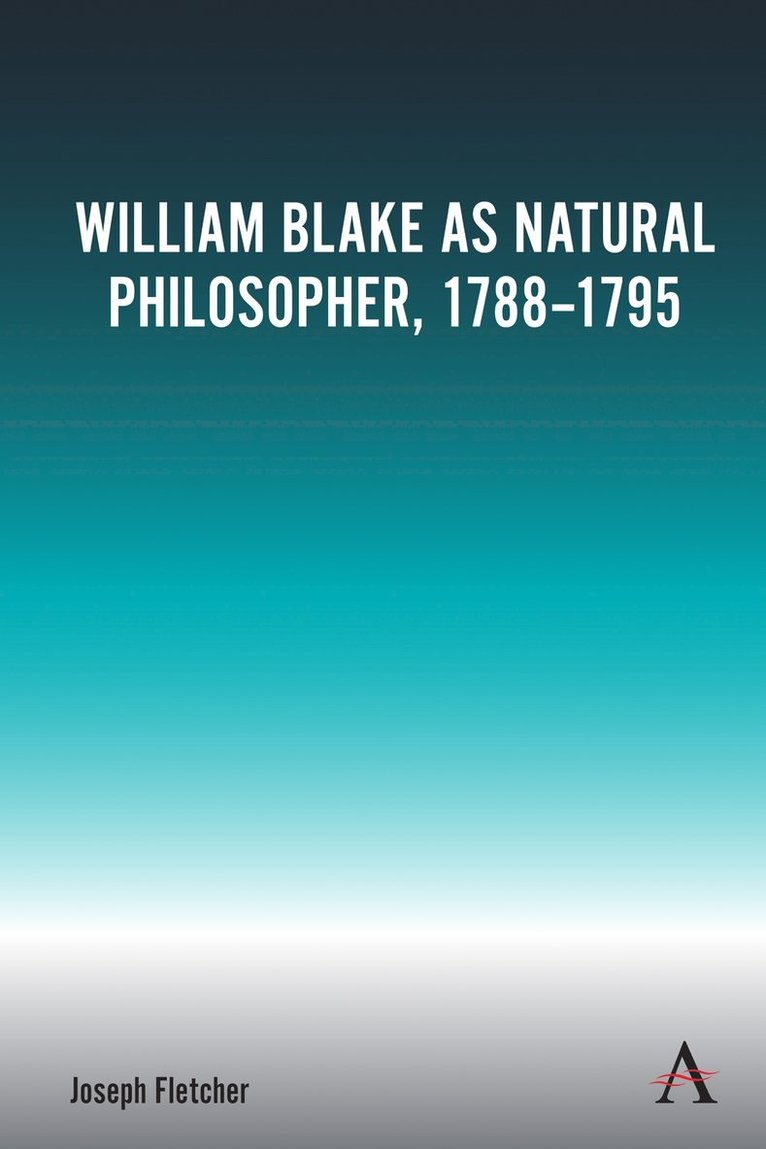
William Blake as Natural Philosopher, 1788-1795 takes seriously William Blake’s wish to be read as a natural philosopher, particularly in his early illuminated works, and reveals the way that poetry and visual art were for Blake an imaginative way of philosophizing. Blake’s poetry and designs reveal a consistent preoccupation with eighteenth-century natural philosophical debates concerning the properties of the physical world, the nature of the soul, and God’s relationship to the material universe. This book traces the history of these debates and examines images and ideas in Blake’s illuminated books that mark the development of the monist pantheism, which contends that every material thing is in its essence God, to the idealism of his later period, which casts the natural world as degenerate and illusory. The book argues that Blake’s philosophical thought was not as monolithic as has been previously characterized, and that pantheism is important to understanding his early works because it entails an ethics that respects the interconnected divinity of all material objects – not just humans – which in turn spurns hierarchical power structures.
512 kr
Tillfälligt slut
537 kr
Kommande
William Blake as Natural Philosopher, 1788-1795 takes seriously William Blake’s wish to be read as a natural philosopher, particularly in his early illuminated works, and reveals the way that poetry and visual art were for Blake an imaginative way of philosophizing. Blake’s poetry and designs reveal a consistent preoccupation with eighteenth-century natural philosophical debates concerning the properties of the physical world, the nature of the soul, and God’s relationship to the material universe. This book traces the history of these debates and examines images and ideas in Blake’s illuminated books that mark the development of the monist pantheism, which contends that every material thing is in its essence God, to the idealism of his later period, which casts the natural world as degenerate and illusory. The book argues that Blake’s philosophical thought was not as monolithic as has been previously characterized, and that pantheism is important to understanding his early works because it entails an ethics that respects the interconnected divinity of all material objects – not just humans – which in turn spurns hierarchical power structures.