E-bok
PDF, Engelska, 1970318 kr
Läs direkt efter köp
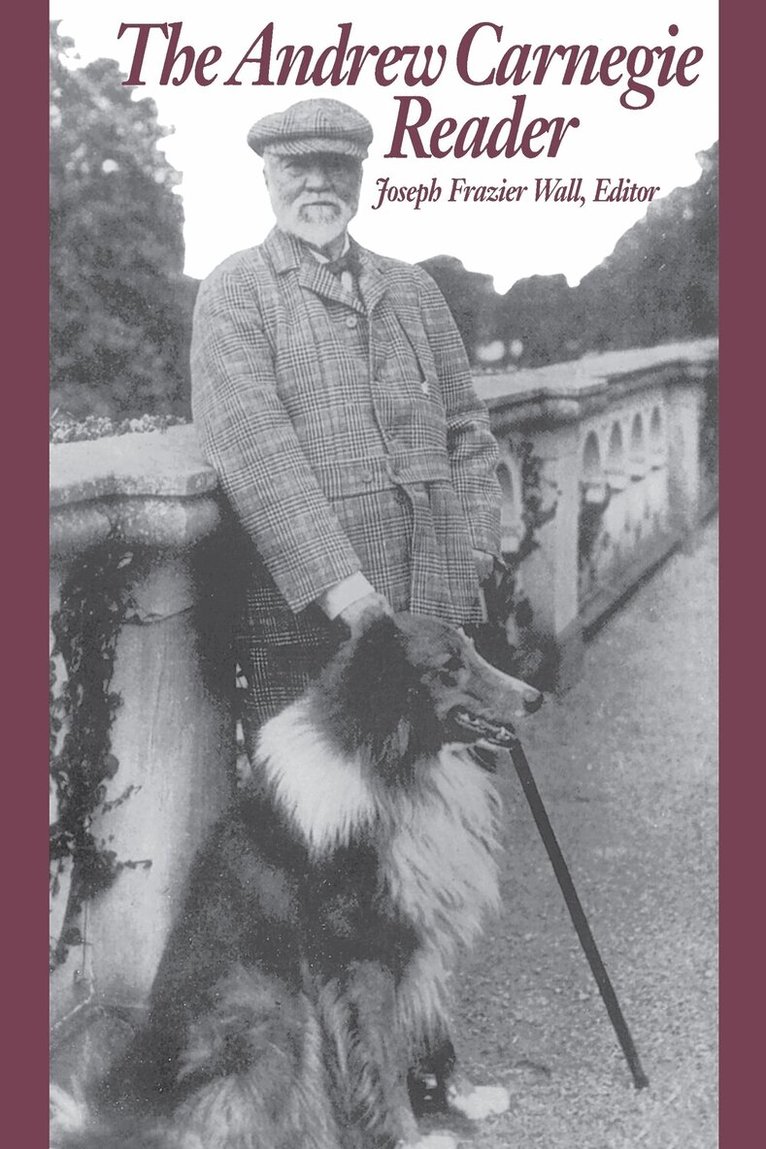
This masterful biography of a giant of American industry--the first full life of Andrew Carnegie in more than a generation--triumphantly reveals every aspect of the man's complex personality and fabulous career. So varied were Carnegie's activities in industry, politics, education, philanthropy, and pacificism that his life encompasses much of the general history of the United States and of Great Britain down to the outbreak of World War I. Wall is particularly successful in capturing the excitement of America's dynamic period of business expansion in the generation after the Civil War. Carnegie the man remains at the center of the book--impulsive, haughty, idealistic, warm, loyal, and shrewd--and the drama of his life from telegraph boy to millionaire philanthropist is emphasized. His Scottish background is thoroughly investigated: Wall is concerned throughout with Carnegie's attempts to reconcile his spectacular business success and position in the American plutocracy with the egalitarian and Radical Chartist ideas of his family and youth. Carnegie's letterbooks and early business files, in the possession of the United States Steel Corporation and until now inaccessible to historians, were made available to the author. This vital and valuable collection of records is unsurpassed in its revelation of how Carnegie's own corporations operated, and also as an actual example of the development of a great American industry. Wall also consulted the huge collection of Carnegie material in the Library of Congress and the papers of Carnegie's business secretary, Robert Franks. Carnegie's daughter, Mrs. Roswell Miller, was kind enough to allow Wall to read the private correspondence between Andrew Carnegie and his wife Louise, also not previously available to scholars. The epic, highly-charged relationship between Carnegie and Henry Clay Frick emerges brilliantly, and the story of Carnegie's ventures in oil, railroad building and financing, bridge building, telegraphy, and iron and steel is clearly and fully presented. The book gives place also to a myriad of fascinating figures in America and Europe, including William Gladstone, Matthew Arnold, and Herbert Spencer in England, and J.P. Morgan, George Pullman, Mark Twain, William Jennings Bryan, Booker T. Washington, and Presidents Lincoln, McKinley, Theodore Roosevelt, and Wilson in America. It has much to say also about the impact of the Civil War on American industrialism, industrial statesmen and robber barons, and the influence of Social Darwinism on the business community. This rounded, honest biography, while compassionate, does not hesitate to call Carnegie to task for some of his financial dealings, his often arbitrary personal relationships and his occasional hypocrisy, or to show him at his worst-when dealing with the tragic Homestead strike of 1892. But the reader takes from the book a full understanding of why to many Americans Carnegie's death meant the end of an era in American history.