Joseph McKenna – författare
Visar alla böcker från författaren Joseph McKenna. Handla med fri frakt och snabb leverans.
10 produkter
10 produkter
478 kr
Skickas inom 5-8 vardagar
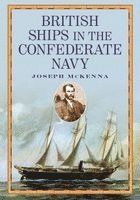
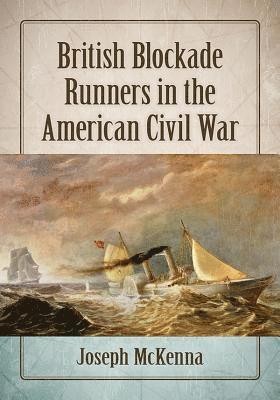
During the American Civil War, British-crewed warships harassed Union merchantmen, sinking a total value of more than $15,000,000 in ships and cargo. Considered pirates by the federal government, these ships and crew were at the center of a largely unknown but fascinating struggle between Commander James Dunwoody of the Confederate Navy, U.S. Ambassador Charles Francis Adams, and Consul Thomas H. Dudley. This history of British assistance to the Confederate Navy covers that story in full and provides a close look at the British seamen who manned warships and blockade runners.
478 kr
Skickas inom 5-8 vardagar
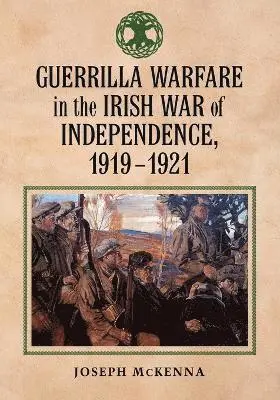
Tracing the development of the Irish Republican Army following Ireland's Declaration of Independence, this book focuses on the recruitment, training, and arming of Ireland's military volunteers and the Army's subsequent guerrilla campaign against British rule. Beginning with a brief account of the failed Easter Rising, it continues through the resulting military and political reorganizations, the campaign's various battles, and the eventual truce agreements and signing of the Anglo-Irish Treaty. Other topics include the significance of Irish intelligence and British counter-intelligence efforts; urban warfare and the fight for Dublin; and the role of female soldiers, suffragists, and other women in waging the IRA's campaign.
589 kr
Skickas inom 5-8 vardagar
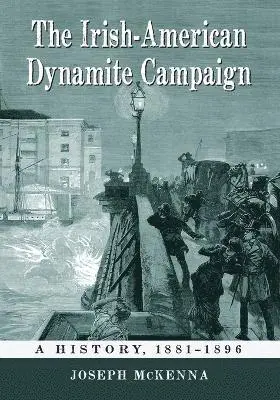
In the 1880s, Clan-na-Gael, an extremist Irish-American organization that succeeded the Fenian Brotherhood, initiated a dynamite campaign against Britain in a bid to bring about Irish independence. Throughout England, explosions rocked government, military and police targets, including the Tower of London, London Bridge and the Houses of Parliament. This detailed study chronicles the origins, operations and aftereffects of the campaign, especially its heavy infiltration by spies, informers and agents of a rogue British Secret Service. By exploring the overlooked areas of the operation's history, this volume reveals how, in a bid to discredit the Irish National Party in Parliament, those most entrusted with Britain`s security were themselves complicit in the bombings.
214 kr
Skickas
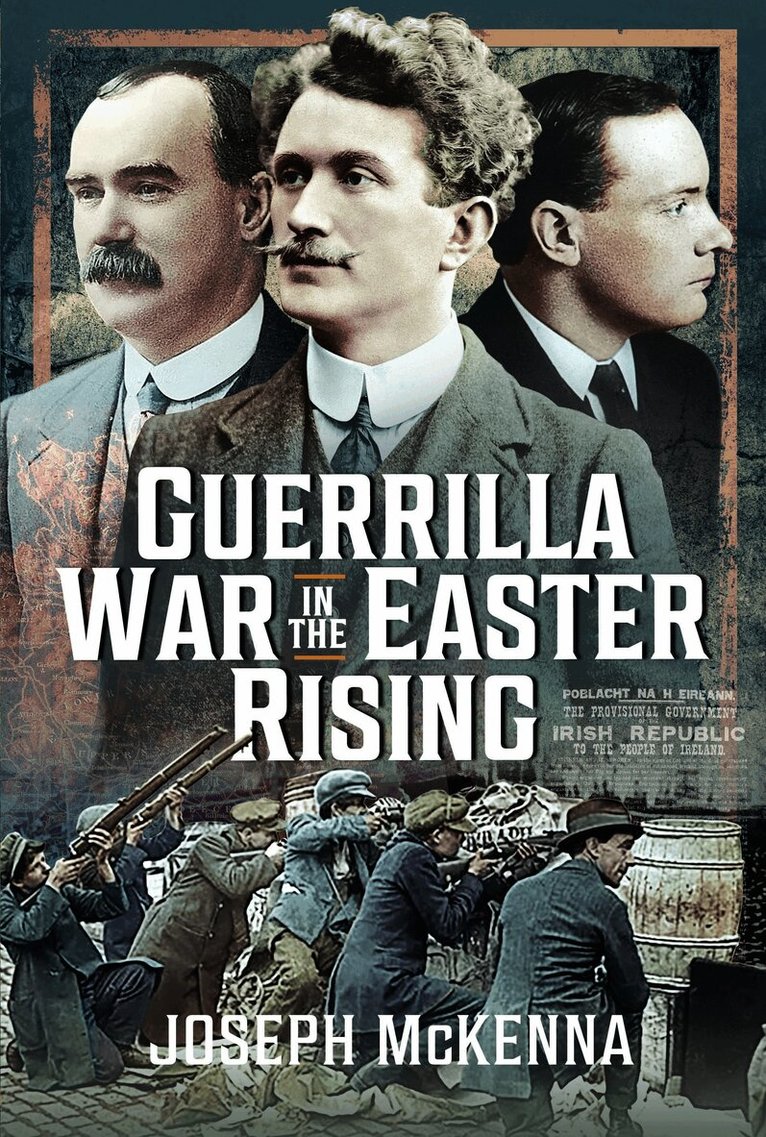
On Easter Monday 1916, Irish rebels seized a number of strategic buildings in Dublin, including the General Post Office on O’Connell Street, and declared an Irish Republic. Within a week they had been bombarded into surrender. Out in the countryside, amidst chaos and confusion over counter orders, the Rising failed to materialize as planned. The one notable exception was the campaign of the Fingal Brigade of North County Dublin. Their leader, the charismatic Tom Ashe, launched a fast moving guerrilla campaign against the para-military Royal Irish Constabulary, seizing barracks and capturing arms. At Ashbourne the Irish Volunteers, having captured the RIC barracks, were faced with the arrival of a numerically superior force of armed policemen. Using tactics evolved from British army training manuals, they overcame and defeated the police. Ashe and Fingal Brigade had shown that fast moving guerrilla warfare was the way ahead in the future struggle for Irish independenceThis little-known yet crucial development in the Irish War of Independence is well researched and described in this over-due account.
478 kr
Skickas inom 5-8 vardagar
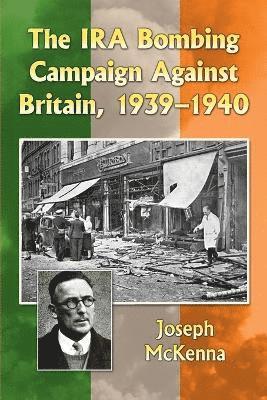
This detailed account of the Irish Republican Army's bombing campaign against Britain during 1939-1940 describes how initial attacks on economic targets turned into a series of terror bombings causing the deaths of seven innocent people. Though two IRA members were hanged, the real men responsible, named here, escaped. The author covers the political situation in Ireland prior to the attacks, the recruiting and training of the bombers, the bombing campaign and the trial of two men for the murder of five people in Coventry.
589 kr
Skickas inom 5-8 vardagar
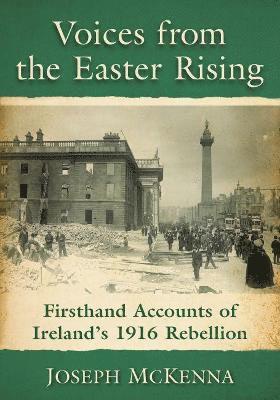
This work records a week in Dublin during April 1916 when in a forlorn hope 2,000 Irish Volunteers rose up in armed rebellion against the British Empire in a bid to establish an independent Irish state. The Rising is recalled in the words of those who took part. It traces the establishment of the various organizations that eventually came together that Easter week. The work then leads on to a day-to-day narrative of the men and women who took part. There are details of the highs and lows; of the triumphs and the little unexpected things that are sometimes lost in the noise of battle. In parts the narrative is intensely personal when participants record the deaths of those close to them. The work does not shy away from the atrocities and murders that took place on both sides; recorded in the Coroner`s reports. Then the work gives a personal account of the trial and, perhaps unnecessary, execution of the leaders, and the imprisonment of the surviving Volunteers.
589 kr
Skickas inom 5-8 vardagar
Perhaps more than all the campaigns of the Union armies, the Union naval blockade--covering all major Southern ports along 3,500 miles of coastline for the duration of the war--brought down the Confederacy. The daring exploits of Confederate blockade runners are well known--but many of them were British citizens operating out of neutral ports such as Nassau, Havana and Bermuda.Focusing on British involvement in the war, this history names the overseas bankers and manufacturers who, in critical need of cotton and other Confederate exports, financed and equipped the fast little ships that ran the blockade. The author attempts to disentangle the names and aliases of the captains--many of whom were Royal Navy officers on temporary leave--and tells their stories in their own words.
366 kr
Skickas inom 5-8 vardagar
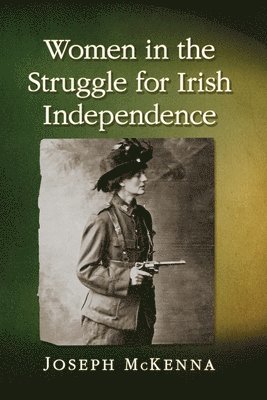
Women have too often been written out of history. This is especially true in the fight for Irish independence. The women's struggle was three-fold, beginning with the suffragettes' fight to win the vote. Then came the push for fair pay and working conditions. Binding them together became part of the national struggle, first for home rule, then for the establishment of an Irish Republic. The Easter Rising of 1916 brought them together as soldiers of the Republic. Through the terrible years that followed, they became the conscience of Republicanism. Following independence, they were betrayed by the men they had served alongside. DeValera and the Catholic Church restricted their roles in society--they were to be wives and mothers without a voice. It was not until Ireland's entry into the European community and the self destruction of a corrupt Church that Irish women were acknowledged for what they had achieved.
526 kr
Skickas inom 5-8 vardagar
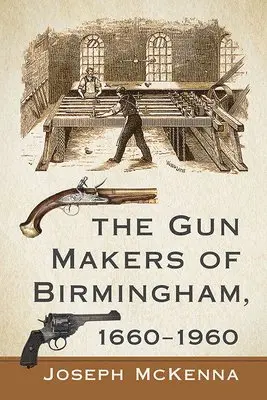
Tracing the history and development of gun-making in Birmingham, England--for many years a center of the world's firearms industry--this book covers innovations in design and manufacture of both military and sporting arms from 1660 through 1960. The city is perhaps best known for mass-producing some of the most battle-tested weapons in history, including the Brown Bess musket, the Webley revolver and the Lee-Enfield rifle. Yet Birmingham's gun-makers have carried on a centuries-long tradition of crafting high quality hand-made sporting guns.
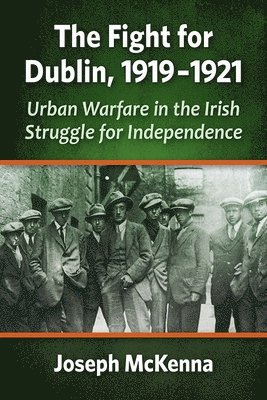
Fight for Dublin, 1919-1921
Urban Warfare in the Irish Struggle for Independence
Häftad, Engelska, 2021
366 kr
Skickas inom 5-8 vardagar
In Dublin, the War of Irish Independence (1919-1921) was an intense and dirty battle between military intelligence agents. While IRA flying columns fought the British Army and the Black and Tans in the countryside, the fighting in Ireland's capital city pitted the wits of IRA commander Michael Collins against the cloak-and-dagger innovations of British Intelligence chief Colonel Ormonde de l'Epee Winter. Drawing on detailed witness statements of Irish participants and documents and biographies from the British side, this history chronicles the covert war of assassinations, arrests, torture and murder that climaxed in the Bloody Sunday mass assassination of British intelligence officers by IRA squads in November 1920.