Joseph P. Sanchez - Böcker
Visar alla böcker från författaren Joseph P. Sanchez. Handla med fri frakt och snabb leverans.
9 produkter
9 produkter
404 kr
Skickas inom 10-15 vardagar
How an Hispano community maintained its identity over four centuriesLocated in Albuquerque's south valley, Atrisco is a vibrant community that predates the city, harking back to a land grant awarded in 1692. Joseph P. Sánchez explores the evolution of this parcel over the four centuries since the first Spanish settlers arrived. He tracks its transformation from an individual to a community grant, peeling away the layers of historical events that have made Atrisco the last piece of undeveloped real estate in a growing metropolitan area.Sánchez examines the creation of Atrisco as a frontier community during the Spanish and Mexican periods and shows how it maintained its identity and land ownership into the American era. He describes the historical processes of colonization, land tenures and transfers, and social and economic activity. He also assesses the transfer of the land grant to a private corporation and its subsequent fate, and considers Atrisco's role in the future of Albuquerque.Today more than 30,000 New Mexicans are descended from the early settlers of Atrisco; and because few places in the United States have retained their Spanish and Mexican influences as have the New Mexican land grants, the history of Atrisco offers a unique perspective. Sánchez's study preserves Atrisco's origins as part of that area's Hispano heritage, depicting people who learned to defend their culture against outside challenges and embedding local history in a larger regional saga.
236 kr
Skickas inom 7-10 vardagar
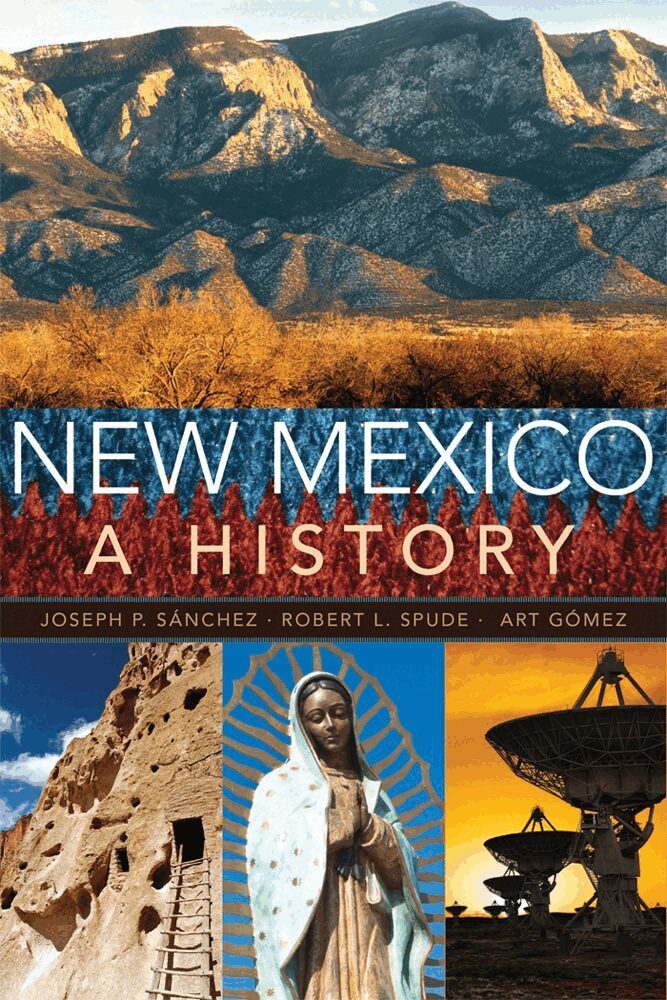
Since the earliest days of Spanish exploration and settlement, New Mexico has been known for lying off the beaten track. But this new history reminds readers that the world has been beating paths to New Mexico for hundreds of years, via the Camino Real, the Santa Fe Trail, several railroads, Route 66, the interstate highway system, and now the Internet. This first complete history of New Mexico in more than thirty years begins with the prehistoric cultures of the earliest inhabitants. The authors then trace the state's growth from the arrival of Spanish explorers and colonizers in the sixteenth century to the centennial of statehood in 2012. Most historians have made the territory's admission to the Union in 1912 as the starting point for the state's modernization. As this book shows, however, the transformation from frontier province to modern state began with World War II. The technological advancements of the Atomic Era, spawned during wartime, propelled New Mexico to the forefront of scientific research and pointed it toward the twenty-first century. The authors discuss the state's historical and cultural geography, the economics of mining and ranching, irrigation's crucial role in agriculture, and the impact of Native political activism and tribe-owned gambling casinos. New Mexico: A History will be a vital source for anyone seeking to understand the complex interactions of the indigenous inhabitants, Spanish settlers, immigrants, and their descendants who have created New Mexico and who shape its future.
312 kr
Skickas inom 10-15 vardagar
How an Hispano community maintained its identity over four centuriesLocated in Albuquerque's south valley, Atrisco is a vibrant community that predates the city, harking back to a land grant awarded in 1692. Joseph P. Sánchez explores the evolution of this parcel over the four centuries since the first Spanish settlers arrived. He tracks its transformation from an individual to a community grant, peeling away the layers of historical events that have made Atrisco the last piece of undeveloped real estate in a growing metropolitan area.Sánchez examines the creation of Atrisco as a frontier community during the Spanish and Mexican periods and shows how it maintained its identity and land ownership into the American era. He describes the historical processes of colonization, land tenures and transfers, and social and economic activity. He also assesses the transfer of the land grant to a private corporation and its subsequent fate, and considers Atrisco's role in the future of Albuquerque.Today more than 30,000 New Mexicans are descended from the early settlers of Atrisco; and because few places in the United States have retained their Spanish and Mexican influences as have the New Mexican land grants, the history of Atrisco offers a unique perspective. Sánchez's study preserves Atrisco's origins as part of that area's Hispano heritage, depicting people who learned to defend their culture against outside challenges and embedding local history in a larger regional saga.
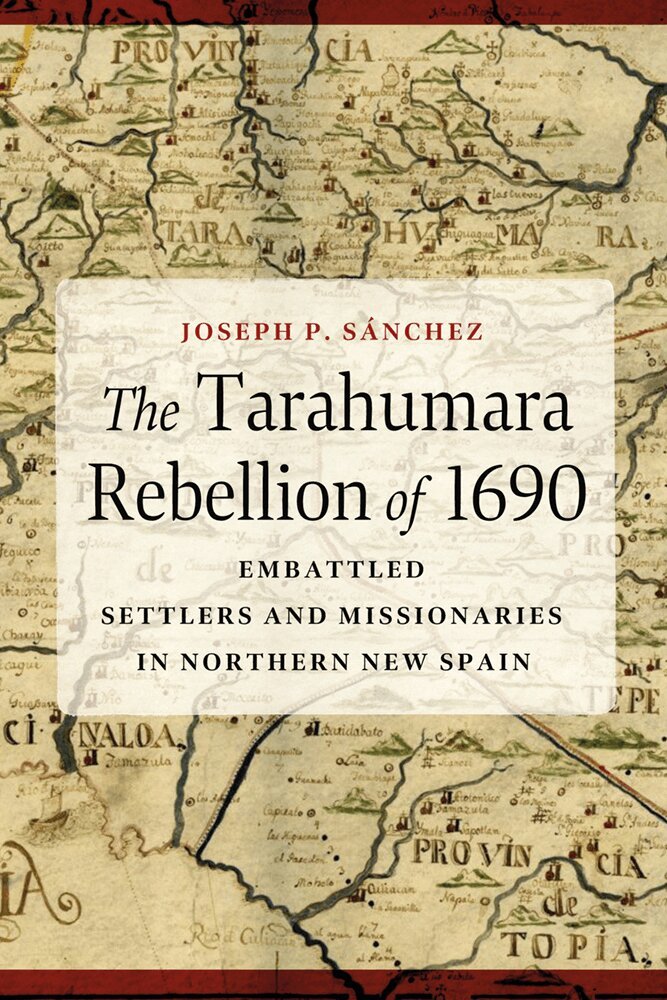
Tarahumara Rebellion of 1690
Embattled Settlers and Missionaries in Northern New Spain
Häftad, Engelska, 2025
317 kr
Skickas inom 7-10 vardagar
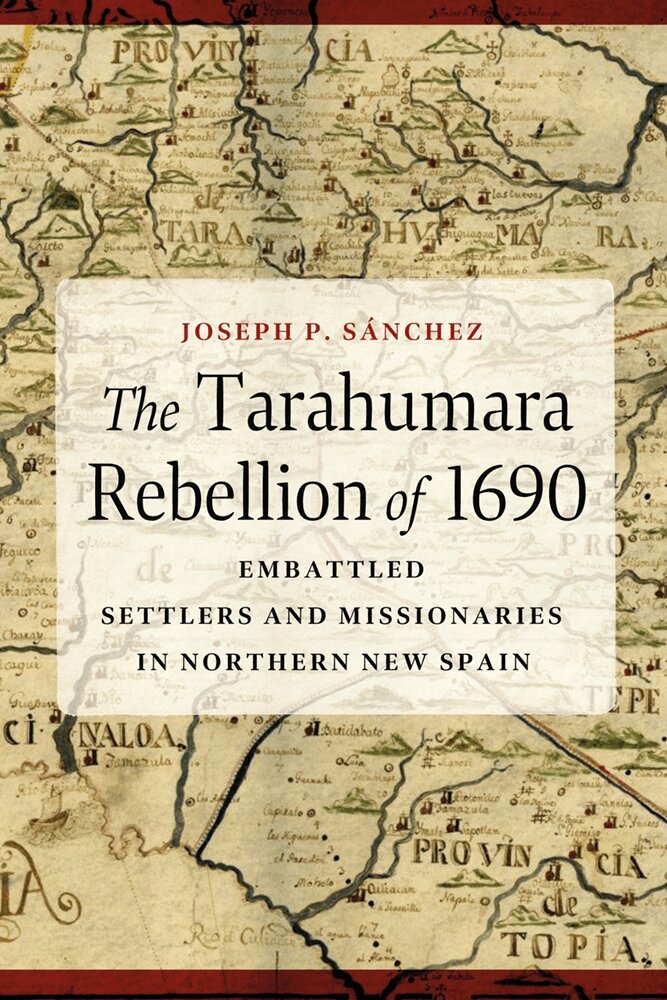
The Tarahumara Rebellion of 1690 examines a seventeenth-century Indigenous uprising in northern Mexico aimed at driving out Spanish miners, missionaries, and settlers from Tarahumara (Rarámuri) and Tepehuanes homelands. Previous histories have interpreted this revolt, and other borderlands uprisings, as localized and spontaneous events aimed at rectifying specific grievances. Historian Joseph P. Sánchez argues that the revolts of the Tepehuanes and the Tarahumaras in northern New Spain, or Nueva Vizcaya, were well-planned, inspired by outside events, and drew in multiple communities and ethnicities. Drawing on a wealth of primary sources, including Jesuit accounts and archival documents, Sánchez offers a comprehensive narrative that challenges conventional interpretations of colonial Mexican uprisings. Far from localized, the Indigenous rebellions in the northern Mexican borderlands during the colonial period were part of the overall Indigenous struggle for defense of homeland throughout the Americas. The Tarahumara Rebellion of 1690 brings together a rich history of localized events and broader historical trends and offers a compelling narrative that enriches our understanding of the colonial experience in northern New Spain.
Tarahumara Rebellion of 1690
Embattled Settlers and Missionaries in Northern New Spain
Inbunden, Engelska, 2025
1 086 kr
Skickas inom 7-10 vardagar
The Tarahumara Rebellion of 1690 examines a seventeenth-century Indigenous uprising in northern Mexico aimed at driving out Spanish miners, missionaries, and settlers from Tarahumara (Rará muri) and Tepehuanes homelands.Previous histories have interpreted this revolt, and other borderlands uprisings, as localized and spontaneous events aimed at rectifying specific grievances. Historian Joseph P. Sánchez argues that the revolts of the Tepehuanes and the Tarahumaras in northern New Spain, or Nueva Vizcaya, were well-planned, inspired by outside events, and drew in multiple communities and ethnicities. Drawing on a wealth of primary sources, including Jesuit accounts and archival documents, Sánchez offers a comprehensive narrative that challenges conventional interpretations of colonial Mexican uprisings.Far from localized, the Indigenous rebellions in the northern Mexican borderlands during the colonial period were part of the overall Indigenous struggle for defense of homeland throughout the Americas. The Tarahumara Rebellion of 1690 brings together a rich history of localized events and broader historical trends and offers a compelling narrative that enriches our understanding of the colonial experience in northern New Spain.
1 062 kr
Skickas inom 3-6 vardagar
The arrival of Spaniards in 1769 served as a defining moment for California's future. They described the First Peoples and their cultures and provided a window into the evolution of California's Camino Real. In an effort to establish the Camino Real de California as a UNESCO World Heritage Site, Joseph P. Sánchez explores the rich history of the path running from San Diego to San Francisco in this significant study. While records capture the stories and legends of the Camino Real there is little information on the exact ground route. Sánchez utilizes historical and archaeological literature and the documentation from Spanish and Mexican archives to begin the much-needed process of authentication of this braided corridor to further establish the Camino Real de California's integrity and valuable history, which is shared with Spain, Mexico, and Native American tribes. Their story is part of the patrimony of the Camino Real de California, which ought to be authenticated, preserved, and protected for future generations to enjoy.
534 kr
Skickas inom 3-6 vardagar
The arrival of Spaniards in 1769 served as a defining moment for California's future. They described the First Peoples and their cultures and provided a window into the evolution of California's Camino Real. In an effort to establish the Camino Real de California as a UNESCO World Heritage Site, Joseph P. Sánchez explores the rich history of the path running from San Diego to San Francisco in this significant study. While records capture the stories and legends of the Camino Real there is little information on the exact ground route. Sánchez utilizes historical and archaeological literature and the documentation from Spanish and Mexican archives to begin the much-needed process of authentication of this braided corridor to further establish the Camino Real de California's integrity and valuable history, which is shared with Spain, Mexico, and Native American tribes. Their story is part of the patrimony of the Camino Real de California, which ought to be authenticated, preserved, and protected for future generations to enjoy.
483 kr
Tillfälligt slut
477 kr
Skickas inom 5-8 vardagar
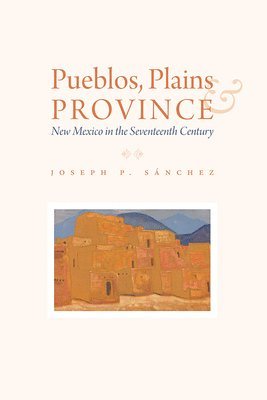
In Pueblos, Plains, and Province Joseph P. Sánchez offers an in-depth examination of sociopolitical conflict in seventeenth-century New Mexico, detailing the effects of Spanish colonial policies on settlers’, missionaries’, and Indigenous peoples’ struggle for economic and cultural control of the region. Sánchez explores the rich archival documentation that provides cultural, linguistic, and legal perspectives of the values of the period. Spanish dual Indian policies for Pueblo and Plains tribes challenged Indigenous political and social systems to conform to the imperial structure for pacification purposes. Meanwhile, missionary efforts to supplant Indigenous religious beliefs with a Christian worldview resulted, in part, in a syncretism of the two worlds. Indigenous resentment of these policies reflected the contentious disagreements between Spanish clergymen and civil authorities, who feuded over Indigenous labor and encroachment on tribal sovereignties with demands for sworn loyalty to Spanish governance. The little-studied “starvation period” adversely affected Spanish-Pueblo relationships for the remainder of the century and contributed significantly to the battle at Acoma, the Jumano War, and the Pueblo Revolt of 1680. Pueblos, Plains, and Province shows how history, culture, and tradition in New Mexico shaped the heritage shared by Spain, Mexico, the United States, and Native American tribes and will be of interest to scholars and students of Indigenous, colonial, and borderlands history.