Joseph Packer – författare
Visar alla böcker från författaren Joseph Packer. Handla med fri frakt och snabb leverans.
4 produkter
4 produkter
431 kr
Skickas inom 5-8 vardagar
In A Feeling of Wrongness, Joseph Packer and Ethan Stoneman confront the rhetorical challenge inherent in the concept of pessimism by analyzing how it is represented in an eclectic range of texts on the fringes of popular culture, from adult animated cartoons to speculative fiction.Packer and Stoneman explore how narratives such as True Detective, Rick and Morty, Final Fantasy VII, Lovecraftian weird fiction, and the pop ideology of transhumanism are better suited to communicate pessimistic affect to their fans than most carefully argued philosophical treatises and polemics. They show how these popular nondiscursive texts successfully circumvent the typical defenses against pessimism identified by Peter Wessel Zapffe as distraction, isolation, anchoring, and sublimation. They twist genres, upend common tropes, and disturb conventional narrative structures in a way that catches their audience off guard, resulting in belief without cognition, a more rhetorically effective form of pessimism than philosophical pessimism.While philosophers and polemicists argue for pessimism in accord with the inherently optimistic structures of expressive thought or rhetoric, Packer and Stoneman show how popular texts are able to communicate their pessimism in ways that are paradoxically freed from the restrictive tools of optimism. A Feeling of Wrongness thus presents uncharted rhetorical possibilities for narrative, making visible the rhetorical efficacy of alternate ways and means of persuasion.
617 kr
Skickas inom 5-8 vardagar
In A Feeling of Wrongness, Joseph Packer and Ethan Stoneman confront the rhetorical challenge inherent in the concept of pessimism by analyzing how it is represented in an eclectic range of texts on the fringes of popular culture, from adult animated cartoons to speculative fiction.Packer and Stoneman explore how narratives such as True Detective, Rick and Morty, Final Fantasy VII, Lovecraftian weird fiction, and the pop ideology of transhumanism are better suited to communicate pessimistic affect to their fans than most carefully argued philosophical treatises and polemics. They show how these popular nondiscursive texts successfully circumvent the typical defenses against pessimism identified by Peter Wessel Zapffe as distraction, isolation, anchoring, and sublimation. They twist genres, upend common tropes, and disturb conventional narrative structures in a way that catches their audience off guard, resulting in belief without cognition, a more rhetorically effective form of pessimism than philosophical pessimism.While philosophers and polemicists argue for pessimism in accord with the inherently optimistic structures of expressive thought or rhetoric, Packer and Stoneman show how popular texts are able to communicate their pessimism in ways that are paradoxically freed from the restrictive tools of optimism. A Feeling of Wrongness thus presents uncharted rhetorical possibilities for narrative, making visible the rhetorical efficacy of alternate ways and means of persuasion.
345 kr
Kommande
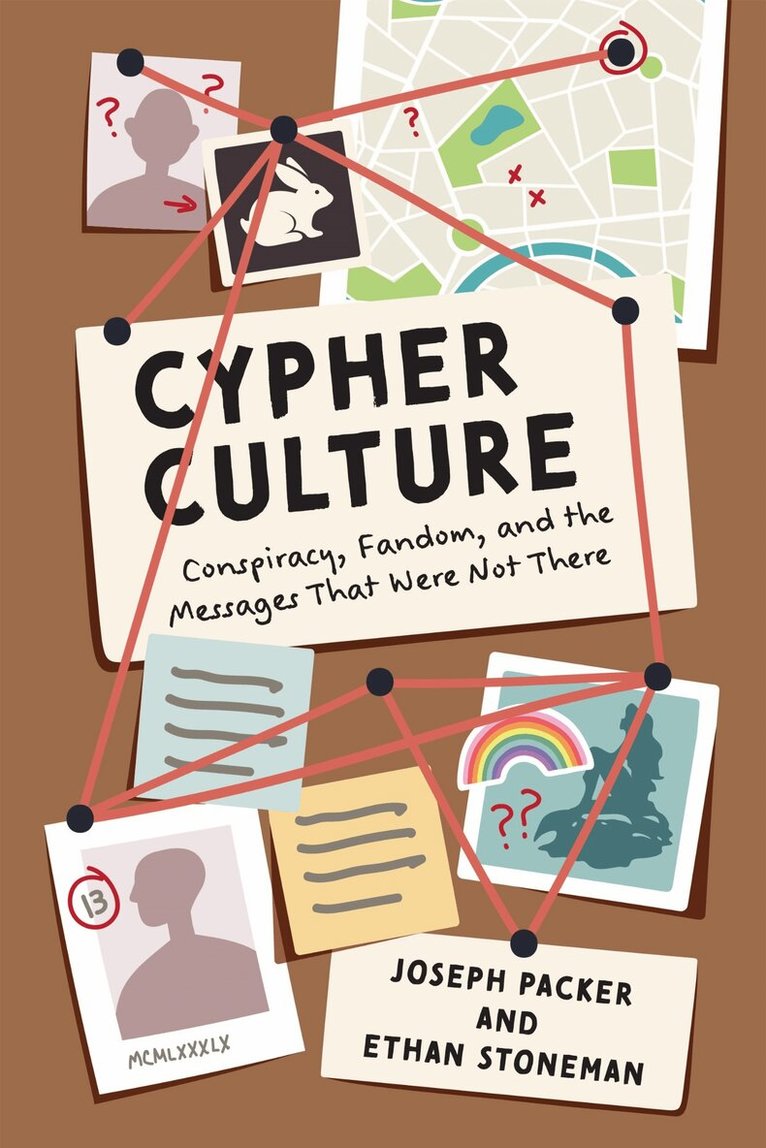
By highlighting the interplay between esotericism, conspiracy theory, and fandom, Cypher Culture examines how marginalized and embattled groups learn to read cultural texts for hidden meanings in hostile environments. Drawing on Leo Strauss's theory of esotericism, Joseph Packer and Ethan Stoneman argue that "reading between the lines" has moved from classical philosophy into popular culture, where queer fandoms, political extremists, and others uncover whispered messages in mass media. The result is a shared interpretive practice with radically different ethical and political consequences. Cypher Culture presents a series of case studies capturing a wide spectrum of esoteric fandom, from interpretations of Shakespeare and Disney to analyses of Taylor Swift, The Dark Knight trilogy of Batman films, and the QAnon phenomenon. Exploring the ways groups interact with these texts helps uncover the dynamics of fan culture and its political dimensions. The book's focus on the interplay of scene, surface, and receiver provides a nuanced framework for understanding how esoteric interpretations take hold and circulate within fan communities, particularly online. Pairing close readings of popular media with cultural analyses of their dedicated communities of esoteric readers, Cypher Culture diagnoses the stylistic, contextual, and authorial elements of a text that invite esoteric interpretations. This approach goes beyond traditional views of esotericism, as formulated by Strauss, demonstrating its evolution in the digital age as not just an authorial strategy but a hermeneutic lens through which fans interpret popular culture.
1 476 kr
Skickas inom 10-15 vardagar
Alien Life and Human Purpose: A Rhetorical Examination through History provides a rhetorical examination of the way major historical figures connect their arguments for the absence of alien life, or “unity,” to their philosophical, religious, and ethical agendas. Although the unity myth has often existed in the background of society, shaping institutions and values, during periods where relativism gained prominence, its opponents actively wielded the unity myth as a response; Plato used the unity myth against the sophists, Anglican theologian and philosopher William Whewell against the utilitarians, co-discoverer of evolution Alfred Russell Wallace against the social Darwinists, university professors Frank J. Tipler and John D. Barrow against the postmodernists, etc. These individuals presented scientific defenses of unity and then used the “fact” of unity to claim the universe is teleological, knowable, and ordered, rather than chaotic and relativistic. This book argues that unity and its complimentary mythic function have played an important role in shaping values throughout history and more importantly continue to do so today.