Jr. Reiss, Albert J. - Böcker
Visar alla böcker från författaren Jr. Reiss, Albert J.. Handla med fri frakt och snabb leverans.
5 produkter
5 produkter
433 kr
Skickas inom 5-8 vardagar
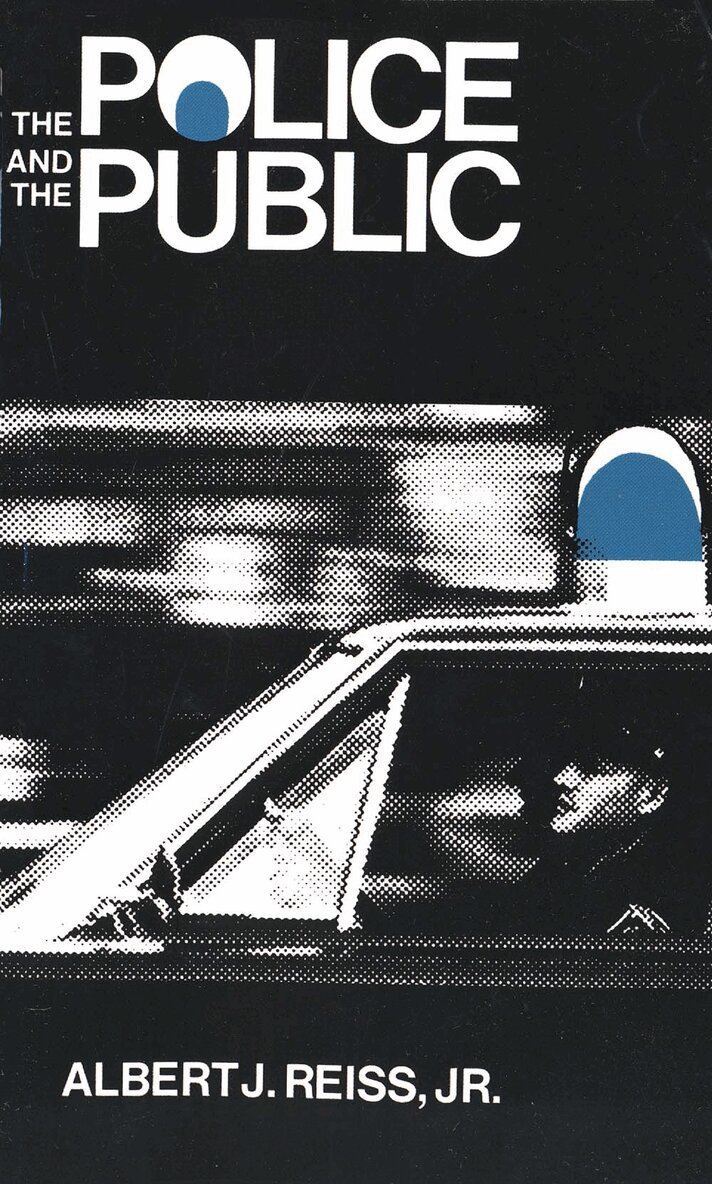
Riding with patrol cars in four major northern cities, walking with policemen on the beat, observing what goes on in police stations, analyzing who telephones the police, what crimes are reported, who reports them, and why, Albert J. Reiss, Jr., seeks to understand the ways in which we can make our society more civil, our police more humane, our population more responsible. Reiss devotes most of his first chapter to describing the experiences of two police officers during an ordinary night in a patrol car. He then considers the many ways in which police and public interact – and how and why they often do not. In a chapter entitled “Police Manners and Morals,” the author investigates situations where policemen may themselves break the law – and how such actions relate to the subculture of an individual neighborhood or beat. Finally, Reiss outlines his understanding of how we may become a more civil society, presenting his view that the morality of the public and the morality of the police are intimately related, that one cannot be expected to improve unless the other does.
741 kr
Tillfälligt slut
This volume contains commissioned reviews of research on biological influences on violent or aggressive behavior. The areas reviewed include genetic contributions to the probability of violent and related behaviors; brain structure and functioning as implicated in aggressive behavior; the roles of hormonal and neurological interactions in violent behavior; the neurochemistry of violence and aggression and its implications for the management of those behaviors; and dietary influences on violent behavior.
762 kr
Tillfälligt slut
This book analyzes the consequences of violence and strategies for controlling them. Included are reviews of public perceptions and reactions to violence; estimates of the costs; the commonalities and complementarities of criminal justice and public health responses; efforts to reduce violence through the prediction and classification of violent offenders; and the relationships between trends in violence and prison population during a period of greatly increased use of incarceration.
1 111 kr
Tillfälligt slut
This volume examines social influences on violent events and violent behavior, particularly concentrating on how the risks of violent criminal offending and victimization are influenced by communities, social situations, and individuals; the role of spouses and intimates; the differences in violence levels between males and females; and the roles of psychoactive substances in violent events.
878 kr
Tillfälligt slut
By conservative estimates, more than 16,000 violent crimes are committed or attempted every day in the United States. Violence involves many factors and spurs many viewpoints, and this diversity impedes our efforts to make the nation safer. Now a landmark volume from the National Research Council presents the first comprehensive, readable synthesis of America's experience of violence--offering a fresh, interdisciplinary approach to understanding and preventing interpersonal violence and its consequences. Understanding and Preventing Violence provides the most complete, up-to-date responses available to these fundamental questions: * How much violence occurs in America? * How do different processes--biological, psychosocial, situational, and social--interact to determine violence levels? * What preventive strategies are suggested by our current knowledge of violence? * What are the most critical research needs? Understanding and Preventing Violence explores the complexity of violent behavior in our society and puts forth a new framework for analyzing risk factors for violent events.From this framework the authors identify a number of "triggering" events, situational elements, and predisposing factors to violence--as well as many promising approaches to intervention. Leading authorities explore such diverse but related topics as crime statistics; biological influences on violent behavior; the prison population explosion; developmental and public health perspectives on violence; violence in families; and the relationship between violence and race, ethnicity, poverty, guns, alcohol, and drugs. Using four case studies, the volume reports on the role of evaluation in violence prevention policy. It also assesses current federal support for violence research and offers specific science policy recommendations. This breakthrough book will be a key resource for policymakers in criminal and juvenile justice, law enforcement authorities, criminologists, psychologists, sociologists, public health professionals, researchers, faculty, students, and anyone interested in understanding and preventing violence.