Juan Poblete - Böcker
Visar alla böcker från författaren Juan Poblete. Handla med fri frakt och snabb leverans.
15 produkter
15 produkter
Piracy and Intellectual Property in Latin America
Rethinking Creativity and the Common Good
Häftad, Engelska, 2020
528 kr
Skickas inom 10-15 vardagar
Piracy and Intellectual Property in Latin America is the first sustained effort to present an alternative framework for understanding piracy and contemporary challenges to global discourses on intellectual property (IP) in the Americas.While piracy might just look like theft and derivative reproduction from the perspective of many right-holders, the contributors to this volume go beyond this economic-driven logic and show how practices of copying are in fact practices of reinvention that reflect the rich social networks and forms of creativity, authorship, commerce, and consumption that characterize informal economies. From a perspective informed by contemporary scenarios in Mexico, Brazil, Chile, Argentina, Peru, Guatemala, and the United States, they engage in a discussion of alternatives that—predicated on the importance of protecting culture—allow for other ways of conceiving prosperity at local, national, regional, and global levels. Examples discussed include video games, clothing, trinkets, music, film, TV, and books.Designed to help understand the broader implications of IP and piracy for the field of Latin American studies, this book will be a major contribution to Global South studies, as well as to the growing bibliography on globalization, informal markets, and piracy.
Piracy and Intellectual Property in Latin America
Rethinking Creativity and the Common Good
Inbunden, Engelska, 2020
1 932 kr
Skickas inom 10-15 vardagar
Piracy and Intellectual Property in Latin America is the first sustained effort to present an alternative framework for understanding piracy and contemporary challenges to global discourses on intellectual property (IP) in the Americas.While piracy might just look like theft and derivative reproduction from the perspective of many right-holders, the contributors to this volume go beyond this economic-driven logic and show how practices of copying are in fact practices of reinvention that reflect the rich social networks and forms of creativity, authorship, commerce, and consumption that characterize informal economies. From a perspective informed by contemporary scenarios in Mexico, Brazil, Chile, Argentina, Peru, Guatemala, and the United States, they engage in a discussion of alternatives that—predicated on the importance of protecting culture—allow for other ways of conceiving prosperity at local, national, regional, and global levels. Examples discussed include video games, clothing, trinkets, music, film, TV, and books.Designed to help understand the broader implications of IP and piracy for the field of Latin American studies, this book will be a major contribution to Global South studies, as well as to the growing bibliography on globalization, informal markets, and piracy.
303 kr
Skickas inom 7-10 vardagar
Situates these dynamic disciplines within debates around globalizationThis book brings together some of the most prominent scholars working across the spectrum of Latin American and Latino studies to explore their changing intellectual undertaking in relation to global processes of change. Critical Latin American and Latino Studies identifies the challenges and possibilities of more politically engaged and theoretically critical modes of scholarly practice. One objective is to provide a brief critical history of the study of various Latin American cultures-Latino, Chicano, Puerto Rican, among others. But these essays also serve to assess the roles of ethnic and area studies in light of changing scholarly trends, from emphases on gender and sexuality to a focus on postcoloniality and globalization. The result is an important contribution to current debates on the conditions of contemporary knowledge production. Contributors: TomÁs Almaguer, San Francisco State U; Frances R. Aparicio, U of Illinois, Chicago; John Beverley, U of Pittsburgh; Angie Chabram-Dernersesian, U of California, Davis; RomÁn de la Campa, SUNY, Stony Brook; Juan Flores, Hunter College and CUNY; Walter D. Mignolo, Duke U; Giorgio Perissinotto, U of California, Santa Barbara; Kirsten Silva Gruesz, U of California, Santa Cruz; Stefano Varese, U of California, Davis; George YÚdice, NYU; Juan Zevallos Aguilar, Villanova U.
590 kr
Skickas inom 10-15 vardagar
New Approaches to Latin American Studies: Culture and Power, Vol. 2 provides an examination of the new and defining approaches that have emerged in the field of Latin American Studies in the last decade since 2014.Like its predecessor, this second volume of New Approaches to Latin American Studies is organized using the concept of a turn (as in linguistic or cultural turn) and aims to help both students and faculty, in an eminently interdisciplinary space like Latin American Studies, find new ways of conceptualizing objects and research. Original contributions from experts in their fields provide a discussion that is not meant to be fully comprehensive but concentrates instead on key authors and key texts. In each chapter, the keyword that defines the turn functions as a specific limit that contains the proliferation of references and connections, restricting them to the trajectory of such turn. This second volume includes 11 new chapters covering important transformations during the last decade on the issues, perspectives, and stakes of the field.This book is an expert-produced, reliable, and reader-friendly orientation to the many new areas of research Latin American Studies now encompasses and evidence of the dynamism of this complex field.
2 159 kr
Skickas inom 10-15 vardagar
New Approaches to Latin American Studies: Culture and Power, Vol. 2 provides an examination of the new and defining approaches that have emerged in the field of Latin American Studies in the last decade since 2014.Like its predecessor, this second volume of New Approaches to Latin American Studies is organized using the concept of a turn (as in linguistic or cultural turn) and aims to help both students and faculty, in an eminently interdisciplinary space like Latin American Studies, find new ways of conceptualizing objects and research. Original contributions from experts in their fields provide a discussion that is not meant to be fully comprehensive but concentrates instead on key authors and key texts. In each chapter, the keyword that defines the turn functions as a specific limit that contains the proliferation of references and connections, restricting them to the trajectory of such turn. This second volume includes 11 new chapters covering important transformations during the last decade on the issues, perspectives, and stakes of the field.This book is an expert-produced, reliable, and reader-friendly orientation to the many new areas of research Latin American Studies now encompasses and evidence of the dynamism of this complex field.
566 kr
Skickas inom 10-15 vardagar
This book addresses a variety of regional humor traditions such as exploitation cinema, Brazilian chanchada, the Cantinflas heritage, the comedy of manners and light sexuality, iconic figures and characters, as well as a variety of humor registers evident in different Latin American films.
2 367 kr
Skickas inom 10-15 vardagar
Academic and research fields are moved by fads, waves, revolutionaries, paradigm shifts, and turns. They all imply a certain degree of change that alters the conditions of a stable system, producing an imbalance that needs to be addressed by the field itself.New Approaches to Latin American Studies: Culture and Power offers researchers and students from different theoretical fields an essential, turn-organized overview of the radical transformation of epistemological and methodological assumptions in Latin American Studies from the end of the 1980s to the present. Sixteen chapters written by experts in their respective fields help explain the various ways in which to think about these shifts. Questions posited include:Why are turns so crucial?How did they alter the shape or direction of the field?What new questions, objects, or problems did they contribute?What were or are their limitations?What did they displace or prevent us from considering?Among the turns included are: memory, transnational, popular culture, decolonial, feminism, affect, indigenous studies, transatlantic, ethical, post/hegemony, deconstruction, cultural policy, subalternism, gender and sexuality, performance, and cultural studies.
840 kr
Skickas inom 10-15 vardagar
Academic and research fields are moved by fads, waves, revolutionaries, paradigm shifts, and turns. They all imply a certain degree of change that alters the conditions of a stable system, producing an imbalance that needs to be addressed by the field itself.New Approaches to Latin American Studies: Culture and Power offers researchers and students from different theoretical fields an essential, turn-organized overview of the radical transformation of epistemological and methodological assumptions in Latin American Studies from the end of the 1980s to the present. Sixteen chapters written by experts in their respective fields help explain the various ways in which to think about these shifts. Questions posited include:Why are turns so crucial?How did they alter the shape or direction of the field?What new questions, objects, or problems did they contribute?What were or are their limitations?What did they displace or prevent us from considering?Among the turns included are: memory, transnational, popular culture, decolonial, feminism, affect, indigenous studies, transatlantic, ethical, post/hegemony, deconstruction, cultural policy, subalternism, gender and sexuality, performance, and cultural studies.
962 kr
Skickas inom 10-15 vardagar
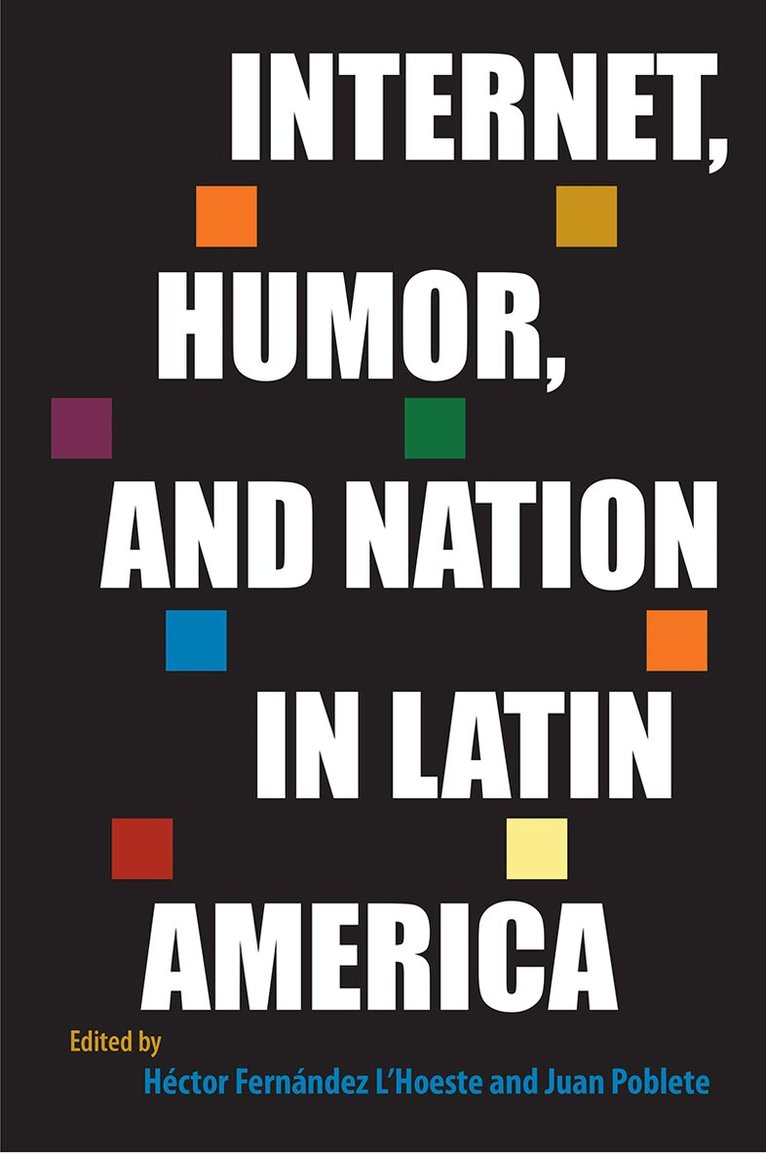
This volume is the first to provide a comprehensive Latin American perspective on the role of humor in the Spanish- and Portuguese-language internet, highlighting how the production and circulation of online humor influence the region’s relation to democracy and civil society and the production of meaning in everyday life.Several case studies consider memes, including discussions of political cartoons in Mexico and imagery that portrays the mismanagement of natural disasters in Puerto Rico. Essays on Brazil examine how memes are shared on WhatsApp by Jair Bolsonaro supporters and how the Instagram account Barbie Fascionista offers memes as political commentary. Other case studies consider video content, including the sketches of Argentinian comedian Guillermo Aquino, the short-form material of Chilean vlogger Germán Garmendia, and a satirical YouTube column created by journalists in Colombia. Contributors also offer new methodologies for studying the laughable on social media, including a model for analyzing fake Twitter accounts.Internet, Humor, and Nation in Latin America demonstrates that internet humor can generate novel means of public interaction with the political and cultural spheres and create greater expectations of governmental accountability and democratic participation. This volume shows the importance of paying serious attention to humorous digital content as part of contemporary culture.Contributors: Eva Paulina Bueno | Juan Poblete | Alberto Centeno-Pulido | Damián Fraticelli | Juan Carlos Rodríguez | Viktor Chagas | Paul Alonso | Ulisses Sawczuk da Silva | Héctor Fernández L'Hoeste | Alejandra Nallely Collado Campos | R. Sánchez-Rivera | Mélodine Sommier | Fábio Marques de Souza
365 kr
Skickas inom 10-15 vardagar
This volume is the first to provide a comprehensive Latin American perspective on the role of humor in the Spanish- and Portuguese-language internet, highlighting how the production and circulation of online humor influence the region’s relation to democracy and civil society and the production of meaning in everyday life.Several case studies consider memes, including discussions of political cartoons in Mexico and imagery that portrays the mismanagement of natural disasters in Puerto Rico. Essays on Brazil examine how memes are shared on WhatsApp by Jair Bolsonaro supporters and how the Instagram account Barbie Fascionista offers memes as political commentary. Other case studies consider video content, including the sketches of Argentinian comedian Guillermo Aquino, the short-form material of Chilean vlogger Germán Garmendia, and a satirical YouTube column created by journalists in Colombia. Contributors also offer new methodologies for studying the laughable on social media, including a model for analyzing fake Twitter accounts.Internet, Humor, and Nation in Latin America demonstrates that internet humor can generate novel means of public interaction with the political and cultural spheres and create greater expectations of governmental accountability and democratic participation. This volume shows the importance of paying serious attention to humorous digital content as part of contemporary culture.Contributors: Eva Paulina Bueno | Juan Poblete | Alberto Centeno-Pulido | Damián Fraticelli | Juan Carlos Rodríguez | Viktor Chagas | Paul Alonso | Ulisses Sawczuk da Silva | Héctor Fernández L'Hoeste | Alejandra Nallely Collado Campos | R. Sánchez-Rivera | Mélodine Sommier | Fábio Marques de Souza
1 322 kr
Kommande
656 kr
Skickas inom 7-10 vardagar
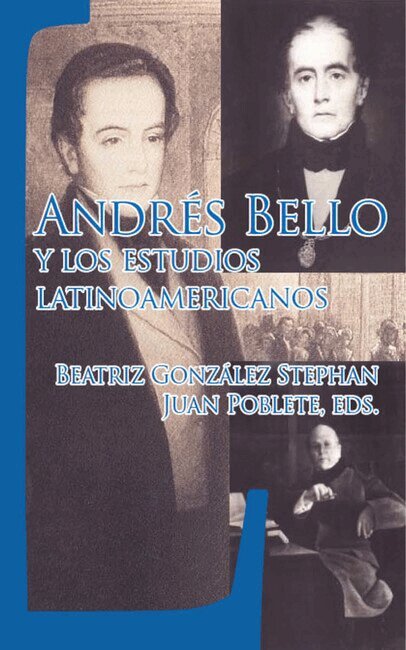
El presente volumen reune trabajos que proponen una mirada crítica actualizada de la obra de Bello, más inscrita dentro de lo que podemos reconocer como la 'nueva historia cultural' o 'crítica cultural postcolonial'. Revisar la obra completa hubiese sido una tarea inabarcable. Se ha tratado sin embargo de evitar el análisis de acuerdo al tradicional reparto de las disciplinas. Con harta frecuencia la bibliografía crítica sobre la obra de Bello la ha anatomizado según las cuadrículas de cierto saber: así, Bello gramático, Bello poeta, Bello historiador, Bello jurista, Bello educador. Aquí los enfoques ha optado más por una perspectiva metodológica interdisciplinaria y/o transdisciplinaria, porque establecen diálogos y conexiones entre diversas discursividades: el Bello que dialoga con las finanzas a la par de estar escribiendo los versos de las Silvas; el Bello que mantiene conservadoramente la lengua de Castilla está pensando en la unidad del continente americano para intervenir agresivamente en el mercado internacional; el Bello que adopta las pautas del derecho internacional de los países europeos para construir el derecho de 'estas gentes' lo hace para desmarginalizar y desubalternizar jurídicamente a las ex-colonias frente a la presión de las grandes potencias imperiales; el Bello que traduce lo hace desde una posición de intelegibilidad que aclimata y adapta los códigos a la cultura receptora porque le preocupa la comprensión cabal de un público lector aún en formación.Colaboran: Graciela Montaldo | Richard Rosa | Andrea Pagni | Francisco Javier Pérez | Alfredo Jocelyn-Holt Letelier | Grínor Rojo | Liliana Obregón Tarazona | Fernando Unzueta | José J. Gómez Asencio | Cecilia Sánchez | Paulette Silva Beauregard | Juan Poblete | Álvaro Contreras | Javier Lasarte Valcárcel | Iván Jaksić~This volume brings together works that propose an updated critical look at Bello's work that is more inscribed within what we can recognize as the ‘new cultural history’ or ‘postcolonial cultural criticism’. Reviewing his complete works would have been an overwhelming task. However, an attempt has been made to avoid analysis following the traditional distribution of disciplines. Too often the critical bibliography on Bello's work has dissected it according to certain frames of knowledge: thus, Bello the grammarian, Bello the poet, Bello the historian, Bello the jurist, Bello the educator. Here the approaches have opted more for an interdisciplinary and/or transdisciplinary methodological perspective, because they establish dialogues and connections between various discourses: the Bello who dialogues with finances while writing the verses of Las Silvas; the Bello, who conservatively maintains the Castilian language, is thinking of the unity of the American continent to intervene aggressively in the international market; the Bello, who adopts the guidelines of international law of European countries to build the rights of ‘these peoples’, does so to legally include and empower the former colonies in the face of pressure from the great imperial powers; the Bello who translates does so from a position of intelligibility that changes and adapts the codes to the receiving culture because he is concerned about the full understanding of a reading public that still learning.Contributors: Graciela Montaldo | Richard Rosa | Andrea Pagni | Francisco Javier Pérez | Alfredo Jocelyn-Holt Letelier | Grínor Rojo | Liliana Obregón Tarazona | Fernando Unzueta | José J. Gómez Asencio | Cecilia Sánchez | Paulette Silva Beauregard | Juan Poblete | Álvaro Contreras | Javier Lasarte Valcárcel | Iván Jaksić
465 kr
Skickas inom 7-10 vardagar
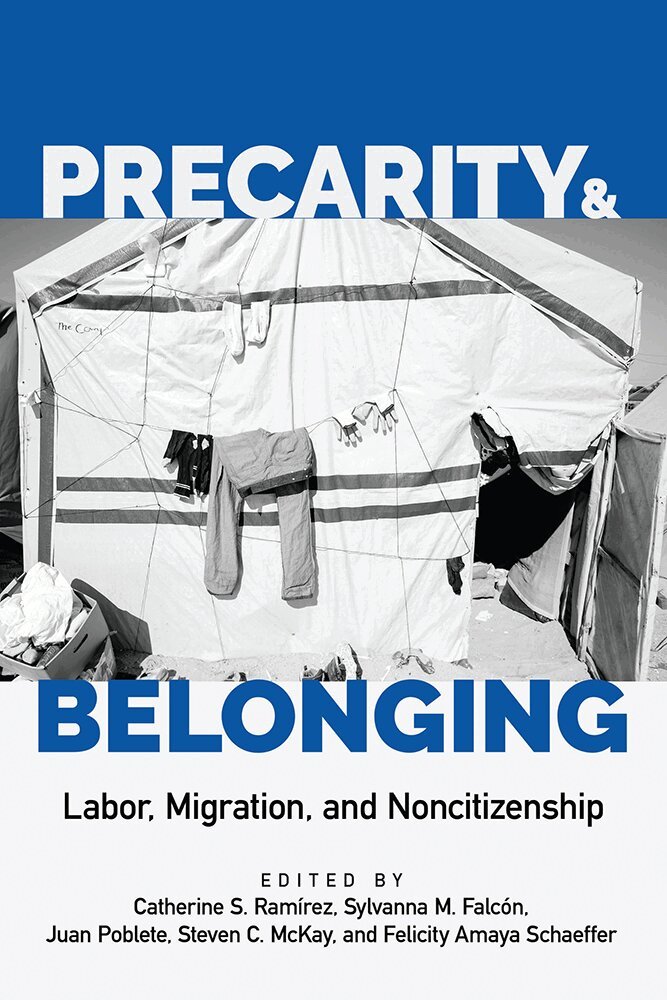
Precarity and Belonging examines how the movement of people and their incorporation, marginalization, and exclusion, under epochal conditions of labor and social precarity affecting both citizens and noncitizens, have challenged older notions of citizenship and alienage. This collection brings mobility, precarity, and citizenship together in order to explore the points of contact and friction, and, thus, the spaces for a possible politics of commonality between citizens and noncitizens.The editors ask: What does modern citizenship mean in a world of citizens, denizens, and noncitizens, such as undocumented migrants, guest workers, permanent residents, refugees, detainees, and stateless people? How is the concept of citizenship, based on assumptions of deservingness, legality, and productivity, challenged when people of various and competing statuses and differential citizenship practices interact with each other, revealing their co-constitutive connections? How is citizenship valued or revalued when labor and social precarity impact those who seemingly have formal rights and those who seemingly or effectively do not? This book interrogates such binaries as citizen/noncitizen, insider/outsider, entitled/unentitled, “legal”/“illegal,” and deserving/undeserving in order to explore the fluidity--that is, the dynamism and malleability--of the spectra of belonging.
1 576 kr
Skickas inom 7-10 vardagar
Precarity and Belonging examines how the movement of people and their incorporation, marginalization, and exclusion, under epochal conditions of labor and social precarity affecting both citizens and noncitizens, have challenged older notions of citizenship and alienage. This collection brings mobility, precarity, and citizenship together in order to explore the points of contact and friction, and, thus, the spaces for a possible politics of commonality between citizens and noncitizens.The editors ask: What does modern citizenship mean in a world of citizens, denizens, and noncitizens, such as undocumented migrants, guest workers, permanent residents, refugees, detainees, and stateless people? How is the concept of citizenship, based on assumptions of deservingness, legality, and productivity, challenged when people of various and competing statuses and differential citizenship practices interact with each other, revealing their co-constitutive connections? How is citizenship valued or revalued when labor and social precarity impact those who seemingly have formal rights and those who seemingly or effectively do not? This book interrogates such binaries as citizen/noncitizen, insider/outsider, entitled/unentitled, “legal”/“illegal,” and deserving/undeserving in order to explore the fluidity--that is, the dynamism and malleability--of the spectra of belonging.
1 761 kr
Kommande
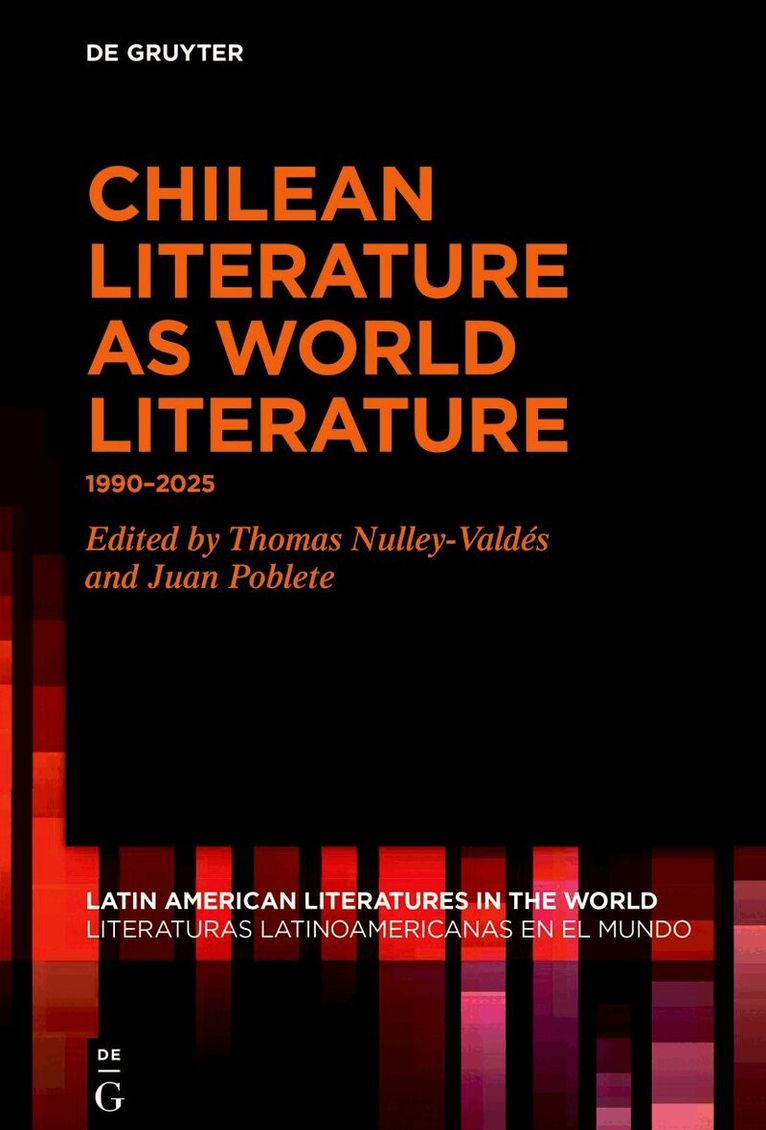
How can we understand the production of Chilean literature in our globalised age? Chilean Literature as World Literature: 1990–2025 brings together leading international critics and theorists exploring the production, circulation, and reception of Chilean literature in times of political and economic upheaval. This groundbreaking volume considers neoliberalism, post-dictatorship, territory, and Indigenous movements as major nation- and world-making processes, and sheds light on the dynamics of Chile’s publishing industry, this recent period of production and its international circulation and reception across various scales of the literary world. It features chapters on canonical world authors such as Isabel Allende and Roberto Bolaño alongside emerging voices like Alejandro Zambra, Nona Fernández, and Benjamín Labatut, as well as anti-canonical figures, exploring how memory, violence, human rights, gender, and cultural resistance have become key mediators of Chilean World Literature.Essential reading for scholars and students of World Literature, this volume shows that understanding Chilean literature requires attention to multiple scales: the subnational, the national, the regional (Latin American), and the global.