Judith Andre – författare
Visar alla böcker från författaren . Handla med fri frakt och snabb leverans.
4 produkter
4 produkter
Inbunden, Engelska, 2015
1 261 kr
Skickas inom 10-15 vardagar
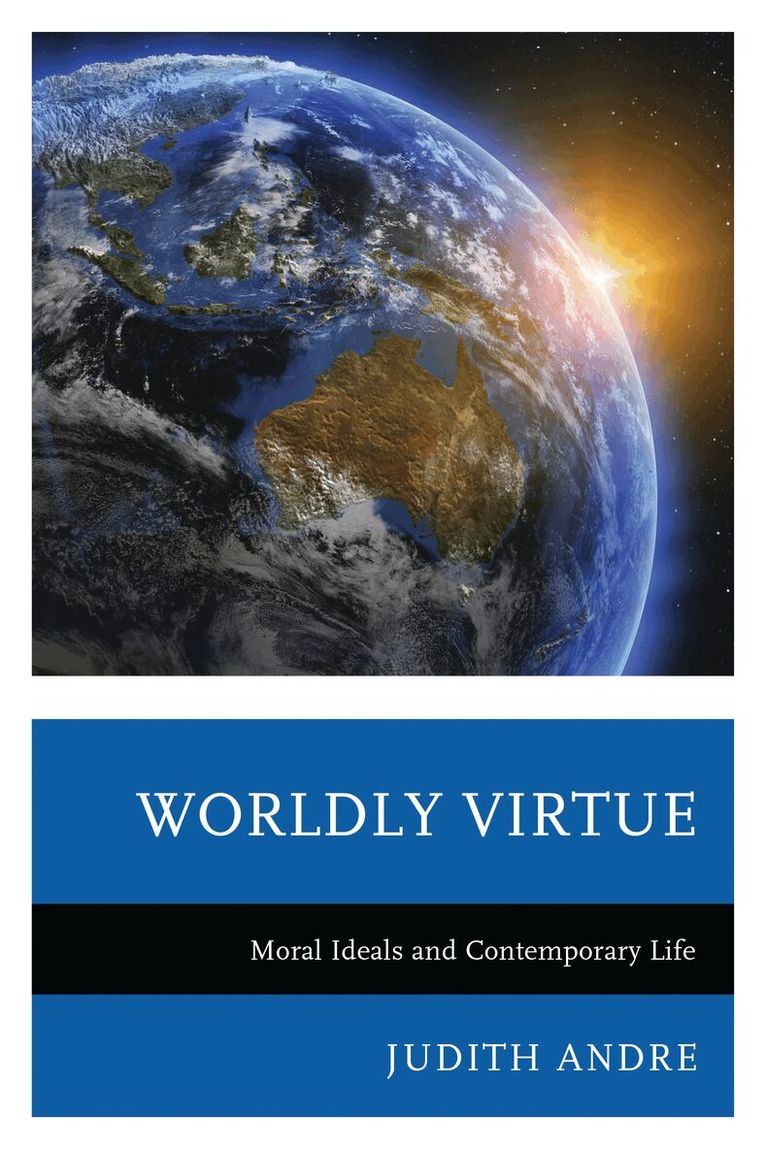
Worldly Virtue argues that general discussions of virtue need to be complemented by attention to specific virtues. Each chapter addresses a single virtue, most of them traditional (e.g., honesty, generosity, and humility), and sometimes newly framed (“earthly virtue,” for instance, and “open hope.”) The final essay breaks ground by identifying virtues specific to the fact that we age. The book draws upon various spiritual traditions, especially Christianity and Buddhism, for what they value and the practices that sustain those values; at times it identifies ways in which each can mislead. The book also draws from contemporary sciences, natural but especially behavioral. Anthropologists and sociologists, for instance, have identified a universal norm of reciprocity; virtuous generosity must respect this need to give back. In another example, new understandings of addiction suggest that temperance requires dealing with pain as much as resisting pleasure. Because no single template applies to every virtue, different questions are asked about each. Nevertheless each chapter addresses the often-neglected question of how the virtue in question is acquired, and how social context can support or impede its acquisition. The book is addressed to philosophers, but may also be of interest in religious studies, for its philosophical development of religious themes.

Häftad, Engelska, 2004
481 kr
Skickas inom 10-15 vardagar
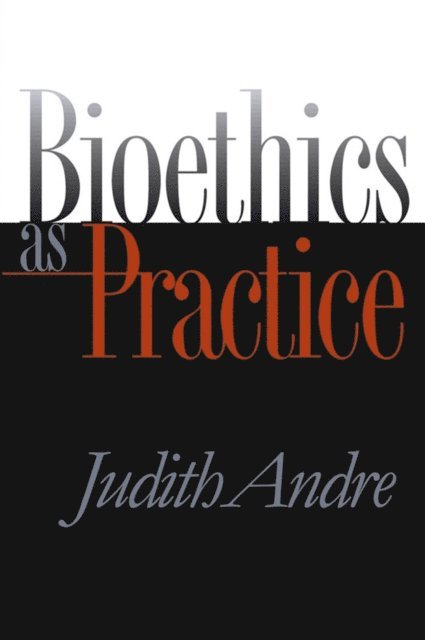
Those who work in bioethics and the medical humanities come from many different backgrounds: health care, philosophy, law, social sciences, religious studies, and more. The work they do also varies widely. Writing as a participant in this developing field, Judith Andre offers a model to unify its diversity. Using the term ""bioethics"" broadly, to include all the medical humanities, she articulates ideals for the field, identifies its temptations and moral pitfalls, and argues for the central importance of certain virtues.
E-bok
Engelska, 2003387 kr
Läs direkt efter köp
Those who work in bioethics and the medical humanities come from many different backgrounds, such as health care, philosophy, law, the social sciences, and religious studies. The work they do also varies widely: consulting on ethical issues in patient care, working with legislatures, dealing with the media, teaching, speaking, writing and more.Writing as a participant in this developing field, Judith Andre offers a model to unify its diversity. Using the term “bioethics” broadly, to include all the medical humanities, she articulates ideals for the field, identifies its temptations and moral pitfalls, and argues for the central importance of certain virtues. Perhaps the most original of these is the virtue of choosing projects well, which demands not only broadening the field’s focus but also understanding the forces that have kept it too narrow. Andre offers an imaginative analysis of the special problems presented by interdisciplinary work and discusses the intellectual virtues necessary for its success. She calls attention to the kinds of professional communities that are necessary to support good work.The book draws from interviews with many people in the field and from the findings of social scientists. It includes the author’s personal reflections, several extended allegories, and philosophical analysis.
E-bok
PDF, Engelska, 2003387 kr
Läs direkt efter köp
Those who work in bioethics and the medical humanities come from many different backgrounds, such as health care, philosophy, law, the social sciences, and religious studies. The work they do also varies widely: consulting on ethical issues in patient care, working with legislatures, dealing with the media, teaching, speaking, writing and more.Writing as a participant in this developing field, Judith Andre offers a model to unify its diversity. Using the term “bioethics” broadly, to include all the medical humanities, she articulates ideals for the field, identifies its temptations and moral pitfalls, and argues for the central importance of certain virtues. Perhaps the most original of these is the virtue of choosing projects well, which demands not only broadening the field’s focus but also understanding the forces that have kept it too narrow. Andre offers an imaginative analysis of the special problems presented by interdisciplinary work and discusses the intellectual virtues necessary for its success. She calls attention to the kinds of professional communities that are necessary to support good work.The book draws from interviews with many people in the field and from the findings of social scientists. It includes the author’s personal reflections, several extended allegories, and philosophical analysis.