Judith F. Duchan - Böcker
Visar alla böcker från författaren Judith F. Duchan. Handla med fri frakt och snabb leverans.
4 produkter
4 produkter
2 044 kr
Skickas inom 10-15 vardagar
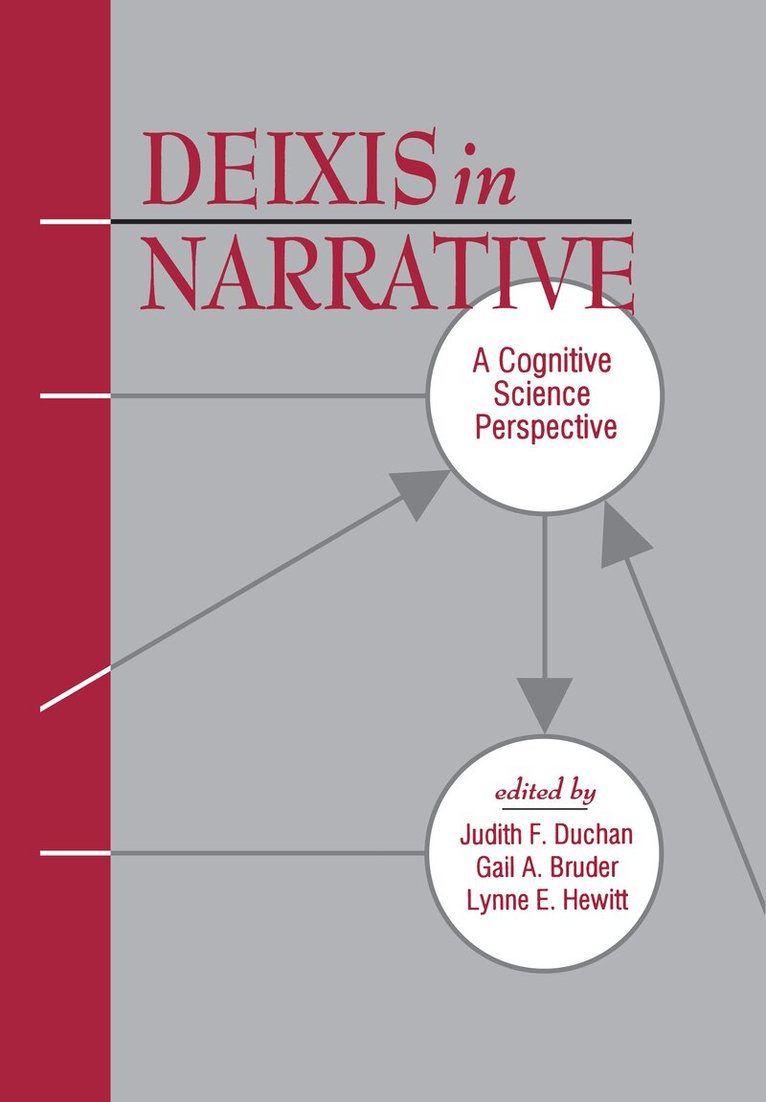
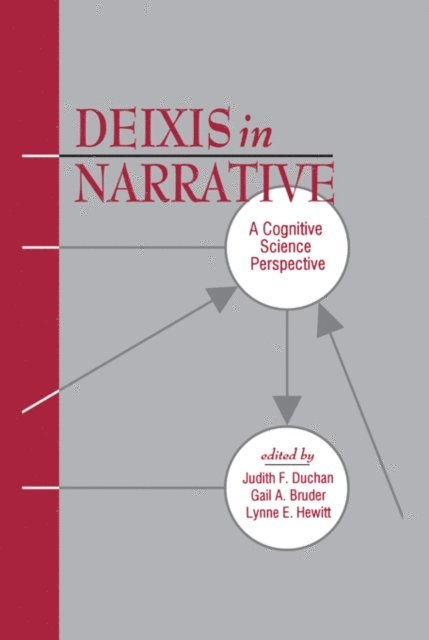
This volume describes the theoretical and empirical results of a seven year collaborative effort of cognitive scientists to develop a computational model for narrative understanding. Disciplines represented include artificial intelligence, cognitive psychology, communicative disorders, education, English, geography, linguistics, and philosophy. The book argues for an organized representational system -- a Deictic Center (DC) -- which is constructed by readers from language in a text combined with their world knowledge. As readers approach a new text they need to gather and maintain information about who the participants are and where and when the events take place. This information plays a central role in understanding the narrative. The editors claim that readers maintain this information without explicit textual reminders by including it in their mental model of the story world. Because of the centrality of the temporal, spatial, and character information in narratives, they developed their notion of a DC as a crucial part of the reader's mental model of the narrative. The events that carry the temporal and spatial core of the narrative are linguistically and conceptually constrained according to certain principles that can be relatively well defined. A narrative obviously unfolds one word, or one sentence, at a time. This volume suggests that cognitively a narrative usually unfolds one place and time at a time. This spatio-temporal location functions as part of the DC of the narrative. It is the "here" and "now" of the reader's "mind's eye" in the world of the story. Organized into seven parts, this book describes the goal of the cognitive science project resulting in this volume, the methodological approaches taken, and the history of the collaborative effort. It provides a historical and theoretical background underlying the DC theory, including discussions of deixis in language and the nature of fiction. It goes on to outline the computational framework and how it is used to represent deixis in narrative, and details the linguistic devices implicated in the DC theory. Other subjects covered include: crosslinguistic indicators of subjectivity, psychological investigations of the use of deixis by children and adults as they process narratives, conversation, direction giving, implications for emerging literacy, and a narrator's experience in writing a short story.
953 kr
Skickas inom 10-15 vardagar
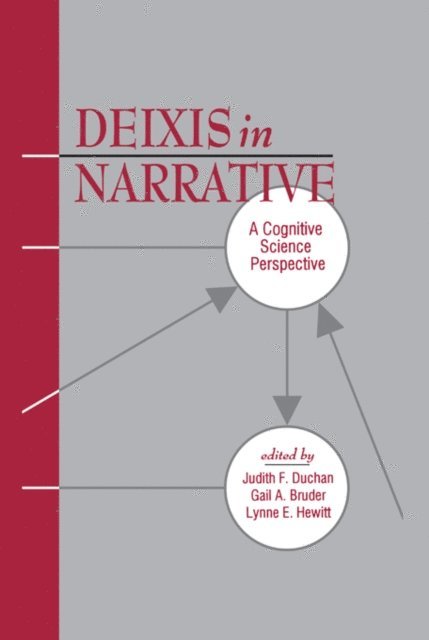
This volume describes the theoretical and empirical results of a seven year collaborative effort of cognitive scientists to develop a computational model for narrative understanding. Disciplines represented include artificial intelligence, cognitive psychology, communicative disorders, education, English, geography, linguistics, and philosophy. The book argues for an organized representational system -- a Deictic Center (DC) -- which is constructed by readers from language in a text combined with their world knowledge. As readers approach a new text they need to gather and maintain information about who the participants are and where and when the events take place. This information plays a central role in understanding the narrative. The editors claim that readers maintain this information without explicit textual reminders by including it in their mental model of the story world. Because of the centrality of the temporal, spatial, and character information in narratives, they developed their notion of a DC as a crucial part of the reader's mental model of the narrative. The events that carry the temporal and spatial core of the narrative are linguistically and conceptually constrained according to certain principles that can be relatively well defined. A narrative obviously unfolds one word, or one sentence, at a time. This volume suggests that cognitively a narrative usually unfolds one place and time at a time. This spatio-temporal location functions as part of the DC of the narrative. It is the "here" and "now" of the reader's "mind's eye" in the world of the story. Organized into seven parts, this book describes the goal of the cognitive science project resulting in this volume, the methodological approaches taken, and the history of the collaborative effort. It provides a historical and theoretical background underlying the DC theory, including discussions of deixis in language and the nature of fiction. It goes on to outline the computational framework and how it is used to represent deixis in narrative, and details the linguistic devices implicated in the DC theory. Other subjects covered include: crosslinguistic indicators of subjectivity, psychological investigations of the use of deixis by children and adults as they process narratives, conversation, direction giving, implications for emerging literacy, and a narrator's experience in writing a short story.
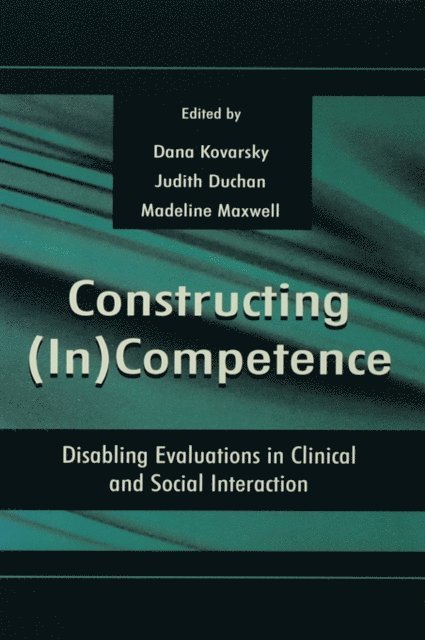
Constructing (in)competence
Disabling Evaluations in Clinical and Social interaction
Inbunden, Engelska, 1999
2 541 kr
Skickas inom 5-8 vardagar
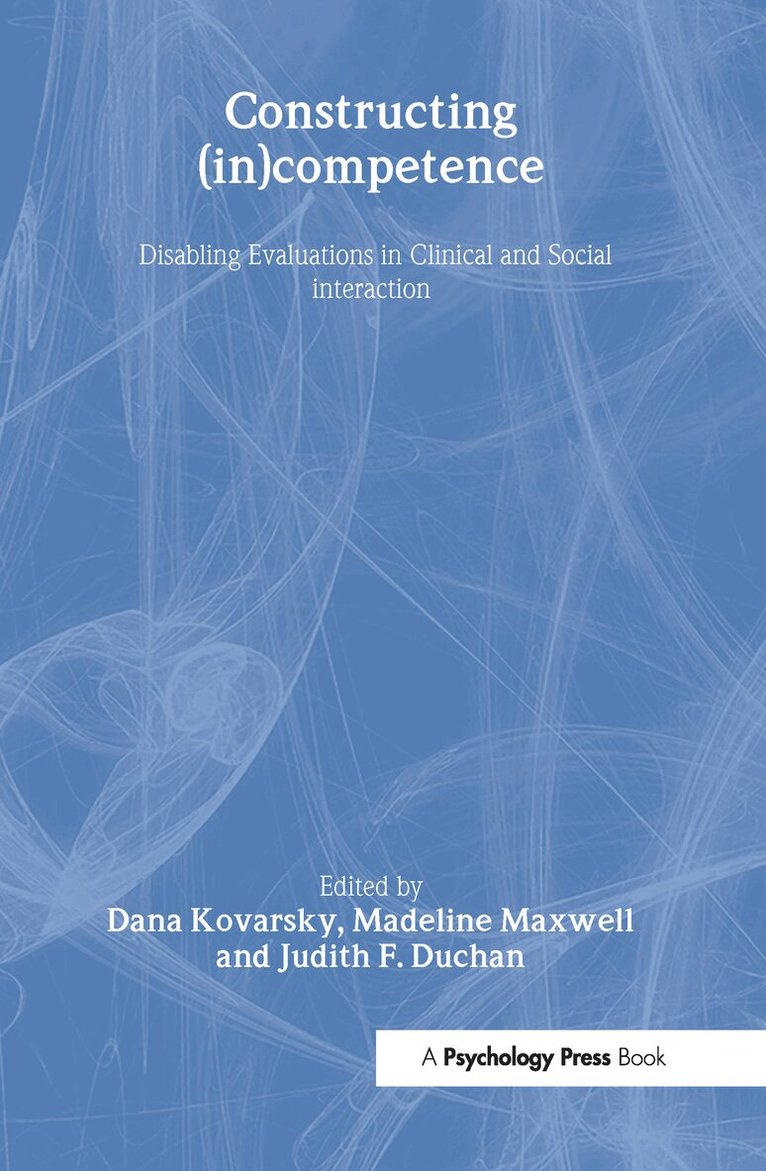
Competence and incompetence are constructs that emerge in the social milieu of everyday life. Individuals are continually making and revising judgments about each other's abilities as they interact. The flexible, situated view of competence conveyed by the research of the authors in this volume is a departure from the way that competence is usually thought about in the fields of communication disabilities and education. In the social constructivist view, competence is not a fixed mass, residing within an individual, or a fixed judgment, defined externally. Rather, it is variable, sensitive to what is going on in the here and now, and coconstructed by those present. Constructions of competence are tied to evaluations implicit in the communication of the participants as well as to explicit evaluations of how things are going.The authors address the social construction of competence in a variety of situations: engaging in therapy for communication and other disorders, working and living with people with disabilities, speaking a second language, living with deafness, and giving and receiving instruction. Their studies focus on adults and children, including those with disabilities (aphasia, traumatic brain injury, augmentative systems users), as they go about managing their lives and identities. They examine the all-important context in which participants make competence judgments, assess the impact of implicit judgments and formal diagnoses, and look at the types of evaluations made during interaction.This book makes an argument all helping professionals need to hear: institutional, clinical, and social practices promoting judgments must be changed to practices that are more positive and empowering.
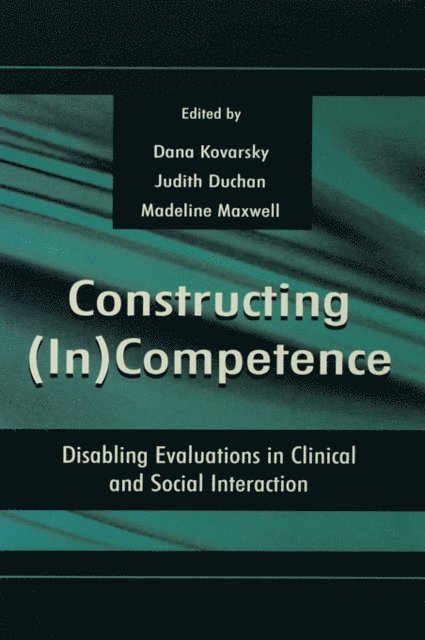
Constructing (in)competence
Disabling Evaluations in Clinical and Social interaction
Häftad, Engelska, 1999
900 kr
Skickas inom 10-15 vardagar
Competence and incompetence are constructs that emerge in the social milieu of everyday life. Individuals are continually making and revising judgments about each other's abilities as they interact. The flexible, situated view of competence conveyed by the research of the authors in this volume is a departure from the way that competence is usually thought about in the fields of communication disabilities and education. In the social constructivist view, competence is not a fixed mass, residing within an individual, or a fixed judgment, defined externally. Rather, it is variable, sensitive to what is going on in the here and now, and coconstructed by those present. Constructions of competence are tied to evaluations implicit in the communication of the participants as well as to explicit evaluations of how things are going.The authors address the social construction of competence in a variety of situations: engaging in therapy for communication and other disorders, working and living with people with disabilities, speaking a second language, living with deafness, and giving and receiving instruction. Their studies focus on adults and children, including those with disabilities (aphasia, traumatic brain injury, augmentative systems users), as they go about managing their lives and identities. They examine the all-important context in which participants make competence judgments, assess the impact of implicit judgments and formal diagnoses, and look at the types of evaluations made during interaction.This book makes an argument all helping professionals need to hear: institutional, clinical, and social practices promoting judgments must be changed to practices that are more positive and empowering.