Judith Scheele - Böcker
Visar alla böcker från författaren Judith Scheele. Handla med fri frakt och snabb leverans.
14 produkter
14 produkter
1 774 kr
Skickas inom 5-8 vardagar
'Community' and 'justice' recur in anthropological, historical, and legal scholarship, yet as concepts they are notoriously slippery. Historians and lawyers look to anthropologists as 'community specialists', but anthropologists often avoid the concept through circumlocution: although much used (and abused) by historians, legal thinkers, and political philosophers, the term remains strikingly indeterminate and often morally overdetermined. 'Justice', meanwhile, is elusive, alternately invoked as the goal of contemporary political theorizing, and wrapped in obscure philosophical controversy. A conceptual knot emerges in much legal and political thought between law, justice, and community, but theories abound, without any agreement over concepts.The contributors to this volume use empirical case studies to unpick threads of this knot. Local codes from Anglo-Saxon England, north Africa, and medieval Armenia indicate disjunctions between community boundaries and the subjects of local rules and categories; processes of justice from early modern Europe to eastern Tibet suggest new ways of conceptualizing the relationship between law and justice; and practices of exile that recur throughout the world illustrate contingent formulations of community. In the first book in the series, Legalism: Anthropology and History, law was addressed through a focus on local legal categories as conceptual tools. Here this approach is extended to the ideas and ideals of justice and community. Rigorous cross-cultural comparison allows the contributors to avoid normative assumptions, while opening new avenues of inquiry for lawyers, anthropologists, and historians alike.
2 393 kr
Skickas inom 5-8 vardagar
Mainstream historians in recent decades have often treated formal categories and rules as something to be 'used' by individuals, as one might use a stick or stone, and the gains of an earlier legal history are often needlessly set aside. Anthropologists, meanwhile, have treated rules as analytic errors and categories as an imposition by outside powers or by analysts, leaving a very thin notion of 'practice' as the stuff of social life. Philosophy of an older vintage, as well as the work of scholars such as Charles Taylor, provides fresh approaches when applied imaginatively to cases beyond the traditional ground of modern Europe and North America. Not only are different kinds of rules and categories open to examination, but the very notion of a rule can be explored more deeply. This volume approaches rules and categories as constitutive of action and hence of social life, but also as providing means of criticism and imagination. A general theoretical framework is derived from analytical philosophy, from Wittgenstein to his critics and beyond, and from recent legal thinkers such as Schauer and Waldron. Case-studies are presented from a broad range of periods and regions, from Amazonia via northern Chad, Tibet, and medieval Russia to the scholarly worlds of Roman law, Islam, and Classical India. As the third volume in the Legalism series, this collection draws on common themes that run throughout the first two volumes: Legalism: Anthropology and History and Legalism: Community and Justice, consolidating them in a framework that suggests a new approach to rule-bound systems.
874 kr
Skickas inom 7-10 vardagar
The Sahara has long been portrayed as a barrier that divides the Mediterranean world from Africa proper and isolates the countries of the Maghrib from their southern and eastern neighbors. Rather than viewing the desert as an isolating barrier, this volume takes up historian Fernand Braudel's description of the Sahara as "the second face of the Mediterranean." The essays recast the history of the region with the Sahara at its center, uncovering a story of densely interdependent networks that span the desert's vast expanse. They explore the relationship between the desert's "islands" and "shores" and the connections and commonalities that unite the region. Contributors draw on extensive ethnographic and historical research to address topics such as trade and migration; local notions of place, territoriality, and movement; Saharan cities; and the links among ecological, regional, and world-historical approaches to understanding the Sahara.
323 kr
Skickas inom 10-15 vardagar
The Sahara has long been portrayed as a barrier that divides the Mediterranean world from Africa proper and isolates the countries of the Maghrib from their southern and eastern neighbors. Rather than viewing the desert as an isolating barrier, this volume takes up historian Fernand Braudel's description of the Sahara as "the second face of the Mediterranean." The essays recast the history of the region with the Sahara at its center, uncovering a story of densely interdependent networks that span the desert's vast expanse. They explore the relationship between the desert's "islands" and "shores" and the connections and commonalities that unite the region. Contributors draw on extensive ethnographic and historical research to address topics such as trade and migration; local notions of place, territoriality, and movement; Saharan cities; and the links among ecological, regional, and world-historical approaches to understanding the Sahara.
901 kr
Skickas inom 7-10 vardagar
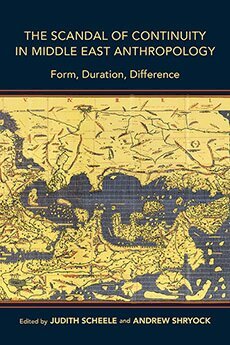
Despite a rich history of ethnographic research in Middle Eastern societies, the region is frequently portrayed as marginal to anthropology. The contributors to this volume reject this view and show how the Middle East is in fact vital to the discipline and how Middle Eastern anthropologists have developed theoretical and methodological tools that address and challenge the region's political, ethical, and intellectual concerns. The contributors to this volume are students of Paul Dresch, an anthropologist known for his incisive work on Yemeni tribalism and customary law. As they expand upon his ideas and insights, these essays ask questions that have long preoccupied anthropologists, such as how do place, point of view, and style combine to create viable bodies of knowledge; how is scholarship shaped by the historical context in which it is located; and why have duration and form become so problematic in the study of Middle Eastern societies? Special attention is given to understanding local terms, contested knowledge claims, what remains unseen and unsaid in social life, and to cultural patterns and practices that persist over long stretches of time, seeming to predate and outlast events. Ranging from Morocco to India, these essays offer critical but sensitive approaches to cultural difference and the distinctiveness of the anthropological project in the Middle East.
362 kr
Skickas inom 7-10 vardagar
Despite a rich history of ethnographic research in Middle Eastern societies, the region is frequently portrayed as marginal to anthropology. The contributors to this volume reject this view and show how the Middle East is in fact vital to the discipline and how Middle Eastern anthropologists have developed theoretical and methodological tools that address and challenge the region's political, ethical, and intellectual concerns. The contributors to this volume are students of Paul Dresch, an anthropologist known for his incisive work on Yemeni tribalism and customary law. As they expand upon his ideas and insights, these essays ask questions that have long preoccupied anthropologists, such as how do place, point of view, and style combine to create viable bodies of knowledge; how is scholarship shaped by the historical context in which it is located; and why have duration and form become so problematic in the study of Middle Eastern societies? Special attention is given to understanding local terms, contested knowledge claims, what remains unseen and unsaid in social life, and to cultural patterns and practices that persist over long stretches of time, seeming to predate and outlast events. Ranging from Morocco to India, these essays offer critical but sensitive approaches to cultural difference and the distinctiveness of the anthropological project in the Middle East.
Smugglers and Saints of the Sahara
Regional Connectivity in the Twentieth Century
Inbunden, Engelska, 2012
1 282 kr
Skickas inom 7-10 vardagar
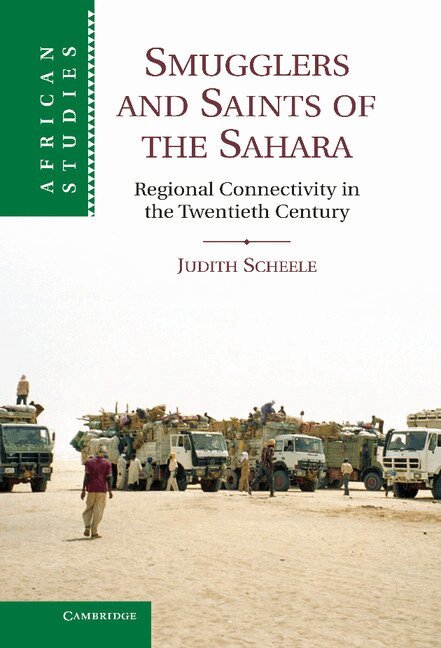
Smugglers and Saints of the Sahara describes life on and around the contemporary border between Algeria and Mali, exploring current developments in a broad historical and socioeconomic context. Basing her findings on long-term fieldwork with trading families, truckers, smugglers and scholars, Judith Scheele investigates the history of contemporary patterns of mobility from the late nineteenth century to the present. Through a careful analysis of family ties and local economic records, this book shows how long-standing mobility and interdependence have shaped not only local economies, but also notions of social hierarchy, morality and political legitimacy, creating patterns that endure today and that need to be taken into account in any empirically-grounded study of the region.
Smugglers and Saints of the Sahara
Regional Connectivity in the Twentieth Century
Häftad, Engelska, 2015
441 kr
Skickas inom 7-10 vardagar
Smugglers and Saints of the Sahara describes life on and around the contemporary border between Algeria and Mali, exploring current developments in a broad historical and socioeconomic context. Basing her findings on long-term fieldwork with trading families, truckers, smugglers and scholars, Judith Scheele investigates the history of contemporary patterns of mobility from the late nineteenth century to the present. Through a careful analysis of family ties and local economic records, this book shows how long-standing mobility and interdependence have shaped not only local economies, but also notions of social hierarchy, morality and political legitimacy, creating patterns that endure today and that need to be taken into account in any empirically-grounded study of the region.
Del 142 - African Studies
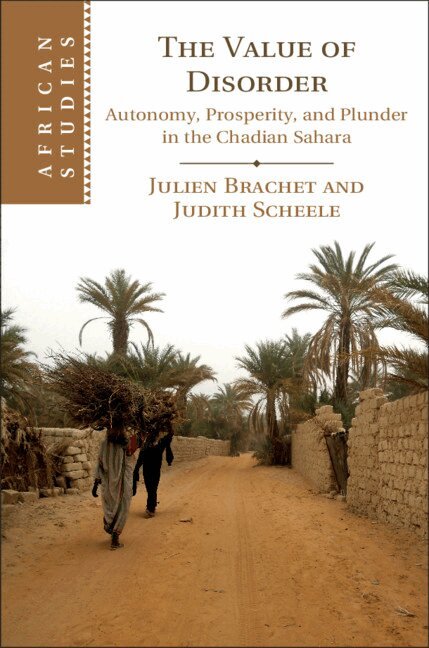
The Value of Disorder
Autonomy, Prosperity, and Plunder in the Chadian Sahara
Inbunden, Engelska, 2019
1 442 kr
Skickas inom 7-10 vardagar
Despite being central to the development of Saharan regional connectivity, northern Chad has been closed to researchers since the late 1960s and thus remains virtually unknown to scholarship. Based on long-term fieldwork, The Value of Disorder is an original and in-depth account of the area and its Tubu majority inhabitants. Julien Brachet and Judith Scheele examine trans-border connectivity and trade; civil war and rebellion; wealth creation and dispersal; labour and gender relations; and aspirations to moral autonomy in northern Chad from an internal point of view - a point of view that in turn participates in a dynamic process of regional interdependence. Vividly ethnographic, the book gives precedence to local categories of value, while asking broader questions about the nature of non-state regional political organisation. Questions that inform current political developments in the Sahara more widely, and have the potential to challenge key concepts in Saharan studies and the social sciences.
Del 142 - African Studies
The Value of Disorder
Autonomy, Prosperity, and Plunder in the Chadian Sahara
Häftad, Engelska, 2020
507 kr
Skickas inom 7-10 vardagar
Despite being central to the development of Saharan regional connectivity, northern Chad has been closed to researchers since the late 1960s and thus remains virtually unknown to scholarship. Based on long-term fieldwork, The Value of Disorder is an original and in-depth account of the area and its Tubu majority inhabitants. Julien Brachet and Judith Scheele examine trans-border connectivity and trade; civil war and rebellion; wealth creation and dispersal; labour and gender relations; and aspirations to moral autonomy in northern Chad from an internal point of view - a point of view that in turn participates in a dynamic process of regional interdependence. Vividly ethnographic, the book gives precedence to local categories of value, while asking broader questions about the nature of non-state regional political organisation. Questions that inform current political developments in the Sahara more widely, and have the potential to challenge key concepts in Saharan studies and the social sciences.
367 kr
Skickas inom 3-6 vardagar
327 kr
Skickas
'Engrossing, enlightening, original ... brilliant' The TimesThis is the story of the Sahara as you've never seen it beforeIn this sweeping, majesterial account, Judith Scheele reveals the rich history and complex reality of the world's largest hot desert. Drawing on decades of research, and years spent living in the region, Scheele leads us from the ancient Roman Empire through the bloody colonial era to the geopolitics of the present - and the race for resources that will define the future. The Sahara covers parts of eleven countries, and Scheele follows in the footsteps and tyre-tracks of the many people who cross the desert, taking us into the homes, mosques, palm groves and battlefields where history is written, spoken and remade.The result is a masterful portrait of the Sahara. Encompassing the geology, religions, peoples and politics that shape and fracture the region, Shifting Sands tells the immersive story of a place whose future holds implications for us all.'A detailed, often gritty, picture of a fragile world ... a clearsighted study of life on the edge' Wall Street Journal'A fascinating and intimate perspective of the region from the ground-up' Barnaby Rogerson
142 kr
Kommande
'A fascinating travelogue and history of the world's largest hot desert ... fresh, original and energising' THE TIMESIn this sweeping account, Judith Scheele reveals the rich history and complex reality of the world's largest hot desert. Drawing on decades of research, and years spent living in the region, Scheele leads us from the ancient Roman Empire through the bloody colonial era to the geopolitics of the present - and the race for resources that will define the future. The Sahara covers parts of eleven countries, and Scheele follows in the footsteps and tyre-tracks of the many people who cross the desert, taking us into the homes, mosques, palm groves and battlefields where history is written, spoken and remade.The result is a masterful portrait of the Sahara. Encompassing the geology, religions, peoples and politics that shape and fracture the region, Shifting Sands tells the immersive story of a place whose future holds implications for us all.
796 kr
Skickas inom 10-15 vardagar
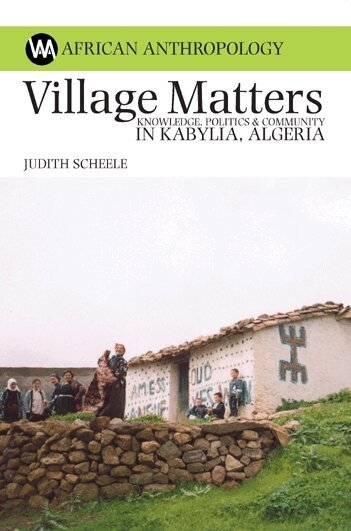
Traces Kabylia's history through French occupation, the Algerian war of independence, and the political turmoil that followed.Kabylia is a Berber-speaking, densely populated mountainous region east of Algiers, that has played an important part in Algerian pre- and post-independence politics, and continues to be troublesome to central government. But 'Kabylia' is also an ideal, shaped and shared by a variety of intellectual trends both in Algeria and in France. Kabylia was seen by sociologically minded nineteenth-century French authors as a model of primitive democracy and became central to their debates about good government, the nature of 'race', nationhood, and the social bond. These qualities have by now largely been appropriated by Kabyles themselves, and have become central to Kabyle self-images discussed on numerous websites run by Kabyle emigrants in France as much as by local parties and associations in Kabylia itself. Central to this image is the Kabyles' attachment to their home villages. But what exactly makes a village a village? And how can this emphasis on communal autonomy be articulated within a modern nation-state? These are the questions this book tries to answer through an in-depth case study of one particular village, analysing the contemporary debates that animate it, and tracing its history through the French conquest and occupation, the Algerian war of independence, and the political turmoil, including the challenge of Islamist politics, that followed independence.The 'village', as much as Kabylia as a whole, emerges as a place made by its internal contradictions, and that can only be understood with reference to the position it occupies within the various intellectual, political, economic and cultural 'world-systems' of which it is part.Judith Scheele is a Research Fellow at Magdalen College, Oxford