Judith Shapiro - Böcker
Visar alla böcker från författaren Judith Shapiro. Handla med fri frakt och snabb leverans.
12 produkter
12 produkter
549 kr
Skickas inom 10-15 vardagar
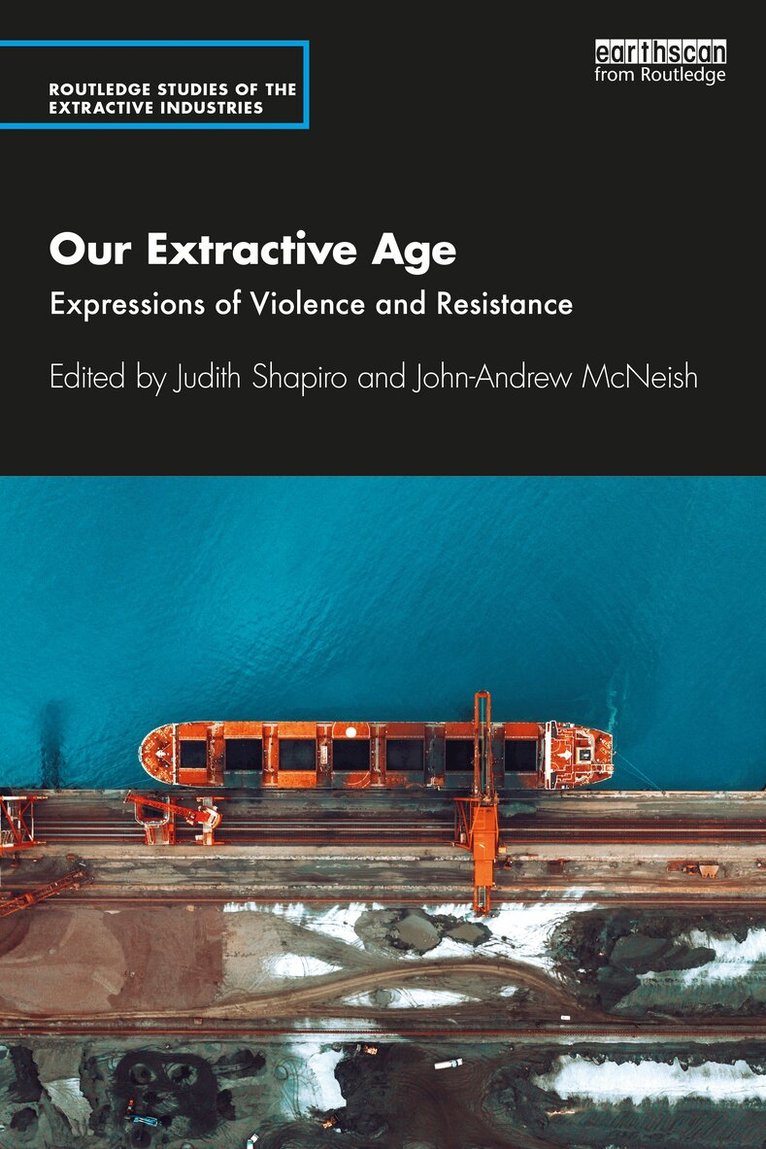
Our Extractive Age: Expressions of Violence and Resistance emphasizes how the spectrum of violence associated with natural resource extraction permeates contemporary collective life. Chronicling the increasing rates of brutal suppression of local environmental and labor activists in rural and urban sites of extraction, this volume also foregrounds related violence in areas we might not expect, such as infrastructural developments, protected areas for nature conservation, and even geoengineering in the name of carbon mitigation. Contributors argue that extractive violence is not an accident or side effect, but rather a core logic of the 21st Century planetary experience. Acknowledgement is made not only of the visible violence involved in the securitization of extractive enclaves, but also of the symbolic and structural violence that the governance, economics, and governmentality of extraction have produced. Extractive violence is shown not only to be a spectacular event, but an extended dynamic that can be silent, invisible, and gradual. The volume also recognizes that much of the new violence of extraction has become cloaked in the discourse of "green development," "green building," and efforts to mitigate the planetary environmental crisis through totalizing technologies. Ironically, green technologies and other contemporary efforts to tackle environmental ills often themselves depend on the continuance of social exploitation and the contaminating practices of non-renewable extraction. But as this volume shows, resistance is also as multi-scalar and heterogeneous as the violence it inspires. The book is essential reading for activists and for students and scholars of environmental politics, natural resource management, political ecology, sustainable development, and globalization.
2 088 kr
Skickas inom 10-15 vardagar
Our Extractive Age: Expressions of Violence and Resistance emphasizes how the spectrum of violence associated with natural resource extraction permeates contemporary collective life. Chronicling the increasing rates of brutal suppression of local environmental and labor activists in rural and urban sites of extraction, this volume also foregrounds related violence in areas we might not expect, such as infrastructural developments, protected areas for nature conservation, and even geoengineering in the name of carbon mitigation. Contributors argue that extractive violence is not an accident or side effect, but rather a core logic of the 21st Century planetary experience. Acknowledgement is made not only of the visible violence involved in the securitization of extractive enclaves, but also of the symbolic and structural violence that the governance, economics, and governmentality of extraction have produced. Extractive violence is shown not only to be a spectacular event, but an extended dynamic that can be silent, invisible, and gradual. The volume also recognizes that much of the new violence of extraction has become cloaked in the discourse of "green development," "green building," and efforts to mitigate the planetary environmental crisis through totalizing technologies. Ironically, green technologies and other contemporary efforts to tackle environmental ills often themselves depend on the continuance of social exploitation and the contaminating practices of non-renewable extraction. But as this volume shows, resistance is also as multi-scalar and heterogeneous as the violence it inspires. The book is essential reading for activists and for students and scholars of environmental politics, natural resource management, political ecology, sustainable development, and globalization.
219 kr
Skickas inom 5-8 vardagar
1 282 kr
Skickas inom 7-10 vardagar
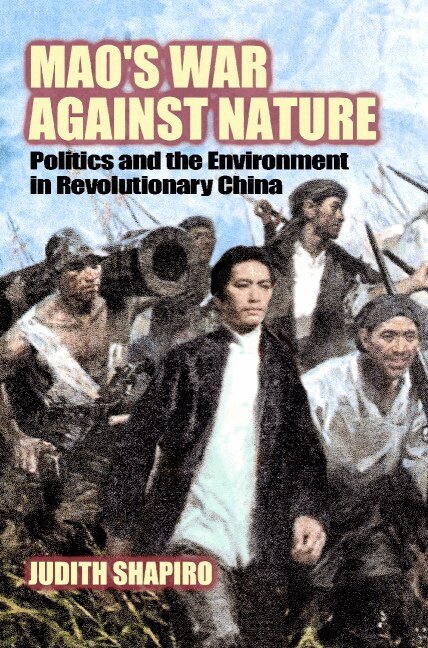
Judith Shapiro, in clear and compelling prose, relates the great, untold story of the devastating impact of Chinese politics on China's environment during the Mao years. Maoist China provides an example of extreme human interference in the natural world in an era in which human relationships were also unusually distorted. Under Mao, the traditional Chinese ideal of 'harmony between heaven and humans' was abrogated in favor of Mao's insistence that 'People Will Conquer Nature'. Mao and the Chinese Communist Party's 'war' to bend the physical world to human will often had disastrous consequences both for human beings and the natural environment. Mao's War Against Nature argues that the abuse of people and the abuse of nature are often linked. Shapiro's account, told in part through the voices of average Chinese citizens and officials who lived through and participated in some of the destructive campaigns, is both eye-opening and heartbreaking.
370 kr
Skickas inom 7-10 vardagar
Judith Shapiro, in clear and compelling prose, relates the great, untold story of the devastating impact of Chinese politics on China's environment during the Mao years. Maoist China provides an example of extreme human interference in the natural world in an era in which human relationships were also unusually distorted. Under Mao, the traditional Chinese ideal of 'harmony between heaven and humans' was abrogated in favor of Mao's insistence that 'People Will Conquer Nature'. Mao and the Chinese Communist Party's 'war' to bend the physical world to human will often had disastrous consequences both for human beings and the natural environment. Mao's War Against Nature argues that the abuse of people and the abuse of nature are often linked. Shapiro's account, told in part through the voices of average Chinese citizens and officials who lived through and participated in some of the destructive campaigns, is both eye-opening and heartbreaking.
199 kr
Tillfälligt slut
1 547 kr
Skickas inom 7-10 vardagar
This book addresses the controversial call for international labor standards, seeking to productively further this debate by considering the economic implications and history of these standards. A result of an initiative by Professor Kaushik Basu in his capacity as member of the Expert Group of Development Issues (EGDI) sponsored by the Swedish Foreign Ministry, the contributions are based on discussions at a seminar held in Stockholm in August 2001. Compiling the best research in the field, this book provides a solid basis for policy decisions, while also serving as a challenging text for students in trade, development, and labor economics. Analyzes the economic implications and history of international labor standards. Productively furthers the debate about intervening with international labor standardsStems from a seminar organized through the Expert Group on Development Issues (EGDI), sponsored by the Swedish Ministry of Foreign Affairs.
684 kr
Skickas inom 7-10 vardagar
This book addresses the controversial call for international labor standards, seeking to productively further this debate by considering the economic implications and history of these standards. A result of an initiative by Professor Kaushik Basu in his capacity as member of the Expert Group of Development Issues (EGDI) sponsored by the Swedish Foreign Ministry, the contributions are based on discussions at a seminar held in Stockholm in August 2001. Compiling the best research in the field, this book provides a solid basis for policy decisions, while also serving as a challenging text for students in trade, development, and labor economics. Analyzes the economic implications and history of international labor standards. Productively furthers the debate about intervening with international labor standardsStems from a seminar organized through the Expert Group on Development Issues (EGDI), sponsored by the Swedish Ministry of Foreign Affairs.
640 kr
Skickas inom 7-10 vardagar
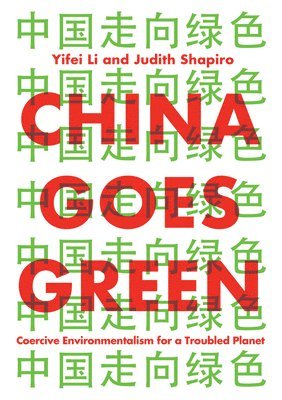
What does it mean for the future of the planet when one of the world’s most durable authoritarian governance systems pursues “ecological civilization”? Despite its staggering pollution and colossal appetite for resources, China exemplifies a model of state-led environmentalism which concentrates decisive political, economic, and epistemic power under centralized leadership. On the face of it, China seems to embody hope for a radical new approach to environmental governance. In this thought-provoking book, Yifei Li and Judith Shapiro probe the concrete mechanisms of China’s coercive environmentalism to show how ‘going green’ helps the state to further other agendas such as citizen surveillance and geopolitical influence. Through top-down initiatives, regulations, and campaigns to mitigate pollution and environmental degradation, the Chinese authorities also promote control over the behavior of individuals and enterprises, pacification of borderlands, and expansion of Chinese power and influence along the Belt and Road and even into the global commons. Given the limited time that remains to mitigate climate change and protect millions of species from extinction, we need to consider whether a green authoritarianism can show us the way. This book explores both its promises and risks.
247 kr
Skickas
What does it mean for the future of the planet when one of the world’s most durable authoritarian governance systems pursues “ecological civilization”? Despite its staggering pollution and colossal appetite for resources, China exemplifies a model of state-led environmentalism which concentrates decisive political, economic, and epistemic power under centralized leadership. On the face of it, China seems to embody hope for a radical new approach to environmental governance. In this thought-provoking book, Yifei Li and Judith Shapiro probe the concrete mechanisms of China’s coercive environmentalism to show how ‘going green’ helps the state to further other agendas such as citizen surveillance and geopolitical influence. Through top-down initiatives, regulations, and campaigns to mitigate pollution and environmental degradation, the Chinese authorities also promote control over the behavior of individuals and enterprises, pacification of borderlands, and expansion of Chinese power and influence along the Belt and Road and even into the global commons. Given the limited time that remains to mitigate climate change and protect millions of species from extinction, we need to consider whether a green authoritarianism can show us the way. This book explores both its promises and risks.
688 kr
Skickas inom 7-10 vardagar
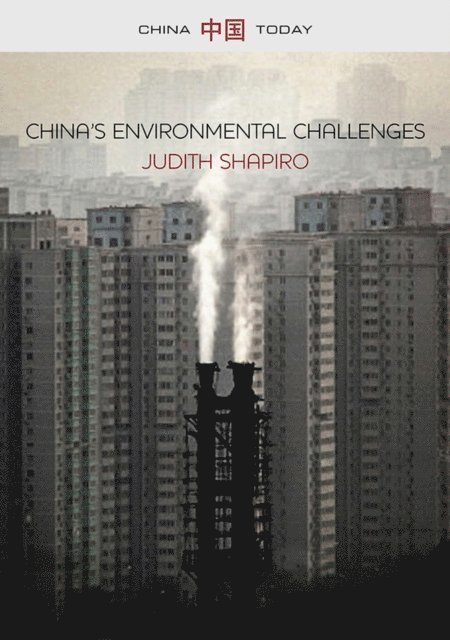
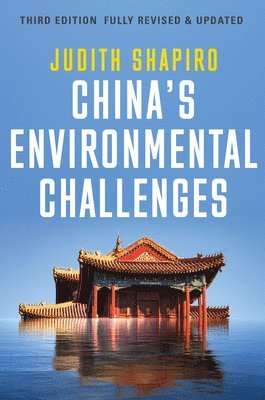
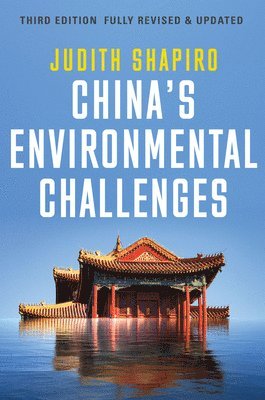
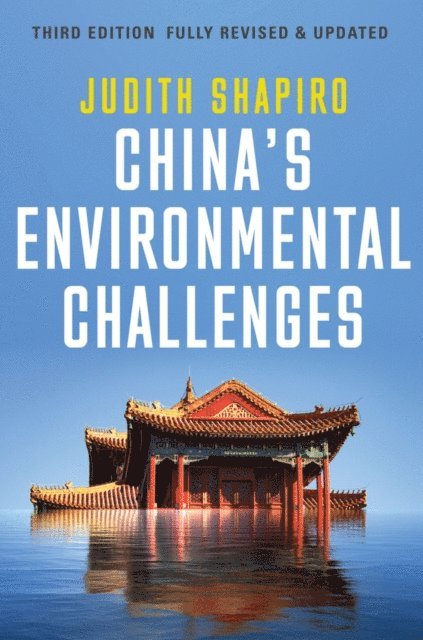
China’s huge environmental challenges affect not only the health and well-being of China but the very future of the planet. In this fully revised and updated third edition of her acclaimed book, noted scholar of Chinese environmentalism Judith Shapiro explores China’s struggle to achieve the ‘ecological civilization’ championed by Xi Jinping since 2017. Drawing on six core analytical concepts - globalization, governance, national identity, civil society, environmental justice, and extractivism - Shapiro ably demonstrates the multifaceted and complex nature of this struggle. China’s precipitous economic growth has carried a heavy cost in air and water pollution, soil contamination, and loss of habitat for the biodiversity upon which human life depends. But its quest for sustainability has been further hampered by authoritarian governance patterns, soaring middle class consumption, the need to provide employment and safety nets for a population of more than one billion, and a manufacturing sector thirsty to secure global resources and sell to new markets. Transformation to a more sustainable development model is still possible. But, as Shapiro persuasively argues, this will require humility, creativity, and a rejection of business as usual. China – and the planet – are at a pivotal moment.
244 kr
Skickas inom 7-10 vardagar
China’s huge environmental challenges affect not only the health and well-being of China but the very future of the planet. In this fully revised and updated third edition of her acclaimed book, noted scholar of Chinese environmentalism Judith Shapiro explores China’s struggle to achieve the ‘ecological civilization’ championed by Xi Jinping since 2017. Drawing on six core analytical concepts - globalization, governance, national identity, civil society, environmental justice, and extractivism - Shapiro ably demonstrates the multifaceted and complex nature of this struggle. China’s precipitous economic growth has carried a heavy cost in air and water pollution, soil contamination, and loss of habitat for the biodiversity upon which human life depends. But its quest for sustainability has been further hampered by authoritarian governance patterns, soaring middle class consumption, the need to provide employment and safety nets for a population of more than one billion, and a manufacturing sector thirsty to secure global resources and sell to new markets. Transformation to a more sustainable development model is still possible. But, as Shapiro persuasively argues, this will require humility, creativity, and a rejection of business as usual. China – and the planet – are at a pivotal moment.