Juha A. Vuori - Böcker
Visar alla böcker från författaren Juha A. Vuori. Handla med fri frakt och snabb leverans.
4 produkter
4 produkter
2 238 kr
Skickas inom 10-15 vardagar
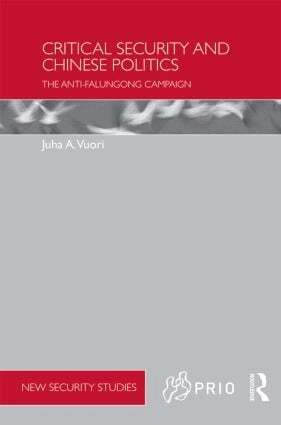
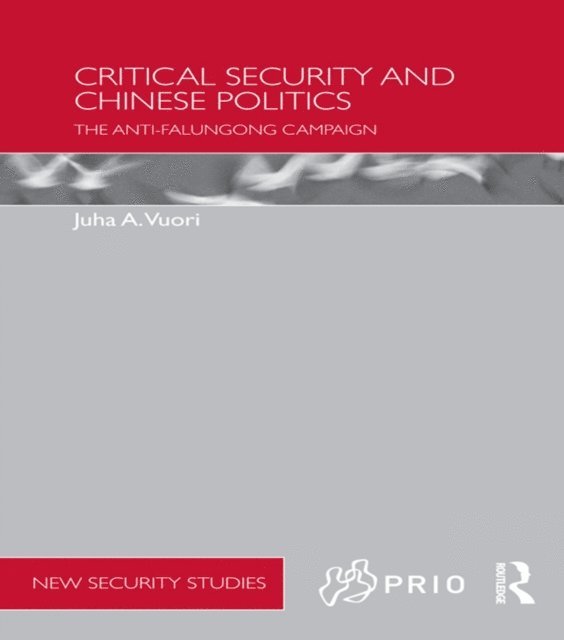
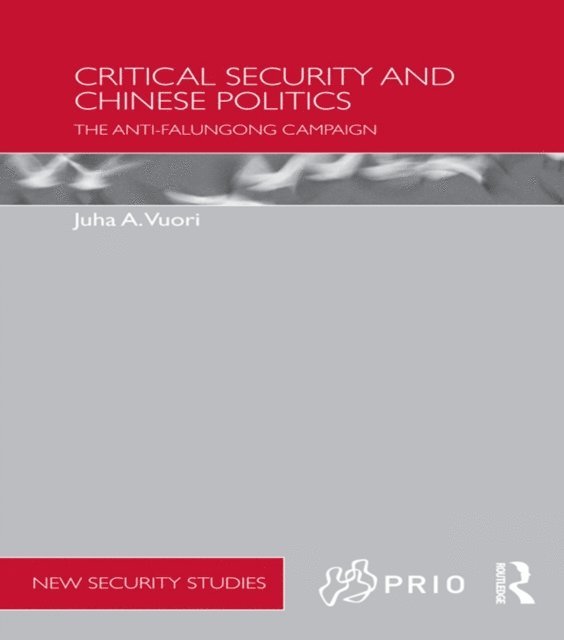
This book examines how critical approaches to security developed in Europe can be used to investigate a Chinese security issue - the case of the Falungong. The past few decades have produced a rich field of theoretical approaches to ‘security’ in Europe. In this book, the security-specific notions of securitization, the politics of insecurity, and emancipation are used as analytical approaches to investigate the anti-Falungong campaign in the People’s Republic of China. This campaign, launched in 1999, was the largest security-related propaganda campaign since 1989 and was directed against a group of qigong-practitioners who were presented as a grave threat to society. The campaign had major impacts as new security legislation was established and human rights organizations reported severe mistreatment of practitioners. This book approaches one empirical case with three approaches in order to transcend the tendency to pit one approach against another. It shows how they highlight different aspects in investigation, and how they can be combined to gain more comprehensive insights, and thereby invigorate renewed debate in the field. Furthermore, this is used as a vehicle to discuss more general philosophical issues of theory, development, and theory development and will assist students to comprehend the effects research framework selection has on a piece of research. Such discussions are necessary in order to apply the frameworks in investigations that go beyond the socio-political context they were originally developed in. This book will be of interest to students of critical security studies, Chinese politics, research methods and IR in general.
2 103 kr
Skickas inom 10-15 vardagar
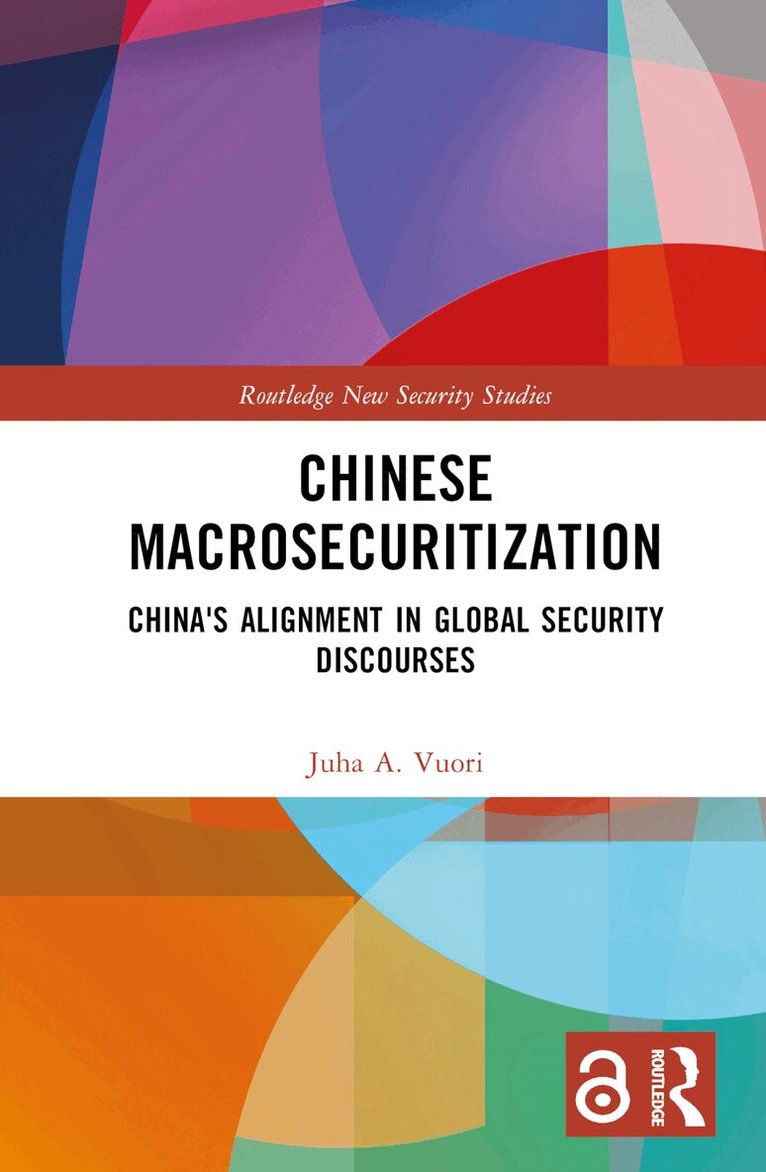
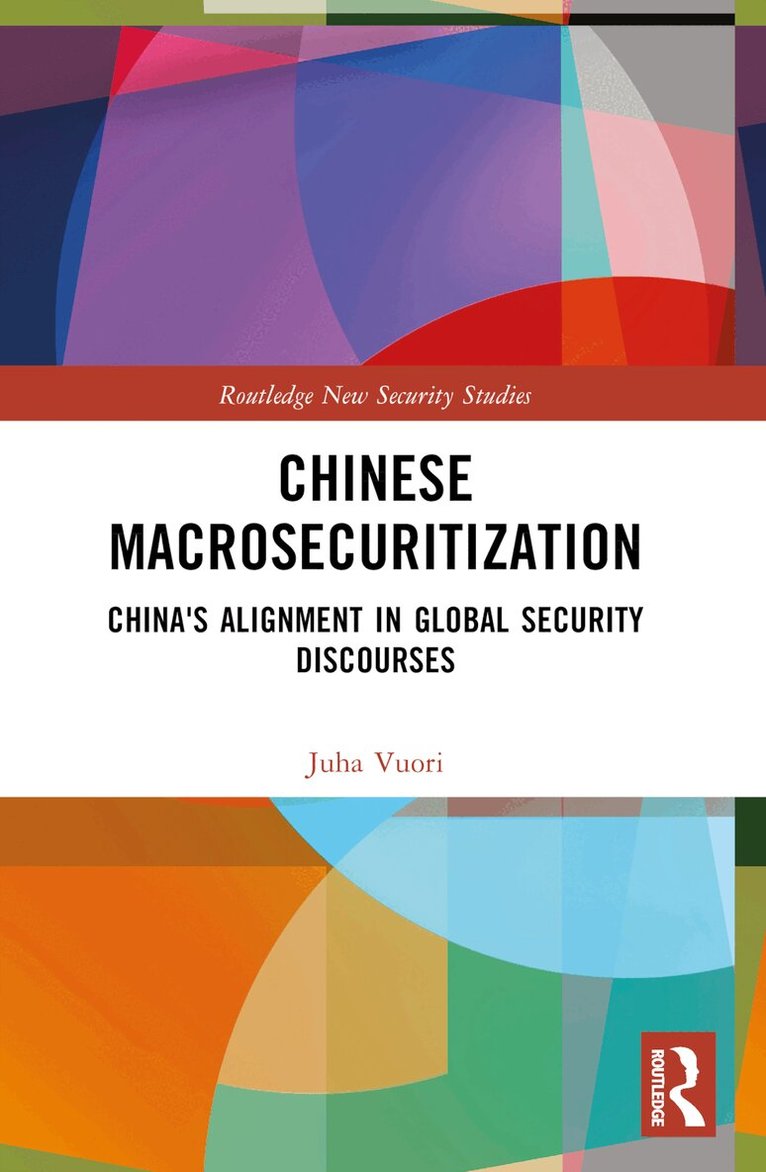
This book provides a holistic picture of Chinese global security discourses, with a focus on macrosecuritizations.The work examines how the People’s Republic of China (PRC) has aligned itself within global security discourses. This is approached through the theory of securitization, specifically by using the notion of macrosecuritization as the lens for its analysis. The book offers the first full account of Chinese macrosecuritization discourses and alignments, and it aims to discern what security speech with referent objects such as humanity, civilization, or nature has done in the domestic and international politics of China. Specifically, the work focuses on the discourses of the Cold War, anti-nuclear weapons, climate change, and the Global War on Terror, which have all been postulated in the literature as macrosecuritizations. In addition, it examines discourses with global referent objects that have been put forth by the PRC so that we can see whether its proposals for global security governance take the form of, or are legitimated through, macrosecuritization. The overall argument in the book is that the way contemporary China uses macrosecuritization discourses provides for ontological security as its position in relation to other major powers is undergoing transformation, by allowing it to maintain a consistent narrative of its international self that abides by its own set of moral values and sense of worth.This book will be of interest to students of critical security studies, Chinese politics and International Relations.The Open Access version of this book, available at www.taylorfrancis.com, has been made available under a Creative Commons Attribution-NonCommercial-ShareAlike (CC-BY-NC-SA) 4.0 International.
629 kr
Skickas inom 10-15 vardagar
This book provides a holistic picture of Chinese global security discourses, with a focus on macrosecuritizations.The work examines how the People’s Republic of China (PRC) has aligned itself within global security discourses. This is approached through the theory of securitization, specifically by using the notion of macrosecuritization as the lens for its analysis. The book offers the first full account of Chinese macrosecuritization discourses and alignments, and it aims to discern what security speech with referent objects such as humanity, civilization, or nature has done in the domestic and international politics of China. Specifically, the work focuses on the discourses of the Cold War, anti-nuclear weapons, climate change, and the Global War on Terror, which have all been postulated in the literature as macrosecuritizations. In addition, it examines discourses with global referent objects that have been put forth by the PRC so that we can see whether its proposals for global security governance take the form of, or are legitimated through, macrosecuritization. The overall argument in the book is that the way contemporary China uses macrosecuritization discourses provides for ontological security as its position in relation to other major powers is undergoing transformation, by allowing it to maintain a consistent narrative of its international self that abides by its own set of moral values and sense of worth.This book will be of interest to students of critical security studies, Chinese politics and International Relations.The Open Access version of this book, available at www.taylorfrancis.com, has been made available under a Creative Commons Attribution-NonCommercial-ShareAlike (CC-BY-NC-SA) 4.0 International.
751 kr
Skickas inom 10-15 vardagar
This book examines how critical approaches to security developed in Europe can be used to investigate a Chinese security issue - the case of the Falungong. The past few decades have produced a rich field of theoretical approaches to ‘security’ in Europe. In this book, the security-specific notions of securitization, the politics of insecurity, and emancipation are used as analytical approaches to investigate the anti-Falungong campaign in the People’s Republic of China. This campaign, launched in 1999, was the largest security-related propaganda campaign since 1989 and was directed against a group of qigong-practitioners who were presented as a grave threat to society. The campaign had major impacts as new security legislation was established and human rights organizations reported severe mistreatment of practitioners. This book approaches one empirical case with three approaches in order to transcend the tendency to pit one approach against another. It shows how they highlight different aspects in investigation, and how they can be combined to gain more comprehensive insights, and thereby invigorate renewed debate in the field. Furthermore, this is used as a vehicle to discuss more general philosophical issues of theory, development, and theory development and will assist students to comprehend the effects research framework selection has on a piece of research. Such discussions are necessary in order to apply the frameworks in investigations that go beyond the socio-political context they were originally developed in. This book will be of interest to students of critical security studies, Chinese politics, research methods and IR in general.