Julia Malitska – författare
Visar alla böcker från författaren Julia Malitska. Handla med fri frakt och snabb leverans.
5 produkter
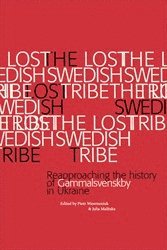
The Lost Swedish Tribe : reapproaching the history of Gammalsvenskby in Ukraine
Av Piotr Wawrzeniuk, Julia Malitska
Häftad, 2014
179 kr
Lägg i varukorg
In the spring of 1782 a group of peasants of Swedish origin reached their destination on the right bank of Dnipro River in Ukraine. The village they founded became known as “Gammalsvenskby” (Russian “Staroshvedskoe,” English “Old Swedish Village”). In the 1880s links were established with Sweden …
Consumption and Advertising in Eastern Europe and Russia in the Twentieth Century
Av Magdalena Eriksroed-Burger, Heidi Hein-Kircher m. fl.
Inbunden, 2023
1692 kr
Lägg i varukorg
This book explores Eastern European consumer cultures in the twentieth century, taking a comparative perspective and conceptualizing the peculiarities of consumption in the region. Contributions cover lifestyles and marketing strategies in imperial contexts in the late nineteenth and early …
Consumption and Advertising in Eastern Europe and Russia in the Twentieth Century
Av Julia Malitska, Heidi Hein-Kircher m. fl.
E-bok, 2023
2174 kr
Lägg i varukorg
This book explores Eastern European consumer cultures in the twentieth century, taking a comparative perspective and conceptualizing the peculiarities of consumption in the region. Contributions cover lifestyles and marketing strategies in imperial contexts in the late nineteenth and early …
Consumption and Advertising in Eastern Europe and Russia in the Twentieth Century
Av Magdalena Eriksroed-Burger, Heidi Hein-Kircher m. fl.
Häftad, 2024
1692 kr
Lägg i varukorg
This book explores Eastern European consumer cultures in the twentieth century, taking a comparative perspective and conceptualizing the peculiarities of consumption in the region. Contributions cover lifestyles and marketing strategies in imperial contexts in the late nineteenth and early …
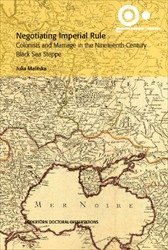
Negotiating Imperial Rule : Colonists and Marriage in the Nineteenth-century Black Sea Steppe
Häftad, 2017
239 kr
Lägg i varukorg
In the beginning of the nineteenth century, tsar Alexander I set new conditions for Russian immigration policy. Immigrants from troubled German lands were to be sent into the Northern Black Sea Steppe during a state-sponsored colonization. Categorized by officialdom as “German colonists,” the …