Julián Jiménez Heffernan - Böcker
Visar alla böcker från författaren Julián Jiménez Heffernan. Handla med fri frakt och snabb leverans.
6 produkter
6 produkter
2 652 kr
Skickas inom 10-15 vardagar
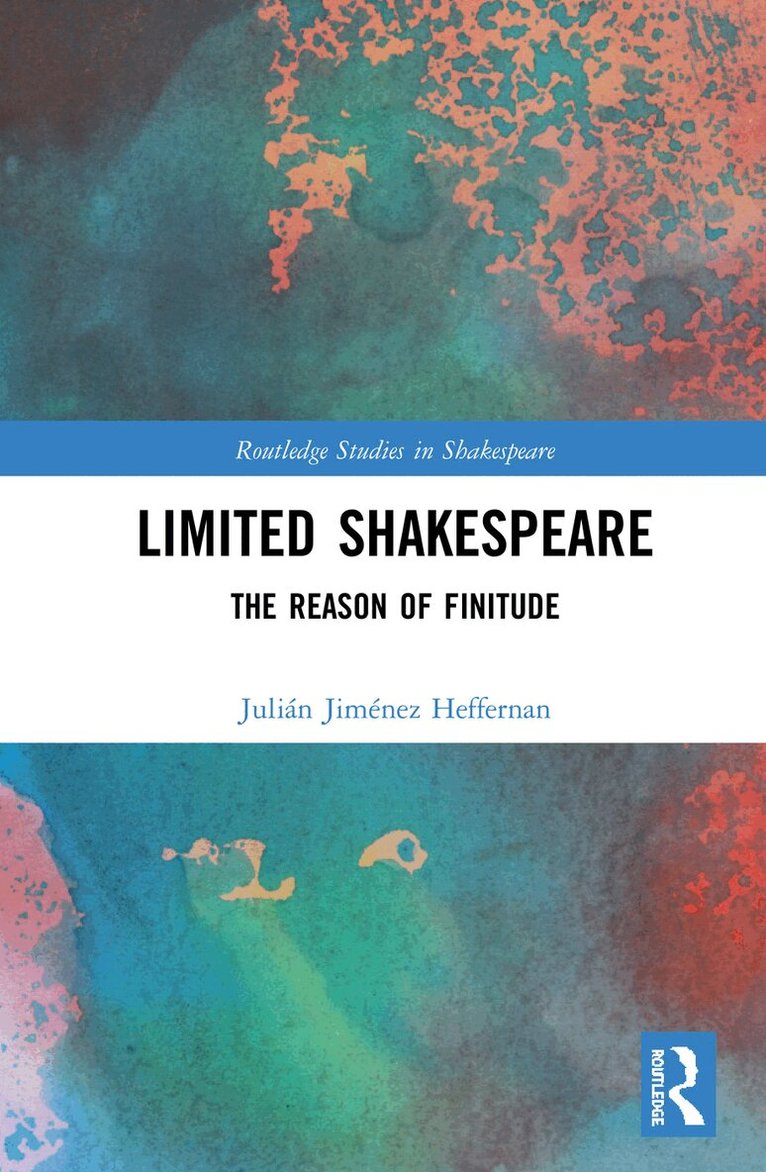
Shakespeare’s poetic-dramatic worlds are inescapably limited. There is always, in his poems and plays, a force (a contingent drive, a pre-textual undertow, a rational-critical momentum, an ironic stance, the deflections of error) coercing plot and meaning to their end. By examining the work of limits in the sonnets and in five of his plays, this book seeks not only to highlight the poet’s steadfast commitment to critical rationality. It also aims to plead a case of hermeneutic continence. Present-day appraisals of Shakespeare’s world-making and meaning-projecting potential are often overruled by a neo-romantic and phenomenological celebration of plenty. This pre-critical tendency unwittingly obtains epistemic legitimation from philosophical quarters inspired by Alain Badiou’s derisive rejection of "the pathos of finitude". But finitude is much more than a modish, neo-existentialist, watchword. It is what is left of ontology when reason is done. And cool reason was already at work before Kant. In accounting for the way in which Shakespeare places limits to life (Romeo and Juliet), to experience (The Tempest), to love (the Sonnets), to time (Macbeth), to the world (Hamlet) and to knowledge (Othello), Limited Shakespeare: The Reason of Finitude aims to underscore the deeply mediated dimension of Shakespearean experience, always over-determined by the twin forces of contingency and textual determinism, and his meta-rational and virtually ironic taste for irrational, accidental, and error-driven limits (bonds, bounds, deaths).
2 419 kr
Skickas inom 10-15 vardagar
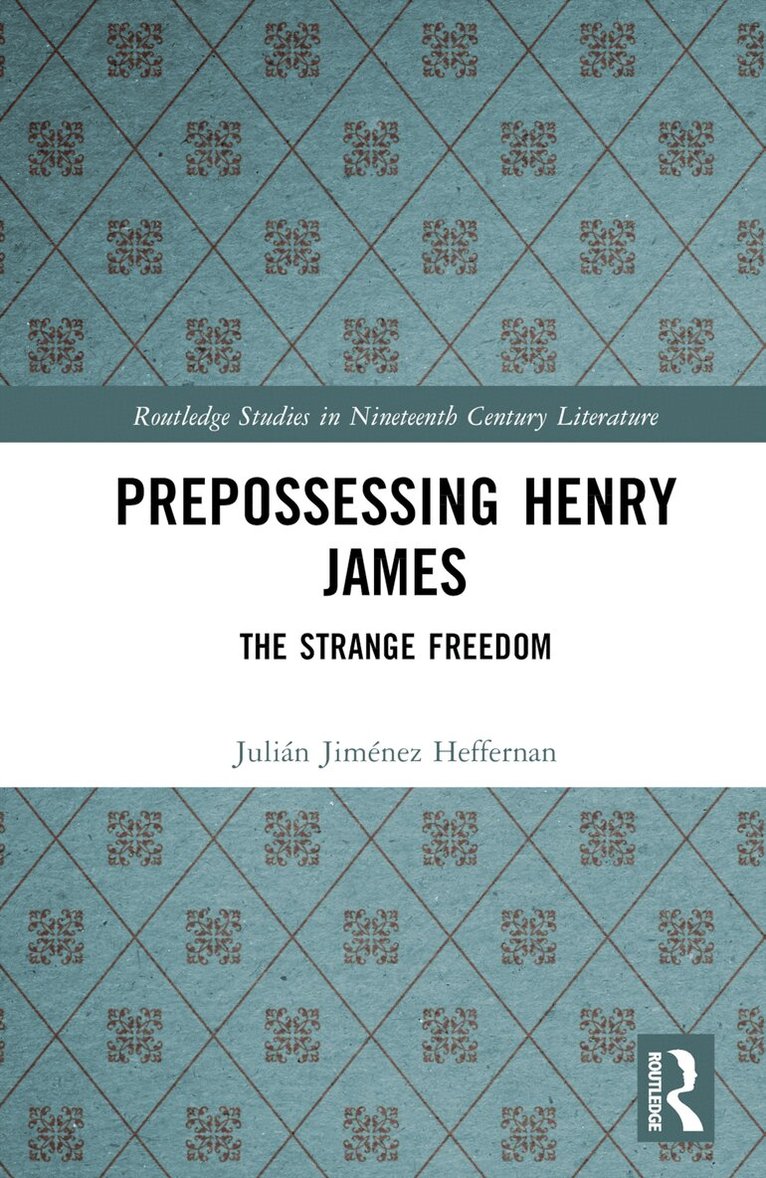
The novels of Henry James are filled with ghosts, but most of them escape dramatic treatment. These elusive specters are the voices of precursors that haunt his narratives, compromising their constitutive freedom. The Strange Freedom is an examination of the ways James’s fiction is prepossessed by some major voices of the English literary tradition: those of Shakespeare, Richardson, Fielding, Gibbon, Thackeray, and Dickens. This subtextual arrogation sets constrains to the unfolding, in James’s narratives, of liberal and romantic freedom—it places limits both to the absolute exemptions of aesthetic interest and to radical Bohemian abandon. But these constrains and limits can be regarded, dialectically, as the enabling conditions of the very liberty they imperil. Drawing on recent research on the spectral dynamics and indirections of literary influence by scholars like Adrian Poole, Philip Horne, Nicola Bradbury, Tamara Follini, and Peter Rawlings, but also on earlier deconstructive work by John Carlos Rowe, Prepossessing Henry James offers a speculative account of the way James is simultaneously resourced and restrained by his sources. Along the way, we discover how Hamlet’s ghost instills in James a fantasy of mental autonomy, or how he adapts Gibbon’s Enlightened narrative to inhibit civic liberty with images of female sacrifice. We see the governess in The Turn of the Screw possessed by the specter of Richardson’s Pamela, exposing social freedoms with liberal brutality. We encounter Gray, in The Ivory Tower, striving to obtain personal freedom by repressing Dickensian "figures, monstruous, fantastic." And, finally, we recognize how much The Ambassadors owes to the ambiguous manner of Thackeray. Chapter 3 of this book is freely available as a downloadable Open Access PDF at http://www.taylorfrancis.com under a Creative Commons Attribution-Non Commercial-No Derivatives (CC-BY-NC-ND) 4.0 license.
646 kr
Skickas inom 10-15 vardagar
The novels of Henry James are filled with ghosts, but most of them escape dramatic treatment. These elusive specters are the voices of precursors that haunt his narratives, compromising their constitutive freedom. The Strange Freedom is an examination of the ways James’s fiction is prepossessed by some major voices of the English literary tradition: those of Shakespeare, Richardson, Fielding, Gibbon, Thackeray, and Dickens. This subtextual arrogation sets constrains to the unfolding, in James’s narratives, of liberal and romantic freedom—it places limits both to the absolute exemptions of aesthetic interest and to radical Bohemian abandon. But these constrains and limits can be regarded, dialectically, as the enabling conditions of the very liberty they imperil. Drawing on recent research on the spectral dynamics and indirections of literary influence by scholars like Adrian Poole, Philip Horne, Nicola Bradbury, Tamara Follini, and Peter Rawlings, but also on earlier deconstructive work by John Carlos Rowe, Prepossessing Henry James offers a speculative account of the way James is simultaneously resourced and restrained by his sources. Along the way, we discover how Hamlet’s ghost instills in James a fantasy of mental autonomy, or how he adapts Gibbon’s Enlightened narrative to inhibit civic liberty with images of female sacrifice. We see the governess in The Turn of the Screw possessed by the specter of Richardson’s Pamela, exposing social freedoms with liberal brutality. We encounter Gray, in The Ivory Tower, striving to obtain personal freedom by repressing Dickensian "figures, monstruous, fantastic." And, finally, we recognize how much The Ambassadors owes to the ambiguous manner of Thackeray. Chapter 3 of this book is freely available as a downloadable Open Access PDF at http://www.taylorfrancis.com under a Creative Commons Attribution-Non Commercial-No Derivatives (CC-BY-NC-ND) 4.0 license.
723 kr
Skickas inom 10-15 vardagar
Shakespeare’s poetic-dramatic worlds are inescapably limited. There is always, in his poems and plays, a force (a contingent drive, a pre-textual undertow, a rational-critical momentum, an ironic stance, the deflections of error) coercing plot and meaning to their end. By examining the work of limits in the sonnets and in five of his plays, this book seeks not only to highlight the poet’s steadfast commitment to critical rationality. It also aims to plead a case of hermeneutic continence. Present-day appraisals of Shakespeare’s world-making and meaning-projecting potential are often overruled by a neo-romantic and phenomenological celebration of plenty. This pre-critical tendency unwittingly obtains epistemic legitimation from philosophical quarters inspired by Alain Badiou’s derisive rejection of "the pathos of finitude". But finitude is much more than a modish, neo-existentialist, watchword. It is what is left of ontology when reason is done. And cool reason was already at work before Kant. In accounting for the way in which Shakespeare places limits to life (Romeo and Juliet), to experience (The Tempest), to love (the Sonnets), to time (Macbeth), to the world (Hamlet) and to knowledge (Othello), Limited Shakespeare: The Reason of Finitude aims to underscore the deeply mediated dimension of Shakespearean experience, always over-determined by the twin forces of contingency and textual determinism, and his meta-rational and virtually ironic taste for irrational, accidental, and error-driven limits (bonds, bounds, deaths).
616 kr
Skickas inom 10-15 vardagar
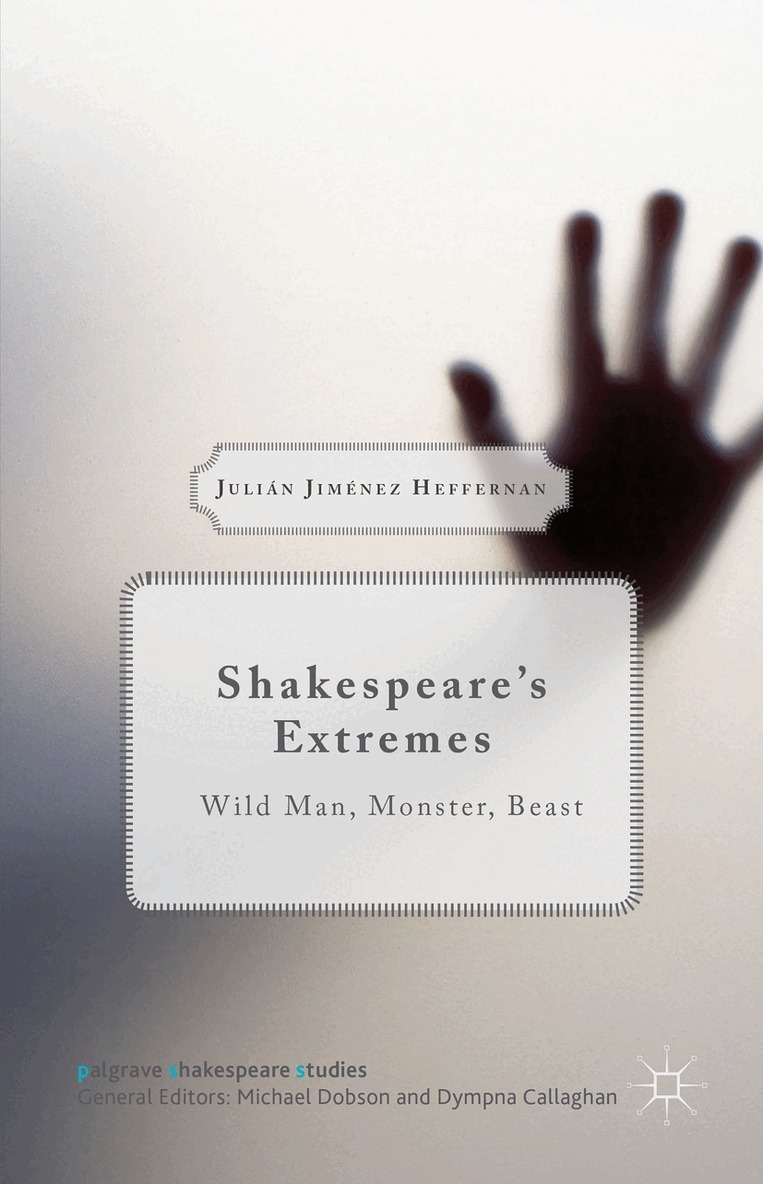
Shakespeare's Extremes is a controversial intervention in current critical debates on the status of the human in Shakespeare's work. By focusing on three flagrant cases of human exorbitance - Edgar, Caliban and Julius Caesar - this book seeks to limn out the domain of the human proper in Shakespeare.
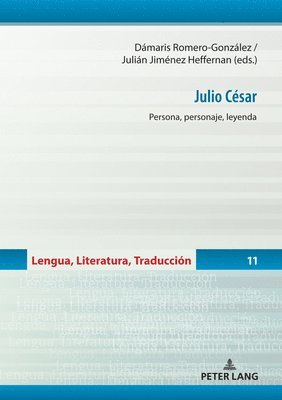
Del 11 - Lengua, Literatura, Traducción
Julio César
Persona, personaje, leyenda
Inbunden, Spanska, 2025
678 kr
Skickas inom 5-8 vardagar