Julie A. Nelson - Böcker
Visar alla böcker från författaren Julie A. Nelson. Handla med fri frakt och snabb leverans.
11 produkter
11 produkter
274 kr
Skickas inom 7-10 vardagar
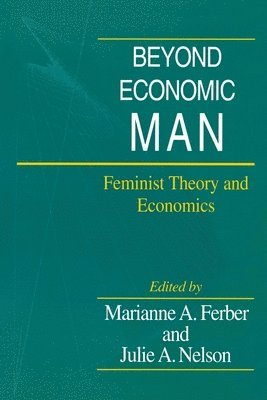
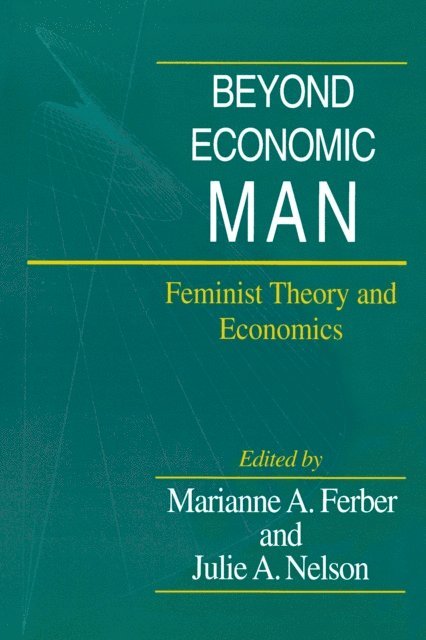
This is the first book to examine the central tenets of economics from a feminist point of view. In these original essays, the authors suggest that the discipline of economics could be improved by freeing itself from masculine biases. Beyond Economic Man raises questions about the discipline not because economics is too objective but because it is not objective enough. The contributors--nine economists, a sociologist, and a philosopher--discuss the extent to which gender has influenced both the range of subjects economists have studied and the way in which scholars have conducted their studies. They investigate, for example, how masculine concerns underlie economists' concentration on market as opposed to household activities and their emphasis on individual choice to the exclusion of social constraints on choice. This focus on masculine interests, the contributors contend, has biased the definition and boundaries of the discipline, its central assumptions, and its preferred rhetoric and methods. However, the aim of this book is not to reject current economic practices, but to broaden them, permitting a fuller understanding of economic phenomena.These essays examine current economic practices in the light of a feminist understanding of gender differences as socially constructed rather than based on essential male and female characteristics. The authors use this concept of gender, along with feminist readings of rhetoric and the history of science, as well as postmodernist theory and personal experience as economists, to analyze the boundaries, assumptions, and methods of neoclassical, socialist, and institutionalist economics. The contributors are Rebecca M. Blank, Paula England, Marianne A. Ferber, Nancy Folbre, Ann L. Jennings, Helen E. Longino, Donald N. McCloskey, Julie A. Nelson, Robert M. Solow, Diana Strassmann, and Rhonda M. Williams.
1 169 kr
Skickas
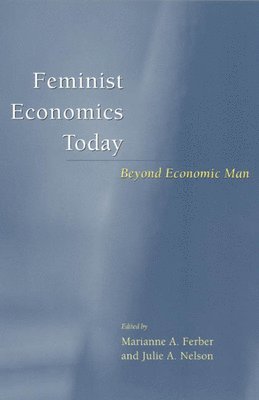
The 1993 publication of Marianne A. Ferber and Julie A. Nelson's Beyond Economic Man was a landmark in both feminist scholarship and the discipline of economics, and it quickly became a handbook for those seeking to explore the emerging connections between the two. A decade later, this book looks back at the progress of feminist economics and forward to its future, offering both a thorough overview of feminist economic thought and a collection of new, high-quality work from the field's leading scholars.
258 kr
Skickas inom 7-10 vardagar
The 1993 publication of Marianne A. Ferber and Julie A. Nelson's Beyond Economic Man was a landmark in both feminist scholarship and the discipline of economics, and it quickly became a handbook for those seeking to explore the emerging connections between the two. A decade later, this book looks back at the progress of feminist economics and forward to its future, offering both a thorough overview of feminist economic thought and a collection of new, high-quality work from the field's leading scholars.
193 kr
Skickas inom 7-10 vardagar
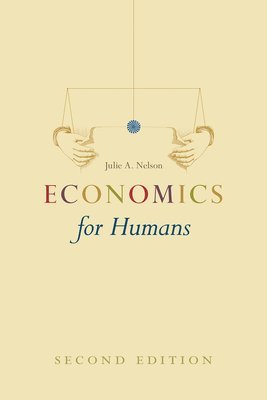
At its core, an economy is about providing goods and services for human well-being. But many economists and critics preach that an economy is something far different: a cold and heartless system that operates outside of human control. In this impassioned and perceptive work, Julie A. Nelson asks a compelling question: given that our economic world is something that we as humans create, aren’t ethics and human relationships—dimensions of a full and rich life—intrinsically part of the picture?Economics for Humans argues against the well-ingrained notion that economics is immune to moral values and distant from human relationships. Here, Nelson locates the impediment to a more considerate economic world in an assumption that is shared by both neoliberals and the political left. Despite their seemingly insurmountable differences, both make use of the metaphor, first proposed by Adam Smith, that the economy is a machine. This pervasive idea, Nelson argues, has blinded us to the qualities that make us work and care for one another—qualities that also make businesses thrive and markets grow. We can wed our interest in money with our justifiable concerns about ethics and social well-being. And we can do so if we recognize that an economy is not a machine, but a living thing in need of attention and careful tending. This second edition has been updated and refined throughout, with expanded discussions of many topics and a new chapter that investigates the apparent conflict between economic well-being and ecological sustainability. Further developing the main points of the first edition, Economics for Humans will continue to both invigorate and inspire readers to reshape the way they view the economy, its possibilities, and their place within it.
943 kr
Skickas inom 10-15 vardagar
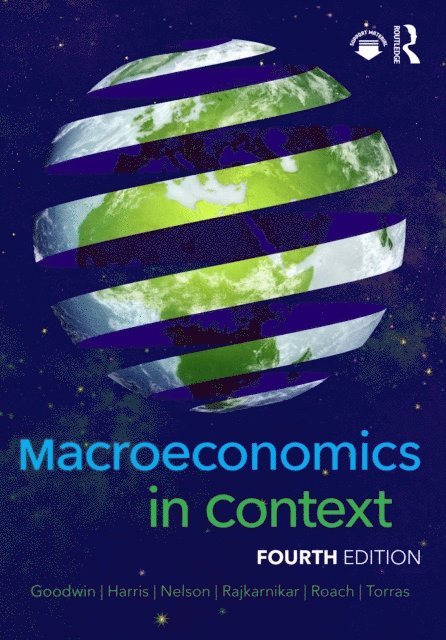
Macroeconomics in Context lays out the principles of macroeconomics in a manner that is thorough, up to date, and relevant to students. Like its counterpart, Microeconomics in Context, the book is uniquely attuned to economic, social, and environmental realities. The “In Context” books offer engaging coverage of current topics including policy responses to recession and inflation, inequality, deficits and government debt, economic impacts of the COVID-19 pandemic, and the economics of environmental sustainability.This fourth edition includes:Improved and concise discussions of introductory topics, especially on key economic activities, macroeconomic goals, and economic modelsFurther emphasis on inequality, environmental sustainability, financialization, the changing nature of work, and international developments such as the role of transnational corporations and supply chain issuesDiscussion of the impacts of the COVID-19 pandemic on macroeconomic factors like well-being, inequality, and labor marketsPresentation of policy issues in historical, environmental, institutional, social, political, and ethical contexts, including an updated discussion of fiscal policy in relation to the Biden administration’s infrastructure and social investment spendingClear explanations of basic economic concepts alongside more in-depth analysis of macroeconomics models and economic activityThis book combines real-world relevance with a thorough grounding in multiple economic paradigms. It is the ideal textbook for modern introductory courses in macroeconomics.The book’s companion website is available at: http://www.bu.edu/eci/macro
2 566 kr
Skickas inom 10-15 vardagar
Macroeconomics in Context lays out the principles of macroeconomics in a manner that is thorough, up to date, and relevant to students. Like its counterpart, Microeconomics in Context, the book is uniquely attuned to economic, social, and environmental realities. The “In Context” books offer engaging coverage of current topics including policy responses to recession and inflation, inequality, deficits and government debt, economic impacts of the COVID-19 pandemic, and the economics of environmental sustainability.This fourth edition includes:Improved and concise discussions of introductory topics, especially on key economic activities, macroeconomic goals, and economic modelsFurther emphasis on inequality, environmental sustainability, financialization, the changing nature of work, and international developments such as the role of transnational corporations and supply chain issuesDiscussion of the impacts of the COVID-19 pandemic on macroeconomic factors like well-being, inequality, and labor marketsPresentation of policy issues in historical, environmental, institutional, social, political, and ethical contexts, including an updated discussion of fiscal policy in relation to the Biden administration’s infrastructure and social investment spendingClear explanations of basic economic concepts alongside more in-depth analysis of macroeconomics models and economic activityThis book combines real-world relevance with a thorough grounding in multiple economic paradigms. It is the ideal textbook for modern introductory courses in macroeconomics.The book’s companion website is available at: http://www.bu.edu/eci/macro
922 kr
Skickas inom 10-15 vardagar
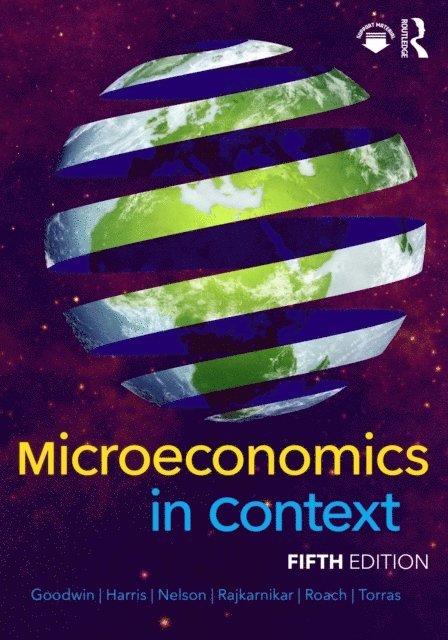
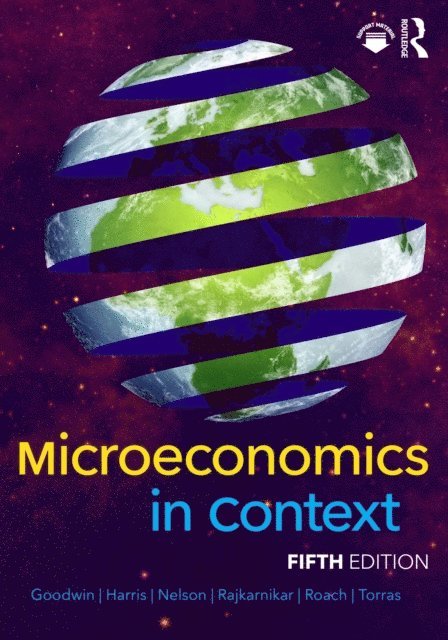
Microeconomics in Context lays out the principles of microeconomics in a manner that is thorough, up to date, and relevant to students. Like its counterpart, Macroeconomics in Context, the book is uniquely attuned to economic, social, and environmental realities. The "In Context" books offer an engaging coverage of current research and policy issues from economic inequality and climate change, to taxes and globalization. Key features include:Up-to-date discussions of the impacts of the COVID-19 pandemic on inequality, labor markets, and beyondAnalysis of recent trade issues and the implications of Brexit Presentation of policy issues in historical, environmental, institutional, social, political, and ethical contexts—an approach that fosters critical evaluation of the standard microeconomic models Clear explanations of basic concepts and analytical tools, with advanced models presented in optional chapter appendices A powerful graphical presentation of various measures of well-being in the United States and other countries, including income inequality, tax systems, educational attainment, and environmental quality A focus on human well-being from a multidimensional perspective, including traditional economic metrics and factors such as health, equity, and political inclusionA full complement of student and instructor support materials online.The book combines real-world relevance with a thorough grounding in multiple economic paradigms. It is the ideal textbook for modern introductory courses in microeconomics. The book's companion website is available at: www.bu.edu/eci/micro
2 566 kr
Skickas inom 10-15 vardagar
Microeconomics in Context lays out the principles of microeconomics in a manner that is thorough, up to date, and relevant to students. Like its counterpart, Macroeconomics in Context, the book is uniquely attuned to economic, social, and environmental realities. The "In Context" books offer an engaging coverage of current research and policy issues from economic inequality and climate change, to taxes and globalization. Key features include:Up-to-date discussions of the impacts of the COVID-19 pandemic on inequality, labor markets, and beyondAnalysis of recent trade issues and the implications of Brexit Presentation of policy issues in historical, environmental, institutional, social, political, and ethical contexts—an approach that fosters critical evaluation of the standard microeconomic models Clear explanations of basic concepts and analytical tools, with advanced models presented in optional chapter appendices A powerful graphical presentation of various measures of well-being in the United States and other countries, including income inequality, tax systems, educational attainment, and environmental quality A focus on human well-being from a multidimensional perspective, including traditional economic metrics and factors such as health, equity, and political inclusionA full complement of student and instructor support materials online.The book combines real-world relevance with a thorough grounding in multiple economic paradigms. It is the ideal textbook for modern introductory courses in microeconomics. The book's companion website is available at: www.bu.edu/eci/micro
1 570 kr
Tillfälligt slut
Microeconomics in Context lays out the principles of microeconomics in a manner that is thorough, up to date, and relevant to students. Like its counterpart, Macroeconomics in Context, the book is uniquely attuned to economic realities. The "in Context" books offer affordability, accessible presentation, and engaging coverage of current policy issues from economic inequality and global climate change to taxes.Key features include: --Clear explanation of basic concepts and analytical tools, with advanced models presented in optional chapter appendices;--Presentation of policy issues in historical, institutional, social, political, and ethical context--an approach that fosters critical evaluation of the standard microeconomic models, such as welfare analysis, labor markets, and market competition;--A powerful graphical presentation of various measures of well-being in the United States, from income inequality and educational attainment to home prices; --Broad definition of well-being using both traditional economic metrics and factors such as environmental quality, health, equity, and political inclusion; --New chapters on the economics of the environment, taxes and tax policy, common property and public goods, and welfare analysis; --Expanded coverage of high-interest topics such as behavioral economics, labor markets, and healthcare; --Full complement of instructor and student support materials online, including test banks and grading through Canvas.
2 030 kr
Skickas inom 10-15 vardagar
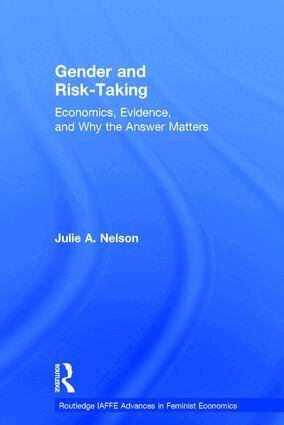
The belief that men and women have fundamentally distinct natures, resulting in divergent preferences and behaviours, is widespread. Recently, economists have also engaged in the search for gender differences, with a number claiming to find fundamental gender differences regarding risk-taking, altruism, and competition. In particular, the idea that "women are more risk-averse than men" has become accepted as a truism. But is it true? And what are its causes and consequences?Gender and Risk Taking makes three contributions. First, it asks whether the belief that men and women have distinct risk preferences is backed up by high quality empirical evidence. The answer turns out to be "no." This leads to a second question: Why, then, does so much of the literature claim to find evidence of "difference"? This, it will be shown, can be attributed to biases arising from too-easy categorical thinking, widespread stereotyping, and a tendency to prefer results that are publishable and that fit one’s prior beliefs. Third, the book explores the economic implications of the conventional association of risk-taking with masculinity and risk-aversion with femininity. Not only fairness in employment, but also the health of the financial sector and national responses to climate change, this book argues, are being compromised.This volume will be eye-opening for anyone interested in gender, decision-making, cognition, and/or risk, especially in areas relating to employment, finance, management, or public policy.
560 kr
Skickas inom 10-15 vardagar
The belief that men and women have fundamentally distinct natures, resulting in divergent preferences and behaviours, is widespread. Recently, economists have also engaged in the search for gender differences, with a number claiming to find fundamental gender differences regarding risk-taking, altruism, and competition. In particular, the idea that "women are more risk-averse than men" has become accepted as a truism. But is it true? And what are its causes and consequences?Gender and Risk Taking makes three contributions. First, it asks whether the belief that men and women have distinct risk preferences is backed up by high quality empirical evidence. The answer turns out to be "no." This leads to a second question: Why, then, does so much of the literature claim to find evidence of "difference"? This, it will be shown, can be attributed to biases arising from too-easy categorical thinking, widespread stereotyping, and a tendency to prefer results that are publishable and that fit one’s prior beliefs. Third, the book explores the economic implications of the conventional association of risk-taking with masculinity and risk-aversion with femininity. Not only fairness in employment, but also the health of the financial sector and national responses to climate change, this book argues, are being compromised.This volume will be eye-opening for anyone interested in gender, decision-making, cognition, and/or risk, especially in areas relating to employment, finance, management, or public policy.