Julie E. Maybee - Böcker
Visar alla böcker från författaren Julie E. Maybee. Handla med fri frakt och snabb leverans.
3 produkter
3 produkter
1 009 kr
Skickas inom 10-15 vardagar
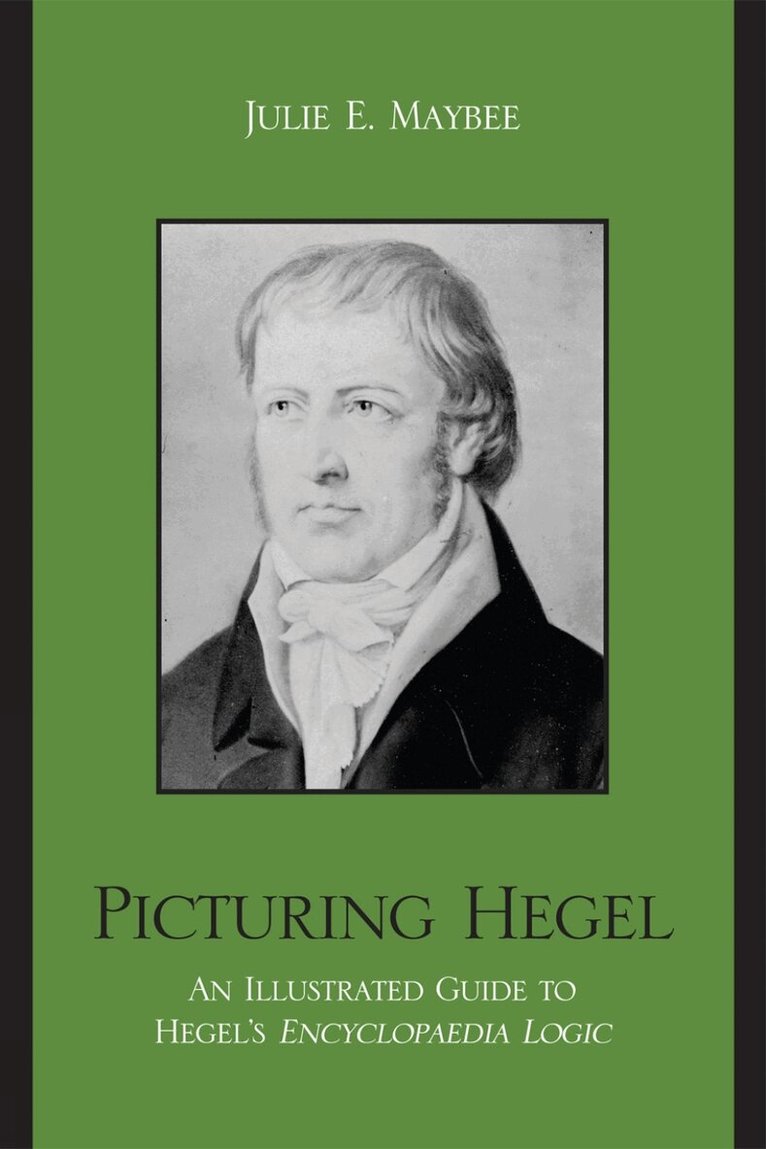
In her innovative take on G.W. F. Hegel's The Encyclopaedia Logic, Julie E. Maybee uses pictures and diagrams to cut through the philosopher's dense, difficult writing. Picturing Hegel: An Illustrated Guide to Hegel's Encyclopaedia Logic utilizes diagrams in order to rehabilitate Hegel's logic for serious consideration by showing how each stage develops step-by-step from earlier stages according to definite, logical patterns. This interpretation makes Hegel's work accessible and understandable for new and experienced readers alike. Because Hegel uses the same logic in all of his works, Maybee's analysis and defense of the logic will capture the attention of those readers interested in Hegel's ethics, politics, history, philosophy of religion, and phenomenology.Through the included diagrams, Maybee is able to define central Hegelian concepts such as "being-in-itself," and "being-in-and-for-itself" with a new level of precision. Maybee argues that Hegel's logic does not include the one logistical pattern most often attributed to him; namely, the pattern "thesis-antithesis-synthesis." Rather, Hegel's model of logic was more scientific than formalistic in nature, as the philosopher himself pointed out. Hegel considered himself an encyclopedic culmination of Western philosophy in some ways, and indeed his work summarizes many of the presuppositions of Western philosophy. By picturing Hegel's logic, we can gain a greater understanding of ourselves.
1 080 kr
Skickas inom 10-15 vardagar
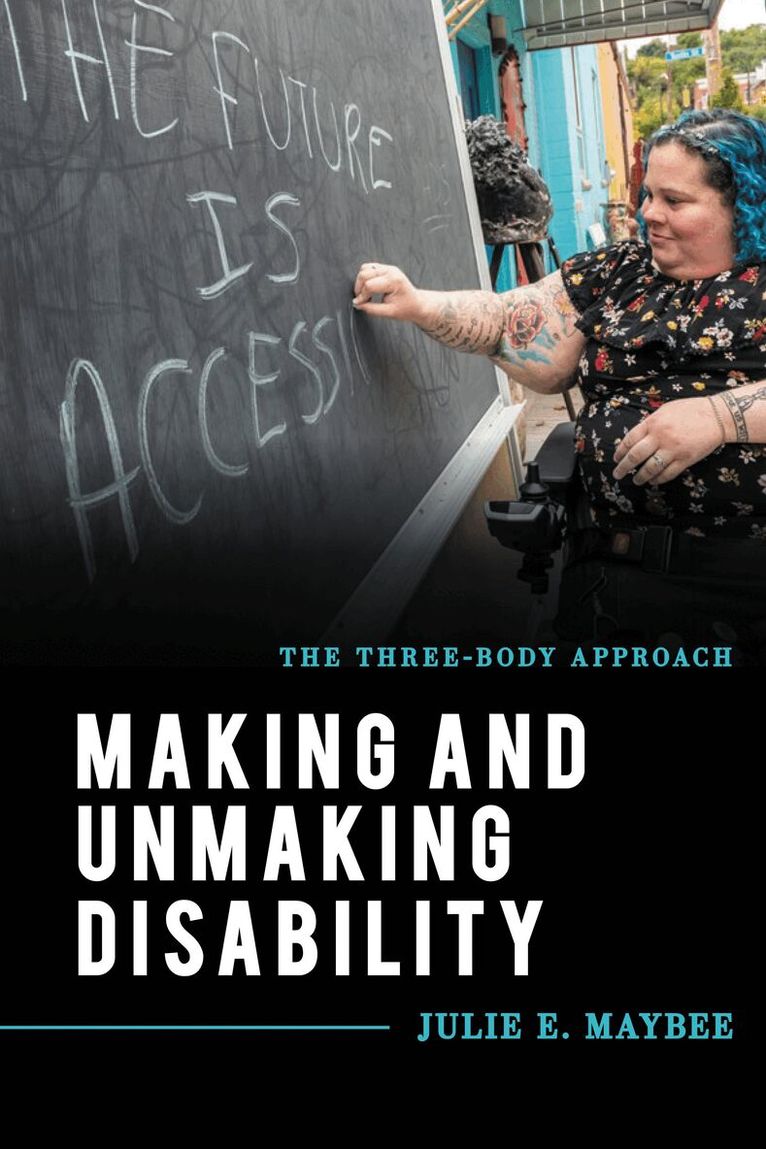
If the future is accessible, as Alisa Grishman—one of 55 million Americans categorized as having a disability—writes in this book’s cover image, then we must stop making or constructing people as disabled and impaired. In this brave new theoretical approach to human physicality, Julie E. Maybee traces societal constructions of disability and impairment through Western history along three dimensions of embodiment: the personal body, the interpersonal body, and the institutional body. Each dimension has played a part in defining people as disabled and impaired in terms of employment, healthcare, education, and social and political roles. Because impairment and disability have been constructed along all three of these bodies, unmaking disability and making the future accessible will require restructuring Western institutions, including capitalism, changing how social roles are assigned, and transforming our deepest beliefs about impairment and disability to reconstruct people as capable. Ultimately, Maybee suggests, unmaking disability will require remaking our world.
488 kr
Skickas inom 10-15 vardagar
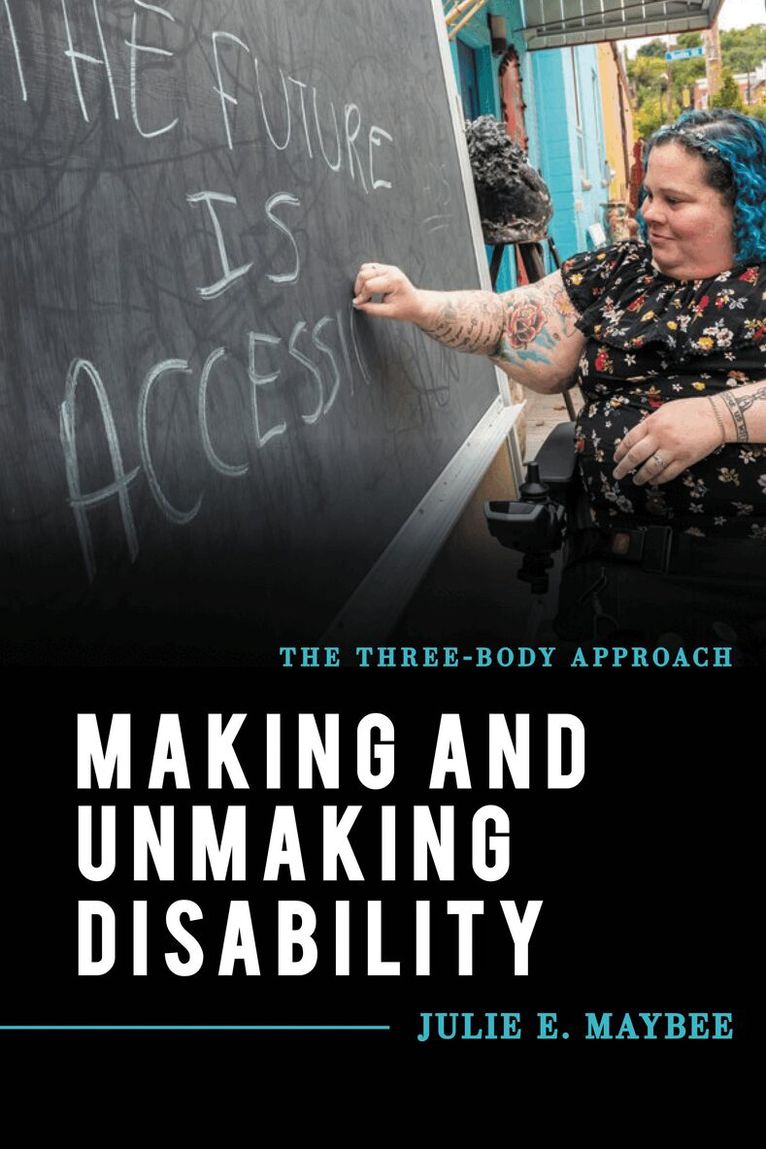
If the future is accessible, as Alisa Grishman—one of 55 million Americans categorized as having a disability—writes in this book’s cover image, then we must stop making or constructing people as disabled and impaired. In this brave new theoretical approach to human physicality, Julie E. Maybee traces societal constructions of disability and impairment through Western history along three dimensions of embodiment: the personal body, the interpersonal body, and the institutional body. Each dimension has played a part in defining people as disabled and impaired in terms of employment, healthcare, education, and social and political roles. Because impairment and disability have been constructed along all three of these bodies, unmaking disability and making the future accessible will require restructuring Western institutions, including capitalism, changing how social roles are assigned, and transforming our deepest beliefs about impairment and disability to reconstruct people as capable. Ultimately, Maybee suggests, unmaking disability will require remaking our world.