Junnosuke Masumi - Böcker
Visar alla böcker från författaren Junnosuke Masumi. Handla med fri frakt och snabb leverans.
4 produkter
4 produkter
665 kr
Skickas inom 3-6 vardagar
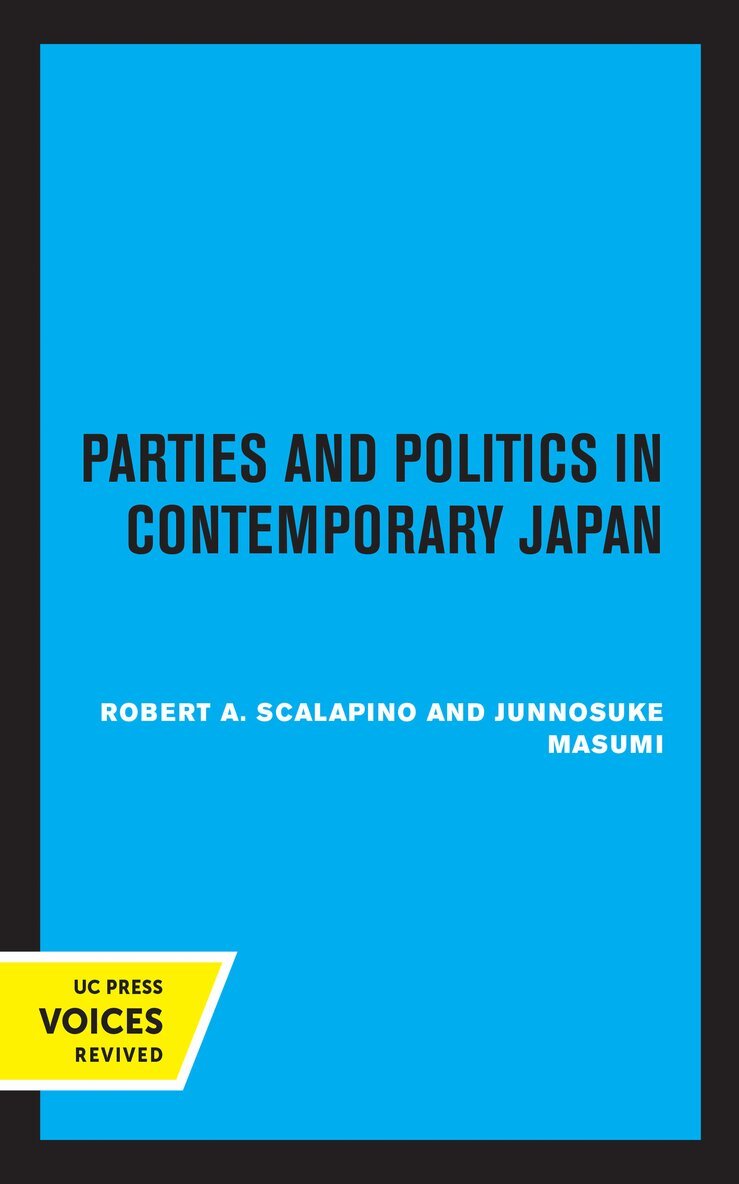
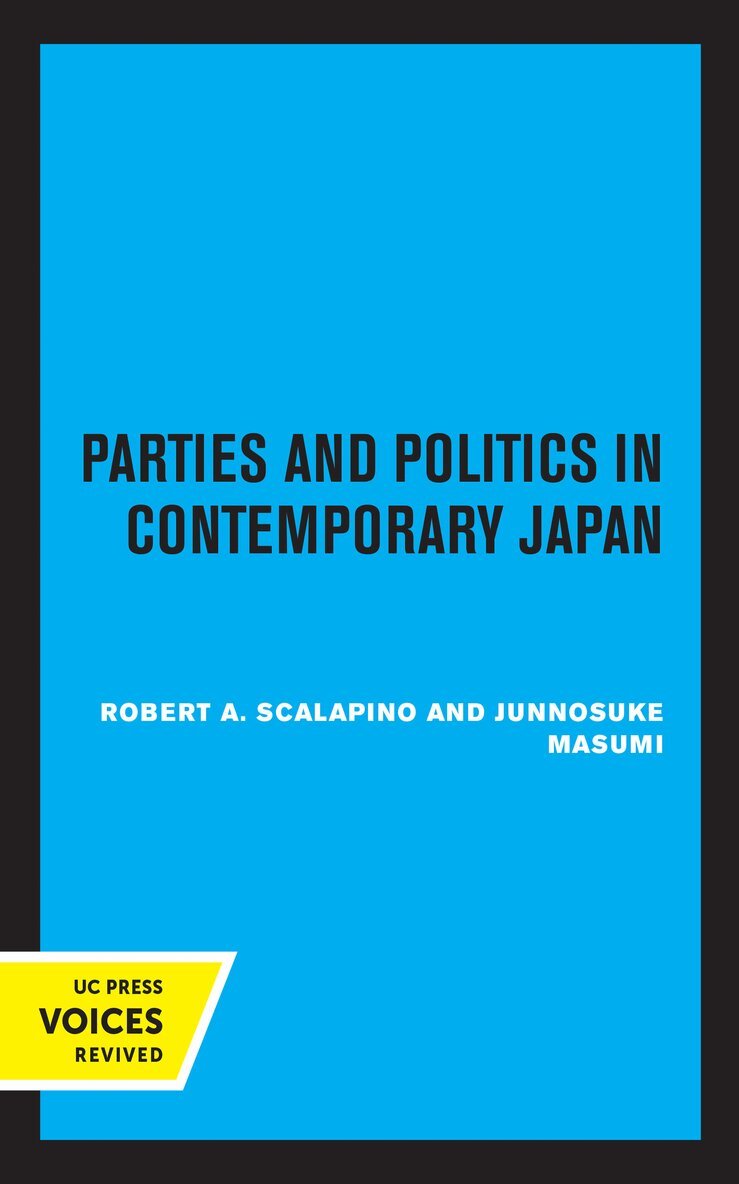
Parties and Politics in Contemporary Japan provides a nuanced exploration of Japan’s political evolution, with a focus on the dynamic interplay between cultural continuity and change. This work delves into how Japan’s historical context, marked by adaptation and fusion of indigenous and foreign influences, has shaped its modern political landscape. By integrating historical and social science methodologies, the authors offer an innovative perspective on the structure and processes of Japanese politics. The study highlights Japan’s emergence into the "modernization stream" and its navigation of universal values such as progress, industrialization, science, and democracy, contrasting its trajectory with that of Western and other non-Western nations.Central to the book is an empirical examination of contemporary political elements, including the socioeconomic composition of party elites, the role of interest groups, and patterns of voter behavior. Using the May-June 1960 incidents as a case study, the authors explore these themes to test their broader hypotheses. This work not only provides insights into Japanese politics but also serves as a methodological template for comparative studies in other societies. Combining historical depth with quantitative analysis, the book is a valuable resource for understanding the complexities of political organization and behavior in Japan and beyond.This title is part of UC Press's Voices Revived program, which commemorates University of California Press’s mission to seek out and cultivate the brightest minds and give them voice, reach, and impact. Drawing on a backlist dating to 1893, Voices Revived makes high-quality, peer-reviewed scholarship accessible once again using print-on-demand technology. This title was originally published in 1962.
585 kr
Skickas
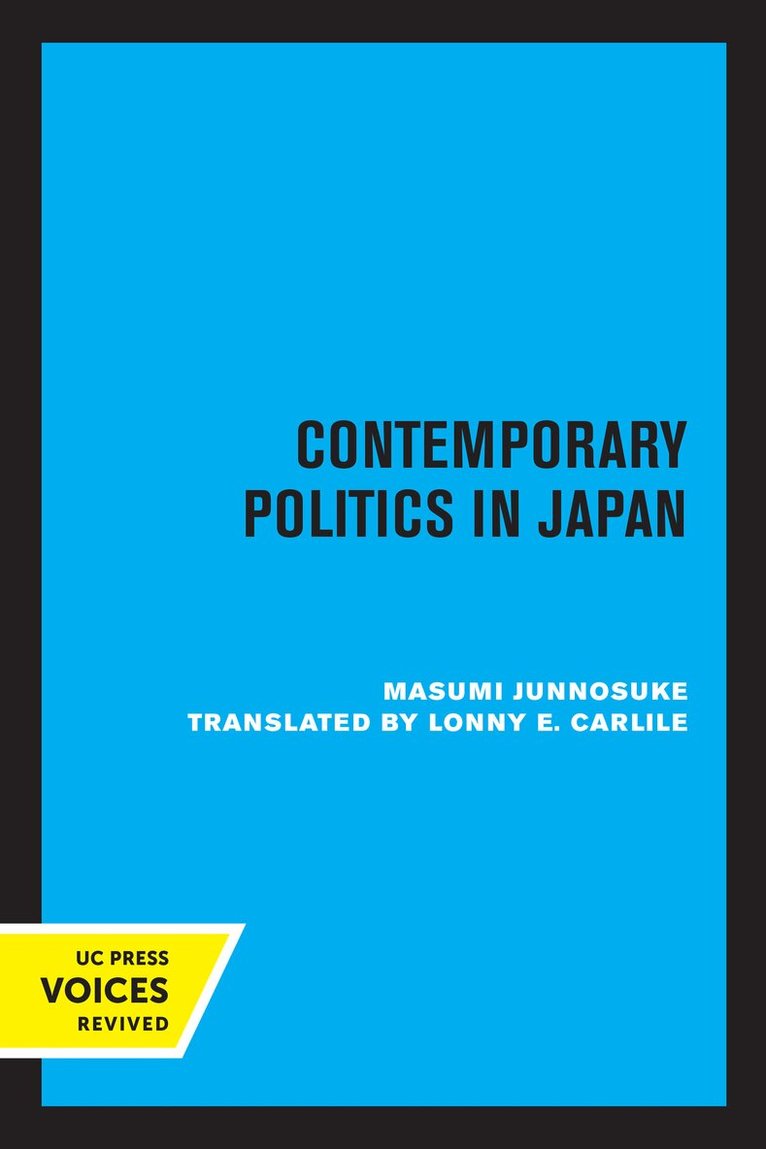
This study by one of Japan's foremost political scientists examines the unfolding relationship between the Liberal Democratic Party (LDP), the state, and the forces of industrialization in Japan from the 1950s through the 1980s. It is the only book in English to describe and analyze in detail Japan's political development during this critical period.Masumi argues that Japan's rapid economic growth was promoted by an "iron triangle" among three actors—the LDP, the bureaucracy, and big business. This growth fueled the enormous social changes of the 1960s and 1970s, which in turn forced the transformation of the "iron triangle" and the basis of party power. In a final chapter, Masumi reflects on the end of LDP rule in 1993.This title is part of UC Press's Voices Revived program, which commemorates University of California Press’s mission to seek out and cultivate the brightest minds and give them voice, reach, and impact. Drawing on a backlist dating to 1893, Voices Revived makes high-quality, peer-reviewed scholarship accessible once again using print-on-demand technology. This title was originally published in 1995.
754 kr
Skickas inom 7-10 vardagar
Parties and Politics in Contemporary Japan provides a nuanced exploration of Japan’s political evolution, with a focus on the dynamic interplay between cultural continuity and change. This work delves into how Japan’s historical context, marked by adaptation and fusion of indigenous and foreign influences, has shaped its modern political landscape. By integrating historical and social science methodologies, the authors offer an innovative perspective on the structure and processes of Japanese politics. The study highlights Japan’s emergence into the "modernization stream" and its navigation of universal values such as progress, industrialization, science, and democracy, contrasting its trajectory with that of Western and other non-Western nations.Central to the book is an empirical examination of contemporary political elements, including the socioeconomic composition of party elites, the role of interest groups, and patterns of voter behavior. Using the May-June 1960 incidents as a case study, the authors explore these themes to test their broader hypotheses. This work not only provides insights into Japanese politics but also serves as a methodological template for comparative studies in other societies. Combining historical depth with quantitative analysis, the book is a valuable resource for understanding the complexities of political organization and behavior in Japan and beyond.This title is part of UC Press's Voices Revived program, which commemorates University of California Press’s mission to seek out and cultivate the brightest minds and give them voice, reach, and impact. Drawing on a backlist dating to 1893, Voices Revived makes high-quality, peer-reviewed scholarship accessible once again using print-on-demand technology. This title was originally published in 1962.
1 513 kr
Skickas inom 3-6 vardagar
This study by one of Japan's foremost political scientists examines the unfolding relationship between the Liberal Democratic Party (LDP), the state, and the forces of industrialization in Japan from the 1950s through the 1980s. It is the only book in English to describe and analyze in detail Japan's political development during this critical period.Masumi argues that Japan's rapid economic growth was promoted by an "iron triangle" among three actors—the LDP, the bureaucracy, and big business. This growth fueled the enormous social changes of the 1960s and 1970s, which in turn forced the transformation of the "iron triangle" and the basis of party power. In a final chapter, Masumi reflects on the end of LDP rule in 1993.This title is part of UC Press's Voices Revived program, which commemorates University of California Press’s mission to seek out and cultivate the brightest minds and give them voice, reach, and impact. Drawing on a backlist dating to 1893, Voices Revived makes high-quality, peer-reviewed scholarship accessible once again using print-on-demand technology. This title was originally published in 1995.