Jurgen Matthaus – författare
Visar alla böcker från författaren Jurgen Matthaus. Handla med fri frakt och snabb leverans.
6 produkter
6 produkter
E-bok
Engelska, 2009378 kr
Läs direkt efter köp
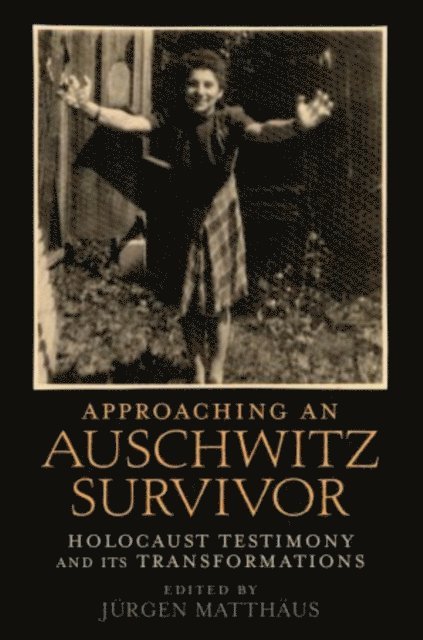
Among sources on the Holocaust, survivor testimonies are the least replaceable and most complex, reflecting both the personality of the narrator and the conditions and perceptions prevailing at the time of narration. Scholars, despite their aim to challenge memory and fill its gaps, often use testimonies uncritically or selectively-mining them to support generalizations. This book represents a departure, bringing Holocaust experts Atina Grossmann, Konrad Kwiet, Wendy Lower, J?rgen Matth?us, and Nechama Tec together to analyze the testimony of one Holocaust survivor. Born in Bratislava at the end of World War I, Helen "Zippi" Spitzer Tichauer was sent to Auschwitz in 1942. One of the few early arrivals to survive the camp and the death marches, she met her future husband in a DP camp, and they moved to New York in the 1960s. Beginning in 1946, Zippi devoted many hours to talking with a small group of scholars about her life. Her wide-ranging interviews are uniquely suited to raise questions on the meaning and use of survivor testimony. What do we know today about the workings of a death camp? How willing are we to learn from the experiences of a survivor, and how much is our perception preconditioned by standardized images? What are the mechanisms, aims, and pitfalls of storytelling? Can survivor testimonies be understood properly without guidance from those who experienced the events? This book''s new, multifaceted approach toward Zippi''s unique story combined with the authors'' analysis of key aspects of Holocaust memory, its forms and its functions, makes it a rewarding and fascinating read.
Inbunden, Engelska, 2004
1 072 kr
Skickas inom 10-15 vardagar
The murder of six million Jews during the Holocaust is a crime that has had a lasting and massive impact on our time. Despite the immense, ever-increasing body of Holocaust literature and representation, no single interpretation can provide definitive answers. Shaped by different historical experiences, political and national interests, our approximations of the Holocaust remain elusive. Holocaust responses—past, present, and future—reflect our changing understanding of history and the shifting landscapes of memory. This book takes stock of the attempts within and across nations to come to terms with the murders.Volume editors establish the thematic and conceptual framework within which the various Holocaust responses are being analyzed. Specific chapters cover responses in Germany and in Eastern Europe; the Holocaust industry; Jewish ultra-Orthodox reflections; and the Jewish intellectuals' search for a new Jewish identity. Experts comment upon the changes in Christian-Jewish relations since the Holocaust; the issue of restitution; and post-1945 responses to genocide. Other topics include Holocaust education, Holocaust films, and the national memorial landscapes in Germany, Poland, Israel, and the United States.
Häftad, Engelska, 2008
390 kr
Skickas inom 10-15 vardagar
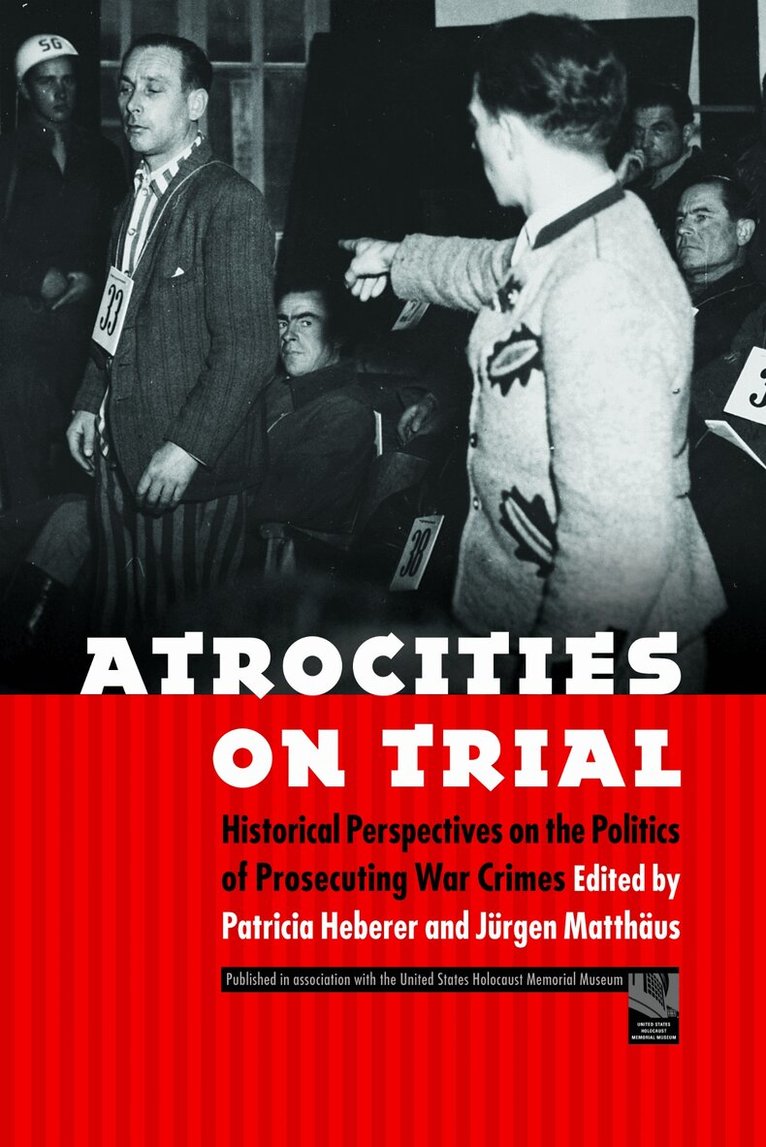
Since the Nuremberg trials following World War II, there has been considerable debate about the nature and effects of war crimes with regard both to the Nazis and to modern-day perpetrators. What constitutes a "war crime," and how has the concept changed over time? How do victors and vanquished deal with crimes that have universal as well as national dimensions? How is the historical reality of war crimes related to their judicial treatment? How are perpetrators portrayed during investigations and trials? These timely and provocative essays make use of newly available archival sources and a wide range of case studies to provide in-depth analyses of war crimes within a broad historical framework. The essays are organized into four sections: the history of war-crime trials from Weimar Germany to just after World War II; the sometimes diverging Allied efforts to come to terms with the Nazi concentration camp system; the ability of postwar society to confront war crimes of the past; and the legacy of war-crime trials in the twenty-first century. Atrocities on Trial illuminates a dark and timely subject and helps us to understand the ongoing struggle to hold accountable those who perpetrate crimes against humanity.
E-bok
Engelska, 20251 887 kr
Läs direkt efter köp
E-bok
PDF, Engelska, 20251 887 kr
Läs direkt efter köp
E-bok
Tyska, 2015170 kr
Läs direkt efter köp
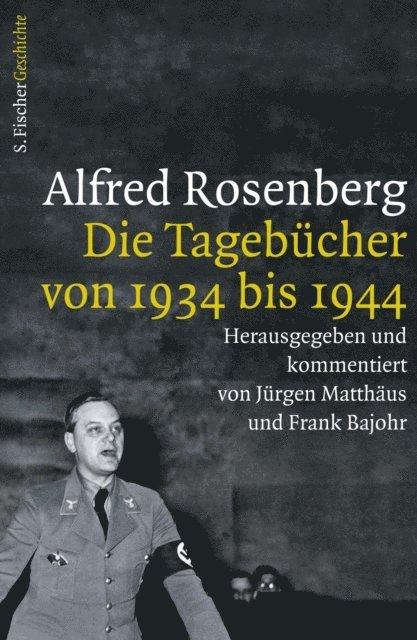
+++Die lange verschwundenen Tagebücher von Alfred Rosenberg, dem Chef-Ideologen der NSDAP, erstmals in einer Gesamtausgabe – ein Schlüsseldokument zur Geschichte von Nationalsozialismus und Holocaust+++Seit 1946 verschollen, wurden die Tagebücher des NSDAP-Reichsleiters Alfred Rosenberg erst 2013 aufgefunden. Hier liegen sie erstmals als Gesamtausgabe vor, ausführlich kommentiert von den renommierten Historikern Frank Bajohr(Zentrum für Holocaust-Studien, München) und Jürgen Matthäus (US Holocaust Memorial Museum, Washington). Rosenbergs Aufzeichnungen zeigen, dass seine Rolle bei der Vorbereitung und Umsetzung des Holocaust lange unterschätzt wurde. Schon früh einer der radikalsten Antisemiten, unterstützte er bis zuletzt die deutsche Vernichtungspolitik. Seine Notizen verdeutlichen neben seiner unbedingten Ergebenheit gegenüber Hitler die erbitterte Konkurrenz innerhalb der Funktionselite um den »Führer«, insbesondere die intime Feindschaft zwischen Rosenberg und Joseph Goebbels. Aus der Perspektive eines der Hauptverantwortlichen eröffnet dieses Schlüsseldokument neue, wichtige Einblicke in die vom NS-Regime erzeugte Gewaltdynamik.