Jürgen Zimmerer – författare
2 215 kr
Skickas inom 10-15 vardagar
2 286 kr
Skickas inom 10-15 vardagar
823 kr
Skickas inom 10-15 vardagar
705 kr
Skickas inom 10-15 vardagar
740 kr
Skickas inom 10-15 vardagar
2 151 kr
Skickas inom 10-15 vardagar
860 kr
Läs direkt efter köp
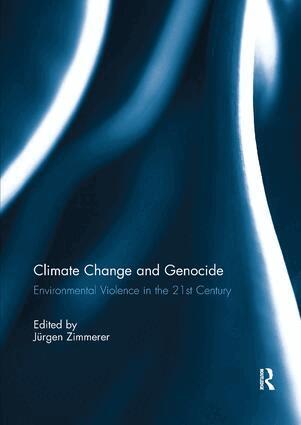
Climate change caused by human activity is the most fundamental challenge facing mankind in the 21st century, since it will drastically alter the living conditions of millions of people, mainly in the Global South. Environmental violence, including resource crises such as peak fossil fuel, will lie at the heart of future conflicts. However, Genocide Studies have so far neglected this subject, due to the emphasis that traditional genocide scholarship places on ideology and legal prosecution, leading to a narrow understanding of the driving forces of genocide.
This books aims at changing this, initiating a dialogue between scholars working in the areas of climate change and genocide. Research into genocide as well as climate change is a highly interdisciplinary endeavour, transcending the boundaries of established disciplines. Contributions to this book address this by approaching the subject from a wide array of methodological, theoretical, disciplinary and regional perspectives. As all the contributions show, climate change is a major threat multiplier for violence or non-violent destruction and any understanding of prevention needs to take this into account. They offer a basis for much needed Critical Prevention Studies, which aims at sustainable prevention.
This book was originally published as a special issue of the International Journal of Human Rights.
860 kr
Läs direkt efter köp
Climate change caused by human activity is the most fundamental challenge facing mankind in the 21st century, since it will drastically alter the living conditions of millions of people, mainly in the Global South. Environmental violence, including resource crises such as peak fossil fuel, will lie at the heart of future conflicts. However, Genocide Studies have so far neglected this subject, due to the emphasis that traditional genocide scholarship places on ideology and legal prosecution, leading to a narrow understanding of the driving forces of genocide.
This books aims at changing this, initiating a dialogue between scholars working in the areas of climate change and genocide. Research into genocide as well as climate change is a highly interdisciplinary endeavour, transcending the boundaries of established disciplines. Contributions to this book address this by approaching the subject from a wide array of methodological, theoretical, disciplinary and regional perspectives. As all the contributions show, climate change is a major threat multiplier for violence or non-violent destruction and any understanding of prevention needs to take this into account. They offer a basis for much needed Critical Prevention Studies, which aims at sustainable prevention.
This book was originally published as a special issue of the International Journal of Human Rights.
795 kr
Läs direkt efter köp
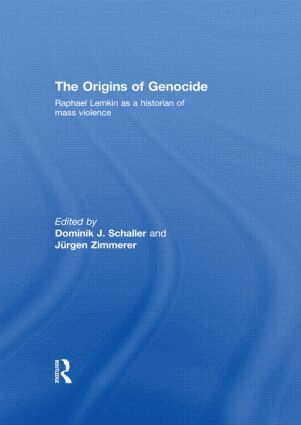
This year the United Nations celebrated the ''Convention on the Prevention and Punishment of the Crime of Genocide'', adopted in December 1948. It is time to recognize the man behind this landmark in international law. At the beginning were a few words: "New conceptions require new terms. By ‘genocide’ we mean the destruction of a nation or of an ethnic group". Rarely in history have paradigmatic changes in scholarship been brought about with such few words. Putting the quintessential crime of modernity in only one sentence, Raphael Lemkin (1900-1959), the Polish Jewish specialist in international law, not only summarized the horrors of the National Socialist Crimes, which were still underway, when he coined the term "genocide" in 1944, but also influenced international law. As the founding figure of the UN Genocide Convention Lemkin is finally getting the respect he deserves. Less known is his contribution to historical scholarship on genocide. Until his death, Lemkin was working on a broad study on genocides in the history of humankind. Unfortunately, he did not manage to publish it. The contributions in this book offer for the first time a critical assessment not only of his influence on international law but also on historical analysis of mass murders, showing the close connection between both.
This book was published as a special issue of the Journal of Genocide Research.
795 kr
Läs direkt efter köp
This year the United Nations celebrated the ''Convention on the Prevention and Punishment of the Crime of Genocide'', adopted in December 1948. It is time to recognize the man behind this landmark in international law. At the beginning were a few words: "New conceptions require new terms. By ‘genocide’ we mean the destruction of a nation or of an ethnic group". Rarely in history have paradigmatic changes in scholarship been brought about with such few words. Putting the quintessential crime of modernity in only one sentence, Raphael Lemkin (1900-1959), the Polish Jewish specialist in international law, not only summarized the horrors of the National Socialist Crimes, which were still underway, when he coined the term "genocide" in 1944, but also influenced international law. As the founding figure of the UN Genocide Convention Lemkin is finally getting the respect he deserves. Less known is his contribution to historical scholarship on genocide. Until his death, Lemkin was working on a broad study on genocides in the history of humankind. Unfortunately, he did not manage to publish it. The contributions in this book offer for the first time a critical assessment not only of his influence on international law but also on historical analysis of mass murders, showing the close connection between both.
This book was published as a special issue of the Journal of Genocide Research.
957 kr
Läs direkt efter köp
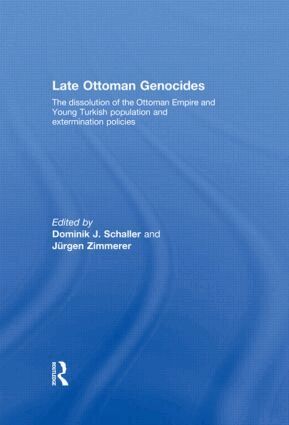
The Armenian Genocide has lately attracted a lot of attention, despite the Turkish government''s attempts at denial. It has been developed into a central obstacle to Turkey''s entry into the European Union. As such it attracts the highest political and public attention. What is largely ignored in the debate, however, is the fact that Armenians were not the only victims of the Young Turk''s genocidal population policies. What is still largely forgotten is the murder, expulsion and deportation of other ethnic groups like Assyrians, Greeks, Kurds and Arabs by the Young Turks. This not only increases the number of victims, but also changes the perspective on the foundation of modern Turkey and as such on modern Turkish history more generally. The Thematic Issue of the JGR, the republication of which is proposed here, is the first publication, which addresses these wider issues. It contributes not only to our understanding of the Young Turks'' population and extermination policies in all its complexities and so helping to bring the forgotten victims'' stories "back" into genocide scholarship, but to our understanding of modern Turkey more generally. It is an indispensable tool for everybody interested in one of the great historical controversies of our time.
This book was published as a special issue of the Journal of Genocide Research.
957 kr
Läs direkt efter köp
The Armenian Genocide has lately attracted a lot of attention, despite the Turkish government''s attempts at denial. It has been developed into a central obstacle to Turkey''s entry into the European Union. As such it attracts the highest political and public attention. What is largely ignored in the debate, however, is the fact that Armenians were not the only victims of the Young Turk''s genocidal population policies. What is still largely forgotten is the murder, expulsion and deportation of other ethnic groups like Assyrians, Greeks, Kurds and Arabs by the Young Turks. This not only increases the number of victims, but also changes the perspective on the foundation of modern Turkey and as such on modern Turkish history more generally. The Thematic Issue of the JGR, the republication of which is proposed here, is the first publication, which addresses these wider issues. It contributes not only to our understanding of the Young Turks'' population and extermination policies in all its complexities and so helping to bring the forgotten victims'' stories "back" into genocide scholarship, but to our understanding of modern Turkey more generally. It is an indispensable tool for everybody interested in one of the great historical controversies of our time.
This book was published as a special issue of the Journal of Genocide Research.
2 169 kr
Skickas inom 3-6 vardagar
488 kr
Skickas
872 kr
Skickas inom 5-8 vardagar
1 237 kr
Skickas inom 3-6 vardagar
651 kr
Skickas inom 3-6 vardagar
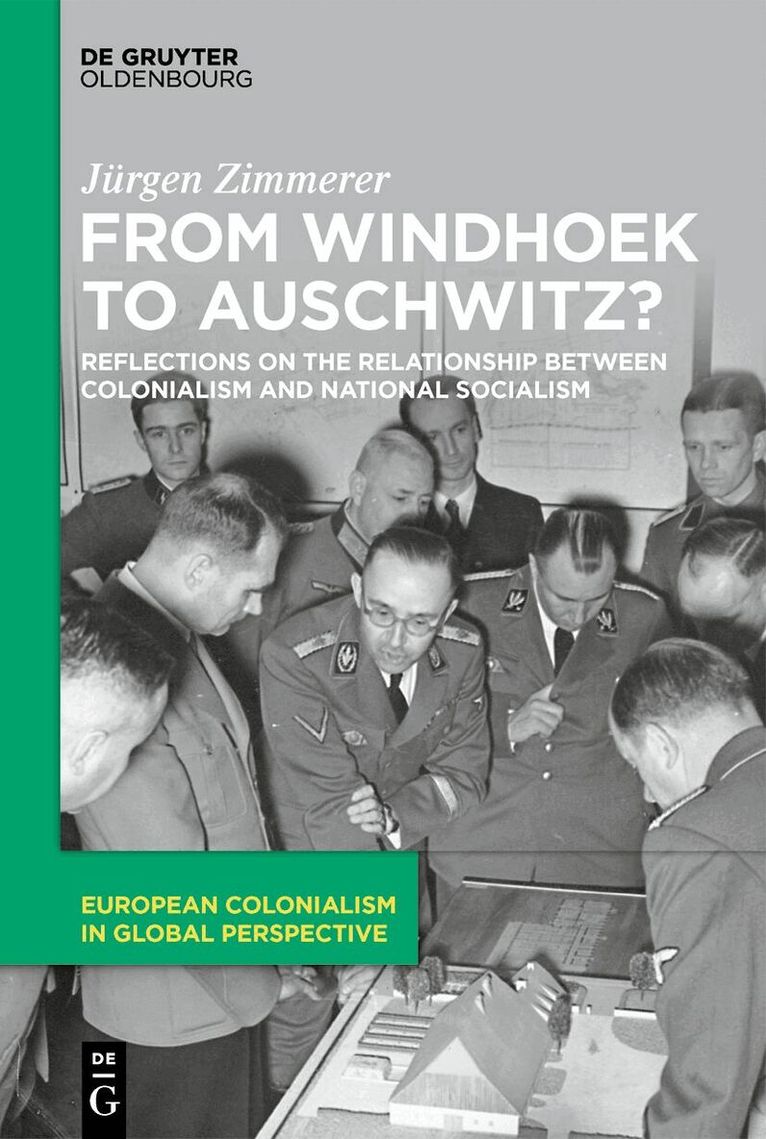
From Windhoek to Auschwitz?
Reflections on the Relationship between Colonialism and National Socialism
245 kr
Skickas inom 3-6 vardagar
1 310 kr
Kommande
215 kr
Läs direkt efter köp
921 kr
Skickas inom 11-20 vardagar
655 kr
Skickas inom 3-6 vardagar
404 kr
Skickas inom 3-6 vardagar
Hamburg: Tor zur kolonialen Welt
413 kr
Skickas inom 3-6 vardagar
267 kr
Tillfälligt slut
274 kr
Tillfälligt slut