Jurgita Malinauskaite – författare
2 320 kr
Skickas inom 10-15 vardagar
613 kr
Skickas inom 10-15 vardagar
1 618 kr
Skickas inom 10-15 vardagar
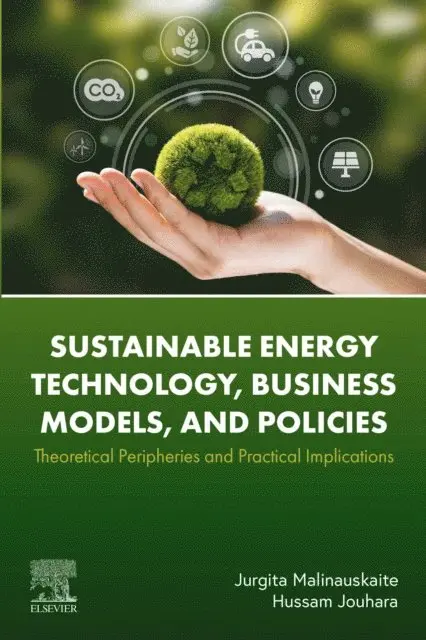
Sustainable Energy Technology, Business Models, and Policies: Theoretical Peripheries and Practical Implications offers a new outlook on incorporating sustainable energy technologies into business models.
This book begins by conceptualizing a theoretical sustainability framework from an interdisciplinary perspective. In the second part, the findings from several case studies examine criteria for business energy policies including legal implications and technical, market, or business model viability. Finally, the book addresses the technical and economic difficulties for recovering and re-using energy losses within energy-intensive industries, while also proposing practical solutions to overcome challenges and exploit opportunities.
Weaving together the latest information on innovative technology, policies, and business models, Sustainable Energy Technology, Business Models, and Policies: Theoretical Peripheries and Practical Implications presents an interdisciplinary guide to the energy transition.
Provides a comprehensive analysis of business models for sustainable energy use Postulates the current insights of energy policy aimed towards the clean energy transition in the EU and worldwide Incorporates case studies to illustrate the practical implementation of sustainable business models for bespoke energy technologies2 370 kr
Läs direkt efter köp
1 963 kr
Kommande
2 968 kr
Skickas inom 10-15 vardagar
678 kr
Kommande
776 kr
Läs direkt efter köp
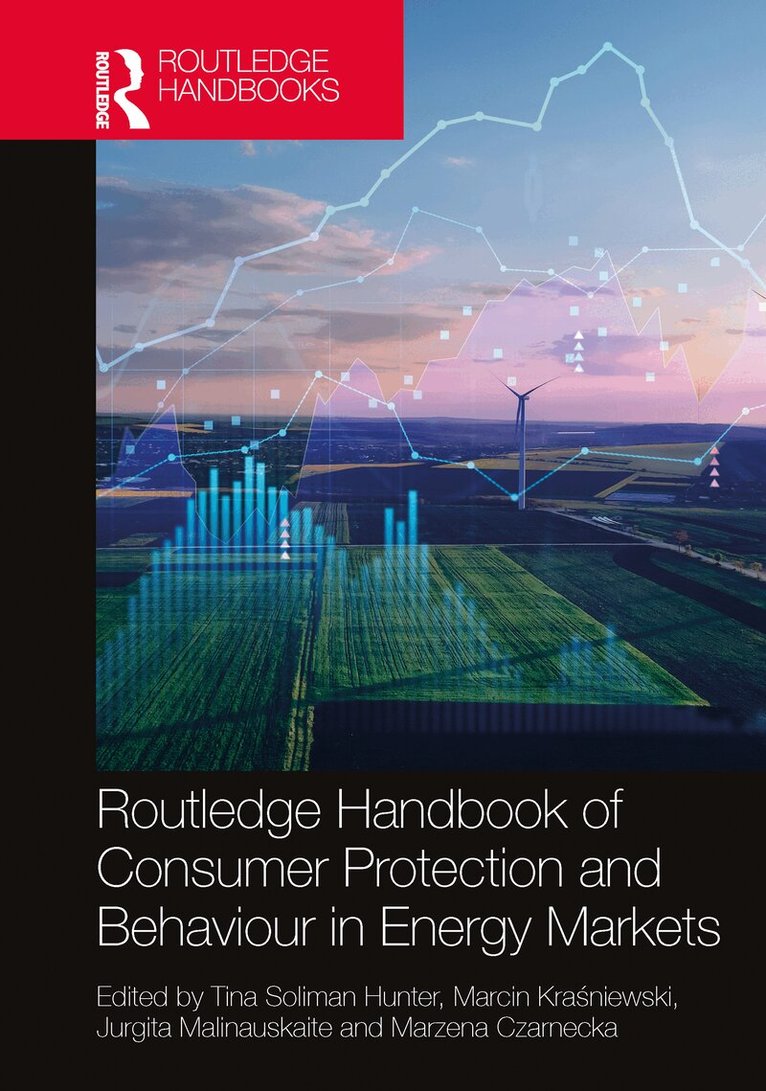
The Routledge Handbook of Consumer Protection and Behaviour in Energy Markets provides a comprehensive study of consumer protection and consumer behaviour in selected jurisdictions worldwide. Each chapter is written by experts and provides a contemporary overview of national consumer protection and policy developments in the energy sector.
Today energy has become an essential factor in ensuring the socio-economic development of any country and improving the quality of life of society and is now an essential element of life for everyone. The energy market has become a competitive market, based on the assumption that generation and sale of energy is not a natural monopoly and that market mechanisms, in particular competition between energy companies, are the best way to reduce prices and improve customer service. The purchase of energy is inextricably linked with its distribution from the producer to the purchaser.
The book shows that well-functioning energy markets need informed and well protected consumers, who can benefit from competition and transparent offers. They are free to choose the most competitive providers, and know their rights, with access to effective means of redress. Given that the energy market has a specific, technical nature, the book analyses the energy market within the scope of free market principles, with a focus on the protection of the weaker party to the contract: the consumer. In addition, consumers can also play an active part of the clean energy transition.
776 kr
Läs direkt efter köp
The Routledge Handbook of Consumer Protection and Behaviour in Energy Markets provides a comprehensive study of consumer protection and consumer behaviour in selected jurisdictions worldwide. Each chapter is written by experts and provides a contemporary overview of national consumer protection and policy developments in the energy sector.
Today energy has become an essential factor in ensuring the socio-economic development of any country and improving the quality of life of society and is now an essential element of life for everyone. The energy market has become a competitive market, based on the assumption that generation and sale of energy is not a natural monopoly and that market mechanisms, in particular competition between energy companies, are the best way to reduce prices and improve customer service. The purchase of energy is inextricably linked with its distribution from the producer to the purchaser.
The book shows that well-functioning energy markets need informed and well protected consumers, who can benefit from competition and transparent offers. They are free to choose the most competitive providers, and know their rights, with access to effective means of redress. Given that the energy market has a specific, technical nature, the book analyses the energy market within the scope of free market principles, with a focus on the protection of the weaker party to the contract: the consumer. In addition, consumers can also play an active part of the clean energy transition.
702 kr
Läs direkt efter köp
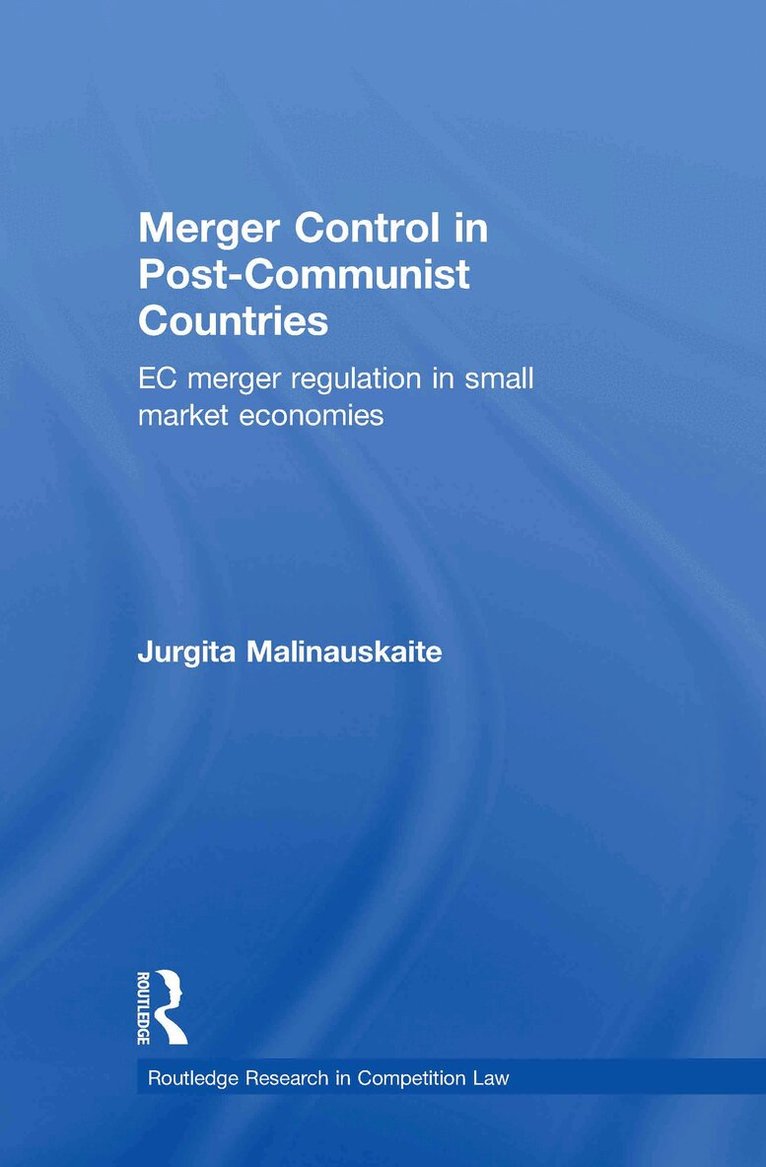
This book provides a critical analysis of merger control regimes in the former socialist countries with small market economies, looking at the unique challenges facing these economies. Questions will be asked as to what extent these countries have had to follow dictation from the EU and whether this implementation of EU merger control rules has been justified from the point of view of these countries'' economic situations.
The book will analyse the merger control regimes in Estonia, Latvia and Lithuania, Slovenia and Slovakia. However, reference will be made to other small market economies of the EU including Cyprus, Ireland, Luxembourg and Malta in order to evaluate the particular difficulties the former socialist countries with small market economies have had in the implementation and further development of merger control rules.
702 kr
Läs direkt efter köp
This book provides a critical analysis of merger control regimes in the former socialist countries with small market economies, looking at the unique challenges facing these economies. Questions will be asked as to what extent these countries have had to follow dictation from the EU and whether this implementation of EU merger control rules has been justified from the point of view of these countries'' economic situations.
The book will analyse the merger control regimes in Estonia, Latvia and Lithuania, Slovenia and Slovakia. However, reference will be made to other small market economies of the EU including Cyprus, Ireland, Luxembourg and Malta in order to evaluate the particular difficulties the former socialist countries with small market economies have had in the implementation and further development of merger control rules.
1 201 kr
Skickas inom 10-15 vardagar
1 538 kr
Läs direkt efter köp
This book explores how the EU’s enforcement of competition law has moved from centralisation to decentralisation over the years, with the National Competition Authorities embracing more enforcement powers. At the same time, harmonisation has been employed as a solution to ensure that the enforcement of EU competition rules is not weakened and the internal market remains a level playing field.
While employing a comparative law argument, the book, accordingly, analyses the need for harmonisation throughout the different stages of development of the EU’s competition law enforcement (save Merger control and State Aid), the underlying rationale, and the extent to which comparative studies have been undertaken to facilitate the harmonisation process from an historical perspective. It also covers the Directives, such as the Antitrust Damages Directive and the ECN+ Directive.
Investigating both public and private enforcement, it also examines the travaux préparatoires for the enforcement legislation in order to discover the drafters’ intent. The book addresses the European and the Member States’ perspectives, namely, the Central and Eastern European (CEE) countries, as harmonisation proceeds through dialogue and cooperation between the two levels. Lastly, it explores the extent to which harmonisation of the competition law enforcement framework has been accepted and implemented in the Member States’ legal systems, or has led to the fragmentation of the national systems of the CEE countries.
1 201 kr
Skickas inom 10-15 vardagar