Tina Soliman Hunter - Böcker
Visar alla böcker från författaren Tina Soliman Hunter. Handla med fri frakt och snabb leverans.
6 produkter
6 produkter
2 847 kr
Skickas inom 10-15 vardagar
The Routledge Handbook of Consumer Protection and Behaviour in Energy Markets provides a comprehensive study of consumer protection and consumer behaviour in selected jurisdictions worldwide. Each chapter is written by experts and provides a contemporary overview of national consumer protection and policy developments in the energy sector. Today energy has become an essential factor in ensuring the socio-economic development of any country and improving the quality of life of society and is now an essential element of life for everyone. The energy market has become a competitive market, based on the assumption that generation and sale of energy is not a natural monopoly and that market mechanisms, in particular competition between energy companies, are the best way to reduce prices and improve customer service. The purchase of energy is inextricably linked with its distribution from the producer to the purchaser. The book shows that well-functioning energy markets need informed and well protected consumers, who can benefit from competition and transparent offers. They are free to choose the most competitive providers, and know their rights, with access to effective means of redress. Given that the energy market has a specific, technical nature, the book analyses the energy market within the scope of free market principles, with a focus on the protection of the weaker party to the contract: the consumer. In addition, consumers can also play an active part of the clean energy transition.
1 717 kr
Skickas inom 7-10 vardagar
This innovative book explores the legal character of petroleum licences, a key vehicle governing the relationship between oil companies and their host states. Examining the issue through the lens of legal culture, it illustrates why some jurisdictions exert strong state control and others only minimal.Critically investigating the nature of a petroleum licence, the book analyses whether it is a mere administrative right, a contract or something more akin to property rights. Chapters examine recent developments, such as the UK's strategy of maximizing economic recovery and the opposition to drilling for oil in Norway and Australia. Outside of Western petroleum jurisdictions, the book also explores several long-established jurisdictions including Russia and Mexico, as well as emerging jurisdictions, such as China and Uganda. Taking a contextual and system-oriented approach, it reveals the preconditions of the petroleum licence regime and offers a critical insight into the reasons behind alterations to the terms of the licences.Encompassing a wide variety of legal cultures and experiences, this thought-provoking book will prove to be a valuable resource for academics and students of energy law, particularly those with an interest in state regulation. It will also provide useful insights for industry-based practitioners.
3 132 kr
Skickas inom 7-10 vardagar
What does the future hold for oil and gas, what can we learn from the past and what role does law have to play in this? Using a unique temporal lens, this Research Handbook examines core themes in oil and gas regulation from historical, contemporary and forward-looking perspectives.Structured in three distinct parts, this Research Handbook begins by detailing the past dominance of oil, charting the role and influence of legal instruments and regulatory regimes governing petroleum. Using a diverse range of case study perspectives over several jurisdictions, the Research Handbook then turns to oil and gas in the modern world, with critical discussion of current petroleum legal regimes. It concludes with a series of forward-looking chapters that consider the future challenges and opportunities for oil and gas, and how petroleum-dependent states can both regulate and facilitate the age of energy transition.Surveying the technological shifts of the oil and gas sector through time, this comprehensive Research Handbook will prove an invigorating read for scholars and students of energy and natural resource law disciplines. Its discussion of emerging technologies and community impact will prove particularly useful to regulators, policymakers, corporations and legal practitioners concerned with the future of energy.
3 132 kr
Skickas inom 7-10 vardagar
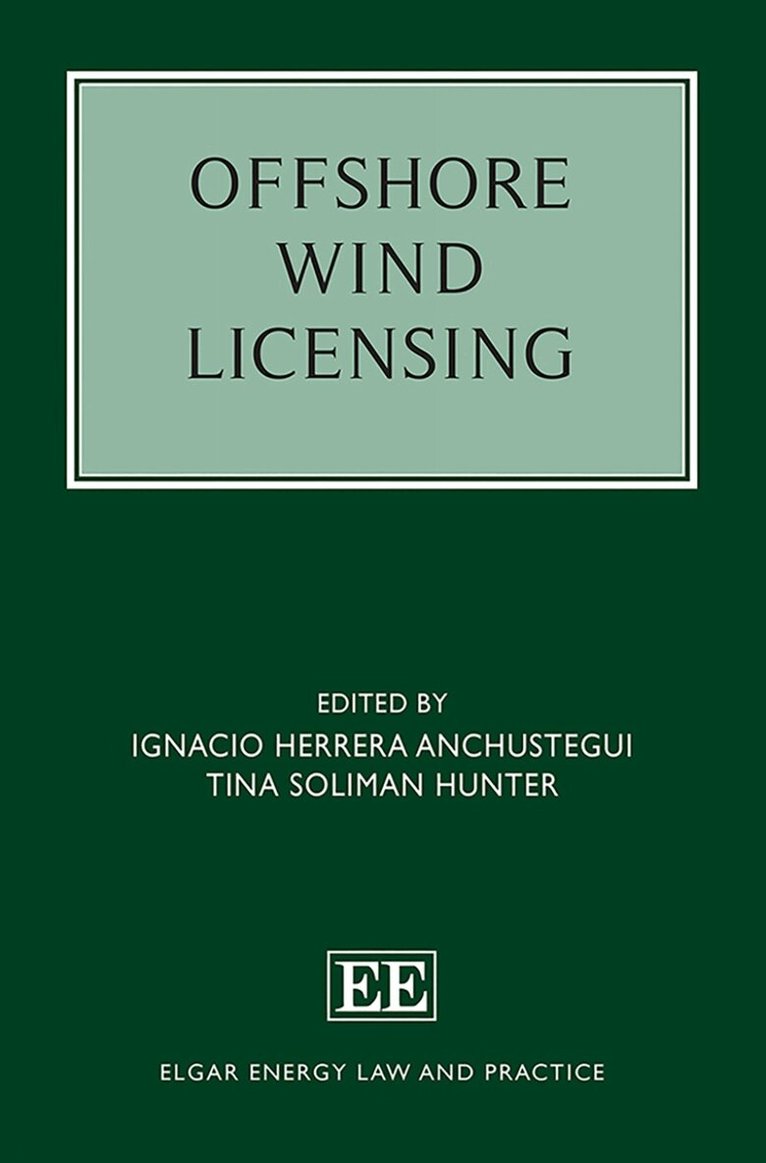
This incisive book provides a timely and magisterial analysis of offshore wind licensing processes and their regulation from a global perspective. It not only explores the concept of licensing and the governance frameworks and backgrounds in which licensing rules are developed, but also looks at the crucial legal challenges facing the licensing of offshore wind farms that regulators, legislatures, operators, and legal practitioners are likely to encounter.Interdisciplinary in scope, the book provides an extensive analysis of the authorisation processes for wind parks at sea in multiple prominent jurisdictions. In addition, expert contributors representing an array of diverse perspectives examine key themes such as technology, meteorology, and environmental and maritime planning issues, and consider the pivotal role of wind farms in today’s rapidly evolving energy transition landscape.Key Features:Identifies legislative challenges and current regulatory gapsCutting-edge insights into the latest policy and regulatory trendsAuthoritative commentary on established and emerging offshore wind jurisdictionsHighlights the crucial role of licensing frameworks in the expansion of offshore wind projectsWith its practical focus, Offshore Wind Licensing will be a beneficial read for legal practitioners, academics, and policymakers seeking to understand renewable energy regulation and the authorisation process for generating offshore renewable electricity. Regulators and legislatures in countries with no offshore wind activity will similarly find this to be an indispensable resource.
3 497 kr
Skickas inom 7-10 vardagar
The Elgar Concise Encyclopedia of Oil and Gas Law provides a comprehensive overview of the engineering and geological aspects of oil and gas activities, placed within their legal context, as well as legal aspects of these activities. It focuses on exploration for and production of oil and gas, incorporating experience-based knowledge and the application of the law to technical issues.Bringing together a diverse array of experienced academics, industry specialists, and legal practitioners, the Encyclopedia covers contemporary topics such as the challenges the oil and gas industry faces as a result of climate change. The historical development and central elements in oil and gas law are comprehensively examined in addition to the various models and legal instruments that have been applied in different regions and jurisdictions across the globe. Through rigorous legal analysis, the book highlights the dynamic and international character of this important area of law.This Encyclopedia is an indispensable resource for academics, researchers, and students interested in oil and gas law, energy law, environmental law, international economic law, and trade law. Policymakers, government officials, and legal practitioners will equally find this to be a fundamental reference work.Key Features:57 authors108 entriesCase studies from across the worldEntries organised alphabetically for ease of referenceTechnical explanations of key aspects of oil and gas activities
North Sea System for Petroleum Production
State Intervention on the British and Norwegian Continental Shelves
Inbunden, Engelska, 2024
1 198 kr
Skickas inom 7-10 vardagar
The North Sea System for Petroleum Production unpacks the variation in state intervention in offshore petroleum activities on the British and Norwegian continental shelves. This astute book also examines the causes of various policy convergences and divergences. Brent F. Nelsen and Tina Soliman Hunter illustrate how varying international conditions, interest group pressures and national cultures explain differences in state intervention that resulted in subsequent divergence and also highlight the issue of increased European demand against ongoing supply and delivery constraints. Considering current pledges to reduce carbon emissions, the book also investigates the increased role of the state in both countries to extract as much petroleum as possible whilst boosting offshore clean energy sources. Academics and students of energy policy and energy law will benefit not only from the historical overview of development but also from the discussions surrounding the evolution of British and Norwegian legal frameworks. Government officials and business professionals will also find the extensive analysis informative, creating a deeper understanding of how Britain and Norway have achieved success in harnessing the resources of foreign private companies.