Justene Hill Edwards - Böcker
Visar alla böcker från författaren Justene Hill Edwards. Handla med fri frakt och snabb leverans.
4 produkter
4 produkter
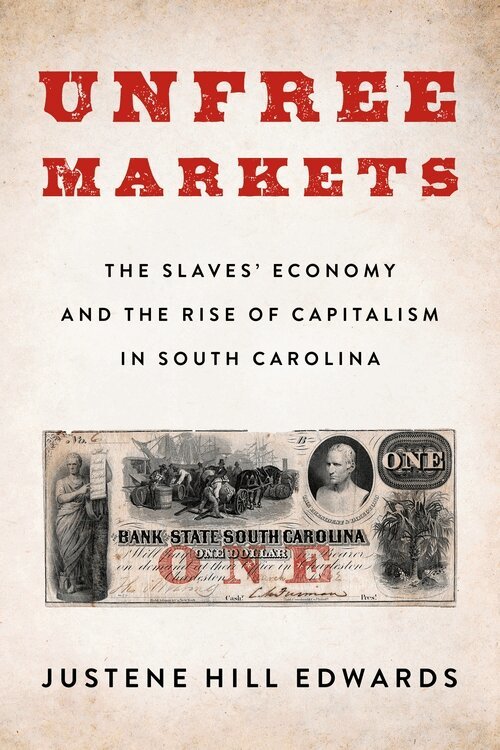
Unfree Markets
The Slaves' Economy and the Rise of Capitalism in South Carolina
Inbunden, Engelska, 2021
1 188 kr
Skickas inom 7-10 vardagar
The everyday lives of enslaved people were filled with the backbreaking tasks that their enslavers forced them to complete. But in spare moments, they found time in which to earn money and obtain goods for themselves. Enslaved people led vibrant economic lives, cultivating produce and raising livestock to trade and sell. They exchanged goods with nonslaveholding whites and even sold products to their enslavers. Did these pursuits represent a modicum of freedom in the interstices of slavery, or did they further shackle enslaved people by other means?Justene Hill Edwards illuminates the inner workings of the slaves’ economy and the strategies that enslaved people used to participate in the market. Focusing on South Carolina from the colonial period to the Civil War, she examines how the capitalist development of slavery influenced the economic lives of enslaved people. Hill Edwards demonstrates that as enslavers embraced increasingly capitalist principles, enslaved people slowly lost their economic autonomy. As slaveholders became more profit-oriented in the nineteenth century, they also sought to control enslaved people’s economic behavior and capture the gains. Despite enslaved people’s aptitude for enterprise, their market activities came to be one more part of the violent and exploitative regime that shaped their lives. Drawing on wide-ranging archival research to expand our understanding of racial capitalism, Unfree Markets shows the limits of the connection between economic activity and freedom.
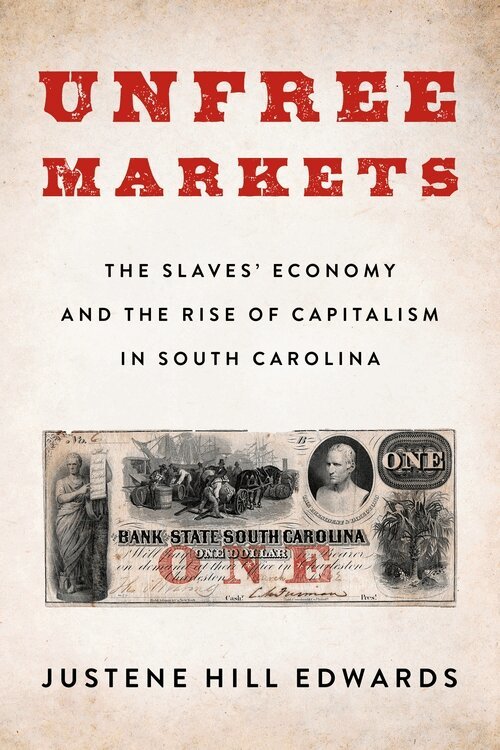
Unfree Markets
The Slaves' Economy and the Rise of Capitalism in South Carolina
Häftad, Engelska, 2021
292 kr
Skickas inom 7-10 vardagar
The everyday lives of enslaved people were filled with the backbreaking tasks that their enslavers forced them to complete. But in spare moments, they found time in which to earn money and obtain goods for themselves. Enslaved people led vibrant economic lives, cultivating produce and raising livestock to trade and sell. They exchanged goods with nonslaveholding whites and even sold products to their enslavers. Did these pursuits represent a modicum of freedom in the interstices of slavery, or did they further shackle enslaved people by other means?Justene Hill Edwards illuminates the inner workings of the slaves’ economy and the strategies that enslaved people used to participate in the market. Focusing on South Carolina from the colonial period to the Civil War, she examines how the capitalist development of slavery influenced the economic lives of enslaved people. Hill Edwards demonstrates that as enslavers embraced increasingly capitalist principles, enslaved people slowly lost their economic autonomy. As slaveholders became more profit-oriented in the nineteenth century, they also sought to control enslaved people’s economic behavior and capture the gains. Despite enslaved people’s aptitude for enterprise, their market activities came to be one more part of the violent and exploitative regime that shaped their lives. Drawing on wide-ranging archival research to expand our understanding of racial capitalism, Unfree Markets shows the limits of the connection between economic activity and freedom.
277 kr
Skickas inom 7-10 vardagar
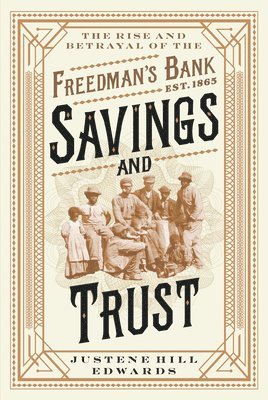
In the years immediately after the Civil War, tens of thousands of former slaves deposited millions of dollars into the Freedman’s Bank. African Americans envisioned this new bank as a launching pad for economic growth and self-determination. But only nine years after it opened, their trust was betrayed and the Freedman’s Bank collapsed.Fully informed by new archival findings, historian Justene Hill Edwards unearths a major turning point in American history in this comprehensive account of the Freedman’s Bank and its depositors. She illuminates the hope with which the bank was first envisioned and demonstrates the significant setback that the sabotage of the bank caused in the fight for economic autonomy. Hill Edwards argues for a new interpretation of its tragic failure: the bank’s white financiers drove the bank into the ground, not Fredrick Douglass, its final president, or its Black depositors and cashiers. A page-turning story filled with both well-known figures like Abraham Lincoln, Frederick Douglass, Jay and Henry Cooke, and General O. O. Howard, and less well-known figures like Dr. Charles B. Purvis, John Mercer Langston, Congressman Robert Smalls, and Ellen Baptiste Lubin. Savings and Trust is necessary reading for those seeking to understand the roots of racial economic inequality in America.
257 kr
Skickas inom 3-6 vardagar
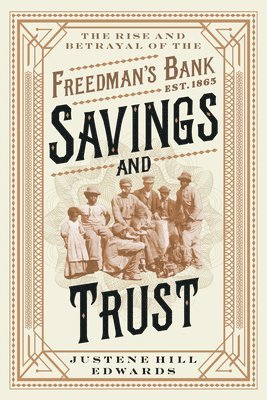
In the years immediately after the Civil War, tens of thousands of former slaves deposited millions of dollars into the Freedman’s Bank. African Americans envisioned this new bank as a launching pad for economic growth and self-determination. But only nine years after it opened, their trust was betrayed and the Freedman’s Bank collapsed.Fully informed by new archival findings, historian Justene Hill Edwards unearths a major turning point in American history in this comprehensive account of the Freedman’s Bank and its depositors. She illuminates the hope with which the bank was first envisioned and demonstrates the significant setback that the sabotage of the bank caused in the fight for economic autonomy. Hill Edwards argues for a new interpretation of its tragic failure: the bank’s white financiers drove the bank into the ground, not Fredrick Douglass, its final president, or its Black depositors and cashiers. A page-turning story filled with both well-known figures like Abraham Lincoln, Frederick Douglass, Jay and Henry Cooke, and General O. O. Howard, and less well-known figures like Dr. Charles B. Purvis, John Mercer Langston, Congressman Robert Smalls, and Ellen Baptiste Lubin. Savings and Trust is necessary reading for those seeking to understand the roots of racial economic inequality in America.