Justin Sabia-Tanis – författare
Visar alla böcker från författaren Justin Sabia-Tanis. Handla med fri frakt och snabb leverans.
4 produkter
4 produkter
Häftad, Engelska, 2018
265 kr
Skickas inom 5-8 vardagar
Inbunden, Engelska, 2018
439 kr
Skickas inom 5-8 vardagar
E-bok
PDF, Engelska, 2018421 kr
Läs direkt efter köp
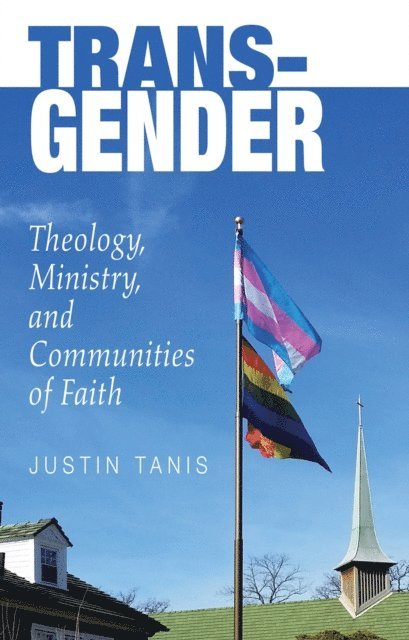
"e;Rev. Dr. Justin Sabia-Tanis is a creative queer theologian and activist with a wealth of pastoral experience. His classic, Transgendered--Theology, Ministry and Communities of Faith, is now available again for faith communities and university students struggling to include trans-people. It is a primer for understanding the spiritual journeys of transgendered people, examining the biblical support for inclusion, and provides faith communities guidelines for hospitality. His notion of 'gender as a calling' is a creative theological proposal for all of us to recognize our own gender calling and the diverse callings of the marginalized. Sabia-Tanis imaginatively uses the image of twilight space of dawn and dusk, in-between space occupied by trans-people. His theology impacted my own commitment to transgendered rights and inclusion. At this time of conservative religious targeting the advances of trans-gendered people, we need the prophetic theological voice of Justin Sabia-Tanis' compassionate inclusion."e;--Rev. Dr. Robert E. Shore-GossQueer Theologian and author of Jesus Acted Up"e;Justin gives tremendous insight into life at the intersection of gender identity and faith. As a transgender Latina religious leader and psychotherapist, I have referenced Justin's book in workshops and discussion groups to help allies and advocates of the transgender community to understand and promote acceptance of the transgender community. Justin's book is a must-read for clergy who want to integrate transgender community members in to their congregations."e;--Nicole M. Garcia, MDiv, MA LPC"e;Transgendered: Theology Ministry and Communities of Faith remains a trailblazing work in the exploration of transgender identities, gender variance and Scripture, and responses of exclusion and inclusion conveyed by communities of faith. Dr. Sabia-Tanis' wide-ranging research and candid conversations about transgender persons seeking faithful spiritual identity provides a helpful framework for transgender people; and for families, friends, and communities who want to support us. Outlining explicit and implicit barriers to participation, Sabia-Tanis challenges faith communities to o?er genuine hospitality and welcome to transgender and gender non-conforming people, o?ering several ways to extend such welcome, including liturgical resources created specifically for the transgender community. This text continues to be a valuable resource for my parish ministry, pastoral care, professional writing, and personal re?ection. I am grateful to see it back in print."e;--Rev. Dr. David Weekley
Inbunden, Engelska, 2026
1 360 kr
Skickas inom 5-8 vardagar
Bringing together material religion and discourse theory, this cross-disciplinary book argues that theories of embodiment and religion co-produce one another. Responding to the scholarly turn towards embodiment and phenomenology beginning in queer studies and branching out into the humanities more broadly, Jessica A. Albrecht brings religion to the table. This book contends that, if the turn to materiality emphasizes what religion does in bodies and spaces, or how bodies make religion, it is equally important to ask whose bodies are made legible, and under what conditions they come to matter. By shining a light on this reciprocal relationship between religion and embodiment, Albrecht reveals the processes through which meanings, “bodies,” and “religion” itself are made. Across seven chapters spanning intersectionality, queer and cuír theory, and crip studies, this book traces counter-genealogies which reveal how bodies become unintelligible within the regimes of religion, race, gender, and ability. Albrecht offers tools for examining how religious experiences are shaped by queerness, disability, and power, providing a fresh and inclusive perspective on how bodies and practices are central constituents of conceptions of religion. The resulting framework for religious studies pushes beyond normative views or religious-secular divisions, prompting readers to critically re-consider both “religion” and the “body.”