Justine Lloyd - Böcker
Visar alla böcker från författaren Justine Lloyd. Handla med fri frakt och snabb leverans.
5 produkter
5 produkter
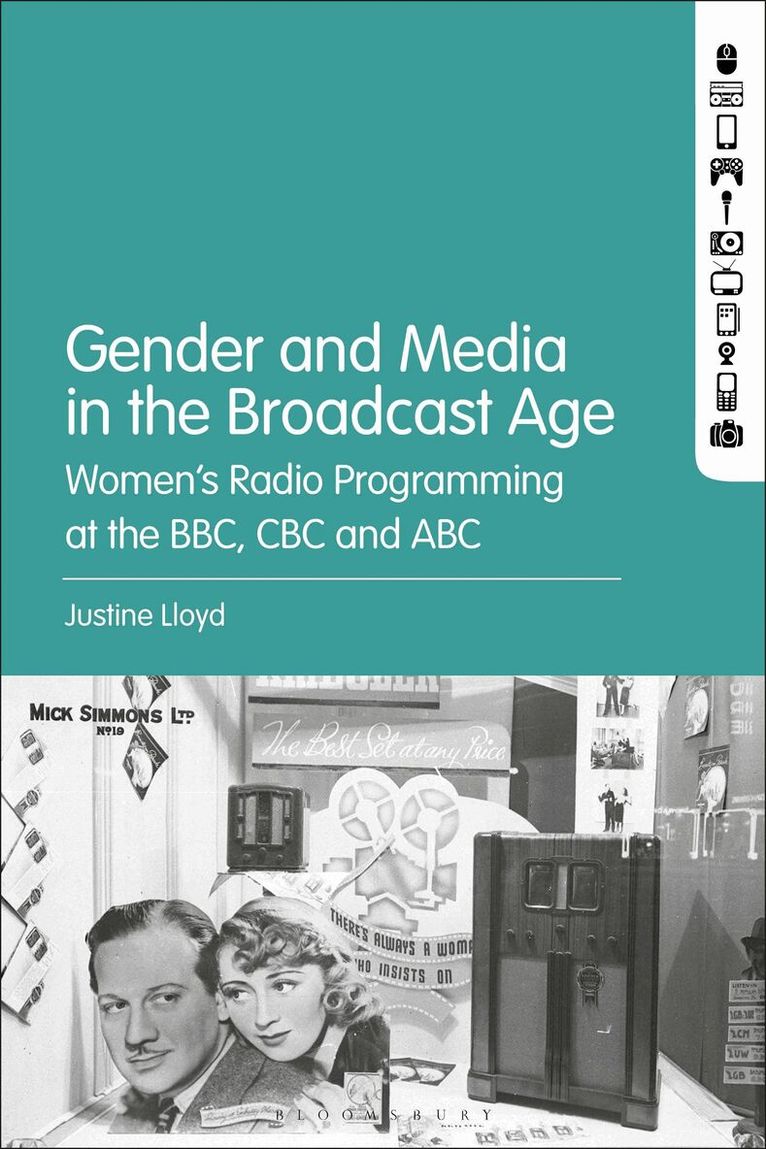
Gender and Media in the Broadcast Age
Women’s Radio Programming at the BBC, CBC, and ABC
Inbunden, Engelska, 2019
1 343 kr
Skickas inom 10-15 vardagar
This book is open access and available on www.bloomsburycollections.com. It is funded by Knowledge Unlatched.The 20th century was a time of rapid expansion in media industries, as well as of accelerating demands for equality and recognition for women. While women’s agency has typically been defined through the domestic sphere, the introduction of media into the home destabilised firm boundaries between public and private spheres.Gender and Media in the Broadcast Age demonstrates how women as media producers and audiences in three countries with public service broadcasters (UK, Canada and Australia) have contributed to changes in our understandings of public and private. Justine Lloyd offers a new way of understanding how tremendous changes in social definitions of gender roles played out in media forms worldwide during this period through the notion of ‘intimate geographies’. Women’s participation in media continues to be a key challenge to notions of the public sphere and the book concludes that profound changes initiated in the broadcast era are unfinished in the age of digital media. Lloyd therefore provides rich and valuable evidence of the dynamic relationship between media texts, producers and audiences that is relevant to contemporary debates about a growing gender ‘apartheid’ in a mediated culture.
Gender and Media in the Broadcast Age
Women’s Radio Programming at the BBC, CBC, and ABC
Häftad, Engelska, 2021
295 kr
Skickas
This book is open access and available on www.bloomsburycollections.com. It is funded by Knowledge Unlatched.The 20th century was a time of rapid expansion in media industries, as well as of accelerating demands for equality and recognition for women. While women’s agency has typically been defined through the domestic sphere, the introduction of media into the home destabilised firm boundaries between public and private spheres.Gender and Media in the Broadcast Age demonstrates how women as media producers and audiences in three countries with public service broadcasters (UK, Canada and Australia) have contributed to changes in our understandings of public and private. Justine Lloyd offers a new way of understanding how tremendous changes in social definitions of gender roles played out in media forms worldwide during this period through the notion of ‘intimate geographies’. Women’s participation in media continues to be a key challenge to notions of the public sphere and the book concludes that profound changes initiated in the broadcast era are unfinished in the age of digital media. Lloyd therefore provides rich and valuable evidence of the dynamic relationship between media texts, producers and audiences that is relevant to contemporary debates about a growing gender ‘apartheid’ in a mediated culture.
1 808 kr
Skickas inom 7-10 vardagar
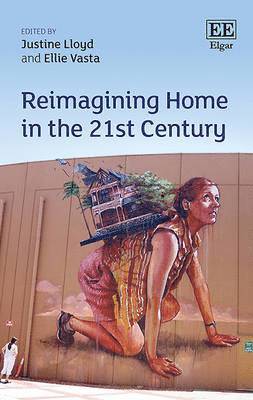
Asking us to think differently about the home, this book challenges the notion of a closed-off and self-sufficient place and reimagines home to be where we find our connections to others and the world. By exploring home in relation to the figure of the stranger and public space, as well as with a focus on practices of dwelling and materialities, the authors demonstrate that thinking differently about home advances our understanding of belonging as a social process in which we are all implicated.Interrelated chapters challenge traditional, convenient and stereotypical notions of 'home'. Specifically, the book provides a state-of-the-art cross-disciplinary conceptual framework; contributes to national and international discussions on the changing economic and social meanings of home; and provides analysis of areas and locations that are rarely thought of as involved in 'home-making', e.g. man caves; mobile homes; the home in public; senses of home; the migrant citizen/stranger. This book is an essential resource for those involved in housing policy, issues around migration policies and to researchers working in other arenas such as cultural heritage. It is of particular interest to academics of sociology, anthropology and cultural studies, and those whose research investigates questions of domestic space and the politics of home.Contributors include: A. Ålund, J. Browitt, A. Deslandes, N. Ebert, M. Giuffre, O. Hamilton, E. Honeywill, J. Humphry, L. Kings, J. Lloyd, Y. Musharbash, S. Redshaw, C.-U. Schierup, A. Stebbing, S. Supski, I. Vanni Accarigi, E. Vasta
1 703 kr
Skickas inom 10-15 vardagar
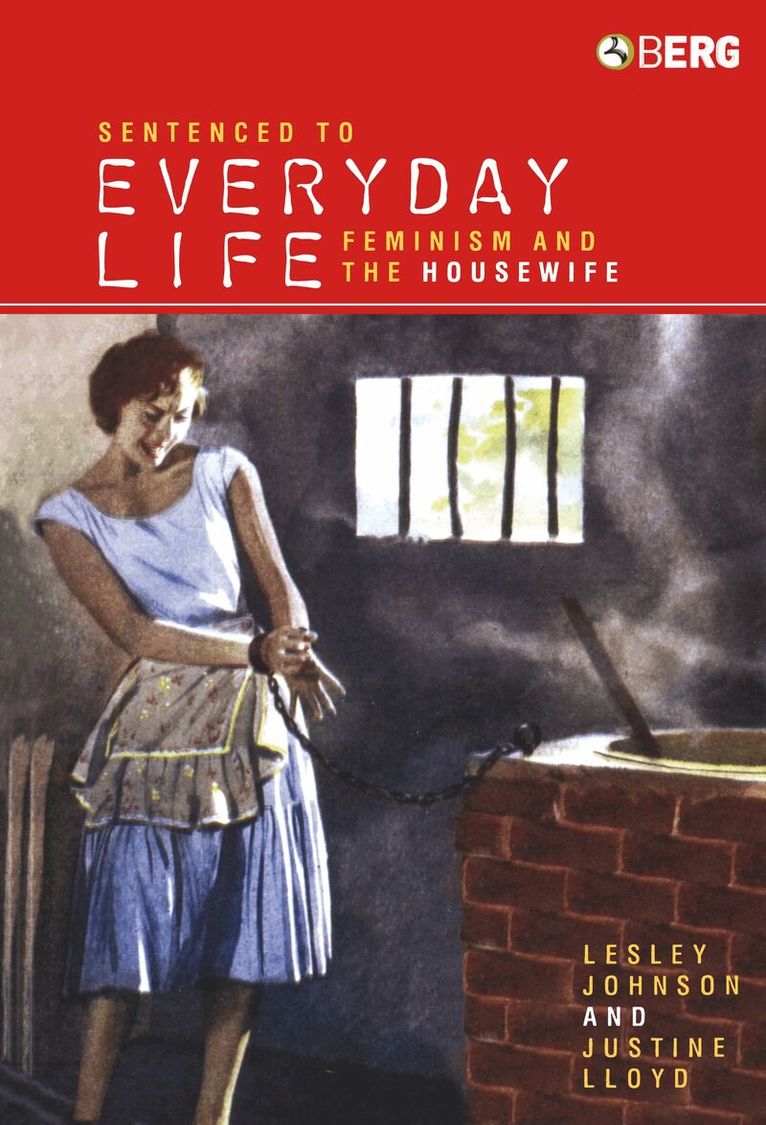
The history of the housewife is a complicated and uneasy narrative, rife with contradictions, tensions, and unanswered questions. In response to this, Sentenced to Everyday Life marks an important cross-generational moment in feminism. Challenging our previous understandings of what constitutes the housewife figure, this book tugs at a critical issue still unresolved in the contemporary world: what is the relationship between women and the home? And why are women so reluctant to call themselves housewives? Drawing on research and evidence surrounding the housewife figure of the 1940s and 1950s, Johnson and Lloyd address the question of why the housewife has been such a problematic figure in feminist debates since World War II. Starting with an exploration of why the housewife of the 1940s became associated with drudgery, this book covers such topics as the ways in which magazines and advertising attempted to articulate an innate connection between women and the domestic sphere, while later films of the 1950s explored the constantly shifting boundaries between social, family and individual desires and constraints for women in the home.Johnson and Lloyd also examine how the home has been a site of boredom, and what happens to the balance between work and family in the modern world. In moving into contemporary debates, the authors explore the uneasy tension between the construction of the modern self and women's efforts to transcend the domestic sphere. By situating their examination in a still unresolved contemporary topic, Johnson and Lloyd offer us both a backward glance and a forward-looking perspective into domesticity and the modern self.
474 kr
Skickas inom 10-15 vardagar
The history of the housewife is a complicated and uneasy narrative, rife with contradictions, tensions, and unanswered questions. In response to this, Sentenced to Everyday Life marks an important cross-generational moment in feminism. Challenging our previous understandings of what constitutes the housewife figure, this book tugs at a critical issue still unresolved in the contemporary world: what is the relationship between women and the home? And why are women so reluctant to call themselves housewives? Drawing on research and evidence surrounding the housewife figure of the 1940s and 1950s, Johnson and Lloyd address the question of why the housewife has been such a problematic figure in feminist debates since World War II. Starting with an exploration of why the housewife of the 1940s became associated with drudgery, this book covers such topics as the ways in which magazines and advertising attempted to articulate an innate connection between women and the domestic sphere, while later films of the 1950s explored the constantly shifting boundaries between social, family and individual desires and constraints for women in the home.Johnson and Lloyd also examine how the home has been a site of boredom, and what happens to the balance between work and family in the modern world. In moving into contemporary debates, the authors explore the uneasy tension between the construction of the modern self and women's efforts to transcend the domestic sphere. By situating their examination in a still unresolved contemporary topic, Johnson and Lloyd offer us both a backward glance and a forward-looking perspective into domesticity and the modern self.