Jyotika Virdi - Böcker
Visar alla böcker från författaren Jyotika Virdi. Handla med fri frakt och snabb leverans.
2 produkter
2 produkter
394 kr
Skickas inom 5-8 vardagar
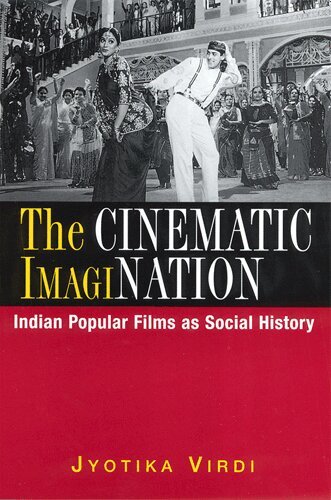
"This book makes an important contribution to the field of Asian film criticism, Indian film history, cultural studies, and gender studies. The Cinematic ImagiNation provides readers with valuable insight into the relationships between nation-building, gender, sexuality, the family, and popular cinema, using post-Independence India as a case study."--Gina Marchetti, author of Romance and the "Yellow Peril": Race, Sex, and Discursive Strategies in Hollywood FictionIndia produces more films than any other country in the world, and these works are avidly consumed by non-Western cultures in Africa, Eastern Europe, the Middle East, and by the Indian communities in Australia, Britain, the Caribbean Islands, and North America. Jyotika Virdi focuses on how this dominant medium configures the "nation" in post-Independence Hindi cinema. She scrutinizes approximately thirty films that have appeared since 1950 and demonstrates how concepts of the nation form the center of this cinema's moral universe. As a kind of storytelling, Indian cinema provides a fascinating account of social history and cultural politics, with the family deployed as a symbol of the nation. Virdi demonstrates how the portrayal of the nation as a mythical community in Hindi films collapses under the weight of its own contradictions--irreconcilable differences that encompass gender, sexuality, family, class, and religious communities. Through these film narratives, the author traces transactions among the various constituencies that struggle, accommodate, coexist uneasily, or reconstitute each other over time, and, in the process, reveal the topography of postcolonial culture.
1 130 kr
Skickas inom 7-10 vardagar
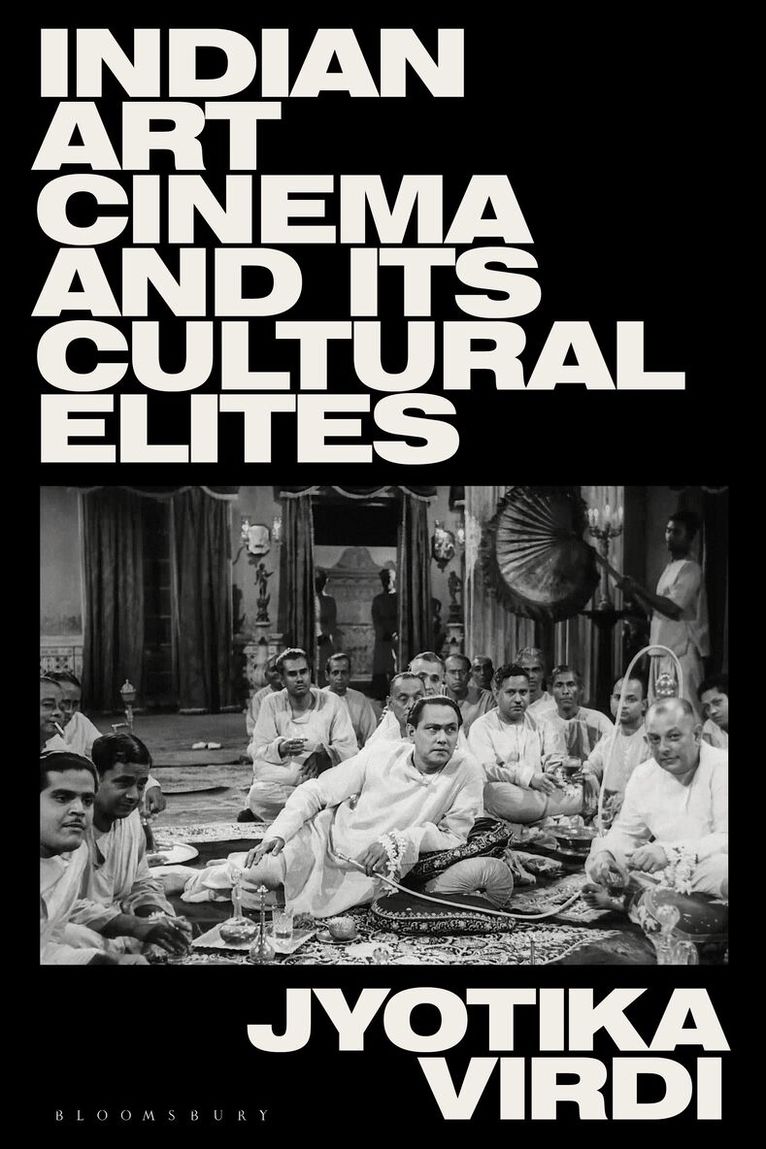
Repositioning Indian art cinema as a genre that articulated an elite, middle-class social imaginary, Indian Art Cinema and its Cultural Elites examines the form's contentious position within Indian society, at once exclusionary in its outlook and yet instrumental in bringing Indian film into global prominence in the latter half of the twentieth century.Drawing on Bourdieu's theory of cultural production, Jyotika Virdi looks at how a closed producer-critic-consumer circuit reinforced class distinction through a presumption of superior taste. She traces the trajectory of art cinema in India from the 1950s, when new institutions under Nehru's socialist ideals catalysed its emergence, through the New Wave movement of the 1970s and 1980s, and finally to its gradual decline in the 1990s as economic liberalization once again transformed the social landscape. By examining films like The Apu Trilogy (1955-1959) and Ardh Satya (Half Truth, 1983), she showcases the complex contradictions of the middle class, who were both the creative producers and consumers of alternative cinema, especially during the political turbulence of the late 1960s and 1970s.Combining a meticulous examination of key auteurs such as Satyajit Ray, Mrinal Sen, and Shyam Benegal, among others, with a broader study of cultural shifts and institutional frameworks, this book reevaluates the intricate relationship between art films, the state that sustains them, and the ruling cultural elite whose influence far exceeds its size.