Kadriye Ercikan - Böcker
Visar alla böcker från författaren Kadriye Ercikan. Handla med fri frakt och snabb leverans.
9 produkter
9 produkter
3 072 kr
Skickas inom 10-15 vardagar
Large-scale assessments (LSAs) play a growing role in education policy decisions, accountability, and education planning worldwide. This book focuses on central issues that are key components of successful planning, development and implementation of LSAs. The book’s main distinction is its focus on practice- based, cutting-edge research. This is achieved by having chapters co-authored by world-class researchers in collaboration with measurement practitioners. The result is a how-to book whose language is accessible to practitioners and graduate students as well as academics. No other book so thoroughly covers current issues in the field of large-scale assessment. An introductory chapter is followed by sixteen chapters that each focus on a specific issue. The content is prescriptive and didactic in nature but based on the most recent scientific research. It includes successful experiences, exemplary practices, training modules, interesting breakthroughs or alternatives, and promising innovations regarding large-scale assessments. Finally, it covers meaningful topics that are currently taking center stage such as motivating students, background questionnaires, comparability of different linguistic versions of assessments, and cognitive modeling of learning and assessment.
1 218 kr
Skickas inom 10-15 vardagar
Large-scale assessments (LSAs) play a growing role in education policy decisions, accountability, and education planning worldwide. This book focuses on central issues that are key components of successful planning, development and implementation of LSAs. The book’s main distinction is its focus on practice- based, cutting-edge research. This is achieved by having chapters co-authored by world-class researchers in collaboration with measurement practitioners. The result is a how-to book whose language is accessible to practitioners and graduate students as well as academics. No other book so thoroughly covers current issues in the field of large-scale assessment. An introductory chapter is followed by sixteen chapters that each focus on a specific issue. The content is prescriptive and didactic in nature but based on the most recent scientific research. It includes successful experiences, exemplary practices, training modules, interesting breakthroughs or alternatives, and promising innovations regarding large-scale assessments. Finally, it covers meaningful topics that are currently taking center stage such as motivating students, background questionnaires, comparability of different linguistic versions of assessments, and cognitive modeling of learning and assessment.
Generalizing from Educational Research
Beyond Qualitative and Quantitative Polarization
Inbunden, Engelska, 2008
2 224 kr
Skickas inom 10-15 vardagar
"This book frames the major challenge facing educational researchers as one of going beyond the mindless qualitative-quantitative divide and addressing the overarching/fundamental challenge of enriching and enlarging educational inquiry. It is a signature contribution to the field." - Clifton F. Conrad, University of Wisconsin-Madison, USATackling one of the most critical issues in education research today - how research methods are related to value and meaningfulness - this frontline volume achieves two purposes. First, it presents an integrated approach to educational inquiry that works toward a continuum instead of a dichotomy of generalizability, and looks at how this continuum might be related to types of research questions asked and how these questions should determine modes of inquiry. Second, it discusses and demonstrates the contributions of different data types and modes of research to generalizability of research findings, and to limitations of research findings that utilize a single approach.International leaders in the field take the discussion of generalizing in education research to a level where claims are supported using multiple types of evidence. The volume pushes the field in a different direction, where the focus is on creating meaningful research findings that are not polarized by qualitative versus quantitative methodologies. The integrative approach allows readers to better understand possibilities and shortcomings of different types of research.
Generalizing from Educational Research
Beyond Qualitative and Quantitative Polarization
Häftad, Engelska, 2008
705 kr
Skickas inom 10-15 vardagar
"This book frames the major challenge facing educational researchers as one of going beyond the mindless qualitative-quantitative divide and addressing the overarching/fundamental challenge of enriching and enlarging educational inquiry. It is a signature contribution to the field." - Clifton F. Conrad, University of Wisconsin-Madison, USATackling one of the most critical issues in education research today - how research methods are related to value and meaningfulness - this frontline volume achieves two purposes. First, it presents an integrated approach to educational inquiry that works toward a continuum instead of a dichotomy of generalizability, and looks at how this continuum might be related to types of research questions asked and how these questions should determine modes of inquiry. Second, it discusses and demonstrates the contributions of different data types and modes of research to generalizability of research findings, and to limitations of research findings that utilize a single approach.International leaders in the field take the discussion of generalizing in education research to a level where claims are supported using multiple types of evidence. The volume pushes the field in a different direction, where the focus is on creating meaningful research findings that are not polarized by qualitative versus quantitative methodologies. The integrative approach allows readers to better understand possibilities and shortcomings of different types of research.
2 094 kr
Skickas inom 10-15 vardagar
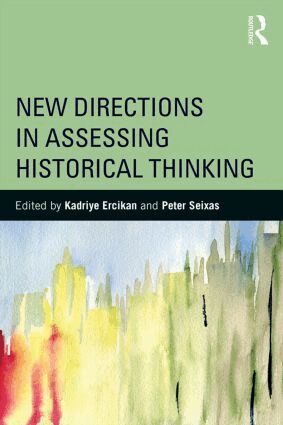
New technologies have radically transformed our relationship to information in general and to little bits of information in particular. The assessment of history learning, which for a century has valued those little bits as the centerpiece of its practice, now faces not only an unprecedented glut but a disconnect with what is valued in history education. More complex processes—historical thinking, historical consciousness or historical sense making—demand more complex assessments. At the same time, advances in scholarship on assessment open up new possibilities. For this volume, Kadriye Ercikan and Peter Seixas have assembled an international array of experts who have, collectively, moved the fields of history education and assessment forward. Their various approaches negotiate the sometimes-conflicting demands of theoretical sophistication, empirically demonstrated validity and practical efficiency. Key issues include articulating the cognitive goals of history education, the relationship between content and procedural knowledge, the impact of students’ language literacy on history assessments, and methods of validation in both large scale and classroom assessments. New Directions in Assessing Historical Thinking is a critical, research-oriented resource that will advance the conceptualization, design and validation of the next generation of history assessments.
695 kr
Skickas inom 10-15 vardagar
New technologies have radically transformed our relationship to information in general and to little bits of information in particular. The assessment of history learning, which for a century has valued those little bits as the centerpiece of its practice, now faces not only an unprecedented glut but a disconnect with what is valued in history education. More complex processes—historical thinking, historical consciousness or historical sense making—demand more complex assessments. At the same time, advances in scholarship on assessment open up new possibilities. For this volume, Kadriye Ercikan and Peter Seixas have assembled an international array of experts who have, collectively, moved the fields of history education and assessment forward. Their various approaches negotiate the sometimes-conflicting demands of theoretical sophistication, empirically demonstrated validity and practical efficiency. Key issues include articulating the cognitive goals of history education, the relationship between content and procedural knowledge, the impact of students’ language literacy on history assessments, and methods of validation in both large scale and classroom assessments. New Directions in Assessing Historical Thinking is a critical, research-oriented resource that will advance the conceptualization, design and validation of the next generation of history assessments.
Validation of Score Meaning for the Next Generation of Assessments
The Use of Response Processes
Inbunden, Engelska, 2017
1 637 kr
Skickas inom 10-15 vardagar
Despite developments in research and practice on using examinee response process data in assessment design, the use of such data in test validation is rare. Validation of Score Meaning in the Next Generation of Assessments Using Response Processes highlights the importance of validity evidence based on response processes and provides guidance to measurement researchers and practitioners in creating and using such evidence as a regular part of the assessment validation process. Response processes refer to approaches and behaviors of examinees when they interpret assessment situations and formulate and generate solutions as revealed through verbalizations, eye movements, response times, or computer clicks. Such response process data can provide information about the extent to which items and tasks engage examinees in the intended ways.With contributions from the top researchers in the field of assessment, this volume includes chapters that focus on methodological issues and on applications across multiple contexts of assessment interpretation and use. In Part I of this book, contributors discuss the framing of validity as an evidence-based argument for the interpretation of the meaning of test scores, the specifics of different methods of response process data collection and analysis, and the use of response process data relative to issues of validation as highlighted in the joint standards on testing. In Part II, chapter authors offer examples that illustrate the use of response process data in assessment validation. These cases are provided specifically to address issues related to the analysis and interpretation of performance on assessments of complex cognition, assessments designed to inform classroom learning and instruction, and assessments intended for students with varying cultural and linguistic backgrounds.The Open Access version of this book, available at http://www.taylorfrancis.com, has been made available under a Creative Commons Attribution-Non Commercial-No Derivatives 4.0 license.
Validation of Score Meaning for the Next Generation of Assessments
The Use of Response Processes
Häftad, Engelska, 2017
692 kr
Skickas inom 10-15 vardagar
Despite developments in research and practice on using examinee response process data in assessment design, the use of such data in test validation is rare. Validation of Score Meaning in the Next Generation of Assessments Using Response Processes highlights the importance of validity evidence based on response processes and provides guidance to measurement researchers and practitioners in creating and using such evidence as a regular part of the assessment validation process. Response processes refer to approaches and behaviors of examinees when they interpret assessment situations and formulate and generate solutions as revealed through verbalizations, eye movements, response times, or computer clicks. Such response process data can provide information about the extent to which items and tasks engage examinees in the intended ways.With contributions from the top researchers in the field of assessment, this volume includes chapters that focus on methodological issues and on applications across multiple contexts of assessment interpretation and use. In Part I of this book, contributors discuss the framing of validity as an evidence-based argument for the interpretation of the meaning of test scores, the specifics of different methods of response process data collection and analysis, and the use of response process data relative to issues of validation as highlighted in the joint standards on testing. In Part II, chapter authors offer examples that illustrate the use of response process data in assessment validation. These cases are provided specifically to address issues related to the analysis and interpretation of performance on assessments of complex cognition, assessments designed to inform classroom learning and instruction, and assessments intended for students with varying cultural and linguistic backgrounds.The Open Access version of this book, available at http://www.taylorfrancis.com, has been made available under a Creative Commons Attribution-Non Commercial-No Derivatives 4.0 license.
413 kr
Skickas inom 7-10 vardagar
What role does history play in contemporary society? Has the frenetic pace of today’s world led people to lose contact with the past? A high-profile team of researchers from across Canada sought to answer these questions by launching an ambitious investigation into how Canadians engage with history in their everyday lives. The results of their survey form the basis of this eye-opening book.Canadians and Their Pasts reports on the findings of interviews with 3,419 Canadians from a variety of cultural and linguistic communities. Along with yielding rich qualitative data, the surveys generated revealing quantitative data that allows for comparisons based on gender, ethnicity, migration histories, region, age, income, and educational background. The book also brings Canada into international conversation with similar studies undertaken earlier in the United States, Australia, and Europe.Canadians and Their Pasts confirms that, for most Canadians, the past is not dead. Rather, it reveals that our histories continue to shape the present in many powerful ways.