Karel Margry - Böcker
Visar alla böcker från författaren Karel Margry. Handla med fri frakt och snabb leverans.
4 produkter
4 produkter
266 kr
Kommande
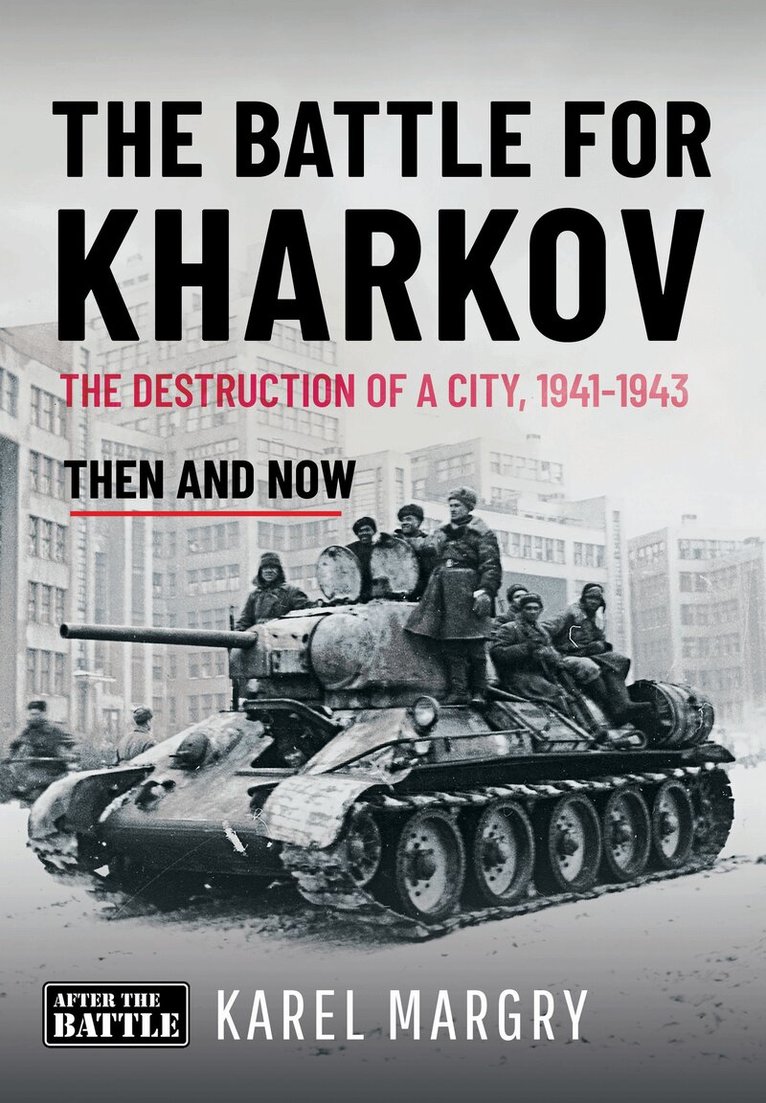
Kharkov, Ukraine’s second-largest city, was a major industrial hub and a key centre for Soviet tank development during the Second World War. Its strategic importance made it a focal point of intense conflict during Operation Barbarossa, changing hands four times between October 1941 and August 1943.The Germans first captured Kharkov in October 1941, but its factories and machinery had been evacuated. The Red Army liberated the city in May 1942 after heavy losses, with over 170,000 soldiers killed and 106,000 wounded. In February 1943, Field Marshal Erich von Manstein led a counter-offensive during the Third Battle of Kharkov, retaking the city through brutal urban combat, marking one of Germany’s last significant victories on the Eastern Front.However, in August 1943, the Red Army’s Belgorod–Kharkov offensive forced the Germans to surrender the city. This Fourth Battle of Kharkov, described by Winston Churchill as one of the war's decisive battles alongside Kursk and Orel, marked the turning point of Germany’s defeat in the East.Karel Margry’s analysis delves into these pivotal battles, highlighting their significance in shaping the outcome of Hitler’s invasion and underscoring the immense human cost of the Soviet-German conflict.
266 kr
Skickas
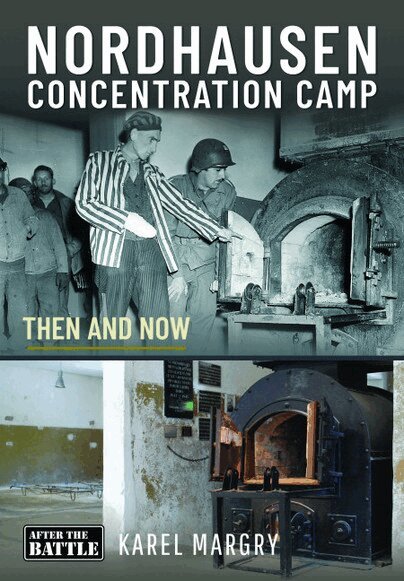
In the history of Nazi concentration camps, and particularly labour camps, there is probably no place that bears the same stigma of wretchedness as 'Dora-Mittelbau' at Nordhausen. Located in the Harz mountains in central Germany, next to a quarry tunnel system in the Kohnstein mountain, it served to house thousands of slave workers for an underground factory known as the Mittelwerk, which produced three of Germany's best-known secret weapons: the V1 flying bomb, the V2 rocket and jet engines for the Me 262 and Ar 234 fighters. With over 20 kilometres of underground galleries, it was the largest underground factory in the world. Many of the inmates died in indescribable misery, being forced to extend the tunnels with meagre equipment and under ghastly conditions, sometimes not seeing daylight for weeks on end. Started in August 1943, Dora-Mittelbau in due course became the centre of a whole complex of underground factories in the Nordhausen area, with several subsidiary camps being set up. In all, of some 60,000 prisoners sent there between 1943 and 1945, 20,000 were driven to extinction to implement Nazi Germany's secret weapons programme, but they laboured late and in vain, for the products they yielded had little impact on the war. The V1 and V2 are the only weapons which cost more lives in production than in deployment: far more people died producing them than were killed from their impact in London, Antwerp and elsewhere.The history of Nordhausen, already gruesome in itself, ended in a crescendo of violence when, in the final weeks of the war, the surviving inmates were evacuated from the camps in death marches . One group of over a thousand men then became victim of one of the most horrendous of all Nazi atrocities. On April 13, 1945, just outside the town of Gardelegen, their SS camp guards, helped by local troops and Hitlerjugend, locked the prisoners in a big barn and set fire to the inside, burning those inside, killing them with hand-grenades, and shooting anyone who tried to escape from the burning, smoke-filled building. A total of 1,016 men died as a result. When discovered by American troops two days later, Gardelegen quickly became known as the site of one most notorious war crimes committed by the Nazis.In this book, Karel Margry recounts the history of Nordhausen concentration camp and of the Gardelegen massacre in full detail. Both stories are illustrated with unique Then and Now comparison photographs.The book contains the following two stories from ATB magazine:Issue 101: NordhausenAuthor: Karel Margry. 18,165 words, 118 black and white photos.Issue 111: The Gardelegen MassacreAuthor: Karel Margry. Text: 16,189 words, 78 black and white photos.Note:After the Battle s account of Nordhausen, when first published in 1998, was considered so accurate and comprehensive that the Nordhausen Camp Memorial asked whether they could translate it into German and use it as one of their brochures. Thus a special German edition of issue 101 appeared under the title Damals und Heute, which has been reprinted several times.
523 kr
Skickas
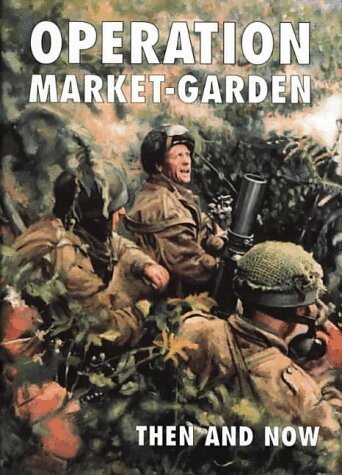
Volume 2 of this two-volume history of Operation "Market-Garden" continues the story as XXX Corps links up with the 82nd Airborne at Nijmegen which leads to the dramatic and spectacular capture of the vital bridges there over the Waal river. But at Arnhem the tide of battle has already turned. The main force of lst Airborne is thrown back to the Oosterbeek perimeter, leaving John Frost's isolated force at the road bridge to fight it out till the end. As the Polish Brigade is dropped south of the Rhine, and the ground army desperately tries to relieve the beleaguered British paras, down in the south the Germans launch repeated attacks on the narrow corridor in an attempt to cut the Allied supply artery. As savage battles rage for possession of "Hell's Highway", the airborne battle is lost and on September 26 the survivors of lst Airborne are evacuated back across the Rhine.
294 kr
Skickas
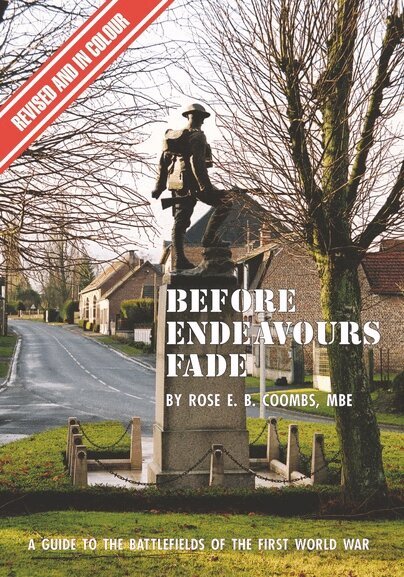
NOW UPDATED AND IN COLOUR. From the Belgian coast, across the fields of Flanders, over the valley of the Somme and down the line to the Argonne: all the major battlefields of the First World War -- Ypres, Arras, Cambrai, Amiens, St Quentin, Mons, Le Cateau, Reims, Verdun and St Mihiel -- are criss-crossed in this book over more than thirty different routes, each clearly shown on a Michelin map. Every significant feature is described in detail. Indispensable for anyone contemplating a tour of the battlefields in Belgium and France, this book combines the years of knowledge, travel and research of its author, Rose Coombs, who worked at the Imperial War Museum in London for nearly forty years. Since her death in 1991, After the Battle's Editor, Karel Margry, has travelled every route, checking and revising the text where necessary, as well as re-photographing every -memorial. Many new ones are included, yet we have striven to keep true to the flavour of Rose's original concept ...before endeavours fade.