Karsten Engsig Sorensen – författare
395 kr
Läs direkt efter köp
395 kr
Läs direkt efter köp
2 420 kr
Läs direkt efter köp
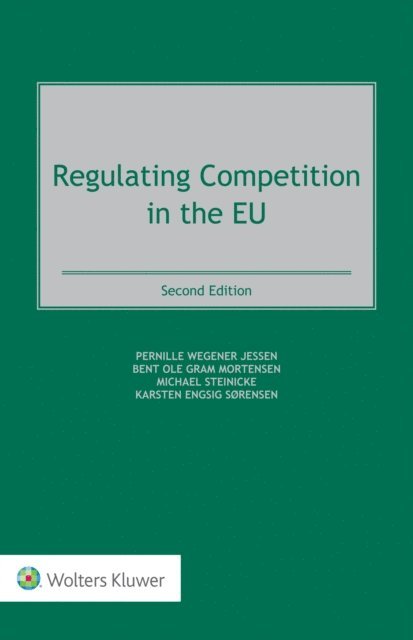
This revised and updated edition of a basic sourcebook and practice guide in EU competition law retains the first edition’s significantly broader perspective on EU competition law than most books in the field. It explains not only the traditional areas of competition law but also aspects of competition law that are of particular importance to practitioners.
With its comprehensive overview of relevant provisions related to competition, among others, the authors shed clear light on the following topics and the interplay between these different areas of competition law:
the prohibition of agreements which restrict competition;
the prohibition of abuse of dominant position;
the rules on merger control;
the prohibition of State aid;
the liberalised sectors such as energy supply, transport, postal services, and telecommunications; and
the rules on public procurement.
The chapters integrate an extensive number of sources, including new acts, new decisions and judgments, and new Commission guidelines, that help guide the interpretation of the underlying Treaty provisions.
With its enhanced view of EU competition policy, regulation, and enforcement and its emphasAis on specific industry sectors, this book offers an unusually thorough view of aspects of competition law which play an essential role in regulating the conduct of undertakings and public authorities in the market. This new edition will continue to be of special value to any lawyer, policymaker, or scholar active in European competition law.
2 420 kr
Läs direkt efter köp
This revised and updated edition of a basic sourcebook and practice guide in EU competition law retains the first edition’s significantly broader perspective on EU competition law than most books in the field. It explains not only the traditional areas of competition law but also aspects of competition law that are of particular importance to practitioners.
With its comprehensive overview of relevant provisions related to competition, among others, the authors shed clear light on the following topics and the interplay between these different areas of competition law:
the prohibition of agreements which restrict competition;
the prohibition of abuse of dominant position;
the rules on merger control;
the prohibition of State aid;
the liberalised sectors such as energy supply, transport, postal services, and telecommunications; and
the rules on public procurement.
The chapters integrate an extensive number of sources, including new acts, new decisions and judgments, and new Commission guidelines, that help guide the interpretation of the underlying Treaty provisions.
With its enhanced view of EU competition policy, regulation, and enforcement and its emphasAis on specific industry sectors, this book offers an unusually thorough view of aspects of competition law which play an essential role in regulating the conduct of undertakings and public authorities in the market. This new edition will continue to be of special value to any lawyer, policymaker, or scholar active in European competition law.
1 677 kr
Läs direkt efter köp
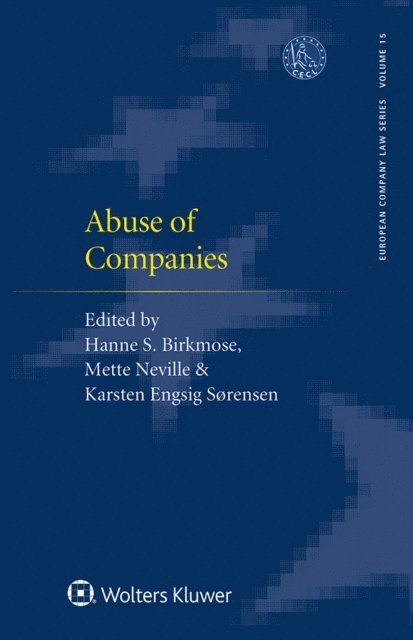
Whether the corporate form is used to avoid liabilities or cover illegal acts, or whether abuse is practised to obtain certain advantages, the subject of this first-ever in-depth survey and analysis garners more attention every day – both in legal literature and in popular media. Taken together, the authoritative contributions in this book clearly and comprehensively reveal typical situations where abuse may take place and how company law and other areas of law have tackled these incidents and practices in a variety of key jurisdictions.
Focusing on Europe but with global implications, the topics raised include the following:
how group structures may be used by multinational enterprises to escape regulation and avoid taxation; whether the decision to incorporate a company in a particular jurisdiction may be abusive; companies set up for the purpose of money laundering; letterbox companies formed as a front to allow a company to benefit from one legal regime and avoid others; ex post transfers of seats such as cross-border mergers and conversions; when the use of phoenix companies may constitute an abuse of the corporate form; how corporate mobility is used to circumvent worker participation; and how online company formation and technological innovation may foster abuse.This book helps to explain how the line is drawn between abuse and (creative) use of the corporate form. Remedies covered include restricting the use of bearer shares, setting minimum capital requirements, piercing the corporate veil, ensuring transparency of beneficial ownership, using insolvency law to lodge claims against directors and shareholders and recover assets, and applying the general principle prohibiting abuse.
There is no other book on the market focusing on abuse of companies and giving such a comprehensive analysis of the topic. Practitioners will get guidelines on how to avoid becoming involved in activities that may constitute abuse and how to address instances where abuse has occurred, and interested academics, legislators, and enforcement authorities in Europe and beyond will find this book’s perspectives invaluable.
1 677 kr
Läs direkt efter köp
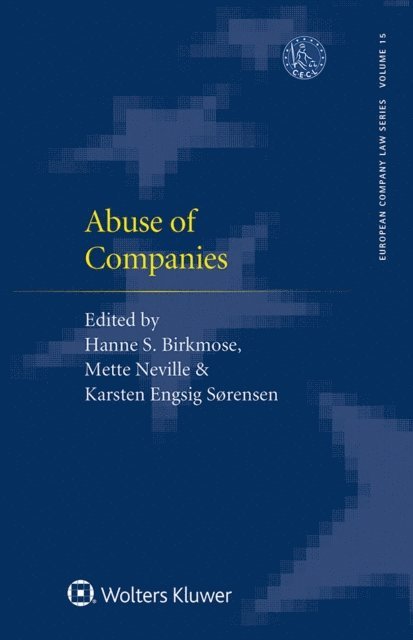
Whether the corporate form is used to avoid liabilities or cover illegal acts, or whether abuse is practised to obtain certain advantages, the subject of this first-ever in-depth survey and analysis garners more attention every day – both in legal literature and in popular media. Taken together, the authoritative contributions in this book clearly and comprehensively reveal typical situations where abuse may take place and how company law and other areas of law have tackled these incidents and practices in a variety of key jurisdictions.
Focusing on Europe but with global implications, the topics raised include the following:
how group structures may be used by multinational enterprises to escape regulation and avoid taxation; whether the decision to incorporate a company in a particular jurisdiction may be abusive; companies set up for the purpose of money laundering; letterbox companies formed as a front to allow a company to benefit from one legal regime and avoid others; ex post transfers of seats such as cross-border mergers and conversions; when the use of phoenix companies may constitute an abuse of the corporate form; how corporate mobility is used to circumvent worker participation; and how online company formation and technological innovation may foster abuse.This book helps to explain how the line is drawn between abuse and (creative) use of the corporate form. Remedies covered include restricting the use of bearer shares, setting minimum capital requirements, piercing the corporate veil, ensuring transparency of beneficial ownership, using insolvency law to lodge claims against directors and shareholders and recover assets, and applying the general principle prohibiting abuse.
There is no other book on the market focusing on abuse of companies and giving such a comprehensive analysis of the topic. Practitioners will get guidelines on how to avoid becoming involved in activities that may constitute abuse and how to address instances where abuse has occurred, and interested academics, legislators, and enforcement authorities in Europe and beyond will find this book’s perspectives invaluable.
1 501 kr
Läs direkt efter köp
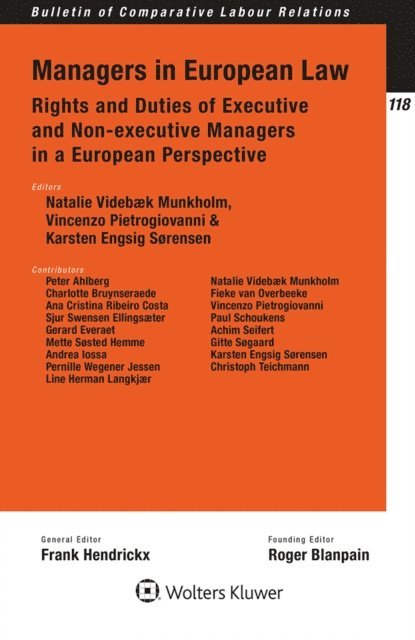
Business organisations depend on having one or more persons who can legitimately make strategic business decisions. But what are the legal entitlements of such key professionals? This is the first book – with contributions from experts across Europe – to take a broad comparative look at how the delimitation of rights and duties of executive and non-executive managers is done under different areas of EU law and across different jurisdictions (namely, EU and national law).
Aspects of the executive role covered include the following:
extensive treatment of definitions and methodologies to ascertain the status of managers as ‘workers’ in Europe;
comprehensive interdisciplinary and comparative analysis of cross-cutting issues affecting managers in Europe, including complexities arising from national variations in governance structures and roles and functions of managers;
comprehensive analysis of cases before the European courts with full awareness of applicable rules;
distinction between registered front directors and those who act as de facto managers;
how employees (and to some degree other stakeholders) may be involved in management;
trends in current EU law that increase the need to protect managers;
trends that increase the need to hold managers liable;
right to inter alia information and consultation, occupational health and safety, non-discrimination and free movement; and
recognition that managers may not necessarily be powerful professionals with strength vis-à-vis the company as employer.
According to EU statistics, in 2019, nearly 9.4 million persons held a managerial position across the EU’s Member States, meaning that many managers currently can no longer inherently be considered unworthy of employment protection. The legal status of these individuals thus cannot be sidestepped. This very important volume accordingly will be of value to practitioners, policymakers, and academics in employment and labour law.
1 501 kr
Läs direkt efter köp
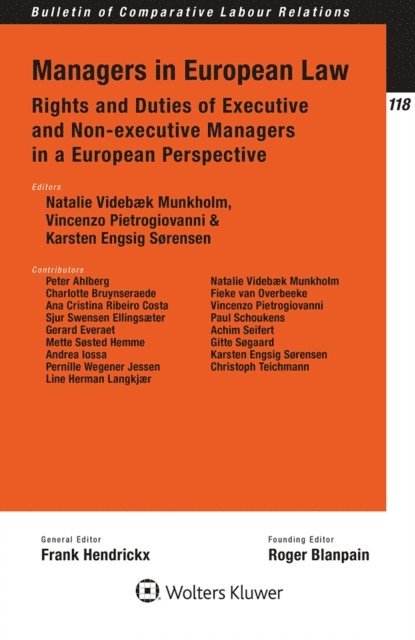
Business organisations depend on having one or more persons who can legitimately make strategic business decisions. But what are the legal entitlements of such key professionals? This is the first book – with contributions from experts across Europe – to take a broad comparative look at how the delimitation of rights and duties of executive and non-executive managers is done under different areas of EU law and across different jurisdictions (namely, EU and national law).
Aspects of the executive role covered include the following:
extensive treatment of definitions and methodologies to ascertain the status of managers as ‘workers’ in Europe;
comprehensive interdisciplinary and comparative analysis of cross-cutting issues affecting managers in Europe, including complexities arising from national variations in governance structures and roles and functions of managers;
comprehensive analysis of cases before the European courts with full awareness of applicable rules;
distinction between registered front directors and those who act as de facto managers;
how employees (and to some degree other stakeholders) may be involved in management;
trends in current EU law that increase the need to protect managers;
trends that increase the need to hold managers liable;
right to inter alia information and consultation, occupational health and safety, non-discrimination and free movement; and
recognition that managers may not necessarily be powerful professionals with strength vis-à-vis the company as employer.
According to EU statistics, in 2019, nearly 9.4 million persons held a managerial position across the EU’s Member States, meaning that many managers currently can no longer inherently be considered unworthy of employment protection. The legal status of these individuals thus cannot be sidestepped. This very important volume accordingly will be of value to practitioners, policymakers, and academics in employment and labour law.
1 555 kr
Läs direkt efter köp
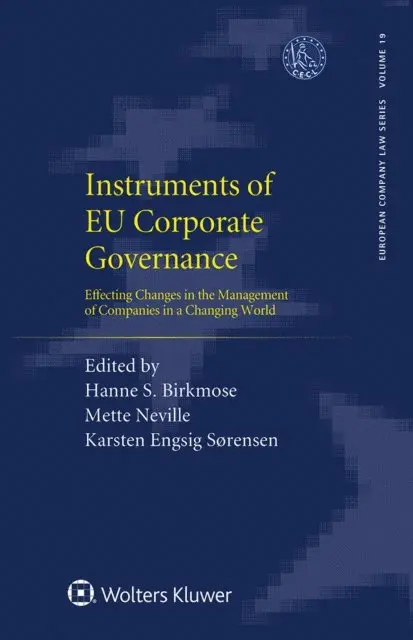
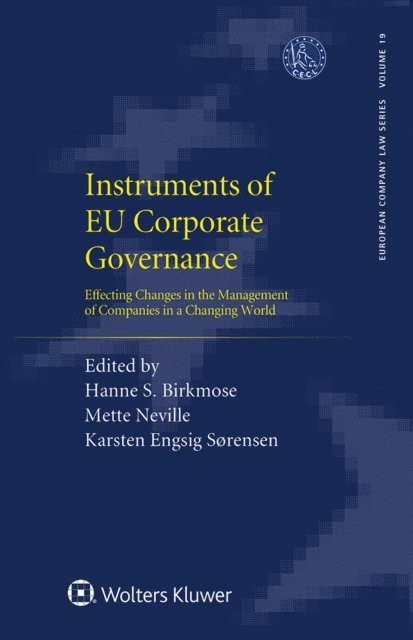
European Company Law Series, Volume 19
Compelling new perspectives on corporate governance – including attention to increased shareholder engagement, long-term value creation, and sustainability – have given rise to major changes in the management of companies. Yet, until this book, there has been no systematic account of the legislative and soft law instruments designed to promote good corporate governance practices across the range of sizes and types of companies. The book analyses the various instruments that legislators and others have used to promote good corporate governance in European companies and assesses their value in practice.
Nineteen well-known scholars of business and corporate law delve into how such issues and topics as the following are approached across the spectrum of corporate governance instruments available in Europe:
corporate codes of conduct;
procedural rules regulating how directors make decisions;
rules on board composition and remuneration;
regulating boards in small- and medium-sized enterprises;
public enforcement of directors’ duties;
how digitalisation may affect implementation of corporate governance instruments;
reporting rules;
rules on the empowerment of minority shareholders;
the role of the general meeting;
regulation of the market for corporate control;
certifications;
rules on liability of directors; and
role of auditors and accountants.
In its in-depth analysis of the benefits and potential disadvantages of each instrument and what may be achieved both at company level and generally, this book will prove of value to all concerned with promoting responsible corporate governance, whether in business, government, or academia.
1 555 kr
Läs direkt efter köp
European Company Law Series, Volume 19
Compelling new perspectives on corporate governance – including attention to increased shareholder engagement, long-term value creation, and sustainability – have given rise to major changes in the management of companies. Yet, until this book, there has been no systematic account of the legislative and soft law instruments designed to promote good corporate governance practices across the range of sizes and types of companies. The book analyses the various instruments that legislators and others have used to promote good corporate governance in European companies and assesses their value in practice.
Nineteen well-known scholars of business and corporate law delve into how such issues and topics as the following are approached across the spectrum of corporate governance instruments available in Europe:
corporate codes of conduct;
procedural rules regulating how directors make decisions;
rules on board composition and remuneration;
regulating boards in small- and medium-sized enterprises;
public enforcement of directors’ duties;
how digitalisation may affect implementation of corporate governance instruments;
reporting rules;
rules on the empowerment of minority shareholders;
the role of the general meeting;
regulation of the market for corporate control;
certifications;
rules on liability of directors; and
role of auditors and accountants.
In its in-depth analysis of the benefits and potential disadvantages of each instrument and what may be achieved both at company level and generally, this book will prove of value to all concerned with promoting responsible corporate governance, whether in business, government, or academia.