Katalin Ligeti – författare
Visar alla böcker från författaren Katalin Ligeti. Handla med fri frakt och snabb leverans.
20 produkter
20 produkter
Inbunden, Engelska, 2018
1 887 kr
Skickas inom 5-8 vardagar
This edited volume is based on the European Law Institute's project, 'The Prevention and Resolution of Conflicts of Exercise of Jurisdiction in Criminal Law', co-ordinated by the European Law Institute (ELI) and the University of Luxembourg. The project ran from 2013 to 2017 and was conducted under the auspices of the ELI and the Luxembourg National Research Fund (FNR). The study sought to explore options for a coherent regulatory mechanism for the prevention and settlement of conflicts of jurisdiction in criminal law. Currently, there is no binding instrument establishing a mechanism to resolve conflicts of (exercising) jurisdiction in criminal matters in the EU, although such a mechanism is essential for the effective functioning of a European criminal justice area based on mutual recognition. Building on empirical research and a comparison with civil law solutions to the problem of conflicts of jurisdiction, this volume seeks to impact the EU policy debate by proposing three fully-formed models for legislative action, coupled with extensive analysis of related themes.
Inbunden, Engelska, 2017
1 251 kr
Skickas inom 10-15 vardagar
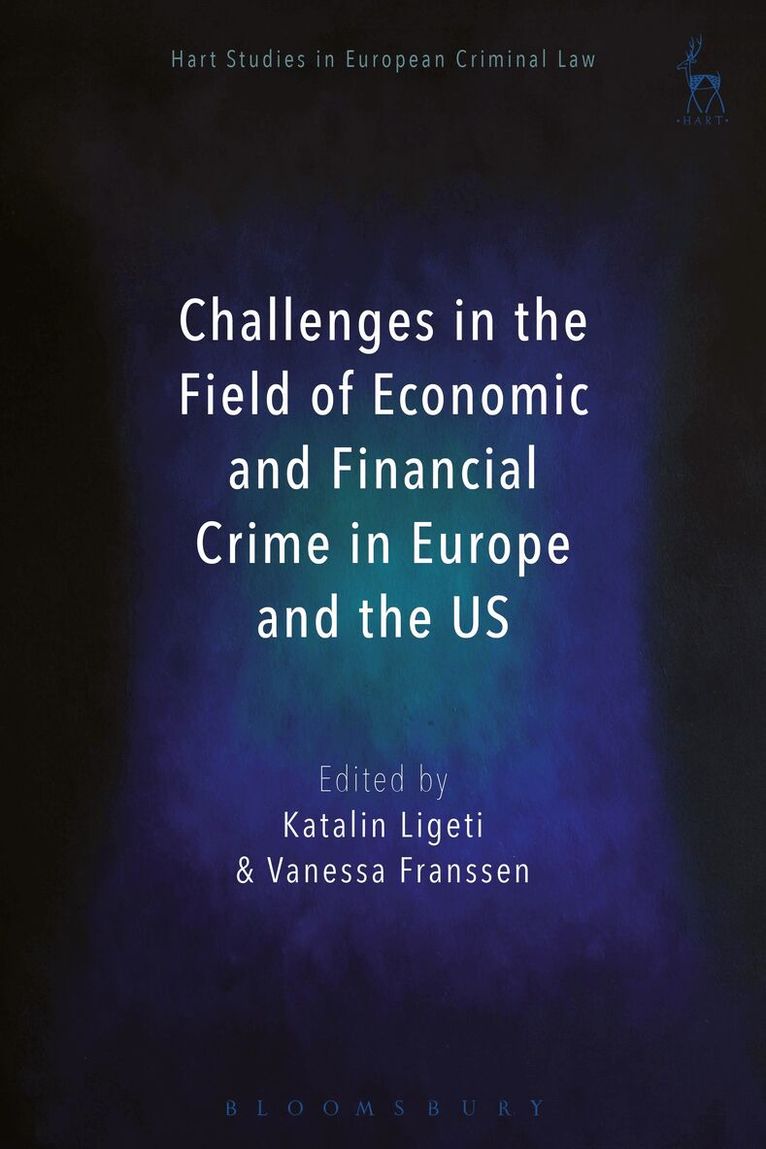
In the past few years, criminal justice systems have faced important global challenges in the field of economic and financial crime. The 2008 financial crisis revealed how strongly financial markets and economies are interconnected and illustrated that misconduct in the economic and financial sectors is often of a systemic nature, with wide-spread consequences for a large number of victims. The prevention, control and punishment of such crimes is thus confronted with a strong globalisation. Moreover, continuous technological evolutions and socio-economic developments make the distinction between socially desirable and undesirable behaviour more problematic. Besides, economic and financial misconduct is notoriously difficult to detect and investigate. In light of these challenges, legislators and law enforcers have been searching for adequate responses to combat economic and financial crime by adapting existing policies, norms and practices and by creating new enforcement mechanisms.The purpose of this volume is to analyse those challenges in the field of economic and financial crime from different perspectives, and to examine which particular solutions criminal justice systems across Europe give to those challenges. The volume has four parts. The first part focuses on a number of key questions with respect to substantive criminal law, whereas the second part will address issues affecting the administration of justice and criminal procedure. Part three then explores particular challenges concerning multi-agency cooperation and multi-disciplinary investigations. Finally, part four will concentrate on issues regarding shared or integrated enforcement models.
Inbunden, Engelska, 2017
1 376 kr
Skickas inom 10-15 vardagar
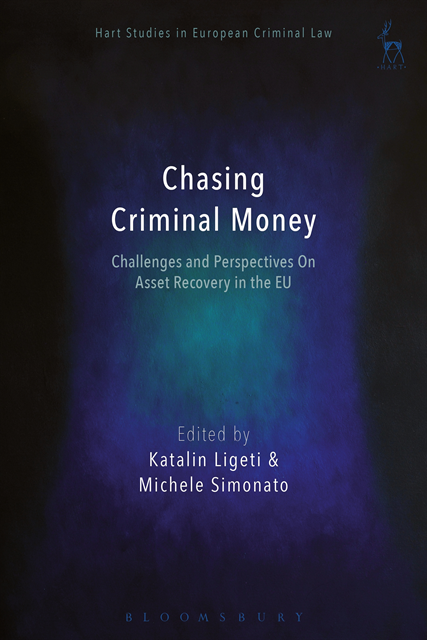
The fight against dirty money is not a new topic, nor a recent problem. It has existed within international and national agendas since the 1980s. Nonetheless, the evolving complexity of criminal skills and networks; the increasingly global dimension of crime; the financial crisis; and the alleged unsatisfactory results of the efforts hitherto undertaken cause us to re-pose and re-discuss some questions. This book addresses several issues concerning the reasons, objectives and scope of national and supranational strategies targeting criminal money, as well as the concrete modalities to overcome its obstacles. The main objective is to explore where the EU stands and where it ought to go, providing useful input for policy-makers and further research. Nevertheless, the problems are not limited to the EU area, and assets – particularly money – cross EU borders much more easily than people do. The reflections developed in the chapters, therefore, aim at going beyond these EU borders. The book is divided into two parts. The first one focuses on the core of asset recovery policies, namely confiscation or forfeiture laws, and explores in particular some issues concerning the respect of fundamental rights. The second part addresses other problematic aspects related to the asset recovery process, such as the return of assets to victim countries, the cross-border investigations on dirty money, and the social use of confiscated assets.
Inbunden, Engelska, 2018
1 749 kr
Skickas inom 10-15 vardagar
White collar crime has expanded significantly over the course of the past two decades. Yet, not only as the amount of national and international legislation in the field grown, but it has also endured changes driving it away from the classic criminal law. These trends have been reflected in changes to national legislation, not infrequently prompted by supranational law, for example, in the financial or the environmental sector. New punishing regimes have emerged, such as UN blacklisting, smart sanctions, civil asset forfeiture, financial supervisory powers, compliance law, and anti-money laundering laws. Furthermore, the role of administrative sanctioning law has been growing as well as the role of private actors in the enforcement of punitive sanctions. The aim of this volume is to examine how various national criminal justice systems across Europe deal with the aforementioned challenges. In the first part, it takes a closer look at the following national systems: France, Germany, Poland and Sweden. Furthermore, it compares the European approach with the American one as a source of inspiration for unresolved difficulties and future developments. Further still, the authors explore those challenging issues regarding the field of economic and financial crime, including the Senior Managers Regime, corporate criminal liability, and whistle-blowers’ protection. Timely and pertinent, this is an important new work in a fast-moving field.
Häftad, Engelska, 2019
529 kr
Skickas inom 10-15 vardagar
In the past few years, criminal justice systems have faced important global challenges in the field of economic and financial crime. The 2008 financial crisis revealed how strongly financial markets and economies are interconnected and illustrated that misconduct in the economic and financial sectors is often of a systemic nature, with wide-spread consequences for a large number of victims. The prevention, control and punishment of such crimes is thus confronted with a strong globalisation. Moreover, continuous technological evolutions and socio-economic developments make the distinction between socially desirable and undesirable behaviour more problematic. Besides, economic and financial misconduct is notoriously difficult to detect and investigate. In light of these challenges, legislators and law enforcers have been searching for adequate responses to combat economic and financial crime by adapting existing policies, norms and practices and by creating new enforcement mechanisms.The purpose of this volume is to analyse those challenges in the field of economic and financial crime from different perspectives, and to examine which particular solutions criminal justice systems across Europe give to those challenges. The volume has four parts. The first part focuses on a number of key questions with respect to substantive criminal law, whereas the second part will address issues affecting the administration of justice and criminal procedure. Part three then explores particular challenges concerning multi-agency cooperation and multi-disciplinary investigations. Finally, part four will concentrate on issues regarding shared or integrated enforcement models.
Häftad, Engelska, 2019
629 kr
Skickas inom 10-15 vardagar
The fight against dirty money is not a new topic, nor a recent problem. It has existed within international and national agendas since the 1980s. Nonetheless, the evolving complexity of criminal skills and networks; the increasingly global dimension of crime; the financial crisis; and the alleged unsatisfactory results of the efforts hitherto undertaken cause us to re-pose and re-discuss some questions. This book addresses several issues concerning the reasons, objectives and scope of national and supranational strategies targeting criminal money, as well as the concrete modalities to overcome its obstacles. The main objective is to explore where the EU stands and where it ought to go, providing useful input for policy-makers and further research. Nevertheless, the problems are not limited to the EU area, and assets – particularly money – cross EU borders much more easily than people do. The reflections developed in the chapters, therefore, aim at going beyond these EU borders. The book is divided into two parts. The first one focuses on the core of asset recovery policies, namely confiscation or forfeiture laws, and explores in particular some issues concerning the respect of fundamental rights. The second part addresses other problematic aspects related to the asset recovery process, such as the return of assets to victim countries, the cross-border investigations on dirty money, and the social use of confiscated assets.
Inbunden, Engelska, 2025
1 136 kr
Kommande
The exploitation of labour is one of the most widespread forms of so-called "modern slavery" and, therefore, there is a need for an in-depth analysis in order to aid the development of a successful counter-strategy. Taking the definitions contained in international law as its starting point, this book is an investigation of the fine lines between labour exploitation, the trafficking of human beings and other phenomena such as forced labour and slavery. An analysis of the supranational framework concludes with an examination of the jurisprudence produced by the Court of Strasbourg in article 4 of the ECHR, legislation to which the theory of positive obligations elaborated by the Court was soon extended.With regard to specific nations, the book focuses on Italy, France, Spain and the UK, with an analysis of how supranational obligations to criminalize certain activities have been implemented, as well as including an evaluation of the adequacy of the incriminating provisions that have been adopted at national level in order to effectively combat the complex phenomenon of modern slavery.
Inbunden, Engelska, 2023
1 189 kr
Skickas inom 10-15 vardagar
EU enforcement authorities are on the rise, entrusted with investigating breaches of EU law by individuals and economic actors. What are the implications for legal practice of their increasing prominence? This book explores this pertinent question from a constitutional and comparative perspective. It sets out the perimeters for composite enforcement and explores the relevant issues such as the interface between criminal and administrative law enforcement, the protection of fundamental rights and legal protection, as well as the admissibility of evidence, including unlawfully obtained evidence. Given the very real implications of the authorities’ investigations, this book will appeal to practitioners and scholars, in fields from criminal law to competition and banking law.
Häftad, Engelska, 2024
629 kr
Skickas inom 10-15 vardagar
EU enforcement authorities are on the rise, entrusted with investigating breaches of EU law by individuals and economic actors. What are the implications for legal practice of their increasing prominence? This book explores this pertinent question from a constitutional and comparative perspective. It sets out the perimeters for composite enforcement and explores the relevant issues such as the interface between criminal and administrative law enforcement, the protection of fundamental rights and legal protection, as well as the admissibility of evidence, including unlawfully obtained evidence. Given the very real implications of the authorities’ investigations, this book will appeal to practitioners and scholars, in fields from criminal law to competition and banking law.
Häftad, Engelska, 2022
554 kr
Skickas inom 10-15 vardagar
This book explores the external dimension of the ambitious EU policy on human trafficking. Through this policy the EU institutions and Member States promote the eradication of human trafficking and support, to that end, cooperation with their partners, being third States or international organisations. Analysing the unilateral and multilateral mechanisms the EU uses to achieve these aims, the book questions whether the EU’s external response to human trafficking addresses it in all its dimensions, and whether it does so in a coherent way. As a case study, the book explores the cooperation of the EU with countries of the Western Balkans, which constitutes a specific unilateral mechanism. The analysis of the multilateral mechanisms covers the cooperation of the EU with key international and regional organisations combating human trafficking, including but not limited to the Council of Europe or the United Nations Office on Drugs and Crime. The book also examines the impact of the evolution of migration flows and the increasing reliance of military tools on the EU’s response to human trafficking.
Inbunden, Engelska, 2022
1 127 kr
Skickas inom 10-15 vardagar
This book asks whether the well-established privilege against self-incrimination applies to corporations, whether it should, and if so, to what extent. Those questions have an increasingly important EU criminal law dimension. To answer them, this study draws on comparative insights from Belgium, England and Wales, and the US; as well as case law of the ECtHR and EU Law. It covers the established CJEU case law in competition cases, the recent CJEU ruling in DB v Consob and addresses Directive (EU) 2016/343. It will appeal to scholars of EU criminal law, but also to white-collar and competition practitioners.
Inbunden, Engelska, 2022
1 189 kr
Skickas inom 10-15 vardagar
This book assesses data protection rules that are applicable to the processing of personal data in a law enforcement context. It offers the first extensive analysis of the LED and Regulation (EU) 2018/1725. It illustrates the challenges arising from the unclear delineation between the different data protection instruments at both national and EU level. Taking a practical approach, it exemplifies situations where the application of data protection instruments could give rise to a lowering of data protection standards where the data protection rules applicable in the law enforcement context are interpreted broadly. The scope of data protection instruments applied by law enforcement authorities impacts processing for purposes of border control, migration management and asylum because there is an unclear delineation between the different data protection instruments.
Häftad, Engelska, 2024
542 kr
Skickas inom 10-15 vardagar
This book assesses data protection rules that are applicable to the processing of personal data in a law enforcement context. It offers the first extensive analysis of the LED and Regulation (EU) 2018/1725. It illustrates the challenges arising from the unclear delineation between the different data protection instruments at both national and EU level. Taking a practical approach, it exemplifies situations where the application of data protection instruments could give rise to a lowering of data protection standards where the data protection rules applicable in the law enforcement context are interpreted broadly. The scope of data protection instruments applied by law enforcement authorities impacts processing for purposes of border control, migration management and asylum because there is an unclear delineation between the different data protection instruments.
Inbunden, Engelska, 2026
1 127 kr
Skickas inom 10-15 vardagar
This open-access volume examines the evidentiary use of AI in criminal proceedings, questioning whether existing criminal procedure rules are sufficient to address its unique challenges.The widespread use of devices that collect, store, and process data about citizens’ behaviour has created new opportunities for criminal justice systems to detect, investigate, and prosecute crime. Law enforcement authorities are no longer limited to searching for information or clues related to reported offences; they increasingly rely on digital investigative techniques to identify individuals, patterns, or data points that may indicate an offence. The shift from retrospective investigations toward more predictive and preventive approaches has been amplified by AI technologies using machine learning and deep neural networks. Within AI’s wide presence in the criminal justice system, this volume investigates only the evidentiary use of AI: when law enforcement authorities rely on AI for investigating and prosecuting offences and offer AI’s output as evidence to tie the accused to a crime. The focus is on six countries – Germany, France, Luxembourg, the Netherlands, the UK, and the US – offering a comparative look at how each legal system handles AI evidence in criminal proceedings. Can evidence generated or processed by AI be trusted? What protections exist for the accused? The volume provides practical suggestions for law enforcement authorities and lawyers, including safeguards and limits to the use of AI in criminal cases. With the advent of regional and global efforts to regulate AI, this volume also offers solutions for supranational and national policy choices.The ebook editions of this book are available open access under a CC BY-NC-ND 4.0 licence on bloomsburycollections.com. Open access was funded by the University of Luxembourg.
Inbunden, Engelska, 2026
1 350 kr
Kommande
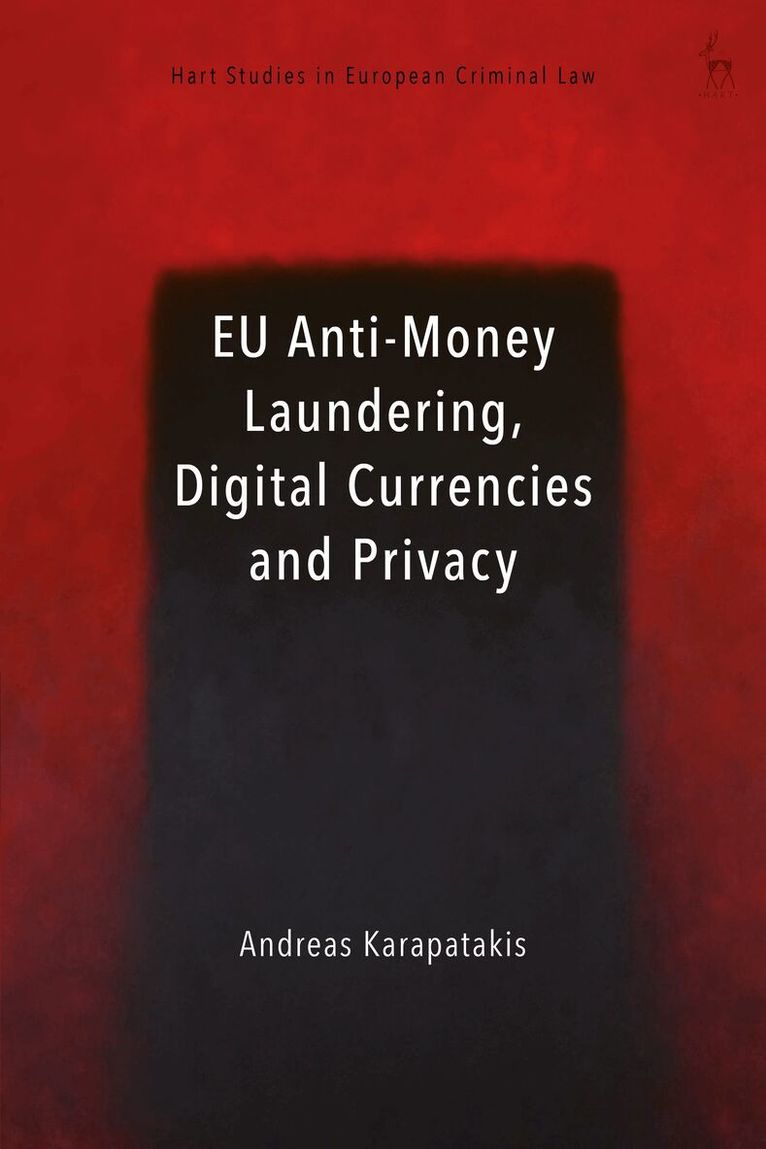
Through an examination of the underlying technology driving digital currencies, this book offers a comprehensive understanding of the mechanisms governing their operation, clarifying complex legal concepts and confronting the pressing issue of anonymity inherent in digital currency transactions.The book focuses on two categories of digital currencies: cryptocurrencies (eg, bitcoin) and in-game currencies (the currencies used in the closed virtual environment of a game). Despite their differences in governance – cryptocurrencies being decentralised and in-game currencies being centralised – they share significant similarities in terms of anonymity, which presents a notable issue within the anti-money laundering (AML) framework. Against the backdrop of both the international AML standards developed by the Financial Action Task Force (FATF) and the European Union AML regime, the book examines the AML compliance stage of the private sector and, specifically, the collection and retention of data relating to digital currency users. It analyses the new AML Regulation, alongside the 5th AML Directive, the Market in Crypto-Assets (MiCA) Regulation and the ‘Travel Rule’ Regulation, to construct a complete picture of the obligations imposed on virtual asset service providers and to assess whether the new framework disproportionately interferes with the right to privacy and data protection of the end user. In doing so, the book offers the first legal assessment of the proportionality of private-sector AML obligations in the field of digital currencies based on the argument that, in this context, EU AML law is increasingly transforming into a surveillance regime.
Inbunden, Engelska, 2025
1 127 kr
Skickas inom 10-15 vardagar
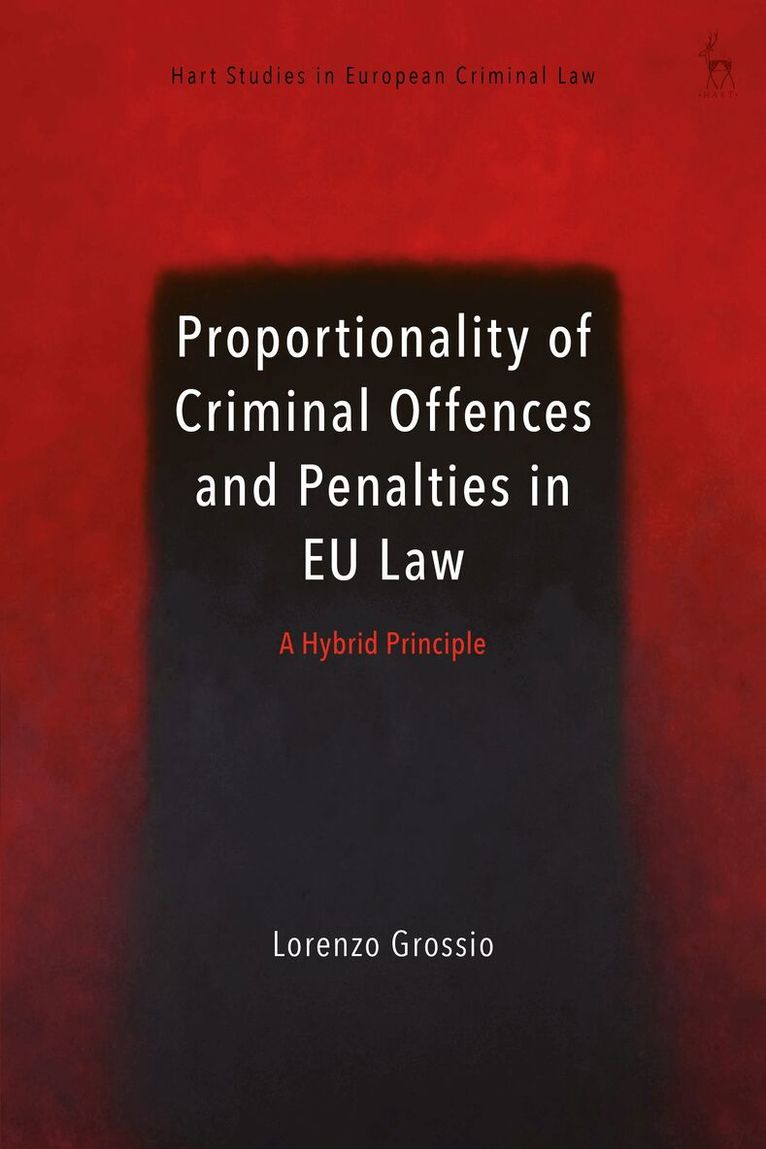
This book analyses the theorisation and application of proportionality of criminal offences and penalties in EU law, shedding light on its hybrid nature.In the EU legal order, proportionality amounts to a general principle playing a crucial role in limiting the exercise of EU powers, assessing domestic measures’ compatibility with internal market freedoms, and adjudicating fundamental rights. The EU concept of proportionality has a precise theorisation, but the principle assumes a distinct physiognomy in EU criminal law. Indeed, proportionality has a different meaning in criminal law, linked to theories of punishment. Not only do the two understandings of proportionality coexist in EU criminal law, but they are also intertwined, thus giving rise to a hybrid principle. However, their uneasy relationship remains unexplored.To understand this unique interaction, the book deepens theorisation and applications of the hybrid principle of proportionality of criminal offences and penalties in the EU legislative practice on the harmonisation of substantive criminal law and ECJ case law on the review of domestic criminal measures. This analysis gives fresh insights into the relationship between the EU and criminal law concepts of proportionality within the EU legal order.
Häftad, Engelska, 2026
678 kr
Kommande
This book analyses the theorisation and application of proportionality of criminal offences and penalties in EU law, shedding light on its hybrid nature.In the EU legal order, proportionality amounts to a general principle playing a crucial role in limiting the exercise of EU powers, assessing domestic measures’ compatibility with internal market freedoms, and adjudicating fundamental rights. The EU concept of proportionality has a precise theorisation, but the principle assumes a distinct physiognomy in EU criminal law. Indeed, proportionality has a different meaning in criminal law, linked to theories of punishment. Not only do the two understandings of proportionality coexist in EU criminal law, but they are also intertwined, thus giving rise to a hybrid principle. However, their uneasy relationship remains unexplored.To understand this unique interaction, the book deepens theorisation and applications of the hybrid principle of proportionality of criminal offences and penalties in the EU legislative practice on the harmonisation of substantive criminal law and ECJ case law on the review of domestic criminal measures. This analysis gives fresh insights into the relationship between the EU and criminal law concepts of proportionality within the EU legal order.
Inbunden, Engelska, 2027
1 369 kr
Kommande
This book focuses on legislative frameworks for data access investigative measures in the EU, and their legal conflicts with data protection law.It identifies four data access investigative measures developed by EU law: access to passenger name records, access to financial data, access to electronic communications and access to e-evidence. The security objectives pursued by data access investigative measures conflict with the fundamental right to personal data protection guaranteed by Article 8 of the Charter of Fundamental Rights of the EU. While there is a lot of case law of the Court of Justice of the EU dedicated to data access investigative measures, the Court is struggling with finding a correct and workable solution for the conflict.The book finds the best available method to strike the right balance and solve the apparent legal conflict, while positioning the outdated cliché on ‘privacy v. security’ in a proper empirical and theoretical framework.
Inbunden, Engelska, 2027
1 362 kr
Kommande
This book addresses the legal challenges posed by deepfakes — highly deceptive content created using artificial intelligence — by examining how criminal law and other emerging regulatory measures are being used to address the harms generated by deepfakes. As AI-generated content becomes increasingly realistic and accessible, the risk of misuse grows more pressing. Hence this book firstly identifies and systematises the varied harms associated with deepfakesfrom non-consensual pornography and online harassment to political disinformation and reputational damage. Secondly, it examines the emergent role of criminal law in responding to these harms, highlighting both recent initiatives worldwide and structural limitations. While several jurisdictions are moving toward criminalising certain harmful uses of deepfakes, this book questions whether criminal law is the most appropriate or effective tool. In particular, it examines two case studies: adult non-consensual intimate material and political disinformation. Thirdly, it analyses emerging regulatory approaches to deepfakes as both AI-generated outputs and harmful online content. It focuses on transparency obligations and content moderation duties — particularly under the EU’s Digital Services Act and AI Act — as alternative or complementary responses to criminal law. Finally, it investigates the intersection between criminal law and digital regulation, arguing how criminal law remains caught between its symbolic role, often seen as the public’s preferred solution, and its more instrumental role in defining illegal content and supporting effective regulation shaped by private platforms and providers. This is the first book in the field that critically examine the challanges and legal responses to deepfakes across both criminal law and digital regulation, offering a comprehensive analysis of the restrictive legal measures used to address the harms generated by deepfakes, using non-consensual pornography and disinformation online as case studies.
Inbunden, Engelska, 2012
2 123 kr
Skickas inom 10-15 vardagar
In an era in which the EU's influence in criminal law matters has expanded rapidly, attention has recently turned to the possible creation of a European Public Prosecutor's Office. This two volume work presents the results of a study carried out by a group of European criminal law experts in 2010-2012, with the financial support of the EU Commission, whose aims were to examine in detail current public prosecution systems in the Member States and to scrutinise proposals for a new European office. Volume 1 begins with thorough descriptions of 20 different national legal systems of investigation and prosecution, addressing a range of evidential and procedural safeguards. These will serve as a point of reference for all future research on public prosecutors. Volume 1 also contains a series of cross-cutting studies of the key issues that will inform debates about the creation of a European Public Prosecutor's Office, including studies of vertical cooperation in administrative investigations in subsidy and competition cases, the accession of the EU to the ECHR, judicial control in cooperation in criminal matters, mutual recognition and decentralised enforcement of European competition law. Volume 2 (which will be published in 2013) presents a draft set of model rules for the procedure of the European Public Prosecutor's Office and continues with a set of comparative studies of the national legal systems that cover the gathering of evidence, seizure of assets, arrests, tracking and tracing, prosecution measures, procedural safeguards, the presumption of innocence and the right to silence, access to the file and victim reconciliation. Volume 2 concludes with the final report, written by Professor Ligeti, summarising the findings of the group and reporting on the prospects for the proposed reform.