Kate Bayliss – författare
Visar alla böcker från författaren Kate Bayliss. Handla med fri frakt och snabb leverans.
11 produkter
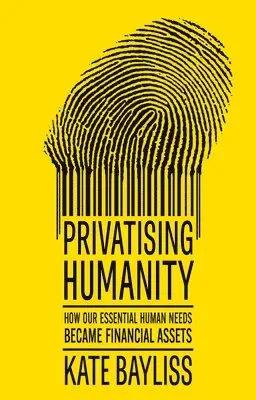
Privatising humanity
How our essential human needs became financial assets
Av Kate Bayliss
Häftad, 2026
198 kr
Lägg i varukorg
A powerful exposé of how finance turns our basic human needs into assets.We have entered a new era of turbo-charged financial extraction. Having amassed huge reserves, global finance capital is seeking out fresh areas for profitable investments. Virtually all aspects of our lives are now targeted …
Material Cultures of Financialisation
Av Kate Bayliss, Ben Fine m. fl.
Häftad, 2020
710 kr
Lägg i varukorg
This collection offers pathbreaking framing of the material culture of financialisation. It begins with a tight definition of financialisation in order to distinguish the phenomenon of financialisation from its effects and from the looser associations prevalent within much of the literature such as …
Material Cultures of Financialisation
Av Mary Robertson, Ben Fine m. fl.
E-bok, 2020
814 kr
Lägg i varukorg
This collection offers pathbreaking framing of the material culture of financialisation. It begins with a tight definition of financialisation in order to distinguish the phenomenon of financialisation from its effects and from the looser associations prevalent within much of the literature such as …
Material Cultures of Financialisation
Av Mary Robertson, Ben Fine m. fl.
E-bok, 2020
814 kr
Lägg i varukorg
This collection offers pathbreaking framing of the material culture of financialisation. It begins with a tight definition of financialisation in order to distinguish the phenomenon of financialisation from its effects and from the looser associations prevalent within much of the literature such as …
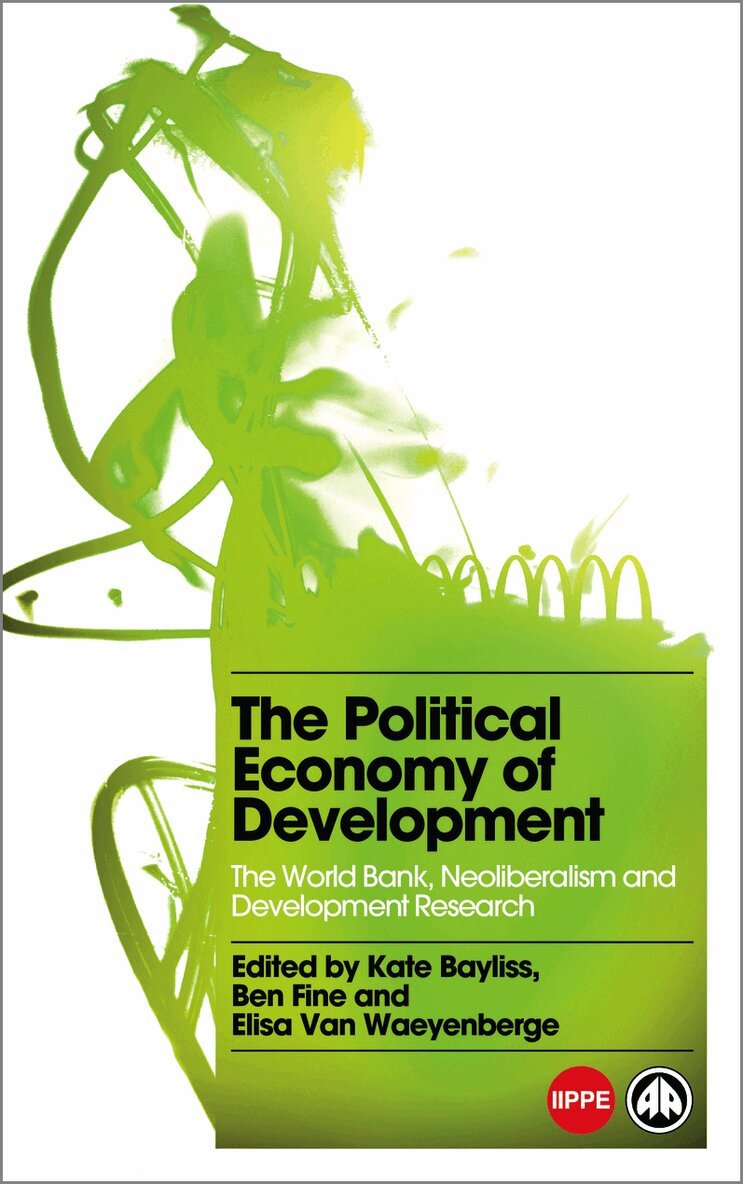
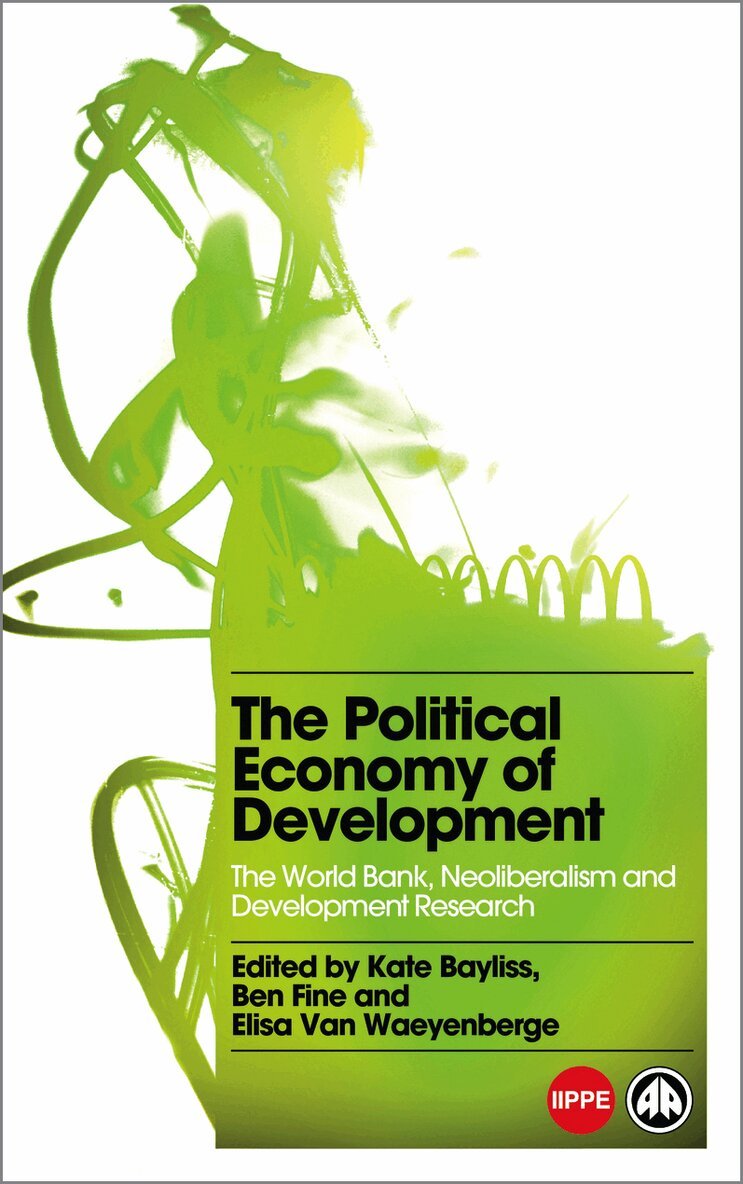
Political Economy of Development
The World Bank, Neoliberalism and Development Research
Av Kate Bayliss, Ben Fine m. fl.
Häftad, 2011
492 kr
Lägg i varukorg
Any student, academic or practitioner wanting to succeed in development studies, radical or mainstream, must understand the World Bank's role and the evolution of its thinking and activities. The Political Economy of Development provides tools for gaining this understanding and applies them across …
Material Cultures of Financialisation
Av Kate Bayliss, Ben Fine m. fl.
Inbunden, 2018
2591 kr
Lägg i varukorg
This collection offers pathbreaking framing of the material culture of financialisation. It begins with a tight definition of financialisation in order to distinguish the phenomenon of financialisation from its effects and from the looser associations prevalent within much of the literature such as …
Privatising humanity
How our essential human needs became financial assets
Av Kate Bayliss
Inbunden, 2026
1263 kr
Lägg i varukorg
A powerful exposé of how finance turns our basic human needs into assets.We have entered a new era of turbo-charged financial extraction. Having amassed huge reserves, global finance capital is seeking out fresh areas for profitable investments. Virtually all aspects of our lives are now targeted …
Political Economy of Development
The World Bank, Neoliberalism and Development Research
Av Elisa Van Waeyenberge, Ben Fine m. fl.
E-bok, 2011
459 kr
Lägg i varukorg
Any student, academic or practitioner wanting to succeed in development studies, radical or mainstream, must understand the World Bank''s role and the evolution of its thinking and activities. The Political Economy of Development provides tools for gaining this understanding and applies them across …
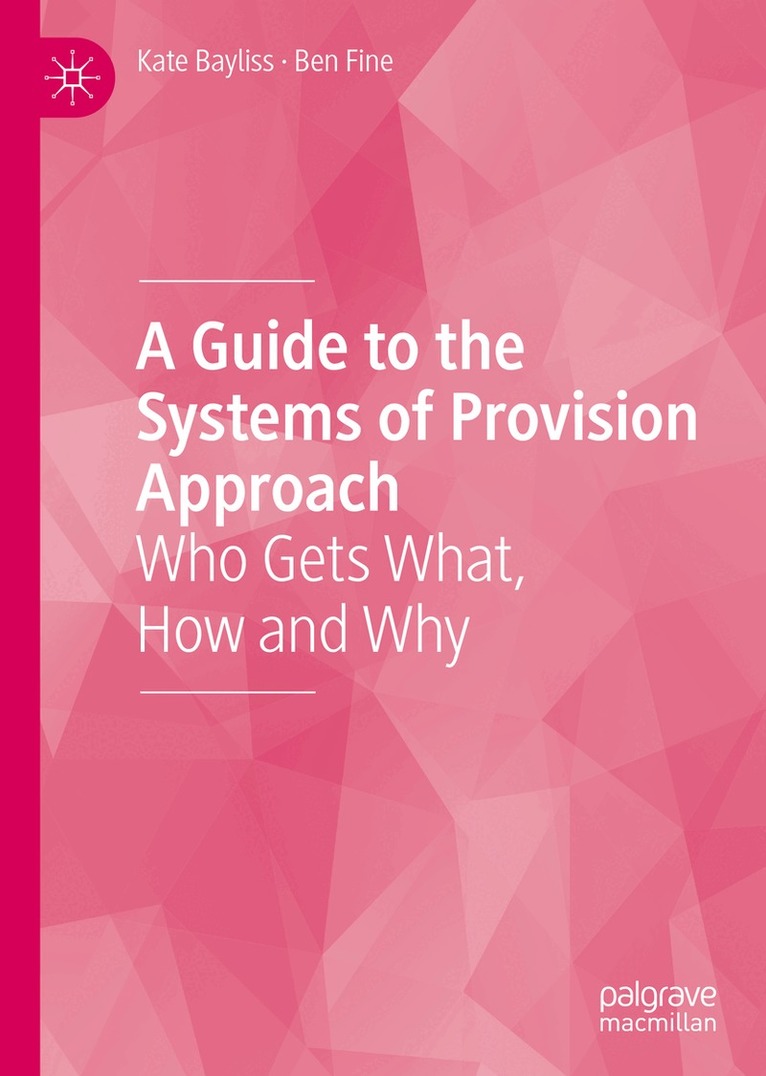
Guide to the Systems of Provision Approach
Who Gets What, How and Why
Av Kate Bayliss, Ben Fine
Inbunden, 2021
986 kr
Lägg i varukorg
Understanding consumption requires looking at the systems by which goods and services are provided – not just how they are produced but the historically evolved structures, power relations and cultures within which they are located. The Systems of Provision approach provides an interdisciplinary …
Guide to the Systems of Provision Approach
Who Gets What, How and Why
Av Ben Fine, Kate Bayliss
E-bok, 2021
1255 kr
Lägg i varukorg
Understanding consumption requires looking at the systems by which goods and services are provided – not just how they are produced but the historically evolved structures, power relations and cultures within which they are located. The Systems of Provision approach provides an interdisciplinary …
Political Economy of Development
The World Bank, Neoliberalism and Development Research
Av Kate Bayliss, Ben Fine m. fl.
Inbunden, 2011
963 kr
Tillfälligt slut
Any student, academic or practitioner wanting to succeed in development studies, radical or mainstream, must understand the World Bank's role and the evolution of its thinking and activities. The Political Economy of Development provides tools for gaining this understanding and applies them across …