Kate Masur – författare
Visar alla böcker från författaren Kate Masur. Handla med fri frakt och snabb leverans.
21 produkter
21 produkter
Inbunden, Engelska, 2018
357 kr
Skickas inom 5-8 vardagar
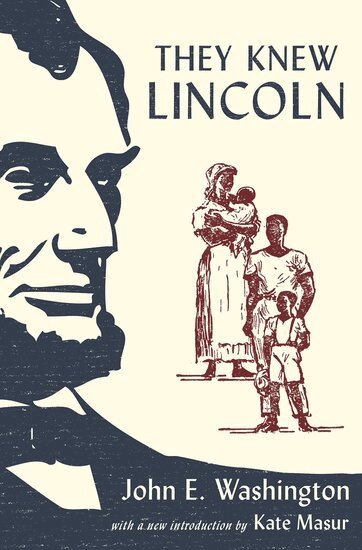
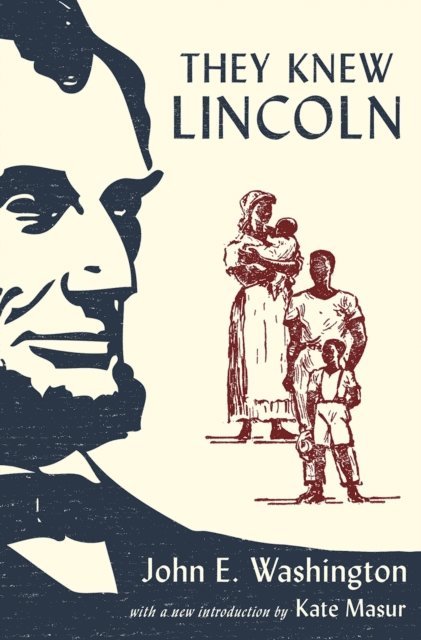
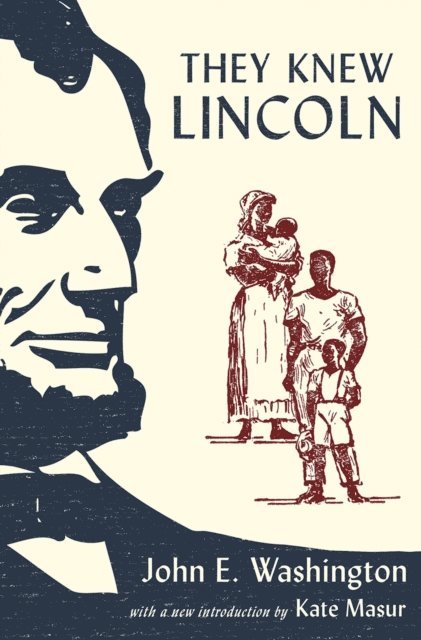
They Knew Lincoln, first published in 1942, captures impressions of Abraham Lincoln by African Americans who personally knew and interacted with him in Springfield, Illinois, and Washington, DC. Dr. John Washington, an African American collector of Lincoln memorabilia, who grew up in the shadow of Ford's Theatre in the late 19th century, gathered stories through personal interviews with Lincoln's African American acquaintances or their children. They include Lincoln's barbers, White House servants, waiters, doorkeepers and others. A large section is devoted to Mary Lincoln's African American seamstress and confidant Elizabeth Keckley. Washington conducted research in collections across the Southeast and Midwest; he interviewed elderly African Americans in Washington, Maryland, and Virginia; and he reached out to the foremost Lincoln scholars and collectors of his era, hoping for new leads and new information. This remarkable book was originally published by E.P. Dutton, including a strong introduction by the famed poet and Lincoln biographer Carl Sandburg. The "collection of Negro stories, memories, legends about Lincoln" seemed "to fill such an obvious gap in the material about Lincoln that one wonders why no one ever did it before." Even in the twenty-first century, They Knew Lincoln remains unsurpassed as a study of the African Americans who knew Abraham and Mary Todd Lincoln. In recent years historians have regularly turned to Washington's book as a crucial source of information about the Lincolns' domestic world and about black Washington in the Civil War era. Yet the book has never been reprinted and remains largely unavailable. This reissue reproduces the original text in full and the rare photos that appeared in the original book (as well as some additional ones of John E. Washington), along with a significant original essay by Kate Masur about the publication of the book, its author, and the subjects covered by this unusual work.
E-bok
PDF, Engelska, 2018404 kr
Läs direkt efter köp
Originally published in 1942 and now reprinted for the first time, They Knew Lincoln is a classic in African American history and Lincoln studies. Part memoir and part history, the book is an account of John E. Washington''s childhood among African Americans in Washington, DC, and of the black people who knew or encountered Abraham and Mary Todd Lincoln. Washington recounted stories told by his grandmother''s elderly friends--stories of escaping from slavery, meeting Lincoln in the Capitol, learning of the president''s assassination, and hearing ghosts at Ford''s Theatre. He also mined the US government archives and researched little-known figures in Lincoln''s life, including William Johnson, who accompanied Lincoln from Springfield to Washington, and William Slade, the steward in Lincoln''s White House. Washington was fascinated from childhood by the question of how much African Americans themselves had shaped Lincoln''s views on slavery and race, and he believed Lincoln''s Haitian-born barber, William de Fleurville, was a crucial influence. Washington also extensively researched Elizabeth Keckly, the dressmaker to Mary Todd Lincoln, and advanced a new theory of who helped her write her controversial book, Behind the Scenes,A new introduction by Kate Masur places Washington''s book in its own context, explaining the contents of They Knew Lincoln in light of not only the era of emancipation and the Civil War, but also Washington''s own times, when the nation''s capital was a place of great opportunity and creativity for members of the African American elite. On publication, a reviewer noted that the "collection of Negro stories, memories, legends about Lincoln" seemed "to fill such an obvious gap in the material about Lincoln that one wonders why no one ever did it before." This edition brings it back to print for a twenty-first century readership that remains fascinated with Abraham Lincoln.
E-bok
Engelska, 2018404 kr
Läs direkt efter köp
Originally published in 1942 and now reprinted for the first time, They Knew Lincoln is a classic in African American history and Lincoln studies. Part memoir and part history, the book is an account of John E. Washington''s childhood among African Americans in Washington, DC, and of the black people who knew or encountered Abraham and Mary Todd Lincoln. Washington recounted stories told by his grandmother''s elderly friends--stories of escaping from slavery, meeting Lincoln in the Capitol, learning of the president''s assassination, and hearing ghosts at Ford''s Theatre. He also mined the US government archives and researched little-known figures in Lincoln''s life, including William Johnson, who accompanied Lincoln from Springfield to Washington, and William Slade, the steward in Lincoln''s White House. Washington was fascinated from childhood by the question of how much African Americans themselves had shaped Lincoln''s views on slavery and race, and he believed Lincoln''s Haitian-born barber, William de Fleurville, was a crucial influence. Washington also extensively researched Elizabeth Keckly, the dressmaker to Mary Todd Lincoln, and advanced a new theory of who helped her write her controversial book, Behind the Scenes,A new introduction by Kate Masur places Washington''s book in its own context, explaining the contents of They Knew Lincoln in light of not only the era of emancipation and the Civil War, but also Washington''s own times, when the nation''s capital was a place of great opportunity and creativity for members of the African American elite. On publication, a reviewer noted that the "collection of Negro stories, memories, legends about Lincoln" seemed "to fill such an obvious gap in the material about Lincoln that one wonders why no one ever did it before." This edition brings it back to print for a twenty-first century readership that remains fascinated with Abraham Lincoln.
Inbunden, Engelska, 2027
313 kr
Kommande
A sweeping, ground‑level reinterpretation arguing that Reconstruction both created the country we live in and sparked the battles that threaten to engulf it today. Far from a brief epilogue to slavery’s end, Reconstruction was an era of epochal change. Emancipation transformed everyday life for nearly four million formerly enslaved Black southerners who became architects of freedom: creating independent institutions, organizing mass political movements, and, with white allies, driving the passage and implementation of the Thirteenth, Fourteenth, and Fifteenth Amendments that established birthright citizenship, equal protection, and voting rights. This is the constitutional framework that structures American democracy today.Taking readers on a site-seeing journey across the South’s commemorative landscape, Downs and Masur ground the narrative in nine distinct places that show Americans’ struggles to deliver on the most egalitarian promises of the Founding era, including• Green-Meldrim House in Savannah, where Major General William T. Sherman was headquartered and met with local Black leaders • First African Church in Richmond, a center for Black politics and community-building• Grant Parish Courthouse in Colfax, Louisiana, site of the massacre of dozens of Black men• Beaufort Naval Hospital in South Carolina, location of a January 1, 1863 meeting where formerly enslaved soldiers urged a large crowd to fight for complete freedom and equality.This accessible narrative shows how Reconstruction both created the country we live in today and sparked the battles that threaten to engulf it.
Häftad, Engelska, 2012
451 kr
Skickas inom 10-15 vardagar
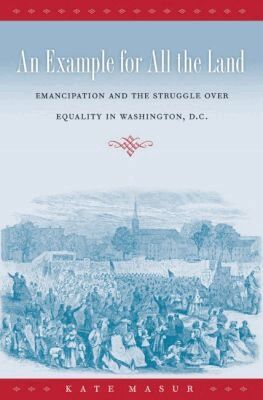
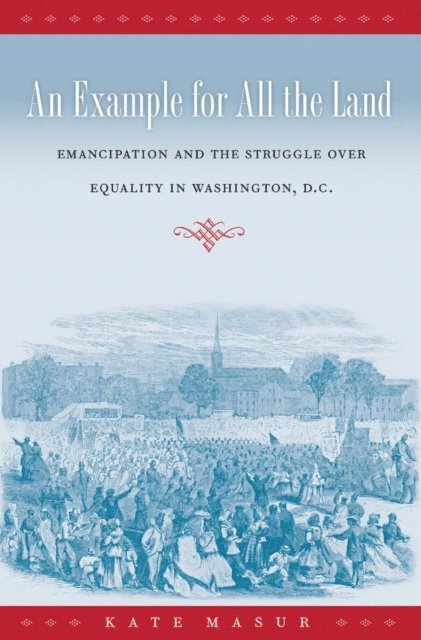
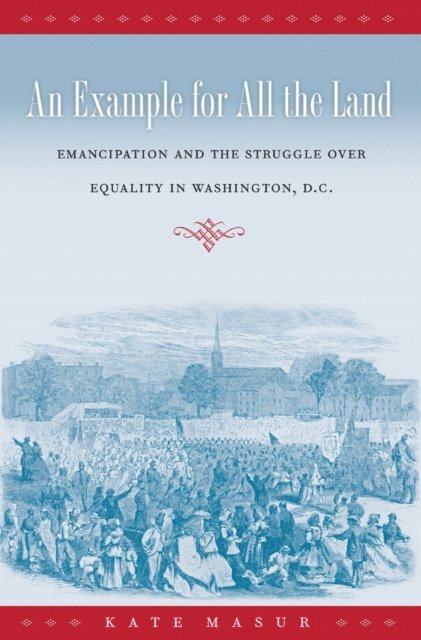
In An Example for All the Land, Kate Masur offers the first major study of Washington during Reconstruction in over fifty years. Masur's panoramic account considers grassroots struggles, city politics, Congress, and the presidency, revealing the District of Columbia as a unique battleground in the American struggle over equality. After slavery's demise, the question of racial equality produced a multifaceted debate about who should have which rights and privileges, and in which places. Masur shows that black Washingtonians demanded public respect for their organizations and equal access to streetcars, public schools, the vote, and municipal employment. Congressional Republicans, in turn, passed local legislation that made the capital the nation's vanguard of racial equality, drawing the attention of woman suffragists hoping for similar experiments in women's rights. But a conservative coalition soon mobilized and, in the name of reform and modernization, sought to undermine African Americans' newfound influence in local affairs. In a stunning reversal, Congress then abolished local self-government, making the capital an exemplar of disfranchisement amid a national debate about the dangers of democracy. Combining political, social, and legal history, Masur reveals Washington as a laboratory for social policy at a pivotal moment in American history and brings the question of equality to the forefront of Reconstruction scholarship.
E-bok
Engelska, 2010450 kr
Läs direkt efter köp
An Example for All the Land reveals Washington, D.C. as a laboratory for social policy in the era of emancipation and the Civil War. In this panoramic study, Kate Masur provides a nuanced account of African Americans'' grassroots activism, municipal politics, and the U.S. Congress. She tells the provocative story of how black men''s right to vote transformed local affairs, and how, in short order, city reformers made that right virtually meaningless. Bringing the question of equality to the forefront of Reconstruction scholarship, this widely praised study explores how concerns about public and private space, civilization, and dependency informed the period''s debate over rights and citizenship.
Inbunden, Engelska, 2021
309 kr
Skickas inom 5-8 vardagar
The half-century before the Civil War was beset with conflict over equality as well as freedom. Beginning in 1803, many free states enacted laws that discouraged free African Americans from settling within their boundaries and restricted their rights to testify in court, move freely from place to place, work, vote, and attend public school. But over time, African American activists and their white allies, often facing mob violence, courageously built a movement to fight these racist laws. They countered the states’ insistences that states were merely trying to maintain the domestic peace with the equal-rights promises they found in the Declaration of Independence and the Constitution. They were pastors, editors, lawyers, politicians, ship captains, and countless ordinary men and women, and they fought in the press, the courts, the state legislatures, and Congress, through petitioning, lobbying, party politics, and elections. Long stymied by hostile white majorities and unfavorable court decisions, the movement’s ideals became increasingly mainstream in the 1850s, particularly among supporters of the new Republican party. When Congress began rebuilding the nation after the Civil War, Republicans installed this vision of racial equality in the 1866 Civil Rights Act and the Fourteenth Amendment. These were the landmark achievements of the first civil rights movement.Kate Masur’s magisterial history delivers this pathbreaking movement in vivid detail. Activists such as John Jones, a free Black tailor from North Carolina whose opposition to the Illinois “black laws” helped make the case for racial equality, demonstrate the indispensable role of African Americans in shaping the American ideal of equality before the law. Without enforcement, promises of legal equality were not enough. But the antebellum movement laid the foundation for a racial justice tradition that remains vital to this day.
Häftad, Engelska, 2022
219 kr
Skickas
The half-century before the Civil War was beset with conflict over equality as well as freedom. Beginning in 1803, many free states enacted laws that discouraged free African Americans from settling within their boundaries and restricted their rights to testify in court, move freely from place to place, work, vote, and attend public school. But over time, African American activists and their white allies, often facing mob violence, courageously built a movement to fight these racist laws. They countered the states’ insistences that states were merely trying to maintain the domestic peace with the equal-rights promises they found in the Declaration of Independence and the Constitution. They were pastors, editors, lawyers, politicians, ship captains, and countless ordinary men and women, and they fought in the press, the courts, the state legislatures, and Congress, through petitioning, lobbying, party politics, and elections. Long stymied by hostile white majorities and unfavorable court decisions, the movement’s ideals became increasingly mainstream in the 1850s, particularly among supporters of the new Republican party. When Congress began rebuilding the nation after the Civil War, Republicans installed this vision of racial equality in the 1866 Civil Rights Act and the Fourteenth Amendment. These were the landmark achievements of the first civil rights movement.Kate Masur’s magisterial history delivers this pathbreaking movement in vivid detail. Activists such as John Jones, a free Black tailor from North Carolina whose opposition to the Illinois “black laws” helped make the case for racial equality, demonstrate the indispensable role of African Americans in shaping the American ideal of equality before the law. Without enforcement, promises of legal equality were not enough. But the antebellum movement laid the foundation for a racial justice tradition that remains vital to this day.
E-bok
PDF, Engelska, 20101 091 kr
Läs direkt efter köp
An Example for All the Land reveals Washington, D.C. as a laboratory for social policy in the era of emancipation and the Civil War. In this panoramic study, Kate Masur provides a nuanced account of African Americans'' grassroots activism, municipal politics, and the U.S. Congress. She tells the provocative story of how black men''s right to vote transformed local affairs, and how, in short order, city reformers made that right virtually meaningless. Bringing the question of equality to the forefront of Reconstruction scholarship, this widely praised study explores how concerns about public and private space, civilization, and dependency informed the period''s debate over rights and citizenship.
E-bok
PDF, Engelska, 20133 030 kr
Läs direkt efter köp
Land and Labor, 1866–1867 examines the remaking of the South’s labor system in the tumultuous aftermath of emancipation. Using documents selected from the National Archives, this volume of Freedom: A Documentary History of Emancipation depicts the struggle of unenfranchised and impoverished ex-slaves to control their own labor, establish their families as viable economic units, and secure independent possession of land. Among the topics addressed are the dispossession of settlers in the Sherman reserve, the reordering of labor on plantation and farm, nonagricultural labor, new relations of credit and debt, long-distance labor migration, and the efforts of former slaves to rent, purchase, and homestead land. The documents — many of them in the freedpeople’s own words — speak eloquently for themselves, while the editors'' interpretive essays provide context and illuminate major themes.
Häftad, Engelska, 2015
466 kr
Skickas inom 10-15 vardagar
At the close of the Civil War, it was clear that the military conflict that began in South Carolina and was fought largely east of the Mississippi River had changed the politics, policy, and daily life of the entire nation. In an expansive reimagining of post-Civil War America, the essays in this volume explore these profound changes not only in the South but also in the Southwest, the Great Plains, and abroad. Resisting the tendency to use Reconstruction as a catchall, the contributors instead present diverse histories of a postwar nation that stubbornly refused to adopt a unified ideology and remained violently in flux. Portraying the social and political landscape of postbellum America writ large, this volume demonstrates that by breaking the boundaries of region and race and moving past existing critical frameworks, we can appreciate more fully the competing and often contradictory ideas about freedom and equality that continued to define the United States and its place in the nineteenth-century world. Contributors include Amanda Claybaugh, Laura F. Edwards, Crystal N. Feimster, C. Joseph Genetin-Pilawa, Steven Hahn, Luke E. Harlow, Stephen Kantrowitz, Barbara Krauthamer, K. Stephen Prince, Stacey L. Smith, Amy Dru Stanley, Kidada E. Williams, and Andrew Zimmerman.
E-bok
Engelska, 2015416 kr
Läs direkt efter köp
At the close of the Civil War, it was clear that the military conflict that began in South Carolina and was fought largely east of the Mississippi River had changed the politics, policy, and daily life of the entire nation. In an expansive reimagining of post–Civil War America, the essays in this volume explore these profound changes not only in the South but also in the Southwest, in the Great Plains, and abroad. Resisting the tendency to use Reconstruction as a catchall, the contributors instead present diverse histories of a postwar nation that stubbornly refused to adopt a unified ideology and remained violently in flux. Portraying the social and political landscape of postbellum America writ large, this volume demonstrates that by breaking the boundaries of region and race and moving past existing critical frameworks, we can appreciate more fully the competing and often contradictory ideas about freedom and equality that continued to define the United States and its place in the nineteenth-century world. Contributors include Amanda Claybaugh, Laura F. Edwards, Crystal N. Feimster, C. Joseph Genetin-Pilawa, Steven Hahn, Luke E. Harlow, Stephen Kantrowitz, Barbara Krauthamer, K. Stephen Prince, Stacey L. Smith, Amy Dru Stanley, Kidada E. Williams, and Andrew Zimmerman.
E-bok
Engelska, 2015987 kr
Läs direkt efter köp
At the close of the Civil War, it was clear that the military conflict that began in South Carolina and was fought largely east of the Mississippi River had changed the politics, policy, and daily life of the entire nation. In an expansive reimagining of post–Civil War America, the essays in this volume explore these profound changes not only in the South but also in the Southwest, in the Great Plains, and abroad. Resisting the tendency to use Reconstruction as a catchall, the contributors instead present diverse histories of a postwar nation that stubbornly refused to adopt a unified ideology and remained violently in flux. Portraying the social and political landscape of postbellum America writ large, this volume demonstrates that by breaking the boundaries of region and race and moving past existing critical frameworks, we can appreciate more fully the competing and often contradictory ideas about freedom and equality that continued to define the United States and its place in the nineteenth-century world.Contributors include Amanda Claybaugh, Laura F. Edwards, Crystal N. Feimster, C. Joseph Genetin-Pilawa, Steven Hahn, Luke E. Harlow, Stephen Kantrowitz, Barbara Krauthamer, K. Stephen Prince, Stacey L. Smith, Amy Dru Stanley, Kidada E. Williams, and Andrew Zimmerman.
Häftad, Engelska, 2024
316 kr
Skickas inom 3-6 vardagar
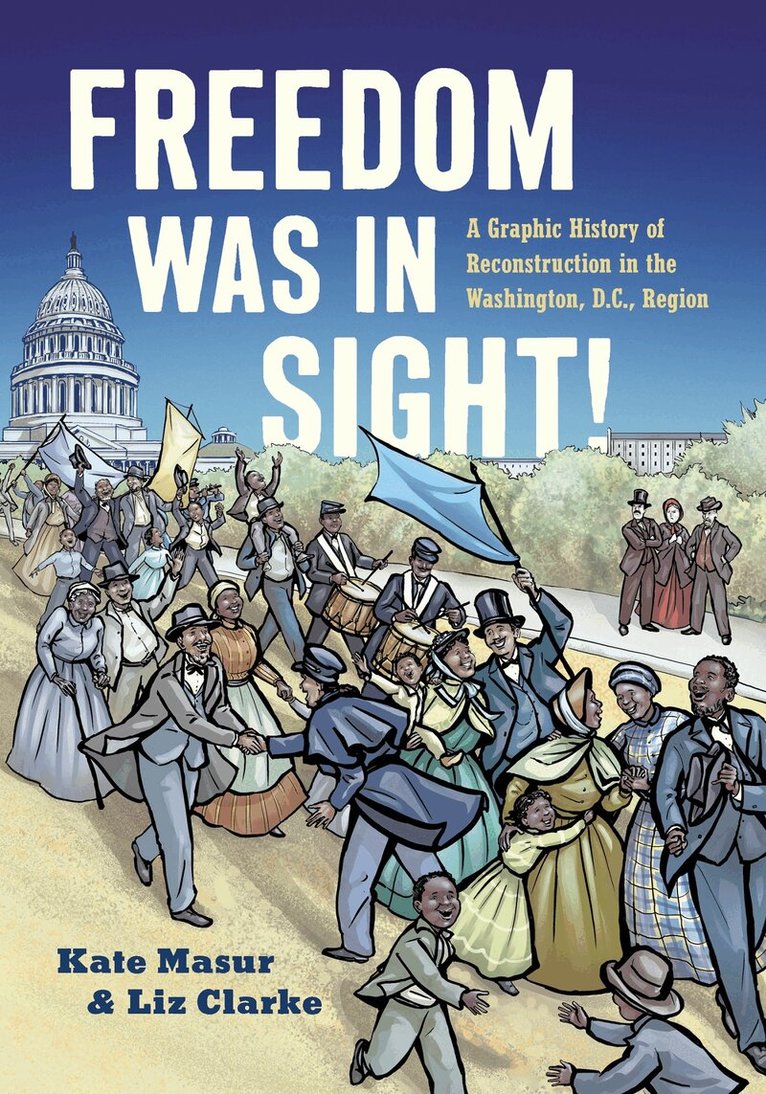
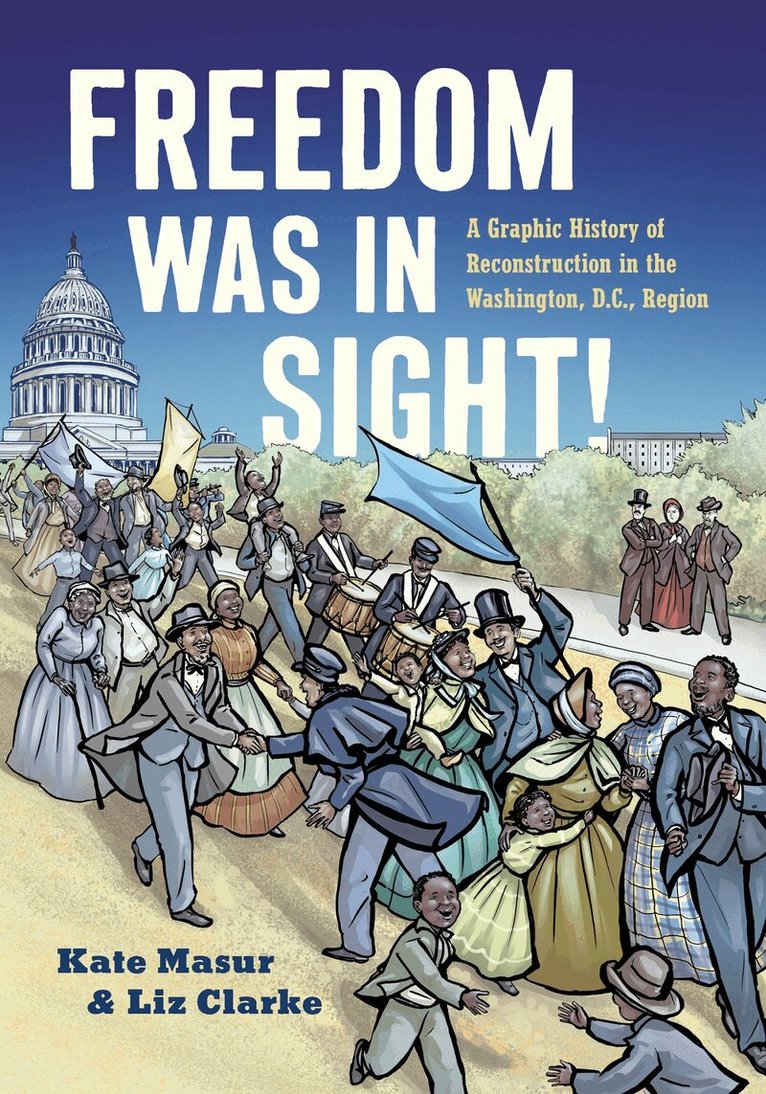
The Reconstruction era was born from the tumult and violence of the Civil War and delivered the most powerful changes the United States had seen since its founding. Black Americans in Washington, D.C., and its surrounding region were at the heart of these transformations, bravely working to reunite their families, build their communities, and claim rights long denied them. Meanwhile, in the capital, government leaders struggled to reunite and remake the nation. Famous individuals such as Frederick Douglass and Ida B. Wells played central roles, as did lesser-known figures like Emma Brown, the first African American teacher in Washington's public schools, and lawyer-journalist William Calvin Chase, longtime editor of the Washington Bee. Freedom Was in Sight! draws on the words and experiences of people who lived during Reconstruction, powerfully narrating how the impacts of emancipation and civil war rippled outward for decades. Vividly drawn by award-winning graphic artist Liz Clarke and written by Pulitzer Prize–finalist Kate Masur, a leading historian of Reconstruction, this rich graphic history reveals the hopes and betrayals of a critical period in American history.
E-bok
Engelska, 2024260 kr
Läs direkt efter köp
The Reconstruction era was born from the tumult and violence of the Civil War and delivered the most powerful changes the United States had seen since its founding. Black Americans in Washington, D.C., and its surrounding region were at the heart of these transformations, bravely working to reunite their families, build their communities, and claim rights long denied them. Meanwhile, in the capital, government leaders struggled to reunite and remake the nation. Famous individuals such as Frederick Douglass and Ida B. Wells played central roles, as did lesser-known figures like Emma Brown, the first African American teacher in Washington’s public schools, and lawyer-journalist William Calvin Chase, longtime editor of the Washington Bee.Freedom Was in Sight! draws on the words and experiences of people who lived during Reconstruction, powerfully narrating how the impacts of emancipation and civil war rippled outward for decades. Vividly drawn by award-winning graphic artist Liz Clarke and written by Pulitzer Prize–finalist Kate Masur, a leading historian of Reconstruction, this rich graphic history reveals the hopes and betrayals of a critical period in American history.
E-bok
PDF, Engelska, 2024260 kr
Läs direkt efter köp
The Reconstruction era was born from the tumult and violence of the Civil War and delivered the most powerful changes the United States had seen since its founding. Black Americans in Washington, D.C., and its surrounding region were at the heart of these transformations, bravely working to reunite their families, build their communities, and claim rights long denied them. Meanwhile, in the capital, government leaders struggled to reunite and remake the nation. Famous individuals such as Frederick Douglass and Ida B. Wells played central roles, as did lesser-known figures like Emma Brown, the first African American teacher in Washington’s public schools, and lawyer-journalist William Calvin Chase, longtime editor of the Washington Bee.Freedom Was in Sight! draws on the words and experiences of people who lived during Reconstruction, powerfully narrating how the impacts of emancipation and civil war rippled outward for decades. Vividly drawn by award-winning graphic artist Liz Clarke and written by Pulitzer Prize–finalist Kate Masur, a leading historian of Reconstruction, this rich graphic history reveals the hopes and betrayals of a critical period in American history.
Inbunden, Engelska, 2024
516 kr
Skickas inom 5-8 vardagar
The Reconstruction era was born from the tumult and violence of the Civil War and delivered the most powerful changes the United States had seen since its founding. Black Americans in Washington, D.C., and its surrounding region were at the heart of these transformations, bravely working to reunite their families, build their communities, and claim rights long denied them. Meanwhile, in the capital, government leaders struggled to reunite and remake the nation. Famous individuals such as Frederick Douglass and Ida B. Wells played central roles, as did lesser-known figures like Emma Brown, the first African American teacher in Washington's public schools, and lawyer-journalist William Calvin Chase, longtime editor of the Washington Bee. Freedom Was in Sight! draws on the words and experiences of people who lived during Reconstruction, powerfully narrating how the impacts of emancipation and civil war rippled outward for decades. Vividly drawn by award-winning graphic artist Liz Clarke and written by Pulitzer Prize–finalist Kate Masur, a leading historian of Reconstruction, this rich graphic history reveals the hopes and betrayals of a critical period in American history.
E-bok
PDF, Engelska, 2015245 kr
Läs direkt efter köp
At the close of the Civil War, it was clear that the military conflict that began in South Carolina and was fought largely east of the Mississippi River had changed the politics, policy, and daily life of the entire nation. In an expansive reimagining of postCivil War America, the essays in this volume explore these profound changes not only in the South but also in the Southwest, in the Great Plains, and abroad. Resisting the tendency to use Reconstruction as a catchall, the contributors instead present diverse histories of a postwar nation that stubbornly refused to adopt a unified ideology and remained violently in flux. Portraying the social and political landscape of postbellum America writ large, this volume demonstrates that by breaking the boundaries of region and race and moving past existing critical frameworks, we can appreciate more fully the competing and often contradictory ideas about freedom and equality that continued to define the United States and its place in the nineteenth-century world.Contributors include Amanda Claybaugh, Laura F. Edwards, Crystal N. Feimster, C. Joseph Genetin-Pilawa, Steven Hahn, Luke E. Harlow, Stephen Kantrowitz, Barbara Krauthamer, K. Stephen Prince, Stacey L. Smith, Amy Dru Stanley, Kidada E. Williams, and Andrew Zimmerman.
E-bok
PDF, Engelska, 2015752 kr
Läs direkt efter köp
At the close of the Civil War, it was clear that the military conflict that began in South Carolina and was fought largely east of the Mississippi River had changed the politics, policy, and daily life of the entire nation. In an expansive reimagining of post–Civil War America, the essays in this volume explore these profound changes not only in the South but also in the Southwest, in the Great Plains, and abroad. Resisting the tendency to use Reconstruction as a catchall, the contributors instead present diverse histories of a postwar nation that stubbornly refused to adopt a unified ideology and remained violently in flux. Portraying the social and political landscape of postbellum America writ large, this volume demonstrates that by breaking the boundaries of region and race and moving past existing critical frameworks, we can appreciate more fully the competing and often contradictory ideas about freedom and equality that continued to define the United States and its place in the nineteenth-century world.Contributors include Amanda Claybaugh, Laura F. Edwards, Crystal N. Feimster, C. Joseph Genetin-Pilawa, Steven Hahn, Luke E. Harlow, Stephen Kantrowitz, Barbara Krauthamer, K. Stephen Prince, Stacey L. Smith, Amy Dru Stanley, Kidada E. Williams, and Andrew Zimmerman.
E-bok
PDF, Engelska, 2010450 kr
Läs direkt efter köp
An Example for All the Land reveals Washington, D.C. as a laboratory for social policy in the era of emancipation and the Civil War. In this panoramic study, Kate Masur provides a nuanced account of African Americans'' grassroots activism, municipal politics, and the U.S. Congress. She tells the provocative story of how black men''s right to vote transformed local affairs, and how, in short order, city reformers made that right virtually meaningless. Bringing the question of equality to the forefront of Reconstruction scholarship, this widely praised study explores how concerns about public and private space, civilization, and dependency informed the period''s debate over rights and citizenship.
E-bok
PDF, Engelska, 20101 348 kr
Läs direkt efter köp
An Example for All the Land reveals Washington, D.C. as a laboratory for social policy in the era of emancipation and the Civil War. In this panoramic study, Kate Masur provides a nuanced account of African Americans'' grassroots activism, municipal politics, and the U.S. Congress. She tells the provocative story of how black men''s right to vote transformed local affairs, and how, in short order, city reformers made that right virtually meaningless. Bringing the question of equality to the forefront of Reconstruction scholarship, this widely praised study explores how concerns about public and private space, civilization, and dependency informed the period''s debate over rights and citizenship.