Kate Singer - Böcker
Visar alla böcker från författaren Kate Singer. Handla med fri frakt och snabb leverans.
7 produkter
7 produkter
356 kr
Skickas inom 7-10 vardagar
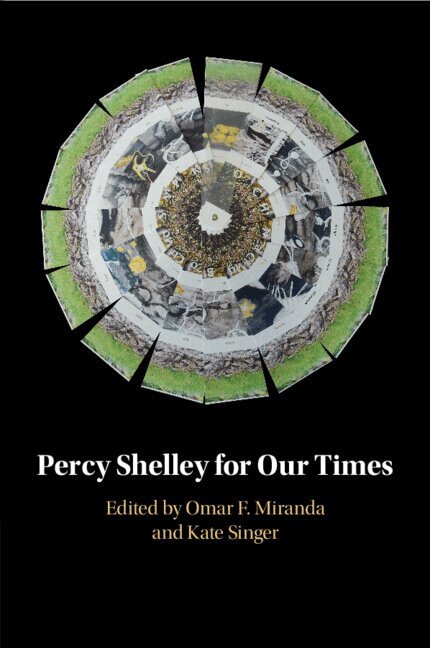
Two centuries after Percy Shelley's death, his writings continue to resonate in remarkable ways. Shelley addressed climate change, women's liberation, nonbinary gender, and political protest, while speaking to Indigenous, queer/trans, disabled, displaced, and working-class communities. He still inspires artists and social justice movements around the world today. Yet Percy Shelley for Our Times reveals an even more farsighted writer, one whose poetic methodology went beyond the didactic powers of prophetic art. Not historicist, presentist, or transhistorical, Shelley 'for our times' conceives worlds outside himself, his poetry, and his era, envisioning how audiences connect and collaborate across space and time. This collection revitalizes a writer once considered an adolescent of idealist protest, showing how his interwoven poetics of relationality continually revisits the meaning of community and the contemporary. This title is part of the Flip it Open programme and may also be available Open Access. Check our website Cambridge Core for details.
1 295 kr
Skickas inom 7-10 vardagar
Two centuries after Percy Shelley's death, his writings continue to resonate in remarkable ways. Shelley addressed climate change, women's liberation, nonbinary gender, and political protest, while speaking to Indigenous, queer/trans, disabled, displaced, and working-class communities. He still inspires artists and social justice movements around the world today. Yet Percy Shelley for Our Times reveals an even more farsighted writer, one whose poetic methodology went beyond the didactic powers of prophetic art. Not historicist, presentist, or transhistorical, Shelley 'for our times' conceives worlds outside himself, his poetry, and his era, envisioning how audiences connect and collaborate across space and time. This collection revitalizes a writer once considered an adolescent of idealist protest, showing how his interwoven poetics of relationality continually revisits the meaning of community and the contemporary. This title is part of the Flip it Open programme and may also be available Open Access. Check our website Cambridge Core for details.
1 215 kr
Tillfälligt slut
Examines the concept of a poetics of vacancy in Romantic-era literature.Romantic Vacancy argues that, at the cult of sensibility's height, Romantic writers found alternative tropes of affect to express movement beyond sensation and the body. Grappling with sensibility's claims that sensation could be translated into ideas and emotions, poets of vacancy rewrote core empiricist philosophies that trapped women and men in sensitive bodies and, more detrimentally, in ideological narratives about emotional response that gendered subjects' bodies and minds. Kate Singer contends that affect's genesis occurs instead through a series of figurative responses and movements that loop together human and nonhuman movements of mind, body, and nature into a posthuman affect. This book discovers a new form of Romantic affect that is dynamically linguistic and material. It seeks to end the long tradition of holding women and men writers of the Romantic period as separate and largely unequal. It places women writers at the forefront of speculative thinking, repositions questions of gender at the vanguard of Romantic-era thought, revises how we have long thought of gender in the period, and rewrites our notions of Romantic affect. Finally, it answers pivotal questions facing both affect studies and Romanticism about interrelations among language, affect, and materiality. Readers will learn more about the deep history of how poetic language can help us move beyond binary gender and its limiting intellectual and affective ideologies.
651 kr
Skickas inom 3-6 vardagar
Examines the concept of a poetics of vacancy in Romantic-era literature.Romantic Vacancy argues that, at the cult of sensibility's height, Romantic writers found alternative tropes of affect to express movement beyond sensation and the body. Grappling with sensibility's claims that sensation could be translated into ideas and emotions, poets of vacancy rewrote core empiricist philosophies that trapped women and men in sensitive bodies and, more detrimentally, in ideological narratives about emotional response that gendered subjects' bodies and minds. Kate Singer contends that affect's genesis occurs instead through a series of figurative responses and movements that loop together human and nonhuman movements of mind, body, and nature into a posthuman affect. This book discovers a new form of Romantic affect that is dynamically linguistic and material. It seeks to end the long tradition of holding women and men writers of the Romantic period as separate and largely unequal. It places women writers at the forefront of speculative thinking, repositions questions of gender at the vanguard of Romantic-era thought, revises how we have long thought of gender in the period, and rewrites our notions of Romantic affect. Finally, it answers pivotal questions facing both affect studies and Romanticism about interrelations among language, affect, and materiality. Readers will learn more about the deep history of how poetic language can help us move beyond binary gender and its limiting intellectual and affective ideologies.
Del 11 - Romantic Reconfigurations: Studies in Literature and Culture 1780-1850
Material Transgressions
Beyond Romantic Bodies, Genders, Things
Inbunden, Engelska, 2020
2 118 kr
Skickas inom 7-10 vardagar
Material Transgressions reveals how Romantic-era authors think outsideof historical and theoretical ideologies that reiterate notions of sexedbodies, embodied subjectivities, isolated things, or stable texts. The essaysgathered here examine how Romantic writers rethink materiality, especially thesubject-object relationship, in order to challenge the tenets of Enlightenmentand the culture of sensibility that privileged the hegemony of the speaking andfeeling lyric subject and to undo supposedly invariable matter, andrepresentations of it, that limited their writing, agency, knowledge, and evenbeing. In this volume, the idea of transgression serves as a flexible and capaciousdiscursive and material movement that braids together fluid forms of affect,embodiment, and textuality. The texts explored offer alternativeunderstandings of materiality that move beyond concepts that fix genderedbodies and intellectual capacities, whether human or textual, idea or thing. Theyenact processes – assemblages, ghost dances, pack mentality, reiterative writing,shapeshifting, multi-voiced choric oralities – that redefine restrictivestructures in order to craft alternative modes of being in the world that canhelp us to reimagine materiality both in the Romantic period and now. Suchdynamism not only reveals a new materialist imaginary for Romanticism but alsounveils textualities, affects, figurations, and linguistic movements that alternew materialism’s often strictly ontological approach.List of contributors: Kate Singer, Ashley Cross, Suzanne L. Barnett, Harriet Kramer Linkin, Michael Gamer, Katrina O’Loughlin, Emily J. Dolive, Holly Gallagher, Jillian Heydt-Stevenson, Mary Beth Tegan, Mark Lounibos, Sonia Hofkosh, David Sigler, Chris Washington, Donelle Ruwe, Mark Lussier.
Del 11 - Romantic Reconfigurations: Studies in Literature and Culture 1780-1850
Material Transgressions
Beyond Romantic Bodies, Genders, Things
Häftad, Engelska, 2023
658 kr
Skickas inom 7-10 vardagar
Material Transgressions reveals how Romantic-era authors think outsideof historical and theoretical ideologies that reiterate notions of sexedbodies, embodied subjectivities, isolated things, or stable texts. The essaysgathered here examine how Romantic writers rethink materiality, especially thesubject-object relationship, in order to challenge the tenets of Enlightenmentand the culture of sensibility that privileged the hegemony of the speaking andfeeling lyric subject and to undo supposedly invariable matter, andrepresentations of it, that limited their writing, agency, knowledge, and evenbeing. In this volume, the idea of transgression serves as a flexible and capaciousdiscursive and material movement that braids together fluid forms of affect,embodiment, and textuality. The texts explored offer alternativeunderstandings of materiality that move beyond concepts that fix genderedbodies and intellectual capacities, whether human or textual, idea or thing. Theyenact processes – assemblages, ghost dances, pack mentality, reiterative writing,shapeshifting, multi-voiced choric oralities – that redefine restrictivestructures in order to craft alternative modes of being in the world that canhelp us to reimagine materiality both in the Romantic period and now. Suchdynamism not only reveals a new materialist imaginary for Romanticism but alsounveils textualities, affects, figurations, and linguistic movements that alternew materialism’s often strictly ontological approach.List of contributors: Kate Singer, Ashley Cross, Suzanne L. Barnett, Harriet Kramer Linkin, Michael Gamer, Katrina O’Loughlin, Emily J. Dolive, Holly Gallagher, Jillian Heydt-Stevenson, Mary Beth Tegan, Mark Lounibos, Sonia Hofkosh, David Sigler, Chris Washington, Donelle Ruwe, Mark Lussier.
2 978 kr
Kommande
A new conceptualization and expansion of Romanticism that includes global texts and establishes them as part of the Romantic tradition.Stepping away from Eurocentric scholarship, The Bloomsbury Handbook of Global Romantic Literature and Culture embraces a vast global archive that invites readers to unearth the unexplored roots of Romantic aesthetics, affects, and abolitionary solidarities that spread unevenly but no less profoundly across cultures and continents. Contributors rewrite resistance as a decolonial, global phenomenon, examining literary and cultural responses to slave revolts in Jamaica and Brazil, political revolution in Haiti and Latin America, military, cultural, and economic rebellions in India and China, indigenous struggles such as the Seminole Wars, and other configurations of space, time, and event. The essays also engage with counter-hegemonic agency beyond the radical individual and the European liberal state, such as maroon collectives, petitions, anti-capitalist communities in North America after 1776, indigenous land sharing, and sharecropping in Mexico developed by communities that were excluded. Through these readings, The Bloomsbury Handbook of Global Romantic Literature and Culture reveals a myriad of conceptions of resistance and creativity from around the world and across history, suggesting how we might redefine or find new concepts and language altogether for terms such as “revolution,” “emancipation,” “the global,” and the "Romantic Era." It also examines what methods we might find that were already latent within that era, poised to disrupt European colonialism and to reconstitute an equitable and loving life.