Katerina Kolozova – författare
Visar alla böcker från författaren Katerina Kolozova. Handla med fri frakt och snabb leverans.
12 produkter
12 produkter
Inbunden, Engelska, 2014
1 502 kr
Skickas inom 3-6 vardagar
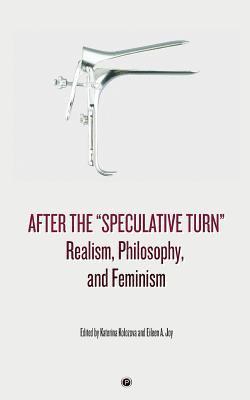
Following Francois Laruelle's nonstandard philosophy and the work of Judith Butler, Drucilla Cornell, Luce Irigaray, and Rosi Braidotti, Katerina Kolozova reclaims the relevance of categories traditionally rendered "unthinkable" by postmodern feminist philosophies, such as "the real," "the one," "the limit," and "finality," thus critically repositioning poststructuralist feminist philosophy and gender/queer studies. Poststructuralist (feminist) theory sees the subject as a purely linguistic category, as always already multiple, as always already nonfixed and fluctuating, as limitless discursivity, and as constitutively detached from the instance of the real. This reconceptualization is based on the exclusion of and dichotomous opposition to notions of the real, the one (unity and continuity), and the stable. The non-philosophical reading of postructuralist philosophy engenders new forms of universalisms for global debate and action, expressed in a language the world can understand. It also liberates theory from ideological paralysis, recasting the real as an immediately experienced human condition determined by gender, race, and social and economic circumstance.
Häftad, Engelska, 2018
217 kr
Skickas inom 5-8 vardagar
Following François Laruelle's nonstandard philosophy and the work of Judith Butler, Drucilla Cornell, Luce Irigaray, and Rosi Braidotti, Katerina Kolozova reclaims the relevance of categories traditionally rendered "unthinkable" by postmodern feminist philosophies, such as "the real," "the one," "the limit," and "finality," thus critically repositioning poststructuralist feminist philosophy and gender/queer studies.Poststructuralist (feminist) theory sees the subject as a purely linguistic category, as always already multiple, as always already nonfixed and fluctuating, as limitless discursivity, and as constitutively detached from the instance of the real. This reconceptualization is based on the exclusion of and dichotomous opposition to notions of the real, the one (unity and continuity), and the stable. The non-philosophical reading of postructuralist philosophy engenders new forms of universalisms for global debate and action, expressed in a language the world can understand. It also liberates theory from ideological paralysis, recasting the real as an immediately experienced human condition determined by gender, race, and social and economic circumstance.
Häftad, Engelska, 2015
237 kr
Skickas inom 5-8 vardagar
Häftad, Engelska, 2016
245 kr
Skickas inom 5-8 vardagar
E-bok
PDF, Engelska, 2019482 kr
Läs direkt efter köp
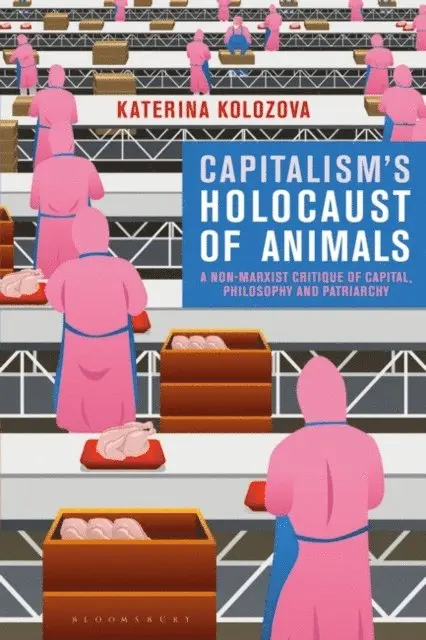
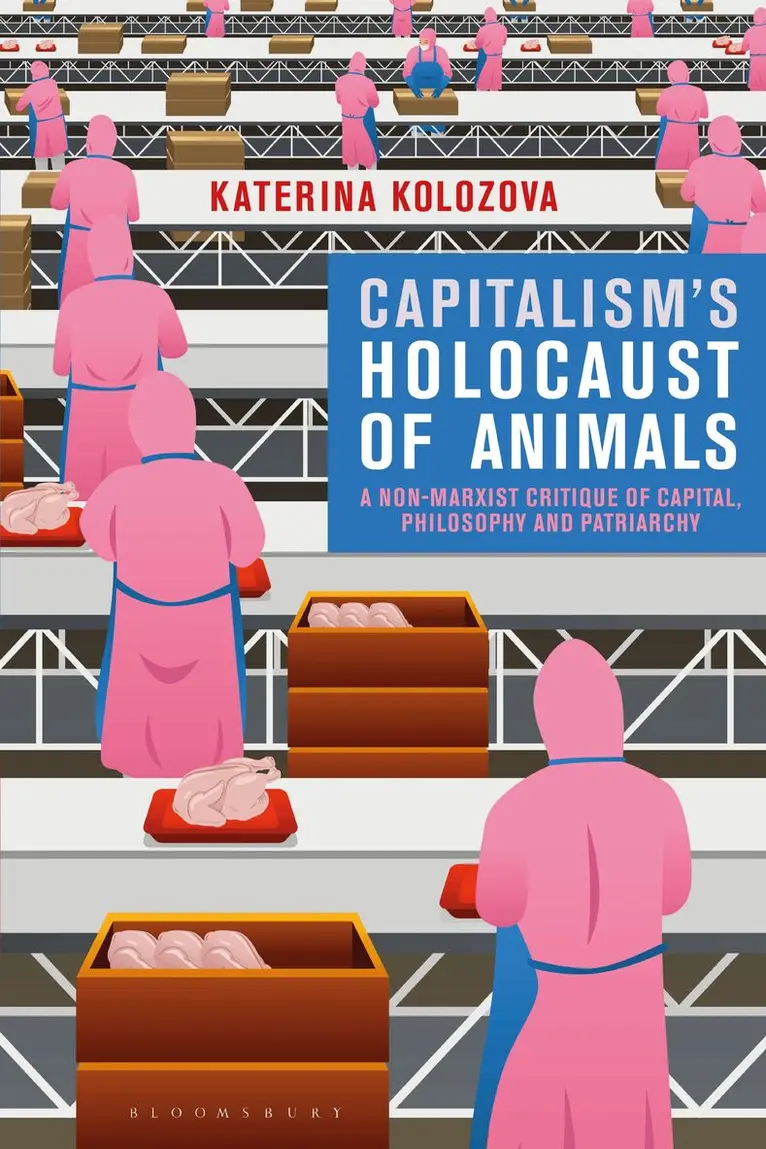
Building on discussions originating in post-humanism, the non-philosophy of François Laruelle, and the science of “species being of humanity” stemming from Marx''s critique of philosophy, Katerina Kolozova proposes a radical consideration of capitalism''s economic exploitation of life. This book uses François Laruelle''s work to think through questions of “practical ethics” and bring the abstract tools of Laruelle''s non-philosophy into conversation with other critical methods in the humanities. Kolozova centres the question of the animal at the very heart of what it means for us as human beings to think and act in the world, and the mistreatment of animality that underpins the logic of capitalism.
Inbunden, Engelska, 2019
1 660 kr
Skickas inom 10-15 vardagar
Building on discussions originating in post-humanism, the non-philosophy of François Laruelle, and the science of “species being of humanity” stemming from Marx’s critique of philosophy, Katerina Kolozova proposes a radical consideration of capitalism’s economic exploitation of life. This book uses François Laruelle’s work to think through questions of “practical ethics” and bring the abstract tools of Laruelle’s non-philosophy into conversation with other critical methods in the humanities. Kolozova centres the question of the animal at the very heart of what it means for us as human beings to think and act in the world, and the mistreatment of animality that underpins the logic of capitalism.
E-bok
Engelska, 2019482 kr
Läs direkt efter köp
Building on discussions originating in post-humanism, the non-philosophy of François Laruelle, and the science of “species being of humanity” stemming from Marx''s critique of philosophy, Katerina Kolozova proposes a radical consideration of capitalism''s economic exploitation of life. This book uses François Laruelle''s work to think through questions of “practical ethics” and bring the abstract tools of Laruelle''s non-philosophy into conversation with other critical methods in the humanities. Kolozova centres the question of the animal at the very heart of what it means for us as human beings to think and act in the world, and the mistreatment of animality that underpins the logic of capitalism.
Häftad, Engelska, 2021
461 kr
Skickas inom 10-15 vardagar
Building on discussions originating in post-humanism, the non-philosophy of François Laruelle, and the science of “species being of humanity” stemming from Marx’s critique of philosophy, Katerina Kolozova proposes a radical consideration of capitalism’s economic exploitation of life. This book uses François Laruelle’s work to think through questions of “practical ethics” and bring the abstract tools of Laruelle’s non-philosophy into conversation with other critical methods in the humanities. Kolozova centres the question of the animal at the very heart of what it means for us as human beings to think and act in the world, and the mistreatment of animality that underpins the logic of capitalism.
Inbunden, Engelska, 2024
1 178 kr
Skickas inom 10-15 vardagar
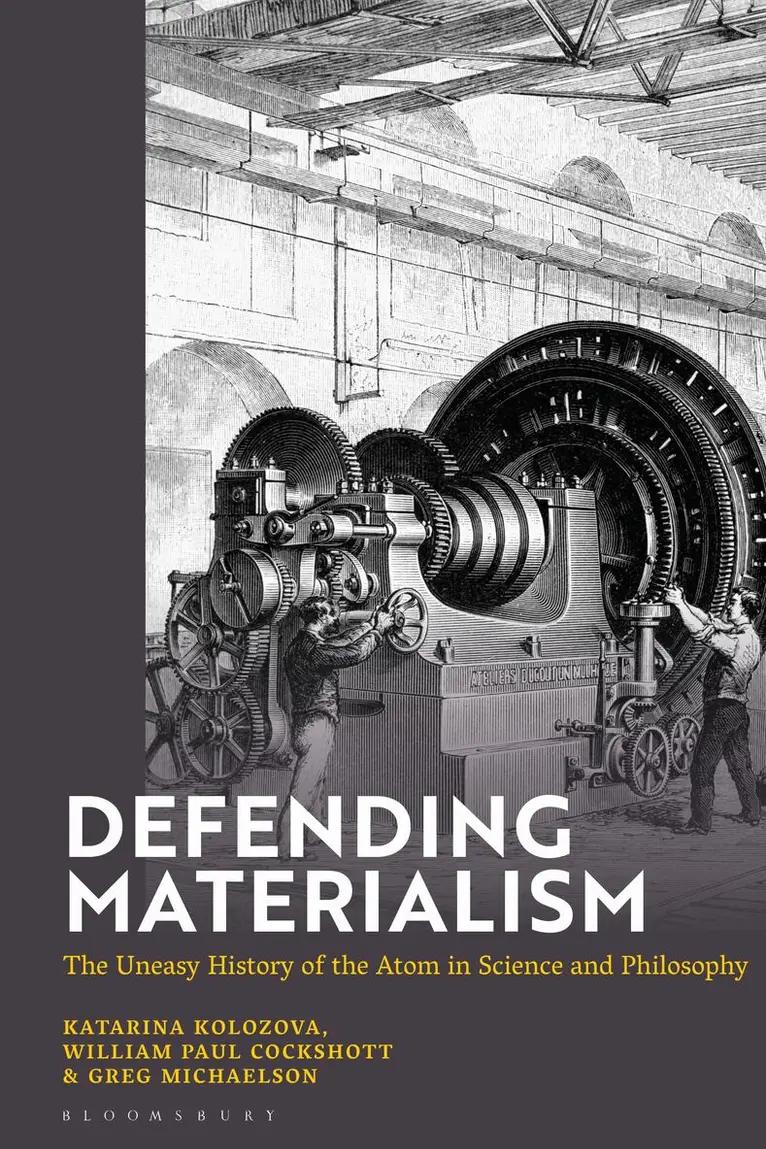
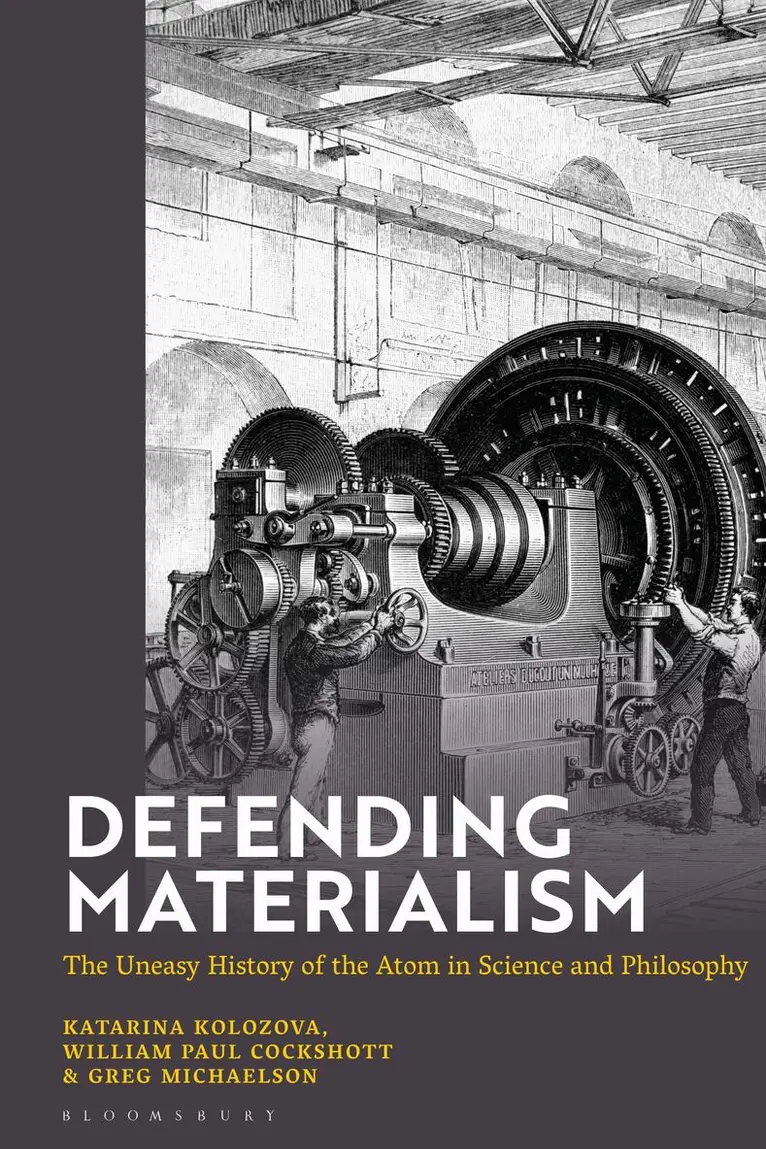
Nobody doubted that atoms were real once atomic energy was developed, but in the early 20th-century and before their existence was widely doubted. Defending Materialism follows the political and theoretical background of this intense philosophical controversy, defending atomistic and mechanical materialism against idealist paradigms. These accounts range from the explicit idealism criticised by Lenin and Einstein to the implicit Hegelian idealism that influenced Soviet dialectical materialism.Following several key threads, the authors trace how the idea of atoms has changed over the centuries, how ideology has influenced both sides of the idealism/materialism divide, and how the nature of time in physics, biology and human society can give a fresh view of historical materialism. Starting from the origins of materialism in ancient Greek thought and moving through its revival in Isaac Newton and Charles Darwin gives a full picture of the links between the Marxist tradition and the ‘coarse materiality’ to which the worlds of science and philosophy have found themselves both subscribed and averse.
Häftad, Engelska, 2026
406 kr
Skickas inom 10-15 vardagar
Nobody doubted that atoms were real once atomic energy was developed, but in the early 20th-century and before their existence was widely doubted. Defending Materialism follows the political and theoretical background of this intense philosophical controversy, defending atomistic and mechanical materialism against idealist paradigms. These accounts range from the explicit idealism criticised by Lenin and Einstein to the implicit Hegelian idealism that influenced Soviet dialectical materialism.Following several key threads, the authors trace how the idea of atoms has changed over the centuries, how ideology has influenced both sides of the idealism/materialism divide, and how the nature of time in physics, biology and human society can give a fresh view of historical materialism. Starting from the origins of materialism in ancient Greek thought and moving through its revival in Isaac Newton and Charles Darwin gives a full picture of the links between the Marxist tradition and the ‘coarse materiality’ to which the worlds of science and philosophy have found themselves both subscribed and averse.
E-bok
PDF, Engelska, 2024424 kr
Läs direkt efter köp
Nobody doubted that atoms were real once atomic energy was developed, but in the early 20th-century and before their existence was widely doubted. Defending Materialism follows the political and theoretical background of this intense philosophical controversy, defending atomistic and mechanical materialism against idealist paradigms. These accounts range from the explicit idealism criticised by Lenin and Einstein to the implicit Hegelian idealism that influenced Soviet dialectical materialism.Following several key threads, the authors trace how the idea of atoms has changed over the centuries, how ideology has influenced both sides of the idealism/materialism divide, and how the nature of time in physics, biology and human society can give a fresh view of historical materialism. Starting from the origins of materialism in ancient Greek thought and moving through its revival in Isaac Newton and Charles Darwin gives a full picture of the links between the Marxist tradition and the ''coarse materiality'' to which the worlds of science and philosophy have found themselves both subscribed and averse.
424 kr
Läs direkt efter köp
Nobody doubted that atoms were real once atomic energy was developed, but in the early 20th-century and before their existence was widely doubted. Defending Materialism follows the political and theoretical background of this intense philosophical controversy, defending atomistic and mechanical materialism against idealist paradigms. These accounts range from the explicit idealism criticised by Lenin and Einstein to the implicit Hegelian idealism that influenced Soviet dialectical materialism.Following several key threads, the authors trace how the idea of atoms has changed over the centuries, how ideology has influenced both sides of the idealism/materialism divide, and how the nature of time in physics, biology and human society can give a fresh view of historical materialism. Starting from the origins of materialism in ancient Greek thought and moving through its revival in Isaac Newton and Charles Darwin gives a full picture of the links between the Marxist tradition and the ''coarse materiality'' to which the worlds of science and philosophy have found themselves both subscribed and averse.