Katherine Kolb – författare
Visar alla böcker från författaren Katherine Kolb. Handla med fri frakt och snabb leverans.
3 produkter
3 produkter
E-bok
Engelska, 2015876 kr
Läs direkt efter köp
The quintessential Romantic artist of his century, Hector Berlioz impressed Paganini and Liszt as "Beethoven''s only heir" and dazzled the young Wagner as a composer, orchestra conductor, and critic. To Paris and all Europe, Berlioz was known as much for his writings as for his music, yet there has been no English-language anthology of his criticism available until now. Berlioz on Music plunges us into the Parisian music world during one of its most vibrant periods, the revolutionary years surrounding 1830, still resonant with memories of Napoleon and the French Revolution of only a few decades before. We follow Berlioz as he confronts the transition to a modern, commerce-driven society where music as high art has yet to find a place, using his pen to praise or scold, rouse or cajole performers, composers, managers, and the general public. The articles presented here-given in chronological order and, with a few exceptions, in their entirety-are accompanied by an introductory paragraph and notes that explain Berlioz''s references to persons, musical and literary works, historical events, and more. The result is an engaging collection of Berlioz''s lively prose, presented with scholarly rigor and rendered in accessible, graceful English. Scholars, lovers of Berlioz''s music, history enthusiasts, and Francophiles will delight in this compelling introduction to one of the richest periods of French culture.
Inbunden, Engelska, 2015
1 062 kr
Skickas inom 5-8 vardagar
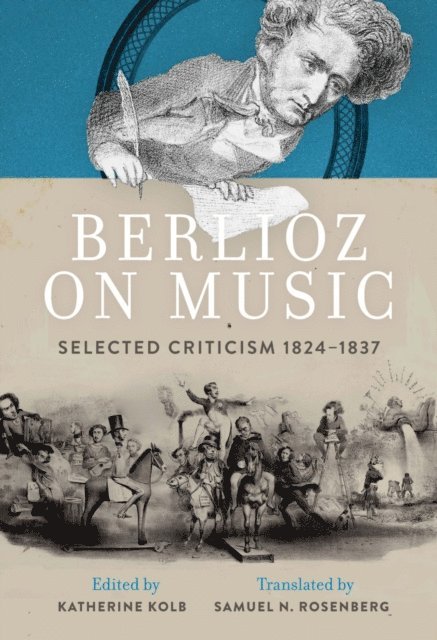
As a composer, Hector Berlioz embodied his century as the quintessential Romantic artist. Niccolo Paganini called him "Beethoven's only heir," and for a young Richard Wagner, he was dazzling as a composer, orchestra conductor, and critic. But Berlioz was known as much for his writings as for his music, and for decades Berlioz scholars have stressed the need for a good English-language anthology of his criticism. Featuring new translations and commentary by Katherine Kolb and Samuel N. Rosenberg, Berlioz on Music: Selected Criticism 1824-1837 is that volume.Berlioz's centrality as a critic results from his literary brilliance, his location in Paris -- the music capital of the nineteenth century -- and his 28-year tenure at the powerful Journal des debats. As one of its founding editors and principal writers, Berlioz contributed about 250 articles to the publication. Berlioz on Music comprises articles from the first 14 years of Berlioz's public writings, given in chronological order and, with few exceptions, in their entirety. Following chronology affords an overview of Berlioz's evolution as critic and of a key phase in the development of modern musical culture. The volume also presents explanatory data in engagingly composed introductions and footnotes, which elucidate Berlioz's references to persons, musical and literary works, historical events, and more. The reader is allowed to follow musical events during one of the richest periods in French cultural history, including the revolutionary decade surrounding 1830, a year marked by Victor Hugo's victory for the Romantics in the Classical bastion of the Théâtre-Français, by the premiere of Berlioz's Fantastic Symphony, and by the toppling of the Restoration monarchy. The result is an engaging collection of Berlioz's lively prose, presented with scholarly rigor and rendered in accessible English. Music historians, both professional and amateur, as well 19th century European history enthusiasts will find Berlioz on Music a compelling introduction to one of the richest periods of French culture.
E-bok
PDF, Engelska, 2015876 kr
Läs direkt efter köp
The quintessential Romantic artist of his century, Hector Berlioz impressed Paganini and Liszt as "Beethoven''s only heir" and dazzled the young Wagner as a composer, orchestra conductor, and critic. To Paris and all Europe, Berlioz was known as much for his writings as for his music, yet there has been no English-language anthology of his criticism available until now. Berlioz on Music plunges us into the Parisian music world during one of its most vibrant periods, the revolutionary years surrounding 1830, still resonant with memories of Napoleon and the French Revolution of only a few decades before. We follow Berlioz as he confronts the transition to a modern, commerce-driven society where music as high art has yet to find a place, using his pen to praise or scold, rouse or cajole performers, composers, managers, and the general public. The articles presented here-given in chronological order and, with a few exceptions, in their entirety-are accompanied by an introductory paragraph and notes that explain Berlioz''s references to persons, musical and literary works, historical events, and more. The result is an engaging collection of Berlioz''s lively prose, presented with scholarly rigor and rendered in accessible, graceful English. Scholars, lovers of Berlioz''s music, history enthusiasts, and Francophiles will delight in this compelling introduction to one of the richest periods of French culture.