Kathleen LeBesco - Böcker
Visar alla böcker från författaren Kathleen LeBesco. Handla med fri frakt och snabb leverans.
8 produkter
8 produkter
258 kr
Skickas inom 7-10 vardagar
Since World War II, when the diet and fitness industries promoted mass obsession with weight and body shape, fat has been a dirty word. In the United States, fat is seen as repulsive, funny, ugly, unclean, obscene, and above all as something to lose. "Bodies Out of Bounds" challenges these dominant perceptions by examining social representations of the fat body. The contributors to this collection show that what counts as fat and how it is valued are far from universal; the variety of meanings attributed to body size in other times and places demonstrates that perceptions of corpulence are infused with cultural, historical, political, and economic biases. The exceptionally rich and engaging essays collected in this volume question discursive constructions of fatness while analyzing the politics and power of corpulence and addressing the absence of fat people in media representations of the body. The essays are widely interdisciplinary; they explore their subject with insight, originality, and humor. The contributors examine the intersections of fat with ethnicity, race, queerness, class, and minority cultures, as well as with historical variations in the signification of fat.They also consider ways in which 'objective' medical and psychological discourses about fat people and food hide larger agendas. By illustrating how fat is a malleable construct that can be used to serve dominant economic and cultural interests, "Bodies Out of Bounds" stakes new claims for those whose body size does not adhere to society's confining standards.
1 057 kr
Tillfälligt slut
Contributors explore the relationship between food and the production of ideology.Edible Ideologies argues that representations of food-in literature and popular fiction, cookbooks and travel guides, war propaganda, women's magazines, television and print advertisements-are not just about nourishment or pleasure. Contributors explore how these various modes of representation, reflecting prevailing attitudes and assumptions about food and food practices, function instead to circulate and transgress dominant cultural ideologies. Addressing questions concerning whose interests are served by a particular food practice or habit and what political ends are fulfilled by the historical changes that lead from one practice to another in Western culture, the essays offer a rich historical narrative that moves from the construction of the nineteenth-century English gentleman to the creation of two of today's iconic figures in food culture, Julia Child and Martha Stewart. Along the way, readers will encounter World War I propaganda, holocaust and Sephardic cookbooks, the Rosenbergs, German tour guides, fast food advertising, food packaging, and chocolate, and will find food for thought on the meanings of everything from camembert to Velveeta, from salads to burgers, and from tikka masala to Campbell's soup.Contributors include Nathan Abrams, Annette Cozzi, Marie I. Drews, Charlene Elliott, Lynne Fallwell, Celia M. Kingsbury, Kathleen LeBesco, Eric Mason, Peter Naccarato, Kathleen Banks Nutter, and Jean P. Retzinger.
382 kr
Tillfälligt slut
Contributors explore the relationship between food and the production of ideology.Edible Ideologies argues that representations of food-in literature and popular fiction, cookbooks and travel guides, war propaganda, women's magazines, television and print advertisements-are not just about nourishment or pleasure. Contributors explore how these various modes of representation, reflecting prevailing attitudes and assumptions about food and food practices, function instead to circulate and transgress dominant cultural ideologies. Addressing questions concerning whose interests are served by a particular food practice or habit and what political ends are fulfilled by the historical changes that lead from one practice to another in Western culture, the essays offer a rich historical narrative that moves from the construction of the nineteenth-century English gentleman to the creation of two of today's iconic figures in food culture, Julia Child and Martha Stewart. Along the way, readers will encounter World War I propaganda, holocaust and Sephardic cookbooks, the Rosenbergs, German tour guides, fast food advertising, food packaging, and chocolate, and will find food for thought on the meanings of everything from camembert to Velveeta, from salads to burgers, and from tikka masala to Campbell's soup.Contributors include Nathan Abrams, Annette Cozzi, Marie I. Drews, Charlene Elliott, Lynne Fallwell, Celia M. Kingsbury, Kathleen LeBesco, Eric Mason, Peter Naccarato, Kathleen Banks Nutter, and Jean P. Retzinger.
1 476 kr
Skickas inom 10-15 vardagar
TV cookery shows hosted by celebrity chefs. Meal prep kitchens. Online grocers and restaurant review sites. Competitive eating contests, carnivals and fairs, and junk food websites and blogs. What do all of them have in common? According to authors Kathleen LeBesco and Peter Naccarato, they each serve as productive sites for understanding the role of culinary capital in shaping individual and group identities in contemporary culture.Beyond providing sustenance, food and food practices play an important social role, offering status to individuals who conform to their culture's culinary norms and expectations while also providing a means of resisting them. Culinary Capital analyzes this phenomenon in action across the landscape of contemporary culture. The authors examine how each of the sites listed above promises viewers and consumers status through the acquisition of culinary capital and, as they do so, intersect with a range of cultural values and ideologies, particularly those of gender and economic class.
461 kr
Skickas inom 10-15 vardagar
TV cookery shows hosted by celebrity chefs. Meal prep kitchens. Online grocers and restaurant review sites. Competitive eating contests, carnivals and fairs, and junk food websites and blogs. What do all of them have in common? According to authors Kathleen LeBesco and Peter Naccarato, they each serve as productive sites for understanding the role of culinary capital in shaping individual and group identities in contemporary culture.Beyond providing sustenance, food and food practices play an important social role, offering status to individuals who conform to their culture's culinary norms and expectations while also providing a means of resisting them. Culinary Capital analyzes this phenomenon in action across the landscape of contemporary culture. The authors examine how each of the sites listed above promises viewers and consumers status through the acquisition of culinary capital and, as they do so, intersect with a range of cultural values and ideologies, particularly those of gender and economic class.
576 kr
Skickas inom 10-15 vardagar
This book presents a fascinating exploration of eating experiences within US national parks, explaining how, on what, and why people eat in national parks and how this has changed over the last century.National parks are enjoying unprecedented popularity, and they are especially popular sites for the expression of cosmopolitanism, an ideological outlook descended from the Romantics on whose vision the parks were originally founded. The book explores the constructed foodscape within US national parks, situating the romantic consumption ethos within the context of sociological work on distinction, culinary tourism, and culinary capital. It analyzes and problematizes elements of cosmopolitan taste and desire, examining food tourism in wilderness spaces that satisfies cosmopolitan hunger for authenticity and a certain type of self-making. Weaving together strands of research that have not been previously integrated, the book gleans meaning from concessions menus and park restaurant web pages and employs audience analysis to take stock of park restaurant visitors’ contributions to restaurant review websites, as well as to understand how they represent their park eating experiences on social media. The book examines how satisfying cosmopolitan tastes in the parks creates profit for corporate concessioners, but also may produce bioregionalist successes and a recentering of Indigenous foodways. It concludes by exploring inroads to a better food experience in the parks, involving food products and processes that are regionally/locally specific, where tourists witness and participate in food production and enjoy commensality, but that are also non-extractive and show care for the environment and the people who inhabit it.This book will be of great interest to students and scholars of food studies, tourism and hospitality, sociology of culture, parks and recreation, American studies, and environmental studies. The book will also be of interest to parks and recreation decision makers, sustainable tourism leaders, and hospitality managers.
2 088 kr
Skickas inom 10-15 vardagar
This book presents a fascinating exploration of eating experiences within US national parks, explaining how, on what, and why people eat in national parks and how this has changed over the last century.National parks are enjoying unprecedented popularity, and they are especially popular sites for the expression of cosmopolitanism, an ideological outlook descended from the Romantics on whose vision the parks were originally founded. The book explores the constructed foodscape within US national parks, situating the romantic consumption ethos within the context of sociological work on distinction, culinary tourism, and culinary capital. It analyzes and problematizes elements of cosmopolitan taste and desire, examining food tourism in wilderness spaces that satisfies cosmopolitan hunger for authenticity and a certain type of self-making. Weaving together strands of research that have not been previously integrated, the book gleans meaning from concessions menus and park restaurant web pages and employs audience analysis to take stock of park restaurant visitors’ contributions to restaurant review websites, as well as to understand how they represent their park eating experiences on social media. The book examines how satisfying cosmopolitan tastes in the parks creates profit for corporate concessioners, but also may produce bioregionalist successes and a recentering of Indigenous foodways. It concludes by exploring inroads to a better food experience in the parks, involving food products and processes that are regionally/locally specific, where tourists witness and participate in food production and enjoy commensality, but that are also non-extractive and show care for the environment and the people who inhabit it.This book will be of great interest to students and scholars of food studies, tourism and hospitality, sociology of culture, parks and recreation, American studies, and environmental studies. The book will also be of interest to parks and recreation decision makers, sustainable tourism leaders, and hospitality managers.
2 094 kr
Skickas inom 10-15 vardagar
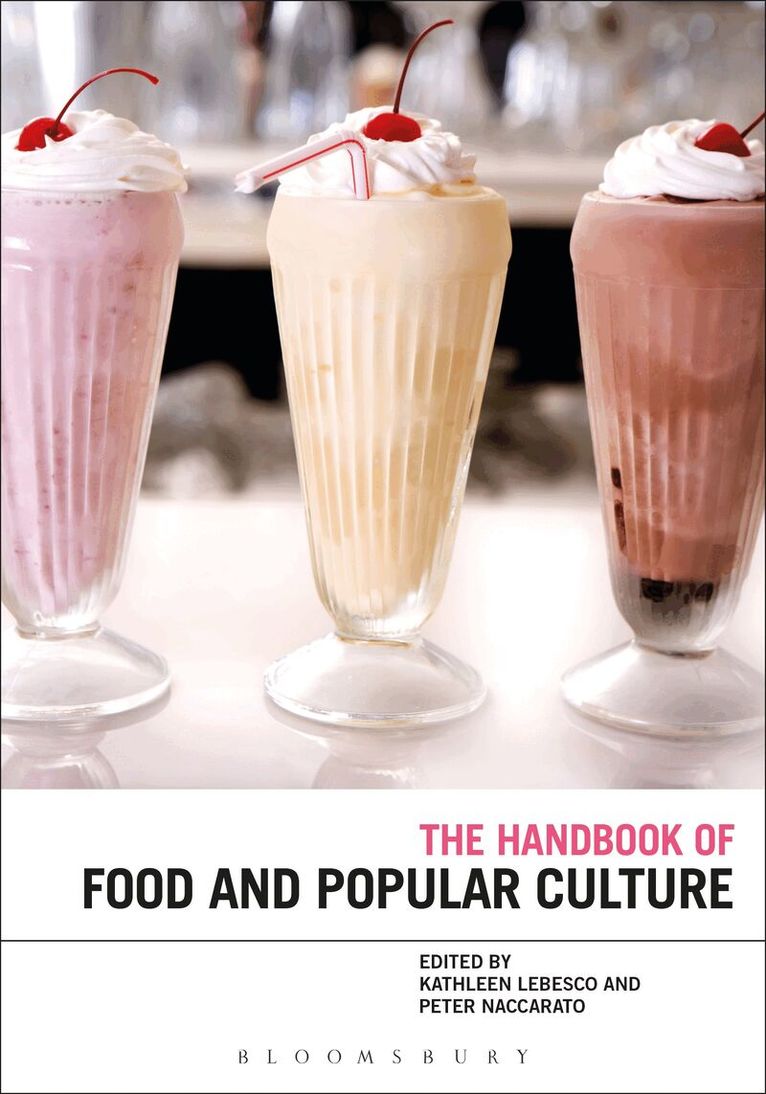
The influence of food has grown rapidly as it has become more and more intertwined with popular culture in recent decades. The Bloomsbury Handbook of Food and Popular Culture offers an authoritative, comprehensive overview of and introduction to this growing field of research. Bringing together over 20 original essays from leading experts, including Amy Bentley, Deborah Lupton, Fabio Parasecoli, and Isabelle de Solier, its impressive breadth and depth serves to define the field of food and popular culture.Divided into four parts, the book covers:- Media and Communication; including film, television, print media, the Internet, and emerging media- Material Cultures of Eating; including eating across the lifespan, home cooking, food retail, restaurants, and street food - Aesthetics of Food; including urban landscapes, museums, visual and performance arts- Socio-Political Considerations; including popular discourses around food science, waste, nutrition, ethical eating, and food advocacy Each chapter outlines key theories and existing areas of research whilst providing historical context and considering possible future developments. The Editors' Introduction by Kathleen LeBesco and Peter Naccarato, ensures cohesion and accessibility throughout. A truly interdisciplinary, ground-breaking resource, this book makes an invaluable contribution to the study of food and popular culture. It will be an essential reference work for students, researchers and scholars in food studies, film and media studies, communication studies, sociology, cultural studies, and American studies.