Kathryn E. Delmez - Böcker
Visar alla böcker från författaren Kathryn E. Delmez. Handla med fri frakt och snabb leverans.
4 produkter
4 produkter
466 kr
Skickas inom 7-10 vardagar
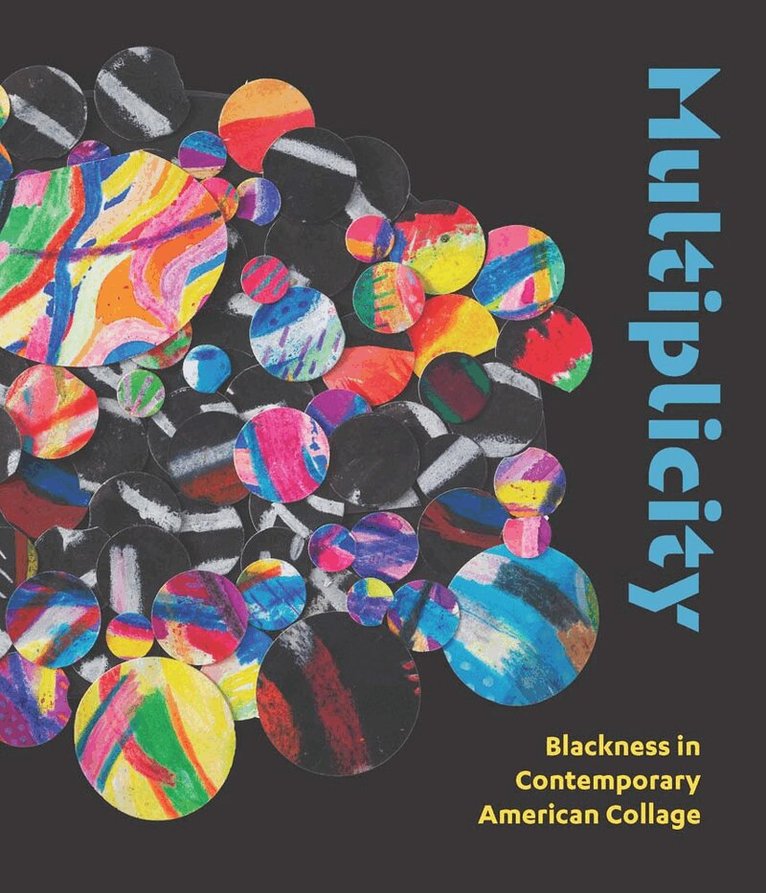
An engaging introduction to contemporary Black American collage brings together art by fifty artists that reflects the breadth and complexity of Black identity “A lavish catalog . . . provides not just beautiful reproductions of the artworks but also commentary on the way these artists, and others, have used collage to address the full range of Black experience.”—Margaret Renkl, New York Times Building on a technique that has roots in European and American traditions, Black artists have turned to collage as a way to convey how the intersecting facets of their lives combine to make whole individuals. Artists have assembled pieces of paper, fabrics, and other, often salvaged, materials to create unified compositions that express the endless possibilities of Black-constructed narratives despite the fragmentation of our times. As artist Deborah Roberts asserts, “With collage, I can create a more expansive and inclusive view of the Black cultural experience.” More than 50 artists are represented in the book’s 140 color images, with some creating original artworks for this project. Featured artists include such well-known figures as Mark Bradford, Lauren Halsey, Kerry James Marshall, Wangechi Mutu, Howardena Pindell, Tschabalala Self, Lorna Simpson, Mickalene Thomas, and Kara Walker. In addition to scholarly essays, the publication contains short biographies of each artist written by Fisk University students. Distributed for the Frist Art Museum Exhibition Schedule: Frist Art Museum, Nashville, TN(September 15–December 31, 2023) Museum of Fine Arts, Houston, TX(February 18–May 12, 2024) The Phillips Collection, Washington, DC(July 6–September 22, 2024)
566 kr
Kommande
In Her Place charts a network of artists working at a high caliber with deceptively specific criteria—they are all women, and they all work in Nashville, Tennessee. The plurality of styles, subjects, and media they choose to work in is so diverse that grouping them together proves that, if anything, there are as many differences among these artists as there are similarities.But isn’t that what it is to be Southern? Hasn’t life in the American South been a quagmire of contradictions from the very start?The South has always been defined as much by what it isn’t as what it is, in much the same way that women have been defined by how they are not like men. The standard for an American artist—and perhaps for a person in general—seems to be a white, straight, cisgender man of vaguely Northern residence. Anything that deviates from that criteria needs to be justified, pointed out, turned into something exceptional in order to simply be visible. It is refreshing, then, that this exhibition does not wallow in the stagnant waters of Southern stereotypes. The artists of In Her Place are legion. They include a Tehran-born sculptor making vessels out of Tennessee red clay, an artist from Arkansas working with cardboard and references to unsettling histories, and a Nashville-born painter whose images of civil rights–era sit-ins read just as poignantly in 2026 as they would have in 1960.If anything ties these artists together, it is not their gender or their location. It is their shared ingenuity and the comfort with which they subvert.
389 kr
Skickas inom 3-6 vardagar
Although known primarily as a country music star, Marty Stuart has been taking photographs of the people and places surrounding him since he first went on tour with bluegrass performer Lester Flatt at age twelve. His inspirations to do this include his own mother, Hilda Stuart, whom he watched document their family's everyday life in Mississippi, bassist Milt Hinton's photographs of fellow jazz artists, and Edward Curtis's well-known images of Native Americans at the turn of the twentieth century. Stuart's work ranges from intimate and often candid behind-the-scenes depictions of legendary musicians, to images that capture the eccentricities of characters from the back roads of America, to dignified portraits of members of the impoverished Lakota tribe in South Dakota, a people he was introduced to through his former father-in-law, Johnny Cash. Whatever the subject, Stuart is able to sensitively tease out something unexpected or hidden beneath the surface through a skillful awareness of timing and composition as well as a unique relationship with many of the subjects based on years of friendship and trust.This book will present images from these three bodies of work: "Badlands," on his time with the Lakota; "The Masters," from his work with musicians like Bill Monroe, Johnny Cash, Ray Charles, Dolly Parton, George Jones, Kitty Wells, Willie Nelson, and Waylon Jennings; and "Blue Line Hot Shots." As Stuart explains, "The newly built Interstate Highway System was at one time represented on our maps by the color red, while the two-lane highways and back roads of the nation were represented in blue. The back roads are where you'll find some of the people that I admire, respect, and always keep an eye out for. ... They are renegades … As Roger Miller once said, 'These people flush to the beat of a different plumber.' "The photographs are framed by an introduction by Stuart and a context-setting essay by photography historian Susan Edwards, executive director of the First Center for the Visual Arts. The book and accompanying exhibition at the First Center demonstrate that Marty Stuart is a master storyteller not only through his songs but also through his revealing and compelling photographs.
311 kr
Tillfälligt slut
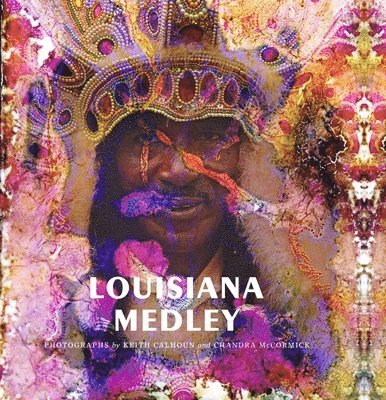
Three decades of African American life in and around New OrleansLouisiana Medley celebrates the 30-year collaboration of photographers Keith Calhoun (born 1955) and Chandra McCormick (born 1957). Partners in life and work, the two have worked together to document African American life in and around their native New Orleans. Calhoun and McCormick’s photographs show the artists in tune with each other as well as the rich complexity of Louisiana identity, from the local street culture and parades of their city to life in the Louisiana State Penitentiary, locally known as “Angola.” Their intimate understanding of labor practices and prison culture has informed their activism, around Angola and outside its walls. The photographers’ activism—and their appreciation for their city’s stubborn, fragile beauty—has only grown since Hurricane Katrina. Louisiana Medley surveys Calhoun and McCormick’s work over the course of three decades, revealing how the two photographers have used their cameras as tools for social engagement.