Kathryn J. Norlock – författare
Visar alla böcker från författaren Kathryn J. Norlock. Handla med fri frakt och snabb leverans.
3 produkter
3 produkter
1 343 kr
Skickas inom 10-15 vardagar
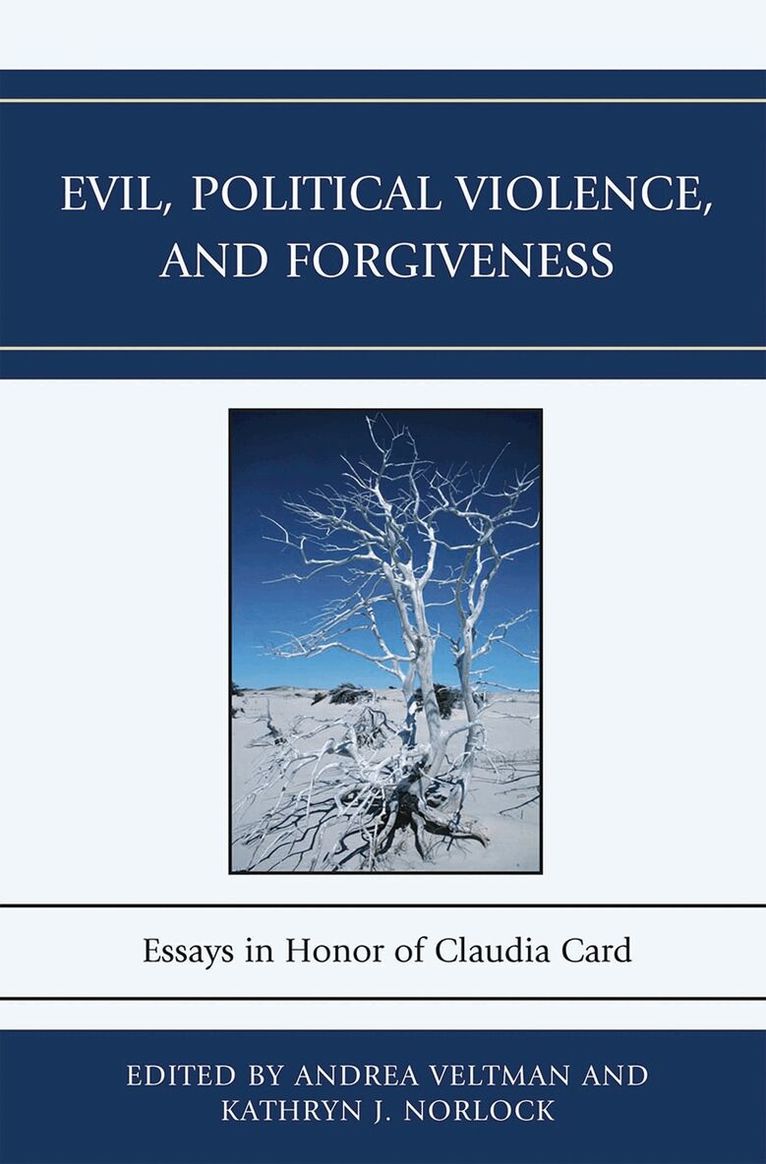
Until recently, philosophers have discussed evil primarily in theodicial contexts in pondering why a perfect God does not abolish evil. Evil, Political Violence, and Forgiveness: Essays in Honor of Claudia Card reflects a burgeoning interest among philosophers in a broader array of ethical and political questions concerning evils. Written in tribute to Claudia Card—whose distinguished academic career has culminated in the development of a new theory of evil—this collection of new essays explores the concept of evil, the multifaceted harms of brutal political violence, and the appropriateness of forgiveness as an ethical response to evils. Evil, Political Violence, and Forgiveness brings together an international cohort of distinguished philosophers who mediate with Card upon an array of twentieth-century atrocities and on the nature of evil actions, persons, and institutions. Contributors explore questions such as "What distinguishes evil from lesser wrongdoing?" "Is culpable wrongdoing a necessary component of evil?" "How are we to understand atrocious political violence?" "What are the best moral and political responses to atrocities?" "Are there moral obligations to forgive contrite perpetrators of evils?" and "Can anyone claim moral innocence amid a climate of evildoing?"
1 703 kr
Skickas inom 10-15 vardagar
The feeling that one can’t get over a moral wrong is challenging even in the best of circumstances. This volume considers challenges to forgiveness in the most difficult circumstances. It explores forgiveness in criminal justice contexts, under oppression, after genocide, when the victim is dead or when bystanders disagree, when many different negative reactions abound, and when anger and resentment seem preferable and important. The book gathers together a diverse assembly of authors with publication and expertise in forgiveness, while centering the work of new voices in the field and pursuing new lines of inquiry grounded in empirical literature. Some scholars consider how forgiveness influences and is influenced by our other mental states and emotions, while other authors explore the moral value of the emotions attendant upon forgiveness in particularly challenging contexts. Some authors critically assess and advance applications of the standard view of forgiveness predominant in Anglophone philosophy of forgiveness as the overcoming of resentment, while others offer rejections of basic aspects of the standard view, such as what sorts of feelings are compatible with forgiving. The book offers new directions for inquiry into forgiveness, and shows that the moral psychology of forgiveness continues to enjoy challenges to its theoretical structure and its practical possibilities.
541 kr
Skickas inom 10-15 vardagar
The feeling that one can’t get over a moral wrong is challenging even in the best of circumstances. This volume considers challenges to forgiveness in the most difficult circumstances. It explores forgiveness in criminal justice contexts, under oppression, after genocide, when the victim is dead or when bystanders disagree, when many different negative reactions abound, and when anger and resentment seem preferable and important. The book gathers together a diverse assembly of authors with publication and expertise in forgiveness, while centering the work of new voices in the field and pursuing new lines of inquiry grounded in empirical literature. Some scholars consider how forgiveness influences and is influenced by our other mental states and emotions, while other authors explore the moral value of the emotions attendant upon forgiveness in particularly challenging contexts. Some authors critically assess and advance applications of the standard view of forgiveness predominant in Anglophone philosophy of forgiveness as the overcoming of resentment, while others offer rejections of basic aspects of the standard view, such as what sorts of feelings are compatible with forgiving. The book offers new directions for inquiry into forgiveness, and shows that the moral psychology of forgiveness continues to enjoy challenges to its theoretical structure and its practical possibilities.