Kathy Stuart - Böcker
Visar alla böcker från författaren Kathy Stuart. Handla med fri frakt och snabb leverans.
5 produkter
5 produkter
Defiled Trades and Social Outcasts
Honor and Ritual Pollution in Early Modern Germany
Häftad, Engelska, 2006
712 kr
Skickas inom 7-10 vardagar
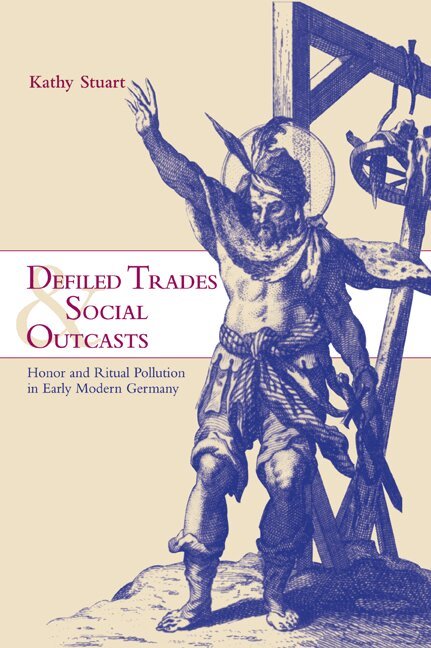
This book presents a social and cultural history of 'dishonourable people' (unehrliche Leute), an outcast group in early modern Germany. Executioners, skinners, grave-diggers, shepherds, barber-surgeons, millers, linen-weavers, sow-gelders, latrine-cleaners, and bailiffs were among the 'dishonourable' by virtue of their trades. This dishonour was either hereditary, often through several generations, or it arose from ritual pollution whereby honourable citizens could become dishonourable by coming into casual contact with members of the outcast group. The dishonourable milieu of the city of Augsburg from the sixteenth to the eighteenth centuries is reconstructed to show the extent to which dishonour determined the life-chances and self-identity of dishonourable people. The book then investigates how honourable estates interacted with dishonourable people, and how the pollution anxieties of early modern Germans structured social and political relations within honourable society.
Defiled Trades and Social Outcasts
Honor and Ritual Pollution in Early Modern Germany
Inbunden, Engelska, 2000
1 472 kr
Skickas inom 7-10 vardagar
This book presents a social and cultural history of 'dishonourable people' (unehrliche Leute), an outcast group in early modern Germany. Executioners, skinners, grave-diggers, shepherds, barber-surgeons, millers, linen-weavers, sow-gelders, latrine-cleaners, and bailiffs were among the 'dishonourable' by virtue of their trades. This dishonour was either hereditary, often through several generations, or it arose from ritual pollution whereby honourable citizens could become dishonourable by coming into casual contact with members of the outcast group. The dishonourable milieu of the city of Augsburg from the sixteenth to the eighteenth centuries is reconstructed to show the extent to which dishonour determined the life-chances and self-identity of dishonourable people. The book then investigates how honourable estates interacted with dishonourable people, and how the pollution anxieties of early modern Germans structured social and political relations within honourable society.
611 kr
Skickas inom 10-15 vardagar
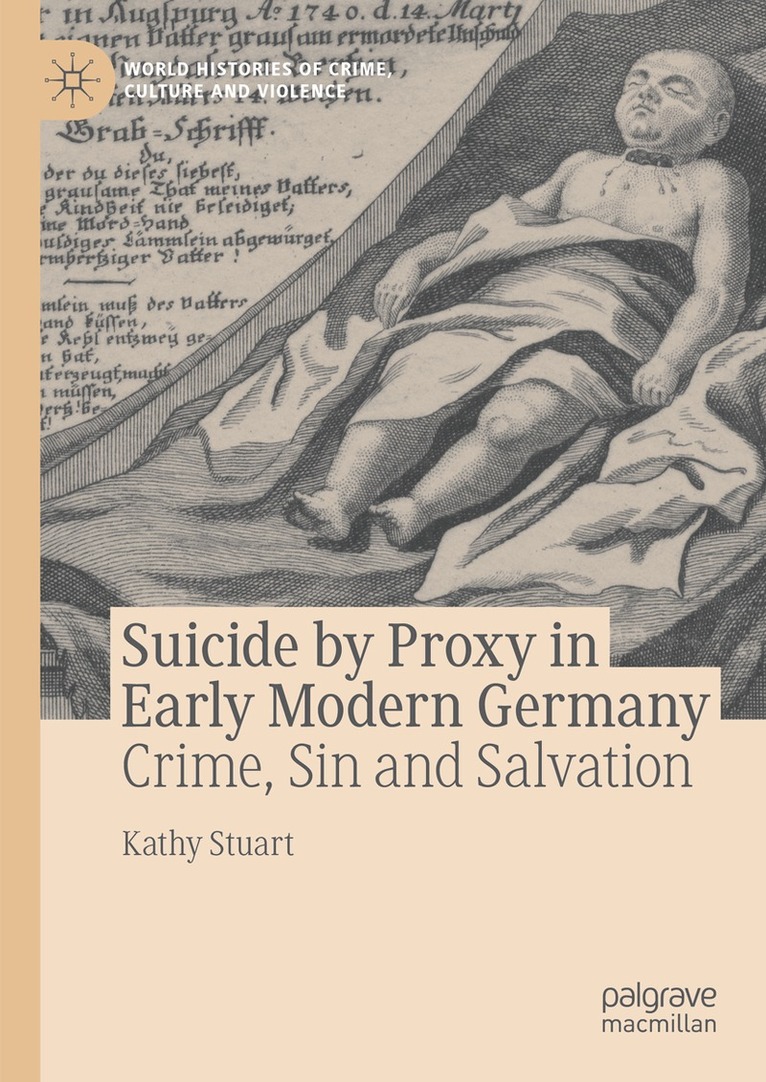
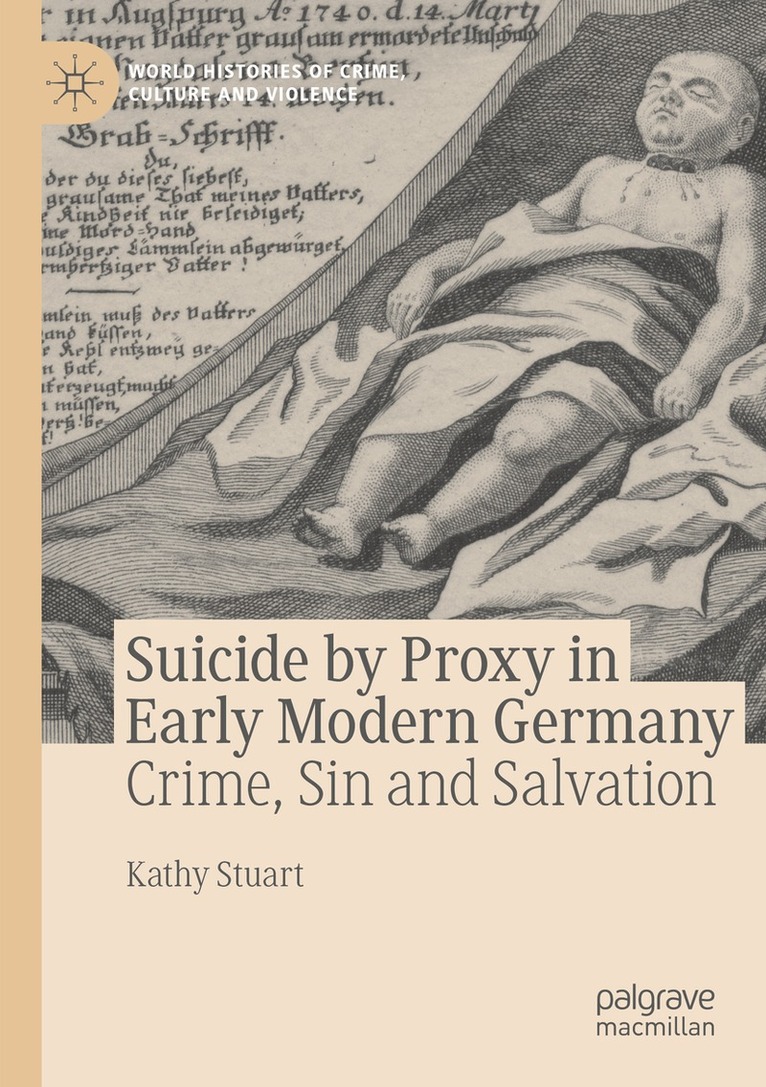
Suicide by Proxy became a major societal problem after 1650. Suicidal people committed capital crimes with the explicit goal of “earning” their executions, as a short-cut to their salvation. Desiring to die repentantly at the hands of divinely-instituted government, perpetrators hoped to escape eternal damnation that befell direct suicides. Kathy Stuart shows how this crime emerged as an unintended consequence of aggressive social disciplining campaigns by confessional states. Paradoxically, suicide by proxy exposed the limits of early modern state power, as governments struggled unsuccessfully to suppress the tactic. Some perpetrators committed arson or blasphemy, or confessed to long-past crimes, usually infanticide, or bestiality. Most frequently, however, they murdered young children, believing that their innocent victims would also enter paradise. The crime had cross-confessional appeal, as illustrated in case studies of Lutheran Hamburg and Catholic Vienna.Winner of The 2024 Natalie Zemon Davis Prize.“What to do about women (and sometimes, men) who gruesomely murdered children because of their own “weariness with life?” This was a dilemma faced by elites in German-speaking lands during the seventeenth and eighteenth centuries, and engaged by Kathy Stuart in this strikingly original monograph. A pervasive, if not largely forgotten behavioral pattern featured women who wished to end their lives but feared the doctrine held by Catholics and Protestants alike, that their souls would then face certain damnation. Instead, they would murder a child: their own, someone else’s, even one chosen at random, and immediately turn themselves into the authorities. This form of “suicide by proxy,” as Stuart terms it, resulted in their execution to be sure, but gave them a chance to repent beforehand. To elucidate this troubling history, she mines an impressive array of primary sources from archives throughout Germany and Austria, as well as broadsheets and other forms of art. She draws penetrating insights from law, gender studies, religion, and medicine. To her sophisticated use of empirical research and interdisciplinary perspectives Stuart adds a sense of compassion for these desperate women and the parents of the children murdered during this time of religious and social upheaval.”
653 kr
Skickas inom 5-8 vardagar
611 kr
Skickas inom 10-15 vardagar
Suicide by Proxy became a major societal problem after 1650. Suicidal people committed capital crimes with the explicit goal of “earning” their executions, as a short-cut to their salvation. Desiring to die repentantly at the hands of divinely-instituted government, perpetrators hoped to escape eternal damnation that befell direct suicides. Kathy Stuart shows how this crime emerged as an unintended consequence of aggressive social disciplining campaigns by confessional states. Paradoxically, suicide by proxy exposed the limits of early modern state power, as governments struggled unsuccessfully to suppress the tactic. Some perpetrators committed arson or blasphemy, or confessed to long-past crimes, usually infanticide, or bestiality. Most frequently, however, they murdered young children, believing that their innocent victims would also enter paradise. The crime had cross-confessional appeal, as illustrated in case studies of Lutheran Hamburg and Catholic Vienna.Winner of The 2024 Natalie Zemon Davis Prize.“What to do about women (and sometimes, men) who gruesomely murdered children because of their own “weariness with life?” This was a dilemma faced by elites in German-speaking lands during the seventeenth and eighteenth centuries, and engaged by Kathy Stuart in this strikingly original monograph. A pervasive, if not largely forgotten behavioral pattern featured women who wished to end their lives but feared the doctrine held by Catholics and Protestants alike, that their souls would then face certain damnation. Instead, they would murder a child: their own, someone else’s, even one chosen at random, and immediately turn themselves into the authorities. This form of “suicide by proxy,” as Stuart terms it, resulted in their execution to be sure, but gave them a chance to repent beforehand. To elucidate this troubling history, she mines an impressive array of primary sources from archives throughout Germany and Austria, as well as broadsheets and other forms of art. She draws penetrating insights from law, gender studies, religion, and medicine. To her sophisticated use of empirical research and interdisciplinary perspectives Stuart adds a sense of compassion for these desperate women and the parents of the children murdered during this time of religious and social upheaval.”