Kathy Tuchman Glass – författare
649 kr
Skickas inom 3-6 vardagar
"The author's conversational style hooks and easily engages readers into the four-step curriculum design process, well-sequenced array of design templates and lesson models, synthesis of the six traits and writing process elements, and integration of history, social science, and science content." Carl Zon, Standards and Assessment Consultant/Coach Connections, Sunnyvale, CA
"This book effectively walks educators through the standards-based lesson design process in a way that is clear, compelling, and achievable while simultaneously building content knowledge and extending understanding." Ruth Goldhammer, Coordinator, Curriculum and Staff Development San Mateo County Office of Education, CA
Design innovative and engaging lessons and units that produce measurable gains! This clever new resource takes the reader step-by-step through the curriculum design process: from identifying national and local standards and translating them into user-friendly language to crafting meaningful writing assignments and assessments that effectively reveal student strengths and weaknesses. Rooted in the six-traits model of instruction and assessment and illuminated by relevant classroom examples, Glass's four-part process shows teachers how to:
Identify grade-level content standards for writing Create a teacher rubric with a clear set of criteria for writing assessment Craft a student checklist that guides students through the unit and prepares them for teacher expectations Design lessons that help students achieve successReplete with tools, strategies, examples and reproducibles, Curriculum Design for Writing Instruction is a valuable resource for any teacher who wants to boost student achievement in writing for any subject and for any grade level!
1 072 kr
Skickas inom 3-6 vardagar
"Offers a new approach and is a valuable addition to the body of literature on curriculum mapping."—Constance Hill, Teacher Specialist, South Carolina Department of Education "After reading Curriculum Mapping, I felt I had the knowledge and tools to show my teachers how to create their own personal 'curriculum guides' and have meaningful collaboration with other teachers to coordinate instruction both horizontally and vertically."—Margo Gibson, Principal, Jemison High School, AL "Easy to read and understand, and I feel I could begin this process right now."—Jamie Jahnig, English Teacher, Central High School, Cheyenne, WY Create a blueprint for your educational objectives! Integrating curriculum with content standards and working with other educators to develop a teaching program makes instruction not only collaborative but also cohesive. Curriculum Mapping: A Step-By-Step Guide for Creating Curriculum Year Overviews offers teachers a customized, personalized process to prepare their curriculum while folding content into a larger curriculum map. Kathy Tuchman Glass leads K–12 educators step-by-step through the process of developing a Curriculum Year Overview—or curriculum map—helping to establish meaningful connections between content areas while ensuring that all standards are met. This excellent resource helps teachers, curriculum directors, staff developers, and principals map out the school year with an articulate game plan to follow as they meticulously educate their students. In this book, readers will find:
A detailed definition and the purposes of a Curriculum Year Overview (CYO)The step-by-step process for creating a personalized CYOSeveral completely developed curriculum maps, blank templates, and suggestions for mapping specific content area skills from grade to gradeDiscover how to build a strong foundation that promotes clear educational goals and results in a winning curriculum plan for your classroom and school!
550 kr
Skickas inom 3-6 vardagar
"Offers a new approach and is a valuable addition to the body of literature on curriculum mapping."—Constance Hill, Teacher Specialist, South Carolina Department of Education "After reading Curriculum Mapping, I felt I had the knowledge and tools to show my teachers how to create their own personal 'curriculum guides' and have meaningful collaboration with other teachers to coordinate instruction both horizontally and vertically."—Margo Gibson, Principal, Jemison High School, AL "Easy to read and understand, and I feel I could begin this process right now."—Jamie Jahnig, English Teacher, Central High School, Cheyenne, WY Create a blueprint for your educational objectives! Integrating curriculum with content standards and working with other educators to develop a teaching program makes instruction not only collaborative but also cohesive. Curriculum Mapping: A Step-By-Step Guide for Creating Curriculum Year Overviews offers teachers a customized, personalized process to prepare their curriculum while folding content into a larger curriculum map. Kathy Tuchman Glass leads K–12 educators step-by-step through the process of developing a Curriculum Year Overview—or curriculum map—helping to establish meaningful connections between content areas while ensuring that all standards are met. This excellent resource helps teachers, curriculum directors, staff developers, and principals map out the school year with an articulate game plan to follow as they meticulously educate their students. In this book, readers will find:
A detailed definition and the purposes of a Curriculum Year Overview (CYO)The step-by-step process for creating a personalized CYOSeveral completely developed curriculum maps, blank templates, and suggestions for mapping specific content area skills from grade to gradeDiscover how to build a strong foundation that promotes clear educational goals and results in a winning curriculum plan for your classroom and school!
1 274 kr
Skickas inom 3-6 vardagar
"The book provides helpful background information as well as a wide variety of examples of differentiated lessons, resource guides, reproducible templates, and a selection of grading tools ranging from rubrics to graphic organizers."—Allan Varni, Instructor and Regional CoordinatorDivision of Continuing Education, University of San Diego
"Glass examines the constructs of masterful teaching and makes them accessible to all. Her intensely practical and forthright approach allows readers to immediately translate the concepts of differentiation into their classrooms."—Modell Marlow Andersen, Director of Educational ServicesHillsborough City School District, CA
Develop effective differentiated lessons that meet students' individual learning needs!
Differentiation allows teachers to target student needs and engage all students according to their learning preferences. Designed for teachers who are new to differentiating instruction, this book provides step-by-step guidance for creating meaningful lessons in language arts, math, science, and social studies at the upper elementary and middle school levels.
Kathy Tuchman Glass helps teachers develop confidence and expertise in differentiating lessons, units, and assessments and provides a detailed planning template, numerous examples, and reproducibles. This user-friendly resource:
Provides an overview of differentiation based on the backward design model Discusses strategies for differentiating content, process, and productHelps teachers organize lessons around guiding or essential questions for students to exploreShows how to take students' learning characteristics (readiness, interests, learning styles) into consideration when planning lessonsLesson Design for Differentiated Instruction, Grades 4–9 helps teachers plan differentiated lessons that will promote learning for every student.
625 kr
Skickas inom 3-6 vardagar
"The book provides helpful background information as well as a wide variety of examples of differentiated lessons, resource guides, reproducible templates, and a selection of grading tools ranging from rubrics to graphic organizers."—Allan Varni, Instructor and Regional CoordinatorDivision of Continuing Education, University of San Diego
"Glass examines the constructs of masterful teaching and makes them accessible to all. Her intensely practical and forthright approach allows readers to immediately translate the concepts of differentiation into their classrooms."—Modell Marlow Andersen, Director of Educational ServicesHillsborough City School District, CA
Develop effective differentiated lessons that meet students' individual learning needs!
Differentiation allows teachers to target student needs and engage all students according to their learning preferences. Designed for teachers who are new to differentiating instruction, this book provides step-by-step guidance for creating meaningful lessons in language arts, math, science, and social studies at the upper elementary and middle school levels.
Kathy Tuchman Glass helps teachers develop confidence and expertise in differentiating lessons, units, and assessments and provides a detailed planning template, numerous examples, and reproducibles. This user-friendly resource:
Provides an overview of differentiation based on the backward design model Discusses strategies for differentiating content, process, and productHelps teachers organize lessons around guiding or essential questions for students to exploreShows how to take students' learning characteristics (readiness, interests, learning styles) into consideration when planning lessonsLesson Design for Differentiated Instruction, Grades 4–9 helps teachers plan differentiated lessons that will promote learning for every student.
1 199 kr
Skickas inom 3-6 vardagar
"This guide provides clear, intelligent support for teachers and administrators to explore the possibilities that the Parallel Curriculum Model brings to educators and students, and to translate those possibilities into action in the classroom."—Carol Ann Tomlinson, William Clay Parish Jr. Professor of EducationUniversity of Virginia
"In my experience teaching graduate students about the Parallel Curriculum Model, I am always looking for a variety of ways to expose them to the intent of each parallel. This guide is an invaluable resource in helping us talk about and practice the model. The varied examples and practical lessons offer fantastic building blocks to use in my work with teachers!"—Jennifer Beasley, Educational ConsultantUniversity of Virginia
Extend the abilities of teachers and students alike with focused training on sophisticated curriculum design!
Complementing the best-selling second edition of The Parallel Curriculum, this all-inclusive facilitator's guide is an indispensable resource for anyone planning, designing, or conducting curriculum development training on the Parallel Curriculum Model.
This easy-to-use workbook offers step-by-step instructions aligned with the content of the core book. Staff developers will learn how to support training sessions to help educators design and implement curriculum along four parallels. Ideal for facilitating book study groups, seminars, and professional development events, the book provides:
A complete training program of 53 workshops, including 12 workshops per curriculum parallelScripts, agendas, activities, sample classroom scenarios, handouts, and transparencies Tools, resources, and strategies for designing curriculum across the four parallelsStaff Development Guide for the Parallel Curriculum is an essential handbook for leading professional training that results in enhanced teacher expertise and a multidimensional, high-quality curriculum that challenges all learners.
601 kr
Skickas inom 3-6 vardagar
"This guide provides clear, intelligent support for teachers and administrators to explore the possibilities that the Parallel Curriculum Model brings to educators and students, and to translate those possibilities into action in the classroom."—Carol Ann Tomlinson, William Clay Parish Jr. Professor of EducationUniversity of Virginia
"In my experience teaching graduate students about the Parallel Curriculum Model, I am always looking for a variety of ways to expose them to the intent of each parallel. This guide is an invaluable resource in helping us talk about and practice the model. The varied examples and practical lessons offer fantastic building blocks to use in my work with teachers!"—Jennifer Beasley, Educational ConsultantUniversity of Virginia
Extend the abilities of teachers and students alike with focused training on sophisticated curriculum design!
Complementing the best-selling second edition of The Parallel Curriculum, this all-inclusive facilitator's guide is an indispensable resource for anyone planning, designing, or conducting curriculum development training on the Parallel Curriculum Model.
This easy-to-use workbook offers step-by-step instructions aligned with the content of the core book. Staff developers will learn how to support training sessions to help educators design and implement curriculum along four parallels. Ideal for facilitating book study groups, seminars, and professional development events, the book provides:
A complete training program of 53 workshops, including 12 workshops per curriculum parallelScripts, agendas, activities, sample classroom scenarios, handouts, and transparencies Tools, resources, and strategies for designing curriculum across the four parallelsStaff Development Guide for the Parallel Curriculum is an essential handbook for leading professional training that results in enhanced teacher expertise and a multidimensional, high-quality curriculum that challenges all learners.
626 kr
Skickas inom 3-6 vardagar
Your blueprint for skilled Common Core literacy alignment!
Learn to artfully navigate Common Core - or any state/province - standards with concrete, step-by-step instruction from master teacher and curriculum specialist, Kathy Tuchman Glass. Confidently map a unit of study aligned to Common Core’s rigorous, evidence-based writing and reading requirements. Dive into in-depth analyses of informational text with supporting essential questions. Glass walks you through the entire process with manageable chunks that eliminate overwhelm.
Chapters include thorough explanations, step-by-step exercises, and detailed templates, assessments, charts, tips, and prompts centered around key CCCS concepts for grades 6–12.
Teachers, curriculum committees, grade level teams, and professional development leaders will learn to:
Challenge and engage students in all content areas using the CCCS ELA framework Use existing curriculum and materials to design new, CCCS-aligned units of study Identify mandatory CCCS ELA essential understandings for informational text, evidence-based writing and other critical competencies Conduct resource-rich workshops and professional developmentThis all-in-one instructional guide, with a companion website for extra help, improves your professional capacity to create, revise, or critique quality-driven units and lessons aligned to the ELA Common Core. Get this essential blueprint to building high quality 6–12 grade-level curriculum for skilled CCCS literacy-aligned success!
“Like them or hate them, the Common Core Standards represent one of the most significant opportunities for improvement schools have faced in decades. This book will be a great help to anyone engaged in the act of translating the Common Core into actual teaching practices.” --Jim Knight, Author of High-Impact Instruction
365 kr
Läs direkt efter köp
Writing plays a crucial part in all education disciplines, helping students to communicate their ideas to different audiences and extend their content knowledge. Developed fhttp://player.listenlive.co/35601/enor teachers, curriculum designers, and literacy coaches, this user-friendly guide offers practical recommendations, strategies, and tips for establishing argumentation units of instruction that empower students to artfully and logically present and convince others of their position.
Benefits
Examine the characteristic elements of an argument and the benefits of teaching students to work through how to structure an argument.Examine an argumentation unit map, its learning goals and guiding questions, and then develop cohesive units based in argumentation writing.Complete exercises throughout the book that will help to create consistent, engaging units that will prepare students to take on any writing challenge that asks them to exercise their persuasive-writing skills.Design a full lesson on argumentation, from establishing author’s purpose, to supporting a thesis with evidence, to presenting counter-arguments.Download templates, checklists, rubrics, and student activities useful for designing an argumentation unit and guiding lessons.Contents
Introduction
Chapter 1: Preparing for Argumentation
Chapter 2: Building an Argumentation Unit Map
Chapter 3: Formulating a Pre- and Culminating Assessment and Establishing Criteria for Success
Chapter 4: Writing Engaging Introductions Using Gradual Release of Responsibility
Chapter 5: Designing Lessons
Epilogue
Appendix A: List of Figures and Tables
Appendix B: Professional and Student Resources
References and Resources
Index
369 kr
Läs direkt efter köp
Prepare students to take on any writing challenge, including district- and state-mandated literacy tests. Perfect for teachers, curriculum designers, and literary coaches, this title provides guidance for designing new writing units and revising existing ones across content areas for grades 5–12. You’ll discover practical strategies and best practices for teaching skills in drafting, editing, revising, peer feedback, assessment, and student collaboration. Consistent and engaging lesson design based on these principles will prepare students to take on any writing challenge, including district- and state-mandated literacy tests.
Benefits
Examine the stages of the writing process and the benefits of teaching students to work through them.Assess the particular importance of the feedback stage of students’ writing process.Study the components and rationale of the backward-planning approach to unit design.Gain access to downloadable templates, checklists, rubrics, and student activities useful for guiding and assessing students in their writing.Explore comprehensive lists of online resources and tools that educators and students may use in lessons aimed at writing.Contents
Introduction
1 The Importance of Writing to Learn
2 The Stages of the Writing Process
3 The Backward-Planning Approach to Unit Design
4 Culminating Assessments and Criteria for Success
5 Effective Lesson Design: The Gradual Release of Responsibility Model
6 Launch the Unit
Epilogue
400 kr
Läs direkt efter köp
Teaching writing is a powerful and effective means for learning across all grade levels and disciplines. This user-friendly resource provides practical recommendations, strategies, and assessments for designing units of study that center on both narrative nonfiction and creative writing. Throughout the book, readers can complete exercises that equip them to create a comprehensive narrative unit of instruction that is ready to pilot. It also provides narrative activities, assessments, sample tasks, rubrics, checklists, writing sample resources, and more for fifth grade to high school.
Learn how to design and maintain a unit that improves students'' narrative writing skills:
Learn a sequential approach to building a narrative writing unit.Review how to structure a narrative.Reflect on past teaching approaches and revise for future narrative writing lesson plans.Download free templates, checklists, rubrics, and narrative writing activities useful for designing a narrative writing plan and guiding lessons.Access professional and student resources in print and online for understanding and teaching narrative writing.Contents:IntroductionChapter 1: Building a Narrative Unit MapChapter 2: Formulating a Pre- and Culminating Assessment and Establishing Criteria for SuccessChapter 3: Enhancing Setting with Imagery Using Gradual Release of ResponsibilityChapter 4: Designing LessonsChapter 5: Studying an Author''s Craft by Analyzing TextEpilogueResource A: Narrative and Descriptive Characteristics and Associated GenresResource B: Elements of LiteratureResource C: Literacy Devices and Figurative Language
400 kr
Läs direkt efter köp
For educators to be effective, they must intentionally select and implement research-based instructional strategies and conduct assessments. Using a clear and well-organized structure, the authors apply the strategies and techniques originally presented in The New Art and Science of Teaching by Robert J. Marzano to the teaching and assessment of writing skills, as well as some associated reading skills. In total, the book shares more than 100 strategies across grade levels and subject areas.
Use effective teaching methods to reach desired writing learning outcomes and student success:
Understand which instructional strategies are best suited to teaching writing skills, and gain specific examples for implementing these strategies.Learn how to utilize general and specific strategies to improve the learning environment of the classroom and obtain desired student learning outcomes for writing.Fine-tune your writing curriculum to achieve student success by developing and assessing writing skills with the book''s instructional techniques.Examine samples of writing rubrics, proficiency scales, and checklists, and learn effective teaching methods to use them as assessment and instructional tools.Utilize an advance organizer as a quick reference of all strategies to assist you in designing writing curriculum and planning lessons.Access and download free reproducible activities, rubrics for assessing student writing, writing assessment examples, writing checklists, and more for classroom use.Contents:IntroductionChapter 1: Providing and Communicating Clear Learning GoalsChapter 2: Using AssessmentsChapter 3: Conducting Direct Instruction LessonsChapter 4: Conducting Practicing and Deepening LessonsChapter 5: Conducting Knowledge Application LessonsChapter 6: Using Strategies That Appear in All Types of LessonsChapter 7: Using Engagement StrategiesChapter 8: Implementing Rules and Procedures and Building RelationshipsChapter 9: Developing ExpertiseConclusionAppendix AAppendix BReferences and Resources
438 kr
Läs direkt efter köp
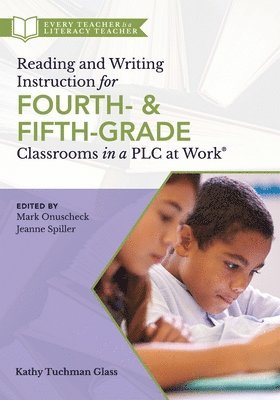
Prepare students to succeed with increasingly sophisticated reading and writing challenges. Designed for teachers of grades 4-5, this resource helps readers address the pivotal shift in learning expectations that occurs during the upper elementary years. Myriad templates, tools, and strategies are included to support collaborative teams as they work to establish a rich and robust plan for quality literacy instruction, assessment, and intervention.
Use this resource to inspire fourth- and fifth-graders to excel in reading and writing:
Understand the role PLCs and collaborative teams play in literacy development and reading comprehension strategies.Obtain strategies and tools, such as the pre-unit protocol, for unpacking and clarifying literacy standards.Explore adaptable, research-based instructional strategies, and learn how to plan high-quality literacy instruction that boosts student reading and writing skills.Examine the four components of the gradual release model--(1) focused instruction, (2) guided instruction, (3) collaborative learning, and (4) independent learning.Observe how to collaboratively score assessments and conduct effective data inquiry and analysis.Study the powerful impact literacy has on student engagement and inclusivity.Contents:Introduction: Every Teacher Is a Literacy Teacher Chapter 1: Establish Clarity About Student Learning ExpectationsChapter 2: Examine Assessment Options for LiteracyChapter 3: Create a Learning Progression to Guide Instruction and AssessmentChapter 4: Develop Collective Understanding of Learning ExpectationsChapter 5: Respond to Data to Ensure All Students LearnChapter 6: Differentiate Instruction With Gradual Release of ResponsibilityChapter 7: Plan High-Quality Literacy InstructionChapter 8: Select Appropriate Instructional StrategiesChapter 9: Consider Equity in LiteracyEpilogueAppendix A: List of Figures and TablesAppendix B: Templates and ToolsAppendix C: Process for Prioritizing StandardsAppendix D: Depth of Knowledge OverviewAppendix E: Essential Understandings and Guiding QuestionsReferences and ResourcesIndex
434 kr
Läs direkt efter köp
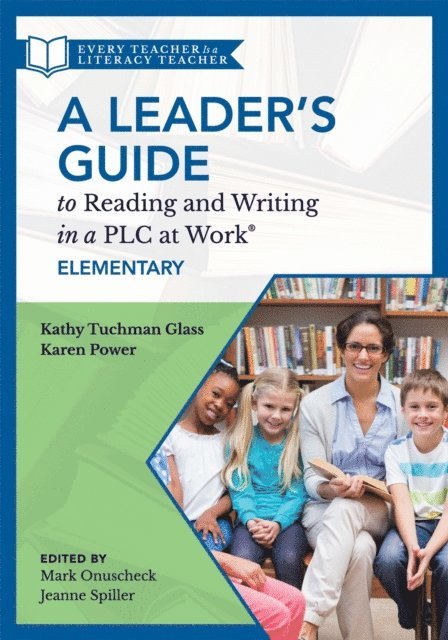
Confidently lead preK-5 literacy improvement in your professional learning community (PLC). Aligned to the Every Teacher Is a Literacy Teacher series, this results-focused guide outlines how to take urgent action to address deficiencies and increase literacy rates. Learn how to bring a new level of focus to your teacher teams and help them do the important daily work of ensuring every student successfully reads and writes at or beyond grade level.
Understand the importance and goals of literacy-focused instruction in an elementary setting.Gain specific suggestions for four types of leaders: (1) district, (2) school, (3) coach, and (4) teacher.Help collaborative teams emphasize literacy knowledge and reading and writing skills in a curriculum''s essential standards.Create effective data-inquiry practices that inform team decision-making for those who require additional support or extension.Facilitate high-quality literacy instruction using the gradual release of responsibility framework.Develop equity in literacy instructional strategies to ensure growth and development for all.Contents:Introduction: Leaders of LiteracyChapter 1: Establish Clarity About Student Learning ExpectationsChapter 2: Examine Assessment Options for LiteracyChapter 3: Create a Learning Progression to Guide Instruction and AssessmentChapter 4: Develop Collective Understanding of Learning ExpectationsChapter 5: Respond to Student Data to Ensure All Students LearnChapter 6: Design Lessons Using the Gradual Release of Responsibility Instructional FrameworkChapter 7: Plan for High-Quality Instruction in LiteracyChapter 8: Select Appropriate Instructional StrategiesChapter 9: Consider Equity in LiteracyEpilogueAppendix A: Reference Points, Templates, and ToolsAppendix B: List of Figures and TablesReferences and ResourcesIndex