Katja Doose – författare
Visar alla böcker från författaren Katja Doose. Handla med fri frakt och snabb leverans.
4 produkter
4 produkter
Inbunden, Engelska, 2025
2 182 kr
Skickas inom 10-15 vardagar
Soviet Climate Change Science explores the character and range of Soviet contributions to the emerging understanding of large-scale anthropogenic climate change during the post-1945 period. More specifically, it examines the role of Soviet scientists in helping to shape the debate, both domestically and on the international stage, and with a particular focus on the period 1960s to the 1980s.The book details the institutional underpinnings of Soviet activity in this area, the main scientific debates evident within key centres of climate-related science and the activities of Soviet scientists with respect to a range of international collaborations such as the 1972 US-USSR Agreement on Cooperation in the Field of Environmental Protection, the early work of the Intergovernmental Panel on Climate Change (IPCC) and the Greenhouse Glasnost initiative, which included the world’s first teleconference on climate change. It concludes with a reflection on the extent to which Soviet scientific legacies continued to shape Russian approaches to climate change post-1991.This book will be of interest to those working on the historical and sociocultural aspects of climate change, providing the first detailed assessment of Soviet involvement in this critical area of scientific activity.
E-bok
PDF, Engelska, 2025769 kr
Läs direkt efter köp
Soviet Climate Change Science explores the character and range of Soviet contributions to the emerging understanding of large-scale anthropogenic climate change during the post-1945 period. More specifically, it examines the role of Soviet scientists in helping to shape the debate, both domestically and on the international stage, and with a particular focus on the period 1960s to the 1980s.The book details the institutional underpinnings of Soviet activity in this area, the main scientific debates evident within key centres of climate-related science and the activities of Soviet scientists with respect to a range of international collaborations such as the 1972 US-USSR Agreement on Cooperation in the Field of Environmental Protection, the early work of the Intergovernmental Panel on Climate Change (IPCC) and the Greenhouse Glasnost initiative, which included the world's first teleconference on climate change. It concludes with a reflection on the extent to which Soviet scientific legacies continued to shape Russian approaches to climate change post-1991.This book will be of interest to those working on the historical and sociocultural aspects of climate change, providing the first detailed assessment of Soviet involvement in this critical area of scientific activity.
E-bok
Engelska, 2025776 kr
Läs direkt efter köp
Soviet Climate Change Science explores the character and range of Soviet contributions to the emerging understanding of large-scale anthropogenic climate change during the post-1945 period. More specifically, it examines the role of Soviet scientists in helping to shape the debate, both domestically and on the international stage, and with a particular focus on the period 1960s to the 1980s.The book details the institutional underpinnings of Soviet activity in this area, the main scientific debates evident within key centres of climate-related science and the activities of Soviet scientists with respect to a range of international collaborations such as the 1972 US-USSR Agreement on Cooperation in the Field of Environmental Protection, the early work of the Intergovernmental Panel on Climate Change (IPCC) and the Greenhouse Glasnost initiative, which included the world's first teleconference on climate change. It concludes with a reflection on the extent to which Soviet scientific legacies continued to shape Russian approaches to climate change post-1991.This book will be of interest to those working on the historical and sociocultural aspects of climate change, providing the first detailed assessment of Soviet involvement in this critical area of scientific activity.
E-bok
PDF, Tyska, 2019737 kr
Läs direkt efter köp
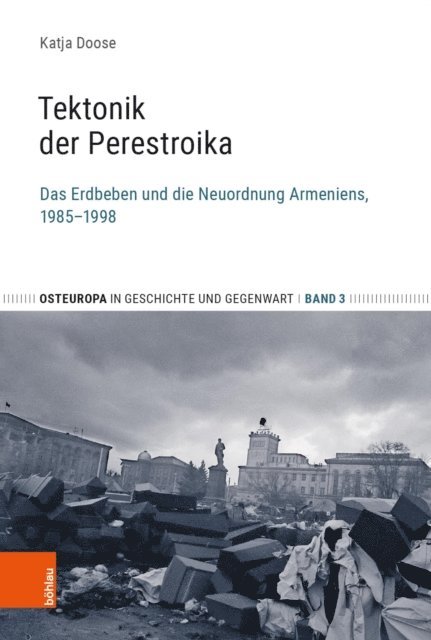
Eine der verheerendsten Katastrophen in der Geschichte der Sowjetunion war das Erdbeben, das am 7. Dezember 1988 den Norden der damaligen Sowjetrepublik Armenien zerstörte und sich aufgrund eines fehlenden Katastrophenmanagements sowie mangelnder Ressourcen beim Wiederaufbau zu einem politischen Desaster entwickelte. Das Erdbeben in Armenien traf eine Sowjetrepublik, die sich seit Ende 1987 längst in politischer Aufruhr sowie im ethnischen Konflikt mit Aserbaidschan um die Enklave Bergkarabach befand. Als pulsierender Fokus offenbarte die Katastrophe den Zustand der Sowjetordnung und die auseinandertreibenden zentrifugalen Kräfte, die zunehmend mehr Souveränität von Moskau forderten. Die Studie untersucht mit einem Schwerpunkt auf den Jahren 1988-1991, wie die Erdbebenkatastrophe den sozialen und politischen Wandel in Armenien prägte und sich somit von Bedeutung für die Zerfallsgeschichte der Sowjetunion erwies.