Katrina Kosec - Böcker
Visar alla böcker från författaren Katrina Kosec. Handla med fri frakt och snabb leverans.
2 produkter
2 produkter
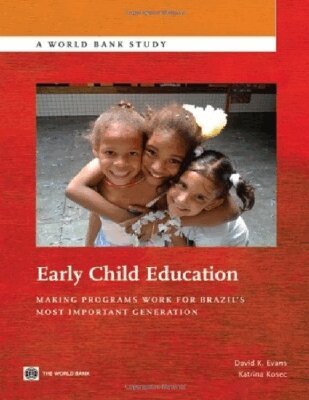
Early Child Education
Making Programs Work for Brazil's Most Important Generation
Häftad, Engelska, 2012
279 kr
Skickas inom 10-15 vardagar
In the past fifteen years, Brazil has made great strides in increasing its population’s access to early child education, with both preschool and creche enrollment increasing by over fifty percent. Education programs for young children have consistently been shown to have long-term positive effects on life outcomes of participants. In Brazil, these programs have demonstrated positive impacts on, for example, income, length of schooling, and test scores. However, the quality of pre-schools and creches is essential in achieving these improvements, and even in capital cities, very few centers are rated as high-quality centers. Representation of the poorest and most vulnerable children among those attending pre-school and creche still lags considerably behind that of more privileged children, although poorer children stand to gain the most from early child education programs. Additionally, large rural-urban and regional disparities exist. This book details the literature on the effects of early child education and the importance of quality, and gives a comprehensive view of the quality, regional, and socioeconomic gaps in early child education in Brazil. It further examines existing public and private initiatives in Brazil, and discusses how they can be leveraged to effectively and efficiently provide quality pre-school and creche care. A central aim of the book is to provide policymakers with specific recommendations of policies to improve the quality and equity of the early child education experience in Brazil. Given the difficulty in reaching children in remote areas and the need to expand coverage to the poorest segments of the population, Brazil will need to be strategic in how and where it invests. It should target new centers and allocate existing spaces to the poorest people and areas. Municipal policymakers should allocate public spaces in a transparent manner, provide guidelines to institutions, and monitor them. Teachers need guidance on the best activities to use, to improve child outcomes. The use of participatory budgeting could potentially improve access and equity by involving the poor directly in the budgeting process. Increased cross-sectoral coordination could improve child welfare in cost-effective ways, and public-private partnerships could stretch existing resources further and expand coverage more quickly.
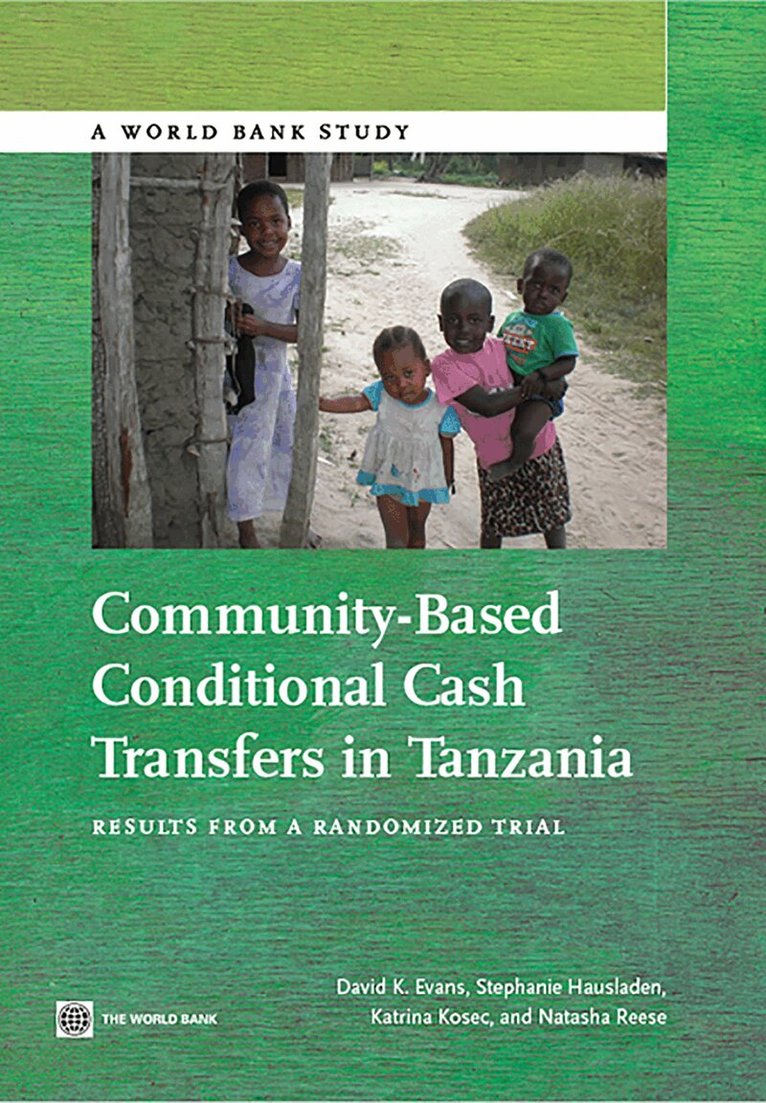
Community-Based Conditional Cash Transfers in Tanzania
Results from a Randomized Trial
Häftad, Engelska, 2014
282 kr
Skickas inom 10-15 vardagar
Given the success of conditional cash transfer (CCT) programmes elsewhere, in 2010 the Government of Tanzania rolled out a pilot CCT programme in three districts. Its aim was to see if, using a model relying on communities to target beneficiaries and deliver payments, the programme could improve outcomes for the poor the way centrally-run CCT programmes have in other contexts. The programme provided cash payments to poor households, but conditioned payments on complying with certain health and education requirements. Given scarce resources, the Government randomly selected 40 out of 80 eligible villages to receive the pilot programme. Households in participating and comparison villages were broadly comparable at baseline. This report describes the programme and the results of a rigorous, mixed methods impact evaluation.Two and a half years into the programme, participating households were healthier and more educated. Health improvements due to the CCT programme were greatest for the poorest half of households - the poorest of the poor. They experienced a half a day per month reduction in sick days on average, and poor children age 0-4 in particular had a full day per month reduction in sick days. In education, the programme showed clear positive impacts on whether children had ever attended school and on whether they completed Standard 7. Households were also more likely to buy shoes for children, which can promote both health and school attendance.In response to the programme, households also made investments to reduce risk: Participating households were much more likely to finance medical care with insurance and much more likely to purchase health insurance than were their comparison counterparts. The programme did not significantly affect savings on average, although it did increase non-bank savings amongst the poorest half of households. Participating households also invested in more livestock assets, which they used to create small enterprises. The programme did not, however, have significant impacts on food consumption.On the whole, the results suggest that households focused on reducing risk and on improving their livelihoods rather than principally on increasing consumption. There is also evidence that the project had positive effects on community cohesion.