Kaveh Niazi - Böcker
Visar alla böcker från författaren Kaveh Niazi. Handla med fri frakt och snabb leverans.
5 produkter
5 produkter
Del 58 - Archimedes
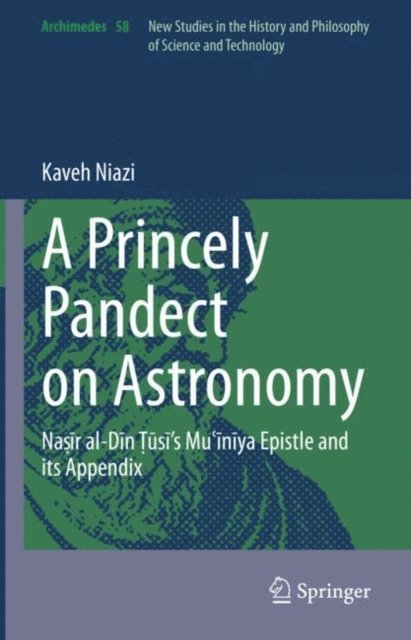
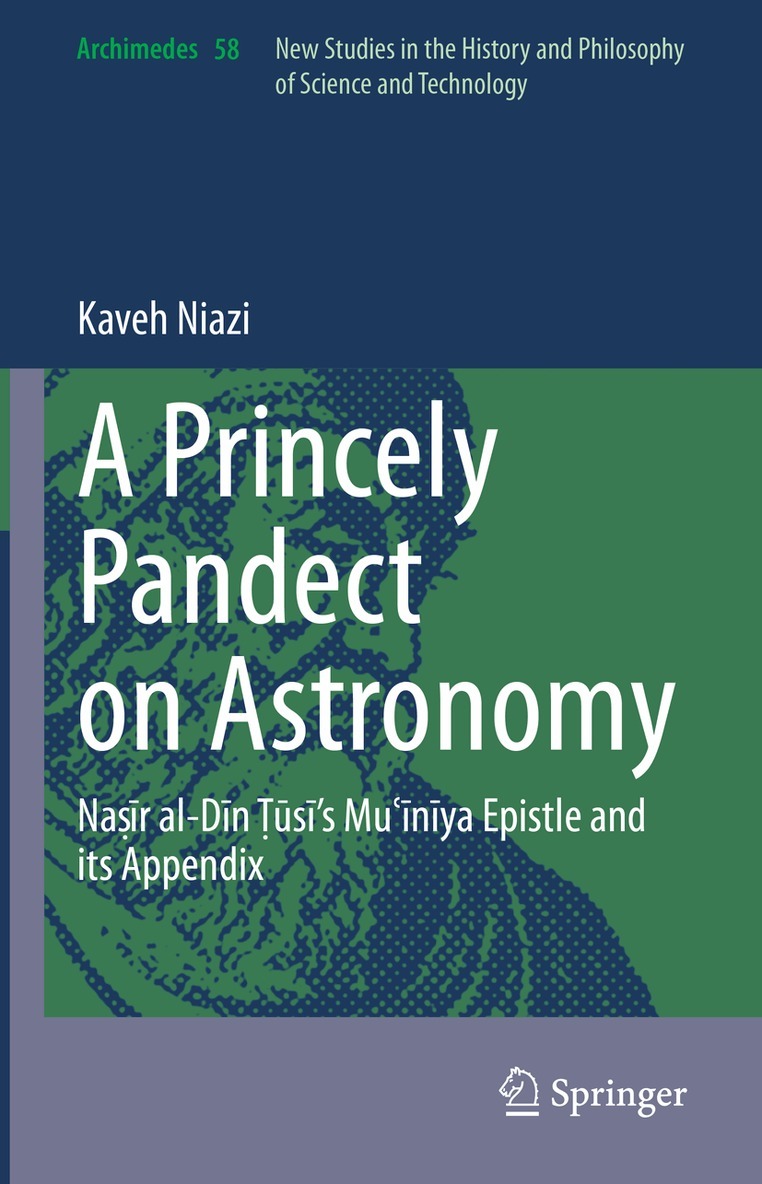
Princely Pandect on Astronomy
Naṣīr al-Dīn Ṭūsī's Muʿīnīya Epistle and its Appendix
Inbunden, Engelska, 2022
1 422 kr
Skickas inom 10-15 vardagar
Subsequently T?u¯si was to pen hisown commentary on the work (the ?all-i Mushkilat-i Mu?iniya, or A solution to the difficulties of the Mu?iniya) and he used this occasion to discuss his celebrated mathematical formulation “the T?u¯si Couple” (a concept that he merely hinted at in the Risala-yi Mu?iniya).
A Princely Pandect on Astronomy : Na¿ir al-Din T¿u¯si's Mu¿iniya Epistle and its Appendix
Engelska, 2022
653 kr
Skickas inom 5-8 vardagar
Del 58 - Archimedes
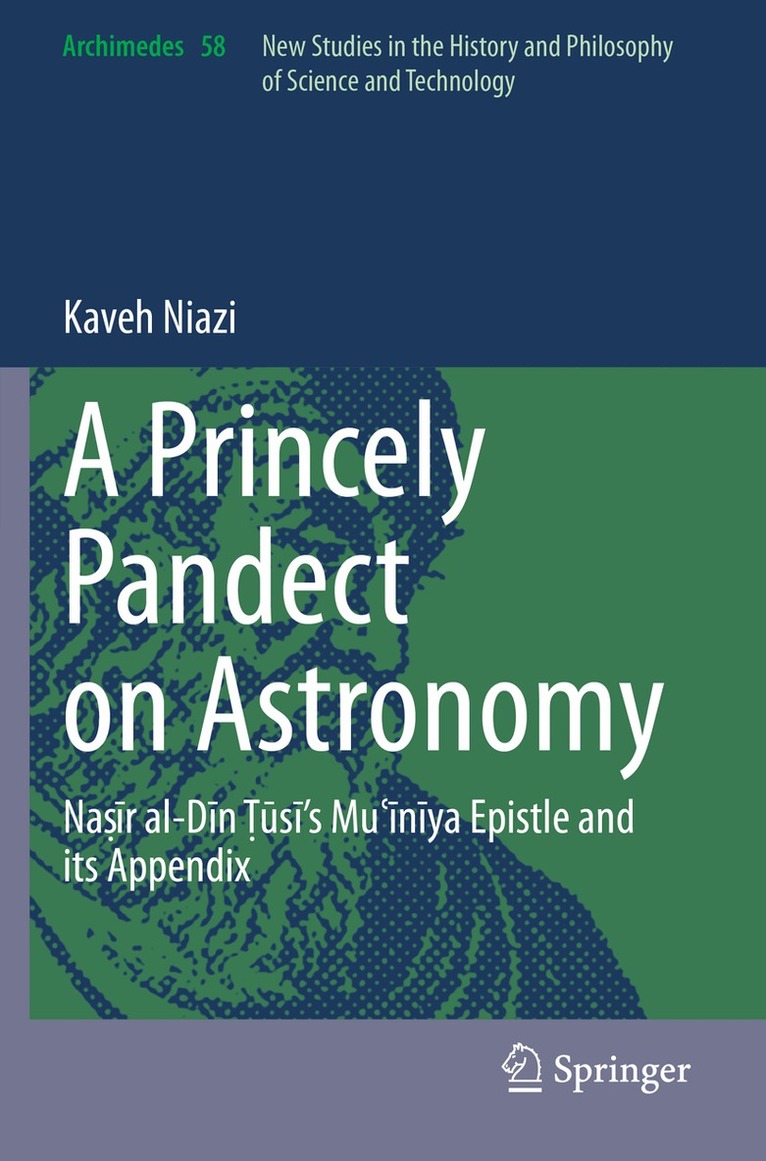
Princely Pandect on Astronomy
Naṣīr al-Dīn Ṭūsī's Muʿīnīya Epistle and its Appendix
Häftad, Engelska, 2023
1 422 kr
Skickas inom 10-15 vardagar
Subsequently T?u¯si was to pen hisown commentary on the work (the ?all-i Mushkilat-i Mu?iniya, or A solution to the difficulties of the Mu?iniya) and he used this occasion to discuss his celebrated mathematical formulation “the T?u¯si Couple” (a concept that he merely hinted at in the Risala-yi Mu?iniya).
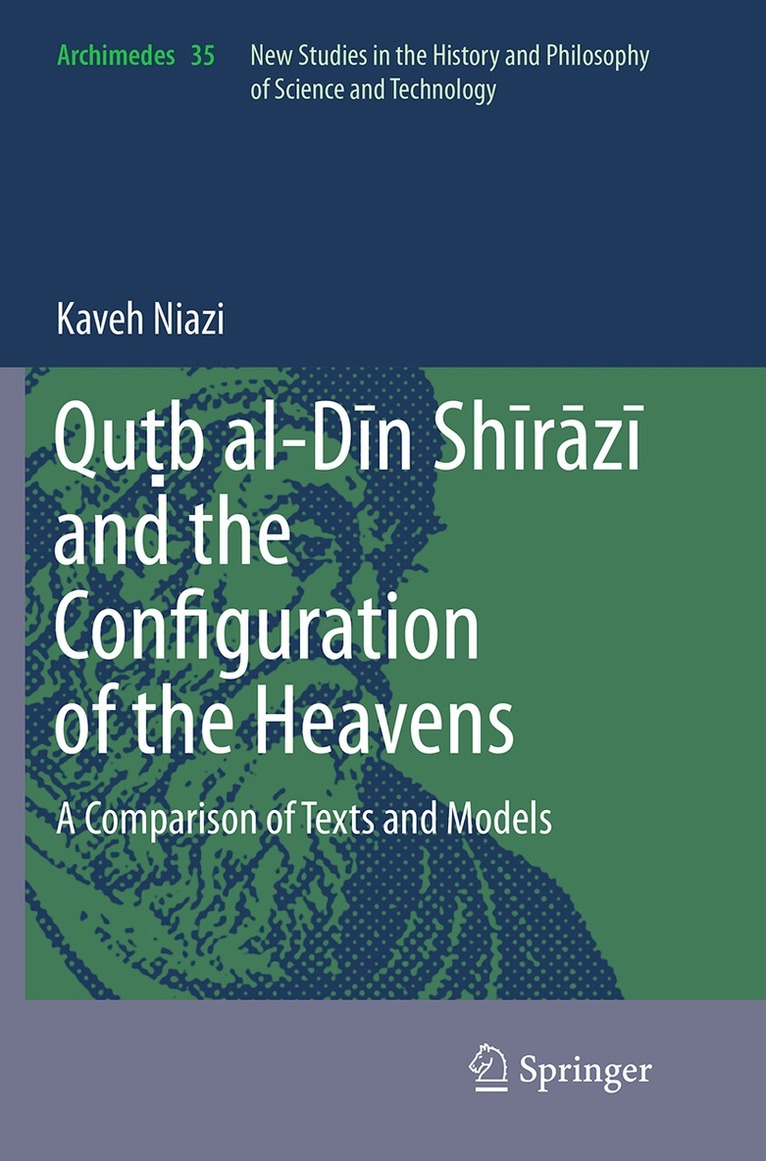
Del 35 - Archimedes
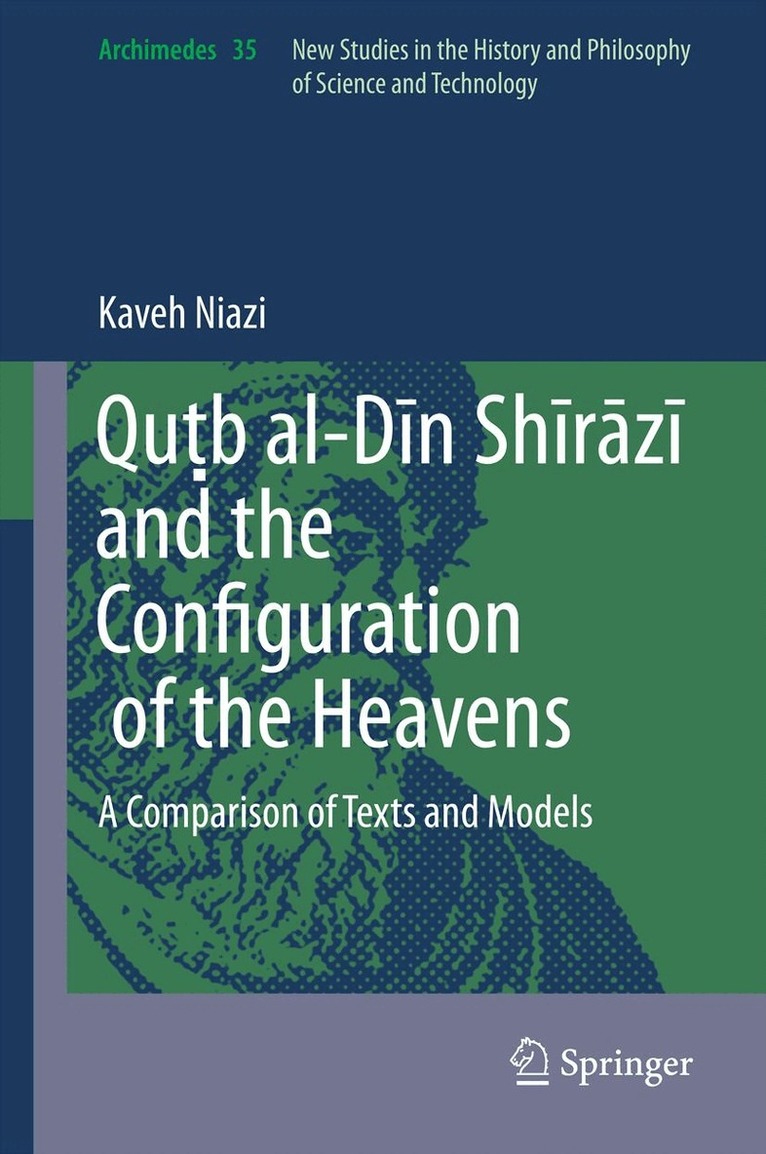
Quṭb al-Dīn Shīrāzī and the Configuration of the Heavens
A Comparison of Texts and Models
Inbunden, Engelska, 2013
536 kr
Skickas inom 10-15 vardagar
As a leading scientist of the 13th century C. E. Quṭb al-Dīn Shīrāzī wrote three substantial works on hay’a (or the configuration of the celestial orbs): Nihāyat al-idrāk fī dirāyat al-aflāk (“The Limits of Attainment in the Understanding of the Heavens”), al-Tuḥfa al-shāhīya fī ‘ilm al-hay’a (“The Royal Offering Regarding the Knowledge of the Configuration of the Heavens”), and Ikhtīyārāt-i Muẓaffarī (“The Muẓaffarī Elections”). Completed in less than four years and written in two of the classical languages of the Islamic world, Arabic and Persian, these works provide a fascinating window to the astronomical research carried out in Ilkhanid Persia. Shīrāzī and his colleagues were driven by their desire to rid Ptolemaic astronomy from its perceived shortcomings. An intriguing trail of revisions and emendations in Shīrāzī’s hay’a texts serves to highlight both those features of Shīrāzī's astronomy that were inherited from his predecessors, as well as his original contributions to this branch of astronomical research. As a renowned savant, Shīrāzī spent a large portion of his career near centers of political power in Persia and Anatolia. A study of his scientific output and career as a scholar is an opportunity, therefore, for an examination of the patronage of science and of scientific works within the Ilkhanid realms. Not only was this patronage important to the work of scholars such as Shīrāzī but it was critical to the founding and operation of one of the foremost scientific institutions of the medieval Islamic world, the Marāgha observatory. The astronomical tradition in which Shīrāzī carried out his research has many links, as well, to the astronomy of Early Modern Europe, as can be seen in the astronomical models ofCopernicus.
Del 35 - Archimedes
Quṭb al-Dīn Shīrāzī and the Configuration of the Heavens
A Comparison of Texts and Models
Häftad, Engelska, 2016
536 kr
Skickas inom 10-15 vardagar
As a leading scientist of the 13th century C. E. Quṭb al-Dīn Shīrāzī wrote three substantial works on hay’a (or the configuration of the celestial orbs): Nihāyat al-idrāk fī dirāyat al-aflāk (“The Limits of Attainment in the Understanding of the Heavens”), al-Tuḥfa al-shāhīya fī ‘ilm al-hay’a (“The Royal Offering Regarding the Knowledge of the Configuration of the Heavens”), and Ikhtīyārāt-i Muẓaffarī (“The Muẓaffarī Elections”). Completed in less than four years and written in two of the classical languages of the Islamic world, Arabic and Persian, these works provide a fascinating window to the astronomical research carried out in Ilkhanid Persia. Shīrāzī and his colleagues were driven by their desire to rid Ptolemaic astronomy from its perceived shortcomings. An intriguing trail of revisions and emendations in Shīrāzī’s hay’a texts serves to highlight both those features of Shīrāzī's astronomy that were inherited from his predecessors, as well as his original contributions to this branch of astronomical research. As a renowned savant, Shīrāzī spent a large portion of his career near centers of political power in Persia and Anatolia. A study of his scientific output and career as a scholar is an opportunity, therefore, for an examination of the patronage of science and of scientific works within the Ilkhanid realms. Not only was this patronage important to the work of scholars such as Shīrāzī but it was critical to the founding and operation of one of the foremost scientific institutions of the medieval Islamic world, the Marāgha observatory. The astronomical tradition in which Shīrāzī carried out his research has many links, as well, to the astronomy of Early Modern Europe, as can be seen in the astronomical models ofCopernicus.