Kei Koga - Böcker
Visar alla böcker från författaren Kei Koga. Handla med fri frakt och snabb leverans.
13 produkter
13 produkter
1 349 kr
Skickas inom 5-8 vardagar
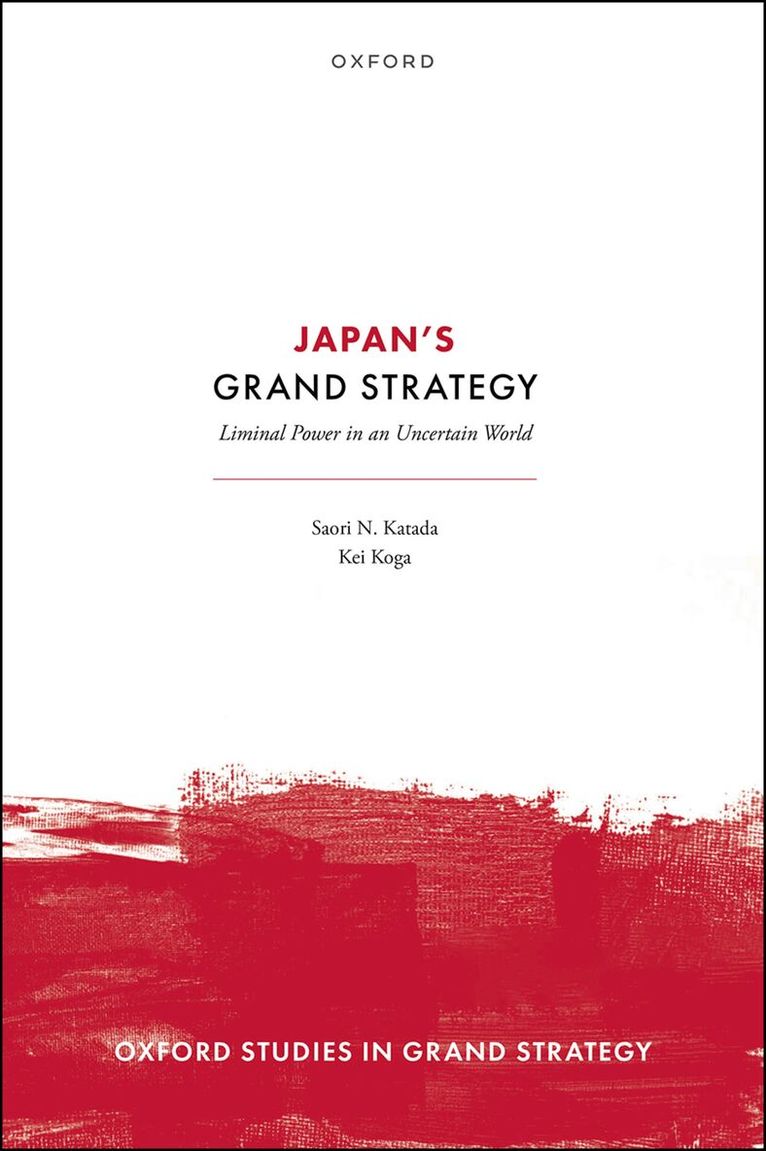
As a liminal state with contrasting identities, Japan often struggles to define its consistent strategic objective due to its fluctuating power status and social role in international relations. In this volume Katada and Koga employ a historical institutionalist approach to examine the evolution of Japan's grand strategy as a liminal power from the Meiji period, starting in 1868, to the present. The authors explore four historical and contemporary "critical junctures" as key determinants of the shifts in Japan's grand strategies: the Meiji era, the inter-war era between World War I and II, the Cold War era, and the Post-Cold War/Indo-Pacific era. In particular, they focus on the contemporary era during which Japan has established its Indo-Pacific grand strategy featuring a "Free and Open Indo-Pacific." As the strategic environment changed in each period, the authors examine how a window of opportunity opened that offered Japan's core decision-makers a chance to construct - or reconstruct - the country's grand strategy.The Oxford Studies in Grand Strategy is a major new series of cutting-edge monographs that examine the grand strategies of states, and those intergovernmental organizations and nonstate actors who credibly aspire to sovereignty. Books concentrate on the contemporary aspects of grand strategy, while paying due respect to the historical antecedents of a nation's grand strategy and their relevance for a leadership's current choices. The series is pluralistic in terms of theory and method, and maintains a broad view of the ways, means, and ends that undergird a grand strategy. Analytical and explanatory in contribution, books in the series feature a rigorous analysis of the interaction between domestic factors and global forces and provide a clear understanding of how that interaction shapes a grand strategy's formulation, codification, and implementation.Series Editors: Thierry Balzacq (Sciences Po, Paris), Peter Dombrowski (US Naval War College), and Simon Reich (Rutgers University, Newark)
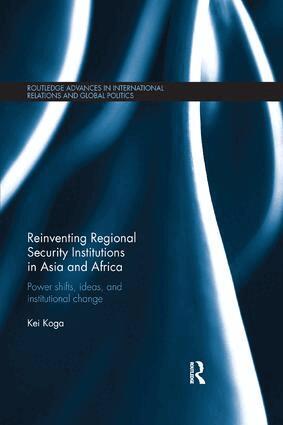
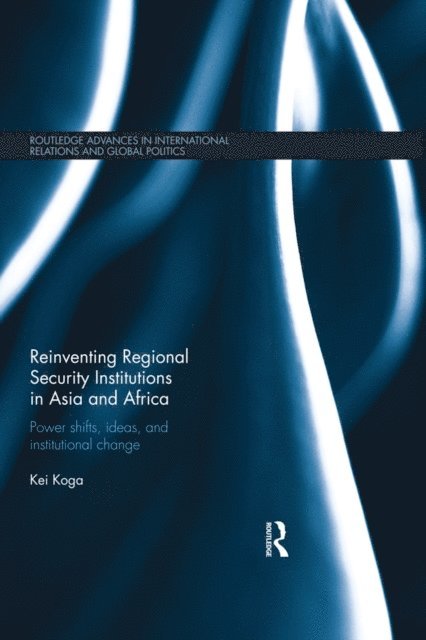
Reinventing Regional Security Institutions in Asia and Africa
Power shifts, ideas, and institutional change
Häftad, Engelska, 2018
617 kr
Skickas inom 10-15 vardagar
Regional security institutions play a significant role in shaping the behavior of existing and rising regional powers by nurturing security norms and rules, monitoring state activities, and sometimes imposing sanctions, thereby formulating the configuration of regional security dynamics. Yet, their security roles and influence do not remain constant. Their raison d’etre, objectives, and functions experience sporadic changes, and some institutions upgrade military functions for peacekeeping operations, while others limit their functions to political and security dialogues. The question is: why and how do these variances in institutional change emerge?This book explores the mechanisms of institutional change, focusing on regional security institutions led by non-great powers. It constructs a theoretical model for institutional change that provides a new understanding of their changing roles in regional security, which has yet to be fully explored in the International Relations field. In so doing, the book illuminates why, when, and how each organization restructures its role, function, and influence. Using case studies of the Association of Southeast Asian Nations (ASEAN), the Economic Community of West African States (ECOWAS), and the Organization of African Unity (OAU)/ African Union (AU), it also sheds light on similarities and differences in institutional change between regional security institutions.
Reinventing Regional Security Institutions in Asia and Africa
Power shifts, ideas, and institutional change
Inbunden, Engelska, 2016
2 219 kr
Skickas inom 10-15 vardagar
Regional security institutions play a significant role in shaping the behavior of existing and rising regional powers by nurturing security norms and rules, monitoring state activities, and sometimes imposing sanctions, thereby formulating the configuration of regional security dynamics. Yet, their security roles and influence do not remain constant. Their raison d’etre, objectives, and functions experience sporadic changes, and some institutions upgrade military functions for peacekeeping operations, while others limit their functions to political and security dialogues. The question is: why and how do these variances in institutional change emerge?This book explores the mechanisms of institutional change, focusing on regional security institutions led by non-great powers. It constructs a theoretical model for institutional change that provides a new understanding of their changing roles in regional security, which has yet to be fully explored in the International Relations field. In so doing, the book illuminates why, when, and how each organization restructures its role, function, and influence. Using case studies of the Association of Southeast Asian Nations (ASEAN), the Economic Community of West African States (ECOWAS), and the Organization of African Unity (OAU)/ African Union (AU), it also sheds light on similarities and differences in institutional change between regional security institutions.
161 kr
Skickas inom 3-6 vardagar
Del 2 - Brutal - Bekenntnisse eines Mordermittlers
Brutal - Bekenntnisse eines Mordermittlers 2
Häftad, Tyska, 2023
161 kr
Skickas inom 3-6 vardagar
Del 3 - Brutal - Bekenntnisse eines Mordermittlers
Brutal - Bekenntnisse eines Mordermittlers 3
Häftad, Tyska, 2024
161 kr
Skickas inom 3-6 vardagar
Del 4 - Brutal - Bekenntnisse eines Mordermittlers
Brutal - Bekenntnisse eines Mordermittlers 4
Häftad, Tyska, 2024
161 kr
Skickas inom 3-6 vardagar
Del 5 - Brutal - Bekenntnisse eines Mordermittlers
Brutal - Bekenntnisse eines Mordermittlers 5
Häftad, Tyska, 2024
161 kr
Skickas inom 3-6 vardagar
202 kr
Tillfälligt slut
177 kr
Skickas inom 3-6 vardagar
218 kr
Tillfälligt slut
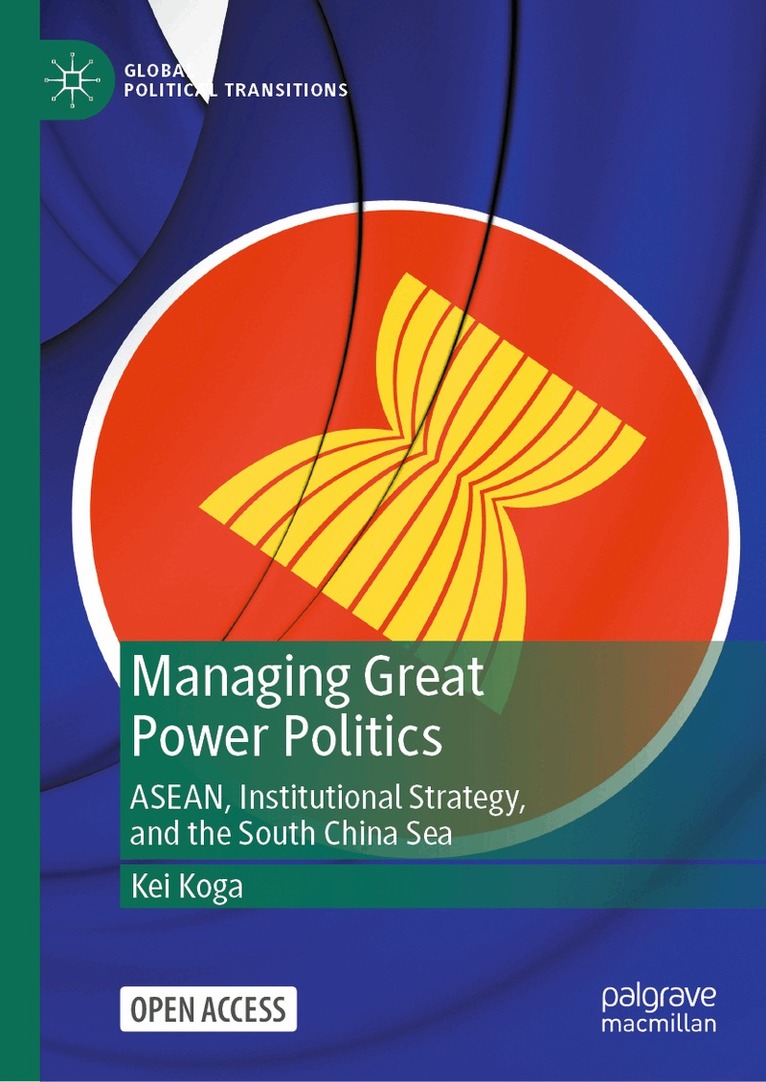
Managing Great Power Politics
ASEAN, Institutional Strategy, and the South China Sea
Inbunden, Engelska, 2022
536 kr
Skickas inom 10-15 vardagar
This Open Access book explains ASEAN’s strategic role in managing great power politics in East Asia. Constructing a theory of institutional strategy, this book argues that the regional security institutions in Southeast Asia, ASEAN and ASEAN-led institutions have devised their own institutional strategies vis-à-vis the South China Sea and navigated the great-power politics since the 1990s. ASEAN proliferated new security institutions in the 1990s and 2000s that assumed a different functionality, a different geopolitical scope, and thus a different institutional strategy. In so doing, ASEAN formed a “strategic institutional web” that nurtured a quasi-division of labor among the institutions to maintain relative stability in the South China Sea. Unlike the conventional analysis on ASEAN, this study disaggregates “ASEAN” as a collective regional actor into specific individual institutions—ASEAN Foreign Ministers’ Meeting, ASEAN Summit, ASEAN-China dialogues, ASEAN Regional Forum, East Asia Summit, and ASEAN Defense Ministers Meeting and ASEAN Defense Ministers Meeting-Plus—and explains how each of these institutions has devised and/or shifted its institutional strategy to curb great powers’ ambition in dominating the South China Sea while navigating great power competition. The book sheds light on the strategic potential and limitations of ASEAN and ASEAN-led security institutions, offers implications for the future role of ASEAN in the Indo-Pacific region, and provides an alternative understanding of the strategic utilities of regional security institutions.
Managing Great Power Politics
ASEAN, Institutional Strategy, and the South China Sea
Häftad, Engelska, 2022
430 kr
Skickas inom 10-15 vardagar
This Open Access book explains ASEAN’s strategic role in managing great power politics in East Asia. Constructing a theory of institutional strategy, this book argues that the regional security institutions in Southeast Asia, ASEAN and ASEAN-led institutions have devised their own institutional strategies vis-à-vis the South China Sea and navigated the great-power politics since the 1990s. ASEAN proliferated new security institutions in the 1990s and 2000s that assumed a different functionality, a different geopolitical scope, and thus a different institutional strategy. In so doing, ASEAN formed a “strategic institutional web” that nurtured a quasi-division of labor among the institutions to maintain relative stability in the South China Sea. Unlike the conventional analysis on ASEAN, this study disaggregates “ASEAN” as a collective regional actor into specific individual institutions—ASEAN Foreign Ministers’ Meeting, ASEAN Summit, ASEAN-China dialogues, ASEAN Regional Forum, East Asia Summit, and ASEAN Defense Ministers Meeting and ASEAN Defense Ministers Meeting-Plus—and explains how each of these institutions has devised and/or shifted its institutional strategy to curb great powers’ ambition in dominating the South China Sea while navigating great power competition. The book sheds light on the strategic potential and limitations of ASEAN and ASEAN-led security institutions, offers implications for the future role of ASEAN in the Indo-Pacific region, and provides an alternative understanding of the strategic utilities of regional security institutions.