Keith R. Fox - Böcker
Visar alla böcker från författaren Keith R. Fox. Handla med fri frakt och snabb leverans.
5 produkter
5 produkter
420 kr
Skickas inom 3-6 vardagar
If our bodies could do more things, would our lives be better? Genome editing is a rapidly developing technology that can modify human genes. It can cure heritable diseases, but we could even make certain genetic “improvements” to healthy people. Should we change human embryos genetically to achieve such goals?Bringing together a leading molecular biologist and a Christian ethicist this book responds to the need for solid information and helpful orientation for a pressing moral issue. They explain relevant technical issues without the jargon, clarify the most important philosophical and religious arguments and bring empirical insights to the question of what helps us lead meaningful lives.
1 095 kr
Skickas inom 10-15 vardagar
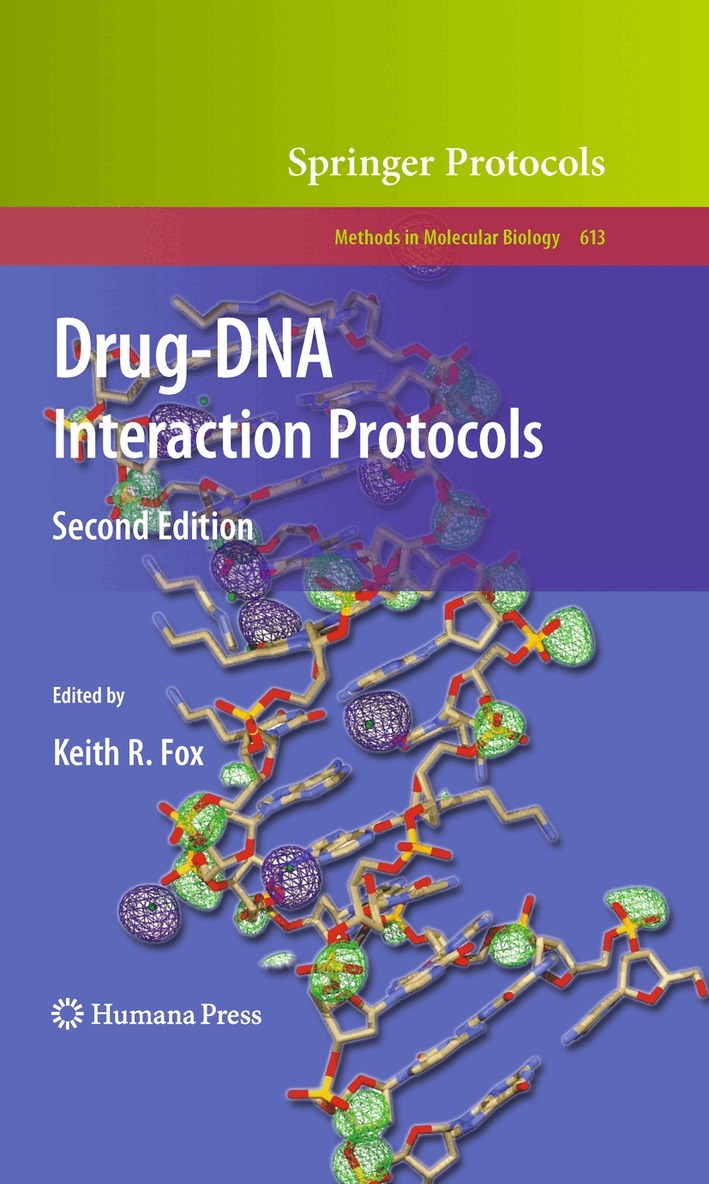
DNA has been known to be the cellular target for many cytotoxic anticancer agents for several decades. The knowledge of its structure in atomic detail and the ease with which DNA fragments (both synthetic oligonucleotides and natural sequences) can be prepared and manipulated has aided the design of compounds that bind to it with improved sel- tivity. On the basis of this information, new generations of sequence reading compounds (including triplex forming oligonucleotides and minor groove binding ligands) have been prepared, which have the potential for targeting specifc DNA sequences as anti-gene agents. Within the last 10 years, it has also become apparent that the familiar DNA duplex is not the only structure that can be targeted by DNA-binding ligands and there has been increased interest in triplex and quadruplex structures as drug targets, as well as protein- DNA complexes, such as those with nucleosomes or topoisomerases. Each of these advances has required the availability and development of an arsenal of techniques for probing the interactions in both qualitative and quantitative terms. This v- ume of Methods in Molecular Biology brings together several techniques that are currently useful for examining these interactions. Some of these are updates on ones that were included in the earlier volume (Methods in Molecular Biology 90), published 12 years ago, while others are new.
1 624 kr
Skickas inom 10-15 vardagar
DNA has been known to be the cellular target for many cytotoxic anticancer agents for several decades. The knowledge of its structure in atomic detail and the ease with which DNA fragments (both synthetic oligonucleotides and natural sequences) can be prepared and manipulated has aided the design of compounds that bind to it with improved sel- tivity. On the basis of this information, new generations of sequence reading compounds (including triplex forming oligonucleotides and minor groove binding ligands) have been prepared, which have the potential for targeting specifc DNA sequences as anti-gene agents. Within the last 10 years, it has also become apparent that the familiar DNA duplex is not the only structure that can be targeted by DNA-binding ligands and there has been increased interest in triplex and quadruplex structures as drug targets, as well as protein- DNA complexes, such as those with nucleosomes or topoisomerases. Each of these advances has required the availability and development of an arsenal of techniques for probing the interactions in both qualitative and quantitative terms. This v- ume of Methods in Molecular Biology brings together several techniques that are currently useful for examining these interactions. Some of these are updates on ones that were included in the earlier volume (Methods in Molecular Biology 90), published 12 years ago, while others are new.
235 kr
Skickas inom 5-8 vardagar
2 668 kr
Skickas inom 5-8 vardagar
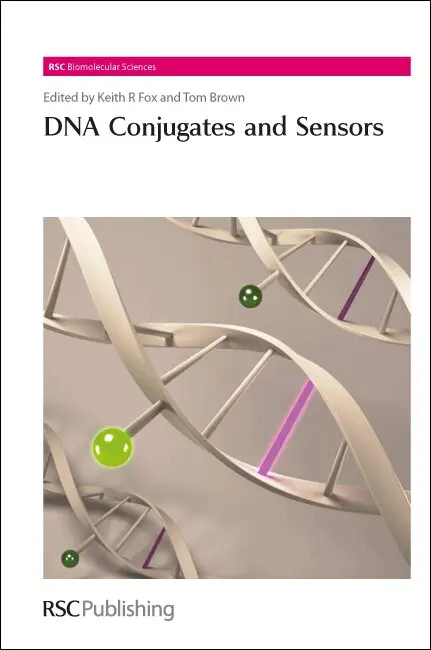
Applications of nucleic acids have developed recently to provide solutions for biosensors, diagnostic tools and as platforms for the assembly of complex structures. These developments have been possible as their base sequence can be used to assemble precise structures following simple and predictable rules. Self-assembled DNA can then be amplified using polymerase chain reaction (PCR) and this ultimately enables the preparation of synthetic nucleic acids. Their use as molecular tools or DNA-conjugates has recently been enhanced by the addition of other groups including enzymes, fluorophores and small molecules. Written by leaders in the field, this volume describes the preparation and application of these DNA-conjugates. Several have been used as sensors (aptamers, riboswitches and nanostructures) based on the ability of nucleic acids to adopt specific structures in the presence of ligands, whilst others link reporter groups such as proteins or fluorophores to RNA or DNA for detection, single molecule studies, and increasing the sensitivity of PCR. The book is relevant to researchers in areas related to analytical chemistry, chemical biology, medicinal chemistry, molecular pharmacology, and structural and molecular biology.