Ken Kollman – författare
Visar alla böcker från författaren Ken Kollman. Handla med fri frakt och snabb leverans.
9 produkter
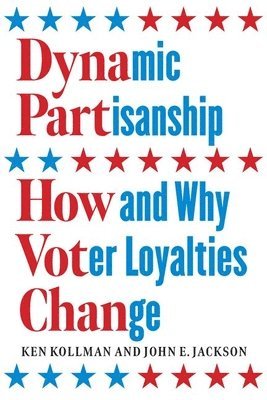
Dynamic Partisanship
How and Why Voter Loyalties Change
Av Ken Kollman, John E Jackson
Inbunden, 2021
1080 kr
Lägg i varukorg
Why do people identify with political parties? How stable are those identifications? Stable party systems, with a limited number of parties and mostly stable voter identification with a party, are normally considered significant signals of a steady democracy. In Dynamic Partisanship, Ken Kollman …
Dynamic Partisanship
How and Why Voter Loyalties Change
Av Ken Kollman, John E Jackson
Häftad, 2021
333 kr
Lägg i varukorg
Why do people identify with political parties? How stable are those identifications? Stable party systems, with a limited number of parties and mostly stable voter identification with a party, are normally considered significant signals of a steady democracy. In Dynamic Partisanship, Ken Kollman …
Dynamic Partisanship
How and Why Voter Loyalties Change
Av John E. Jackson, Ken Kollman
E-bok, 2021
643 kr
Lägg i varukorg
Why do people identify with political parties? How stable are those identifications? Stable party systems, with a limited number of parties and mostly stable voter identification with a party, are normally considered significant signals of a steady democracy. In Dynamic Partisanship , Ken Kollman …
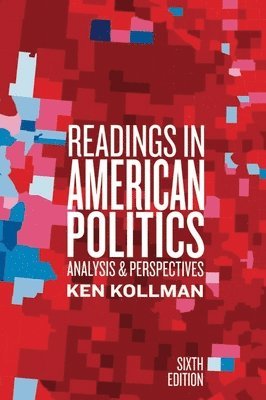
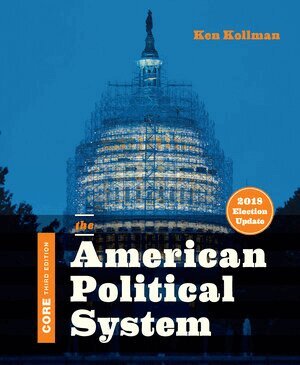
American Political System
Av Ken Kollman
Häftad, 2019
1137 kr
Lägg i varukorg
Unlike texts that overwhelm with irrelevant details, Kollman gives students a simple framework, consistently applied: politics is about collective dilemmas and the institutions that solve them. How can 535 members of Congress get anything done? The committee system. How can the president change …
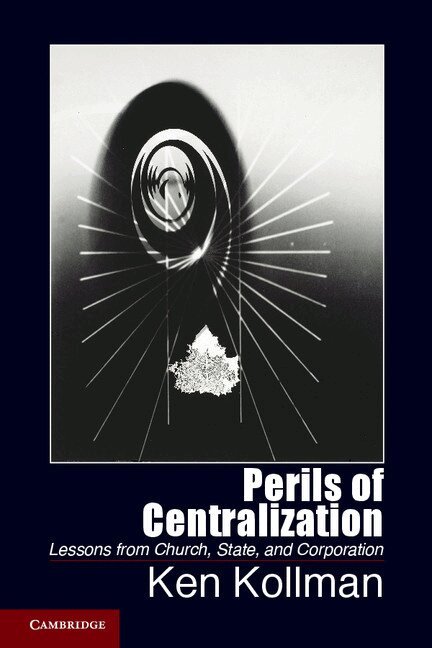
Perils of Centralization
Lessons from Church, State, and Corporation
Av Ken Kollman
Inbunden, 2013
1391 kr
Lägg i varukorg
In this provocative and wide-ranging book, Ken Kollman examines the histories of the US government, the Catholic Church, General Motors, and the European Union as examples of federated systems that centralized power over time. He shows how their institutions became locked-in to intensive power in …
Perils of Centralization
Lessons from Church, State, and Corporation
Av Ken Kollman
E-bok, 2013
444 kr
Lägg i varukorg
In this provocative and wide-ranging book, Ken Kollman examines the histories of the US government, the Catholic Church, General Motors, and the European Union as examples of federated systems that centralized power over time. He shows how their institutions became locked-in to intensive power in …
Perils of Centralization
Lessons from Church, State, and Corporation
Av Ken Kollman
E-bok, 2013
454 kr
Lägg i varukorg
In this provocative and wide-ranging book, Ken Kollman examines the histories of the US government, the Catholic Church, General Motors, and the European Union as examples of federated systems that centralized power over time. He shows how their institutions became locked-in to intensive power in …
Perils of Centralization
Lessons from Church, State, and Corporation
Av Ken Kollman
Häftad, 2013
459 kr
Lägg i varukorg
In this provocative and wide-ranging book, Ken Kollman examines the histories of the US government, the Catholic Church, General Motors, and the European Union as examples of federated systems that centralized power over time. He shows how their institutions became locked-in to intensive power in …